Connect with us

World

Russia May Host Russia-African Union Forum 2019

Published

on

Russia-African Union forum

By Kester Kenn Klomegah

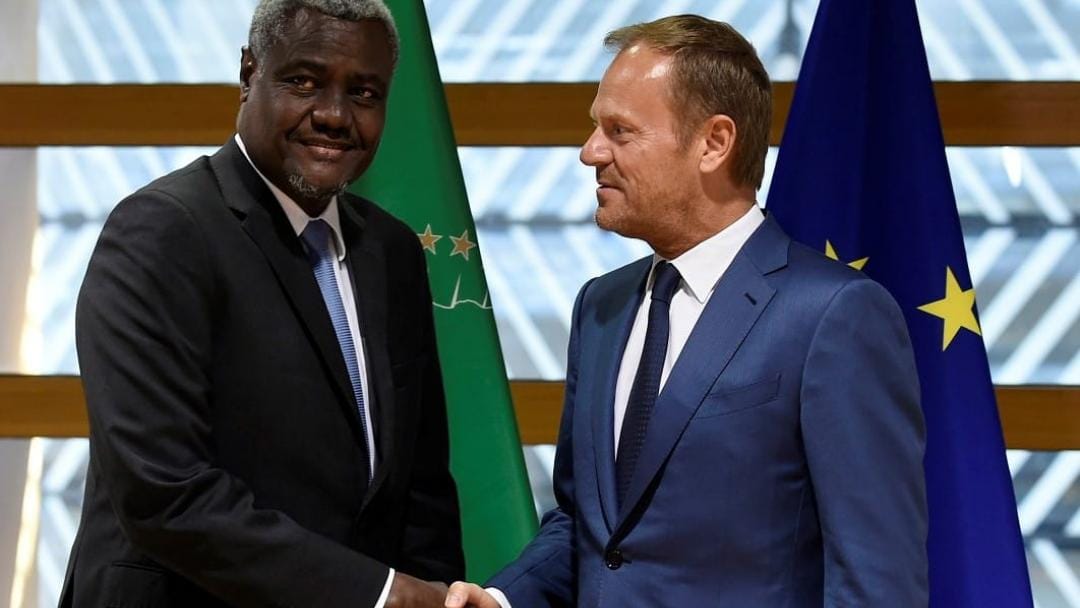
Faced with persistent criticisms, Russia has finally announced it will most likely host the first high-level Russia-African Union forum next year, a replica or a carbon copy of Forum on China Africa Cooperation (FOCAC) or European Union–African Union summit, signaling its readiness to work towards deepening and strengthening multifaceted engagement with Africa.

Working on a new paradigm collaboratively with African Union, Russia hopes to fill up pitfalls and cracks in the existing relationship, reinforce diplomatic ties and raise its staggering economic profile on the continent similar to the levels of China, India, Japan, South Korea, Turkey, U.S. and Europe.

On his official visit to Rwanda early June, Foreign Affairs Minister Sergey Lavrov hinted that the forum rolls out a comprehensive strategic roadmap for more economic cooperation and wide-range of investment possibilities, find effective ways of addressing regional security issues and that of improving public diplomacy in Africa.

“We discussed Russia’s idea of holding a large African Union business forum with AU member states and Russia to be attended by entrepreneurs and politicians, possibly next year,” Lavrov said at a media conference after meeting with Minister of Foreign Affairs, Cooperation and East African Community Louise Mushikiwabo in Kigali, Rwanda.

“We have agreed to prepare a framework political document that will set out a concept for cooperation in the next few years and also several practical projects for implementation in the near future. We are now preparing for a meeting of Russian and AU experts,” he assertively added.

Just before his African tour early March, Lavrov also told Hommes d’Afrique magazine “we carefully study the practice of summits between African countries and their major partners abroad. At present, Russia’s relations with African countries are progressing both on a bilateral basis and along the line of African regional organisations, primarily the African Union and the Southern African Development Community.”

In the interview posted to MFA website, he said “our African friends note the need for Russia’s active presence in the region, and more frequently express interest in holding a Russia-African summit. Such a meeting would undoubtedly help deepen our cooperation on the full range of issues. However, it is necessary to bear in mind that arranging an event of such a scale with the participation of over 50 Heads of State and Government requires most careful preparation, including in terms of its substantive content.”

Lavrov acknowledged in the interview: “The economic component of the summit has a special significance in this relation as it would be of practical interest for all the parties. As such, specific Russian participants in bilateral or multilateral cooperation should be identified, which are not only committed to long-term cooperation but are also ready for large-scale investments in the African markets with account of possible risks and high competition. Equally important are African businesspeople who are looking to work on the Russian market.”

On May 16, Lavrov chaired the Foreign Ministry Collegium meeting on the subject “Cooperation with Sub-Saharan African countries as part of implementing important tasks of Russian foreign policy.” The meeting noted that the consolidation of versatile ties with the Sub-Saharan African countries remains a major part of Russia’s foreign policy strategy, which is acquiring special significance in the context of deep changes in the global arena.

Some experts and researchers have, of course, identified low enthusiasm and lack of coordinated mechanism as key factors affecting cooperation between Russia and African countries, and suggested that this trend could be reversed if both Russian authorities and African governments get down regularly to serious dialogue with concrete business agenda.

Nearly a decade ago, Themba Mhlongo, Head of Programmes at the Southern Africa Trust, said in an emailed interview that “there is no effective Russia-African dialogue or mechanism for dialoguing with Africa. On the other hand, Russia has not been as aggressive as China in pursuing opportunities in Africa because Russia has natural resources and markets in Eastern Europe, South West Asia. Russia’s key exports to Africa might only be dominated by machinery and military equipment which serves their interest well.”

He suggested that Africa must also engage all BRICS members equally including Brazil and Russia in order to build alliances and open trade opportunities including finance and investment opportunities, African countries must not seem to show preferences in their foreign policy in favour of western Europe if they want to benefit from trade relations with Russia.

Tellingly, Vadim Trofimovich Kirsanov, an African Affairs Advisor at the Regional Projects Department of Russkiy Mir Foundation, (non-profit Russian NGO that promotes Russian language, literature and culture abroad), in an interview with Buziness Africa media, discusses the significance of developing bilateral ties not only in economic sphere but also in culture, exchange of people and ideas in the social sphere.

“We must use the full potential interest in Russian culture, Russian language, mutual sympathy and interest between the peoples of Africa and Russia, a great desire of Russians and Africans to visit each other to make friends, establish new connections. That’s where public diplomacy becomes an effective instrument for supporting business dialogue,” he said.

Kirsanov noted: use new opportunities for mutually beneficial cooperation open to the accession of South Africa to BRICS group (Brazil, Russia, India, China and South Africa), taking into account the economic impact of South Africa on the African continent and the world at large. Besides the intensification of dialogue with the African Union (AU), the Russian authorities have the development of multilateral cooperation among African countries with Russian Federation.

Professor Gerrit Olivier from the Department of Political Science, University of Pretoria in South Africa, noted that Russian influence in Africa, despite efforts towards resuscitation, remains marginal. While, given its global status, it ought to be active in Africa as Western Europe, the European Union, the United States and China are, it is all but absent, playing a negligible role.

“Russia, of course, is not satisfied with this state of affairs. At present diplomacy dominates its approach: plethora of agreements have been signed with South Africa and various other states in Africa, official visits from Moscow proliferate apace, but the outcomes remain hardly discernible,” Professor Olivier, previously served as South African Ambassador to the Russian Federation, wrote in an email comment from Pretoria, South Africa.

Be as it may, he indicated further that “the Kremlin has revived its interest in the African continent and it will be realistic to expect that the spade work it is putting in now will at some stage show more tangible results.”

In his assessment, Rex Essenowo, a Moscow-based Economic Policy Analyst, pointed out to a known and well-established fact, which Russians have always shrugged off, that there have been many summits and conferences between the United States, EU and Asian states with Africa, but there has yet to be a single high-level Russia-African summit.

However, he believes that all was not yet lost, there is still an unexplored chance to strengthen Russia’s relationship with Africa if, for example, African countries work collectively together as AU to focus on improving all aspects of Russia-African relationship.

Large investments and comprehensive approach, similar to the Chinese, would help to bridge the economic and political gap between Russia and the African continent, Essenowo said, and reminded that Russia is very much involved in educating and/or training professionals who are playing key roles and could serve as excellent useful links between Russia and Africa. Russia has ignored this valuable product in its diplomacy with Africa.

Interesting, BRICS countries are vigorously moving into Africa and now three BRICS members: Russia is planning, India and China are also preparing for summits next year with Africa. As already publicly known, all previous summits held by many foreign countries with Africa, there were concrete financial packages earmarked towards infrastructure development in Africa.

From Russia’s perspective, there are undeniable important geopolitical implications working with Africa. Nevertheless, Russia’s efforts in the region have been limited thus far which some experts attributed to lack of a system of financing policy projects. While Russia government is very cautious about making financial commitments, Russia’s financial institutions are not closely involved in foreign policy initiatives in Africa.

Experts and researchers have recommended one new initiative that will largely interest African leaders, that is for Russia to create a Russian Development Fund for Africa (RDfA) as an agency to manage and run projects as business for Russia in Africa while Russian International Affairs Council (RIAC) could become the key organiser and coordinator of future Russia-African Union summits. Kester Kenn Klomegah frequently writes on Russia, Africa and BRICS.


Dipo Olowookere is a journalist based in Nigeria that has passion for reporting business news stories. At his leisure time, he watches football and supports 3SC of Ibadan. Mr Olowookere can be reached via [email protected]

Advertisement
Click to comment

Leave a Reply

Your email address will not be published. Required fields are marked *

World

Comviva Wins at IBSi Global FinTech Innovation Award

Published

on

Rajesh Chandiramani

By Modupe Gbadeyanka

For transforming cross-border payments through its deployment with Global Money Exchange, Comviva has been named Best In-Class Cross Border Payments.

The global leader in digital transformation solutions clinched this latest accolade at the IBS Intelligence Global FinTech Innovation Award 2025.

The recognition highlights how Comviva’s mobiquity Pay is helping shape a modern cross-border payment ecosystem that stretches far beyond conventional remittance services.

Deployed as a white label Wallet Platform and launched as Global Pay Oman App, it fulfils GMEC’s dual vision—positioning itself as an innovative payment service provider while digitally extending its core money transfer business.

The solution allows GMEC to offer international money transfers alongside seamless forex ordering and other services. These capabilities sit alongside a broad suite of everyday financial services, including bill and utility payments, merchant transactions, education-related payments, and other digital conveniences — all delivered through one unified experience.

“This award is a testament to Oman’s accelerating digital transformation and our commitment to reshaping how cross-border payments serve people and businesses across the Sultanate.

“By partnering with Comviva and bringing the Global Pay Oman Super App, we have moved beyond traditional remittance services to create a truly inclusive and future-ready financial ecosystem.

“This innovation is not only enhancing convenience and transparency for our customers but is also supporting Oman’s broader vision of building a digitally empowered economy,” the Managing Director at Global Money Exchange, Subromoniyan K.S, said.

Also commenting, the chief executive of Comviva, Mr Rajesh Chandiramani, said, “Cross-border payments are becoming a daily necessity, not a niche service, particularly for migrant and trade-linked economies.

“This recognition from IBS Intelligence validates our focus on building payment platforms that combine global reach with local relevance, operational resilience and a strong user experience. The deployment with Global Money Exchange Co. demonstrates how mobiquity® Pay enables financial institutions to move beyond remittances and deliver integrated digital services at scale.”

“The deployment of mobiquity Pay for GMEC showcases how scalable, API-driven digital wallet platforms can transform cross-border payments into seamless, value-rich experiences.

“By integrating remittances, bill payments, forex services, and AI-powered engagement into a unified Super App, Comviva has reimagined customer journeys and operational agility.

“This Best-in-Class Cross-border Payments award win stands as a testament to Comviva’s excellence in enabling financial institutions to compete and grow in a digitally convergent world,” the Director for Research and Digital Properties at IBS Intelligence, Nikhil Gokhale, said.

Continue Reading

World

Russia Renews Africa’s Strategic Action Plan

Published

on

Russia Africa's Strategic Action Plan

By Kestér Kenn Klomegâh

At the end of an extensive consultation with African foreign ministers, Russian Foreign Minister, Sergey Lavrov, has emphasized that Moscow would advance its economic engagement across Africa, admittedly outlining obstacles delaying the prompt implementation of several initiatives set forth in Strategic Action Plan (2023-2026) approved in St. Petersburg during the Russia-Africa Summit.

The second Ministerial Conference, by the Russian Foreign Ministry with support from Roscongress Foundation and the Arab Republic of Egypt, marked an important milestone towards raising bilateral investment and economic cooperation.

In Cairo, the capital city of the Arab Republic of Egypt, Lavrov read out the final resolution script, in a full-packed conference hall, and voiced strong confidence that Moscow would achieve its strategic economic goals with Africa, with support from the African Union (AU) and other Regional Economic blocs in the subsequent years. Despite the complexities posed by the Russia-Ukraine crisis, combined with geopolitical conditions inside the African continent, Moscow however reiterated its position to take serious steps in finding pragmatic prospects for mutual cooperation and improve multifaceted relations with Africa, distinctively in the different sectors: in trade, economic and investment spheres, education and culture, humanitarian and other promising areas.

The main event was the plenary session co-chaired by Russian Foreign Minister Sergey Lavrov and Egyptian Minister of Foreign Affairs, Emigration, and Egyptians Abroad Bashar Abdelathi. Welcome messages from Russian President Vladimir Putin and Egyptian President Abdelhak Sisi were read.

And broadly, the meeting participants compared notes on the most pressing issues on the international and Russian-African agendas, with a focus on the full implementation of the Russia-Africa Partnership Forum Action Plan for 2023-2026, approved at the second Russia-Africa Summit in St. Petersburg in 2023.

In addition, on the sidelines of the conference, Lavrov held talks with his African counterparts, and a number of bilateral documents were signed. A thematic event was held with the participation of Russian and African relevant agencies and organizations, aimed at unlocking the potential of trilateral Russia-Egypt-Africa cooperation in trade, economic, and educational spheres.

With changing times, Africa is rapidly becoming one of the key centers of a multipolar world order. It is experiencing a second awakening. Following their long-ago political independence, African countries are increasingly insisting on respect for their sovereignty and their right to independently manage their resources and destiny. Based on these conditions, it was concluded that Moscow begins an effective and comprehensive work on preparing a new three-year Cooperation and Joint Action Plan between Russia and Africa.

Moreover, these important areas of joint practical work are already detailed in the Joint Statement, which was unanimously approved and will serve as an important guideline for future work. According to reports, the Joint Statement reflects the progress of discussions on international and regional issues, as well as matters of global significance.

Following the conference, the Joint Statement adopted reflects shared approaches to addressing challenges and a mutual commitment to strengthening multifaceted cooperation with a view to ensuring high-quality preparation for the third Russia-Africa Summit in 2026.

On December 19-20, the Second Ministerial Conference of the Russia-Africa Partnership Forum was held in Cairo, Egypt. It was held for the first time on the African continent, attended by heads and representatives of the foreign policy ministries of 52 African states and the executive bodies of eight regional integration associations.

Continue Reading

World

TikTok Signs Deal to Avoid US Ban

Published

on

Forex Advice on TikTok

By Adedapo Adesanya

Social media platform, TikTok’s Chinese owner ByteDance has signed binding agreements with United States and global investors to operate its business in America.

Half of the joint venture will be owned by a group of investors, including Oracle, Silver Lake and the Emirati investment firm MGX, according to a memo sent by chief executive, Mr Shou Zi Chew.

The deal, which is set to close on January 22, 2026 would end years of efforts by the US government to force ByteDance to sell its US operations over national security concerns.

It is in line with a deal unveiled in September, when US President Donald Trump delayed the enforcement of a law that would ban the app unless it was sold.

In the memo, TikTok said the deal will enable “over 170 million Americans to continue discovering a world of endless possibilities as part of a vital global community”.

Under the agreement, ByteDance will retain 19.9 per cent of the business, while Oracle, Silver Lake and Abu Dhabi-based MGX will hold 15 per cent each.

Another 30.1 per cent will be held by affiliates of existing ByteDance investors, according to the memo.

The White House previously said that Oracle, which was co-founded by President Trump’s supporter Larry Ellison, will license TikTok’s recommendation algorithm as part of the deal.

The deal comes after a series of delays.

Business Post reported in April 2024 that the administration of President Joe Biden passed a law to ban the app over national security concerns, unless it was sold.

The law was set to go into effect on January 20, 2025 but was pushed back multiple times by President Trump, while his administration worked out a deal to transfer ownership.

President Trump said in September that he had spoken on the phone to China’s President Xi Jinping, who he said had given the deal the go ahead.

The platform’s future remained unclear after the leaders met face to face in October.

The app’s fate was clouded by ongoing tensions between the two nations on trade and other matters.

Continue Reading

Trending