Connect with us

Economy

CCNN, BUA Cement Merge to Dominate Market, Give Shareholders Value

Published

on

CCNN shares

By Dipo Olowookere

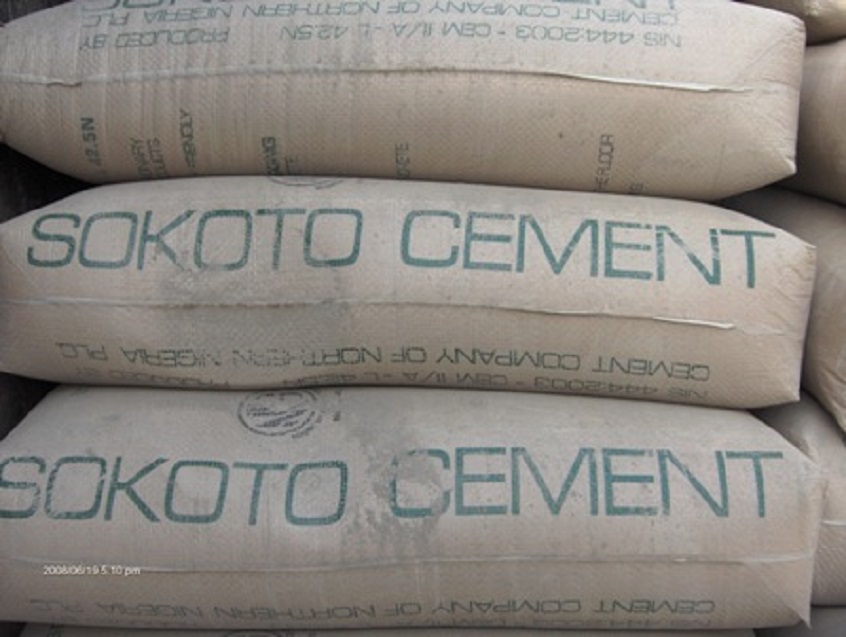
The management of Cement Company of Northern Nigeria (CCNN) Plc has confirmed merging with a subsidiary of BUA Cement Company Limited, Kalambaina Cement Company Limited (Kalambaina Cement).

 The aim of this merger, Business Post gathered, is to boost operations of CCNN, a company listed on the trading platform of the Nigerian Stock Exchange (NSE).

Shares of CCNN closed flat at the market today at N23.50k per share, while share price of its main industry competitor, Dangote Cement, finished at N225 per share. Dangote Cement controls over 60 percent of the cement market in the country.

A statement issued today on the NSE disclosed that the merger between CCNN and BUA Cement is still subject to approvals of the relevant regulatory agencies and shareholders.

However, the boards of directors of CCNN and Kalambaina Cement have agreed to the deal.

Kalambaina Cement is a wholly owned subsidiary of BUA Cement Company Limited.

According to the statement, both boards are resolute in their aspiration to strengthen the competitive position of the enlarged company among cement manufacturers in Nigeria.

“It is in furtherance of this aspiration and a collective vision to create value for all key stakeholders of both companies that the proposed merger is being considered.

“The Proposed Merger provides a compelling opportunity to capture significant synergies and create value for the benefit of the shareholders of both companies in the form of stronger competitive position of the enlarged company, economies of scale, enhanced operations and administrative efficiencies which are expected to accrue from the Proposed Merger.

“As consideration for the Proposed Merger, the shares of CCNN will be issued and allotted to all shareholders of Kalambaina Cement in exchange for their shares in Kalambaina Cement at an agreed ratio based on CCNN’s 30-day volume weighted average closing price (VWAP) to June 22, 2018 of N25.99k per share.

“It is proposed that each shareholder in Kalambaina Cement shall be entitled to receive 19,811,372 new ordinary shares of CCNN for every 100,000 Kalambaina Cement shares.

“Should the necessary regulatory approvals, including those of the NSE and the Securities and Exchange Commission (SEC) be received, the parties will take further steps to consummate the proposed combination including obtaining the approval of their respective shareholders at separate Court-Ordered Meetings,” the statement said.


Dipo Olowookere is a journalist based in Nigeria that has passion for reporting business news stories. At his leisure time, he watches football and supports 3SC of Ibadan. Mr Olowookere can be reached via [email protected]

Economy

Nigerian Stocks Give up 0.47% to Profit-taking

Published

on

Investment in Nigerian Stocks

By Dipo Olowookere

The Nigerian Exchange (NGX) Limited suffered a 0.47 per cent decline on Tuesday a day after hitting all-time highs in its key performance barometers.

This was influenced by profit-taking in Nigerian stocks, as investors cashed out from the gains recorded in the past trading sessions.

According to data, the All-Share Index (ASI) was down by 899.50 points during the session to 189,362.94 points from the preceding session’s 190,262.44 points, and the market capitalisation decreased by N577 billion to N121.553 trillion from the N122.130 trillion achieved a day earlier.

Business Post reports that the sell-offs were intense yesterday as four of the sectors tracked ended in the red.

The consumer goods space improved by 2.54 per cent, but this was not enough to save Customs Street from crumbling when market activity ended at 2:30 pm.

The banking index was down by 3.69 per cent, the insurance space tumbled by 0.57 per cent, the industrial goods counter depleted by 0.50 per cent, and the energy sector dipped 0.06 per cent.

Despite the loss, the market breadth index remained positive after the bourse closed with 44 price gainers and 40 price losers, implying strong investor sentiment.

The trio of Mecure, SAHCO, and Zenith Bank gave up 10.00 per cent each to trade at N93.60, N117.00, and N80.55 apiece, while RT Briscoe depreciated by 9.95 per cent to N14.12, and Tripple G crashed by 9.77 per cent to N6.00.

Conversely, ABC Transport zoomed off by 9.94 per cent to N9.07, Zichis jumped 9.93 per cent to N13.06, Red Star Express appreciated by 9.87 per cent to N29.50, Meyer grew by 9.81 per cent to N22.95, and Japaul increased by 9.78 per cent to N3.03.

As for the activity chart, investors traded 1.2 billion stocks worth N60.2 billion in 86,607 deals compared with the 1.1 billion stocks valued at N64.0 billion transacted in 64,821 deals on Monday, representing a fall in the trading value by 5.94 per cent, and a surge in the trading volume and number of deals by 9.09 per cent and 33.61 per cent apiece.

Access Holdings ended the session as the busiest equity after the sale of 103.5 million units for N2.7 billion, Zenith Bank traded 93.1 million units valued at N8.0 billion, Japaul transacted 73.8 million units for N223.6 million, First Holdco exchanged 54.3 million units worth N2.6 billion, and Secure Electronic Technology sold 45.9 million units valued at N83.3 million.

Continue Reading

Economy

Naira Trades N1,390/$1 at Parallel Market, N1,335/$1 at Official Market

Published

on

naira street value

By Adedapo Adesanya

It was another wonderful day for the Nigerian Naira in the different segments of the foreign market (FX) market on Tuesday, February 17, as it appreciated against the United States Dollar at the close of business.

In the parallel market, it improved its value on the greenback by N30 to sell for N1,390/$1 compared with the previous day’s rate of N1,420/$1, and at the GTBank forex desk, it gained N4 to trade at N1,363/$1 versus the preceding session’s N1,367/$1.

As for the official market, which is known as the Nigerian Autonomous Foreign Exchange Market (NAFEX), the local currency gained N11.82 or 0.88 per cent to close at N1,335.96/$1 versus Monday’s price of N1,347.78/$1.

In the same segment of the market, the domestic currency chalked up N32.43 against the Pound Sterling to finish at N1,806.75/£1 compared with the previous day’s N1,839.18/£1, and gained N18.82 on the Euro to close at N1,579.24/€1 compared with the N1,598.06/€1 it was traded a day earlier.

Improved foreign exchange supply levels following recent high demand pressures helped to sustain the currency’s advance. A portion of the delayed demand was eliminated with licensed Bureau De Change (BDC) businesses fully helping to alleviate any development.

While other supply sources, including exporters, non-bank corporations, and other market actors, pause stoked pressures on the exchange rate, their presence is anticipated to increase liquidity and flow.

Foreign reserves were last reported at $47.80 billion after appreciating by $135.75 million. The build-up in reserves has been supported by favourable external conditions, including stronger oil-related inflows and improved FX market stability.

The market is looking forward to a rate cut when the Monetary Policy Committee (MPC) meets next week after inflation decelerated further to 15.10 per cent.

Meanwhile, the cryptocurrency market was down as software stocks continued to plunge, creating a ripple effect on the digital assets.

Market analysts noted that consolidation is expected as crypto searches for a new narrative strong enough to pull capital back from AI stocks and commodities.

Litecoin (LTC) declined by 1.8 per cent to $53.99, Bitcoin decreased by 1.7 per cent to $67,446.46, Cardano (ADA) dropped 1.5 per cent to trade at $0.2810, Binance Coin (BNB) slumped 1.4 per cent to $617.60, Solana (SOL) depreciated by 0.9 per cent to $84.97, Ripple (XRP) shrank by 0.7 per cent to $1.47, and Dogecoin (DOGE) went down by 0.04 per cent to $0.1005.

On the flip side, Ethereum (ETH) appreciated by 0.2 per cent to $1,992.22, while the US Dollar Tether (USDT) and the US Dollar Coin (USDC) remained unchanged at $1.00 apiece.

Continue Reading

Economy

Oil Dips 2% Amid Progress in US-Iran Nuclear Talks

Published

on

OPEC Global Oil Demand

By Adedapo Adesanya

Oil was down by about 2 per cent on Tuesday on hopes tensions between the United States and Iran were easing after Iran’s foreign minister said the countries had reached an understanding regarding nuclear talks.

Brent futures fell $1.23 or 1.8 per cent to $67.42 a barrel, and the US West Texas Intermediate (WTI) futures slipped 56 cents or 0.9 per cent to $62.33 per barrel.

According to Iranian Foreign Minister, Mr Abbas Araqchi, his country and the United States reached an understanding on the main “guiding principles” in a second round of indirect talks in Geneva, Switzerland, over their nuclear dispute on Tuesday.

However, this does not mean a deal is imminent.

Iran’s supreme leader said on Tuesday that any US attempt to depose his government would fail as the US continued a military buildup exercise in the Middle East.

Iran will close parts of the critical oil shipping lane in the Middle East, the Strait of Hormuz, for a few hours on Tuesday as it is conducting military drills in the area. The government said the partial closure is due to security precautions.

The Strait of Hormuz, the narrow lane between Iran and Oman, is the world’s most critical oil transit chokepoint, and the oil market has time and again feared Iran could attempt to close the lane. In 2024, oil flow through the strait averaged 20 million barrels per day, or the equivalent of about 20 per cent of global petroleum liquids consumption.

Iran and fellow Organisation of the Petroleum Exporting Countries (OPEC) members Saudi Arabia, United Arab Emirates, Kuwait and Iraq export most of their crude via the Strait, mainly to Asia.

Negotiators from Ukraine and Russia concluded the first of two days of US-mediated peace talks in Geneva on Tuesday, with US President Donald Trump pressing Ukraine to act fast to reach a deal to end the four-year conflict.

Meanwhile, Ukraine continued its attacks on Russian energy infrastructure. Its military said on Tuesday it struck the Ilsky refinery, while a drone attack was also reported at the port of Taman.

A peace resolution could see a lifting of sanctions on Russia, bringing Russian oil back to the mainstream market. In 2025, Russia was the third-biggest crude producer in the world behind the United States and Saudi Arabia.

Continue Reading

Trending