Economy
Nigeria Renews Push for West African Single Currency as ECOWAS Hold Talks
By Adedapo Adesanya
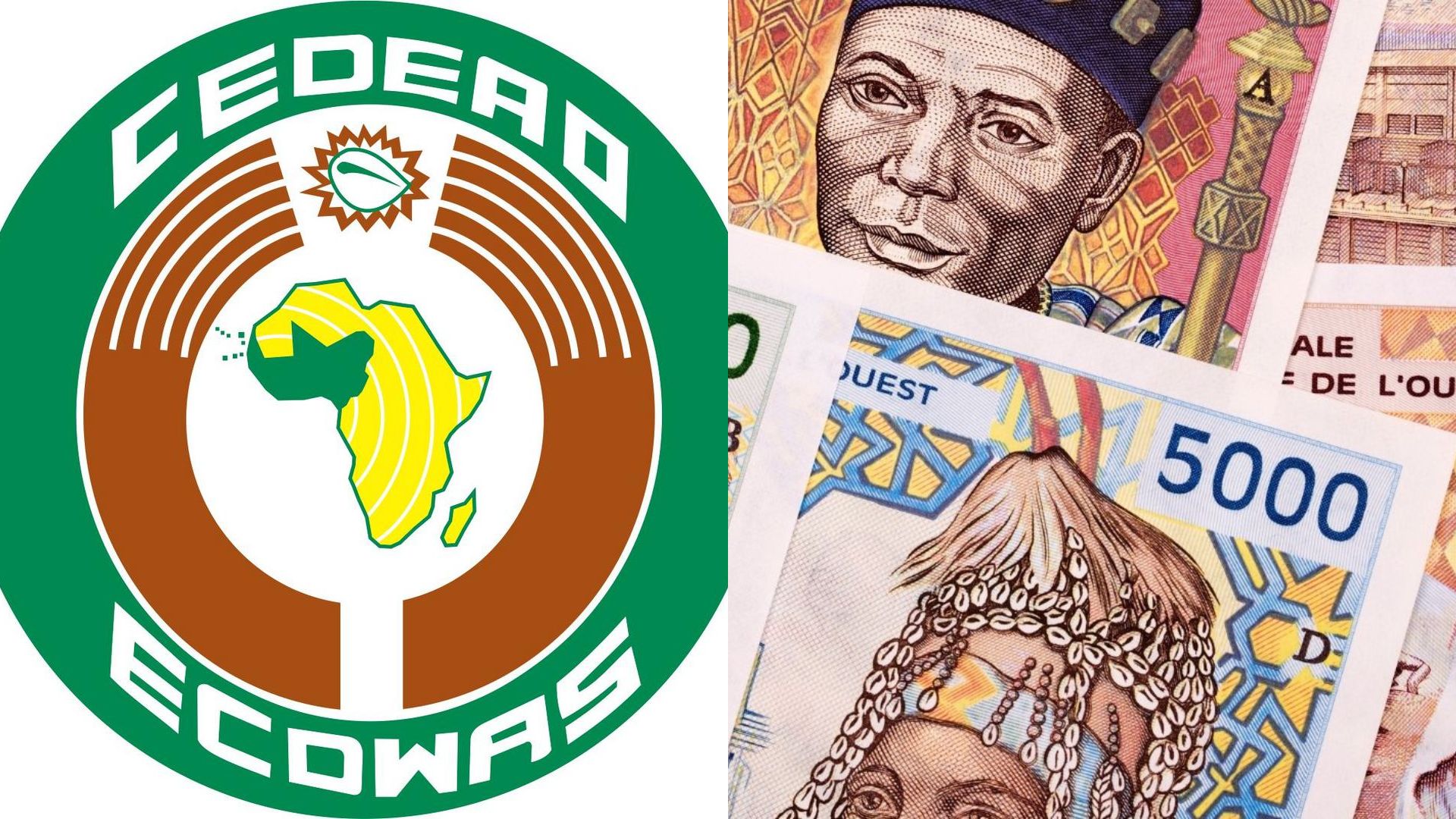
Nigeria is stepping up engagement toward the creation of a regional single currency, following fresh consultations among West African monetary authorities, following constant delay of achieving the goal.
In an update by the Central Bank of Nigeria (CBN) via its X handle, the Governor of the apex bank, Mr Yemi Cardoso, led the country’s delegation to the Committee of Governors meeting held in Monrovia, Liberia, where policymakers reviewed progress and renewed discussions on establishing the long-proposed single currency known as the Eco.
Last year, the West African bloc announced that the single regional currency would be launched by 2027 to foster greater economic integration among member states by facilitating trade through a unified payment system, enhancing price stability and reducing inflationary pressures.
In the latest development, the CBN statement noted that the Nigerian delegation also included Deputy Governor (Economic Policy), Mr Muhammad Sani Abdullahi.
“The meeting formed part of statutory engagements jointly organised by the Economic Community of West African States alongside the West African Monetary Agency, the West African Monetary Institute, and the West African Institute for Financial and Economic Management. The consultations brought together financial regulators and economic policymakers across the sub-region to assess convergence benchmarks required for launching the unified currency”, the apex bank said.
The Eco project is designed to deepen economic integration among ECOWAS member states by providing a common legal tender that would facilitate cross-border trade, enhance price transparency and reduce transaction costs tied to multiple currency exchanges. The initiative has been under discussion for over two decades but has experienced repeated postponements as member countries struggle to meet strict macroeconomic convergence criteria.
The apex bank noted that the meeting focused on evaluating member states’ performance against key economic indicators. These include inflation rate ceilings, fiscal deficit thresholds relative to gross domestic product, and foreign reserve adequacy, all considered critical safeguards for ensuring stability within a potential monetary union.
Despite many delays, ECOWAS latest move shows it may be aligning with Nigeria’s Minister of Foreign Affairs, Mr Yusuf Tuggar, saying last year that member states have started attaining benchmarks to see the goal actualised.
Economy
OTC Securities Exchange Falls 2.48%
By Adedapo Adesanya
The NASD Over-the-Counter (OTC) Securities Exchange was down by 2.48 per cent on Friday, June 19, with the Unlisted Security Index shedding 108.36 points to close at 4,252.73 points compared with the previous day’s 4,361.09 points.
During the trading day, the market capitalisation of the OTC securities exchange dropped 2.18 per cent or N67.29 billion to settle at N2.552 trillion, in contrast to Thursday’s N2.609 trillion.
The alternative stock market was in the red yesterday after finishing with three price losers led by Central Securities Clearing System (CSCS) Plc, which gave up N8.57 to trade at N77.77 per share versus the preceding day’s N86.34. FrieslandCampina Wamco Nigeria Plc lost N8.19 to quote at N170.00 per unit compared with the previous session’s N178.19 per unit, and Food Concepts Plc crashed by 26 Kobo to end at N2.51 per share versus N2.77 per share.
Business Post reports that there were also three price gainers during the session, led by Golden Capital Plc, which chalked up 67 Kobo to sell at N13.67 per unit versus N13.00 per unit. Afriland Properties Plc gained 65 Kobo to trade at N16.85 per share compared with the previous price of N16.20 per share, and MRS Oil added 3 Kobo to close at N142.23 per unit versus N142.00 per unit.
The volume of trades was up by 20.3 per cent on Friday to 954,106 units from 792,835 units, and the number of deals increased by 75 per cent to 35 deals from 20 deals, while the value of transactions went down by 12.9 per cent to N42.7 million from N49.0 million.
The most traded stock by value on a year-to-date basis was Great Nigeria Insurance (GNI) Plc, with 3.4 billion units worth N8.4 billion, followed by Infrastructure Credit Guarantee (Infracredit) Plc with 2.3 billion units sold for N6.5 billion, and CSCS Plc with 67.8 million units exchanged for N4.7 billion.
The most traded stock by volume on a year-to-date basis was also GNI Plc, with 3.4 billion units valued at N8.4 billion, followed by Infracredit Plc with 2.3 billion units traded for N6.5 billion, and Resourcery Plc with 1.1 billion units transacted for N415.7 million.
Economy
Sell-Offs in GTCO, First Holdco Crash NGX All-Share Index by 0.62%
By Dipo Olowookere
The local stock exchange remained in the red on Friday after it further depreciated by 0.62 per cent due to panic sell-offs in some bellwether equities.
NAHCO lost 10.00 per cent to trade at N148.50, Royal Exchange depreciated by 10.00 per cent to N1.53, GTCO slumped by 9.97 per cent to N115.55, First Holdco dropped 9.84 per cent to quote at N55.00, and Neimeth slipped by 9.60 per cent to N28.12.
On the flip side, Deap Capital increased by 9.89 per cent to N4.89, RT Briscoe expanded by 9.62 per cent to N13.10, International Energy Insurance advanced by 7.43 per cent to N5.06, Jaiz Bank gained 7.14 per cent to sell for N9.00, and Living Trust Mortgage Bank rose by 5.26 per cent to N4.00.
During the session, the energy index chalked up 2.35 per cent, but this was not enough to lift the Nigerian Exchange (NGX) Limited when the closing gong was struck by 4 pm to signify the close of trading activities.
This was because the banking sector lost 4.41 per cent, the insurance counter shed 1.52 per cent, the industrial goods space declined by 0.71 per cent, and the consumer goods segment tumbled by 0.13 per cent.
Consequently, the All-Share Index (ASI) contracted by 1,463.45 points to 235,941.27 points from 237,404.92 points, and the market capitalisation retreated by M939 billion to N151.327 trillion from N152.266 trillion.
The activity chart was topped by Access Holdings, which posted a turnover of 65.0 million shares valued at N1.5 billion. Zenith Bank sold 35.2 million stocks worth N3.9 billion, Sterling Holdings exchanged 28.4 million equities for N217.8 million, UBA transacted 16.3 million shares valued at N650.7 million, and GTCO traded 14.0 million stocks worth N1.8 billion.
In all, investors transacted 440.4 million equities for N24.7 billion in 50,273 deals, in contrast to the 691.6 million equities valued at N116.9 billion traded in 50,025 deals on Thursday, implying an uptick in the number of deals by 0.50 per cent, and a decrease in the trading volume and value by 36.32 per cent and 78.87 per cent, respectively.
Economy
Naira Crashes to N1,370/$ at Official Market, N1,390/$1 at Black Market
By Adedapo Adesanya
The Naira again depreciated against the United States Dollar by N7.16 or 0.53 per cent in the Nigerian Autonomous Foreign Exchange Market (NAFEX) on Friday, June 19, to N1,370.46/$1 from the previous day’s N1,363.30/$1.
In the same vein, the Nigerian currency lost N9.07 against the Pound Sterling at the official market yesterday to trade at N1,814.76/£1 compared with Thursday’s closing price of N1,805.69/£1, and crashed against the Euro by N6.43 to settle at N1,571.50/€1 versus N1,565.07/€1.
Also, the Naira weakened against the greenback in the black market during the session by N5 to sell for N1,390/$1, in contrast to the preceding day’s N1,385/$1, and at the GTBank FX desk, it shed N3 to close at N1,376/$1 versus N1,373/$1.
The official market’s FX liquidity has been facing pressure over the last three trading sessions, contributing to a decline in the official exchange rate due to rising demand for foreign payments.
FX reserves rose to $51.03 billion, the highest level since January 20, 2009, according to data obtained from the Central Bank of Nigeria (CBN). The figure also represents the highest since the beginning of the year and under the administration of the current Governor of CBN, Mr Yemi Cardoso.
The latest figure underscores the steady strengthening of Nigeria’s external buffers, which continues to reinforce investor confidence in the Nigerian economy and support exchange rate stability.
Meanwhile, the cryptocurrency market was mixed, with Bitcoin (BTC) up by 0.8 per cent to $63,225.80 after trading activity was relatively subdued due to a US federal holiday, as the absence of stock and bond market activity led to quieter conditions across crypto markets, even though digital assets continue to trade around the clock.
Further, TRON (TRX) also gained 0.8 per cent to sell at $0.3230, Binance Coin (BNB) jumped 0.5 per cent to $579.84, and Ethereum (ETH) appreciated by 0.1 per cent to $1,704.23.
On the flip side, Ripple (XRP) declined by 0.9 per cent to $1.13, Cardano (ADA) shed 0.8 per cent to trade at $0.1611, Solana (SOL) fell by 0.1 per cent to $69.23, and Dogecoin (DOGE) slipped by 0.1 per cent to $0.0831, while the US Dollar Tether (USDT) and the US Dollar Coin (USDC) remained unchanged at $1.00 each.
-
Feature/OPED6 years agoDavos was Different this year
-
Travel/Tourism10 years ago
Lagos Seals Western Lodge Hotel In Ikorodu
-
Showbiz3 years agoEstranged Lover Releases Videos of Empress Njamah Bathing
-
Banking8 years agoSort Codes of GTBank Branches in Nigeria
-
Economy3 years agoSubsidy Removal: CNG at N130 Per Litre Cheaper Than Petrol—IPMAN
-
Banking3 years agoSort Codes of UBA Branches in Nigeria
-
Banking3 years agoFirst Bank Announces Planned Downtime
-
Sports3 years agoHighest Paid Nigerian Footballer – How Much Do Nigerian Footballers Earn