Connect with us

Economy

NCS Denies Manipulating FX Rates in Import, Export Valuation

Published

on

customs exchange rate

By Adedapo Adesanya

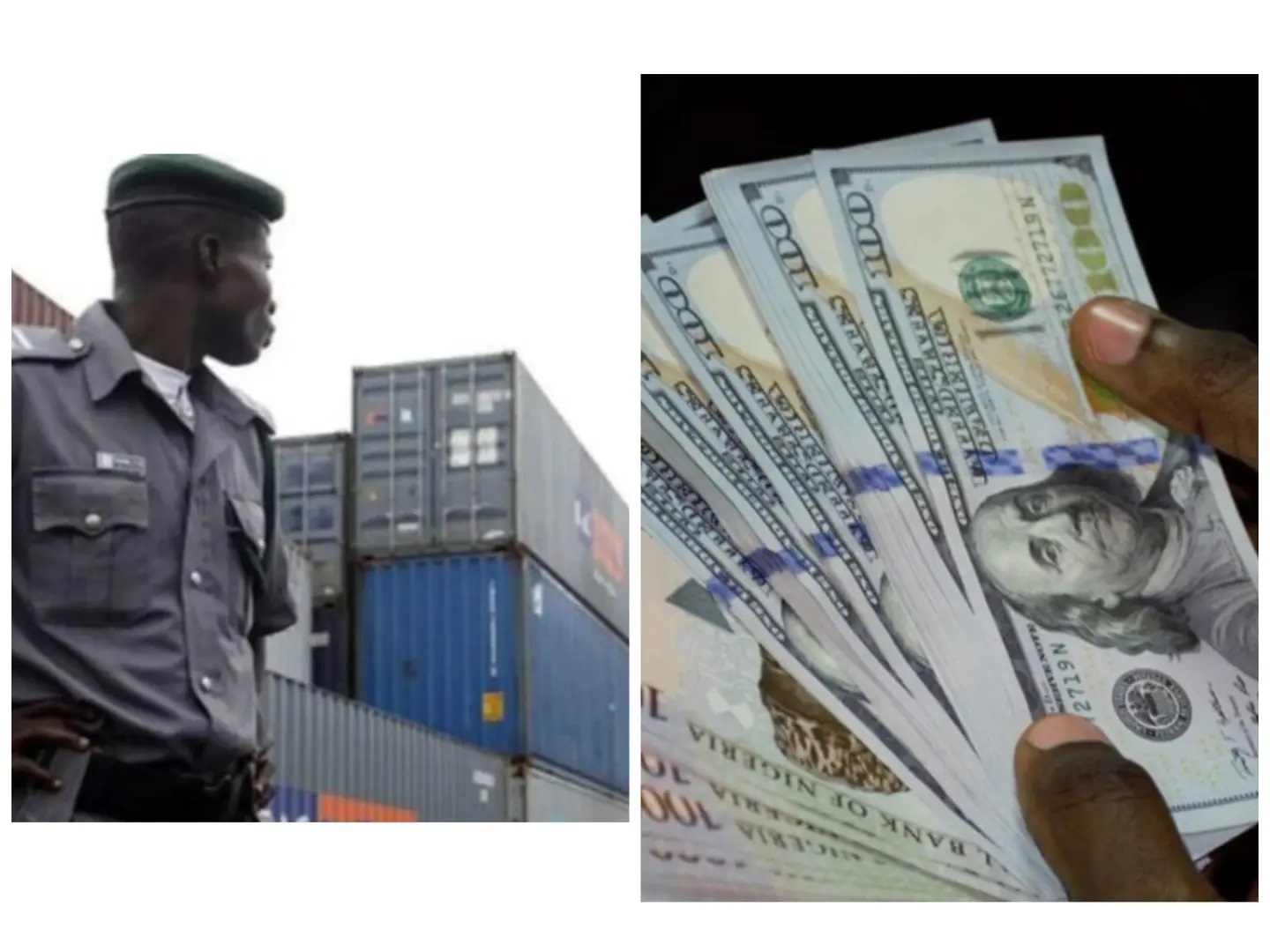
The Nigeria Customs Service (NCS) has clarified how foreign exchange rates are applied in its import and export valuation, saying it neither determines nor alters rates used in cargo clearance.

The service, in a statement by its National Public Relations Officer, Mr Abdullahi Maiwada, explained that it relies solely on official figures transmitted by the Central Bank of Nigeria (CBN).

Mr Maiwada stated that recent public commentary surrounding forex pricing, investor reactions, and customs valuation had prompted NCS to explain the operational framework guiding its digital clearance platform.

“It is worthy of note that the reported exchange rate of N1,451.63/US$ for February 6, 2026 did not originate from the B’Odogwu system.

“That figure was sourced from trade.gov.ng, a legacy public trade information portal that does not reflect live Customs processing data,” it stated.

According to him, all exchange rates used in trade processing are automatically integrated into its Unified Customs Management System, known as B’Odogwu, which it described as the sole official portal for declarations, clearance, and valuation.

“It is important to provide factual clarification on how exchange rates are received, processed, and applied within the NCS digital clearance system, B’Odogwu, a Unified Customs Management System which serves as the sole official platform for Customs declarations, clearance, and valuation,” the statement reads.

The NCS spokesman said the Service receives rates electronically from the apex bank and applies them uniformly across commands nationwide, ensuring transparency, predictability, and compliance with statutory fiscal and monetary policies.

He argued that NCS does not generate or manipulate exchange rates under any circumstances.

Instead, it explained that the platform operates structured data-integration protocols designed to ingest and apply exchange-rate feeds exactly as transmitted.

“For the avoidance of doubt, the Nigeria Customs Service does not independently determine, generate, alter, or apply margins to foreign exchange rates used for import and export valuation.

“All exchange rates applied within the B’Odogwu platform are official rates electronically transmitted by the Central Bank of Nigeria, which remains the competent authority for exchange rate determination under Nigeria’s monetary framework,” Mr Maiwada added.


Adedapo Adesanya is a journalist, polymath, and connoisseur of everything art. When he is not writing, he has his nose buried in one of the many books or articles he has bookmarked or simply listening to good music with a bottle of beer or wine. He supports the greatest club in the world, Manchester United F.C.

Click to comment

Leave a Reply

Your email address will not be published. Required fields are marked *

Economy

CSCS Loses N10.30 Per Share to Slash NASD OTC Market Cap by 0.36%

Published

on

ISSA CSCS

By Adedapo Adesanya

The Central Securities Clearing System (CSCS) Plc weakened the NASD Over-the-Counter (OTC) Securities Exchange by 0.36 per cent on Wednesday, August 19, slicing the market capitalisation of the platform by N9.41 billion to N2.60 trillion from N2.610 trillion, and reducing the NASD Security Index (NSI) by 15.67 points to 4,333.09 from 4,348.76 points.

The securities depository company lost N10.30 at midweek to close at N88.12 per share versus Tuesday’s closing price of N90.02 per share.

This offset the 38 Kobo gained by Golden Capital Plc during the session. The stock traded at N14.05 per unit compared with the preceding day’s N13.67 per unit.

Yesterday, the volume of securities soared by 557.2 per cent to 747,429 units from 113,728 units, the value of securities jumped by 934.0 per cent to N9.4 million from N375.7 million, and the number of deals increased by 35.5 per cent to 42 deals from 31 deals.

Great Nigeria Insurance (GNI) Plc remained the most active stock by value on a year-to-date basis, with 3.4 billion units valued at N8.4 billion, trailed by Infrastructure Credit Guarantee (Infracredit) Plc with 2.3 billion units exchanged for N6.5 billion, and CSCS Plc with 79.9 million units worth N5.8 billion.

GNI Plc also finished the session as the most traded stock by volume on a year-to-date basis, with 3.4 billion units transacted for N8.4 billion, followed by Infracredit Plc with 2.3 billion units traded for N6.5 billion, and Resourcery Plc with 1.1 billion units sold for N415.7 million.

Continue Reading

Economy

Naira Loses N7.09, Closes N1,350/$1 at NAFEM

Published

on

more wealth for investors Naira

By Adedapo Adesanya

The Naira weakened by N7.09 or 0.53 per cent against the United States Dollar in the Nigerian Autonomous Foreign Exchange Market (NAFEM) on Wednesday, August 19, to N1,350.41/$1 from the previous rate of N1,343.32/$1.

The local currency also significantly depreciated against the Pound Sterling in the official market yesterday, by N19.87, to close at N1,839.13/£1 versus the previous day’s N1,819.26/£1, and against the Euro, it lost N18.07 to end at N1,574.31/€1 versus Tuesday’s price of N1,556.24/€1.

However, at the black market, the Naira maintained stability against the US Dollar at N1,390/$1, and also remained unchanged at the GTBank forex desk at N1,357/$1.

Interbank FX turnover increased by 1.72 per cent to $370.980 million from $364.709 million, according to the daily update by the Central Bank of Nigeria (CBN).

On the other hand, the number of interbank FX deals declined to 100, from 108 the previous day, reflecting a moderate slowdown in activities.

Available data from the central bank showed that demand for FX by end-users in Nigeria fell by 35.23 per cent to $3.42 billion in April 2026, easing pressure on the Dollar market as the Naira recorded modest gains.

This occurred as FX utilisation across economic sectors declined during the month, while the Naira strengthened at the official market. Across several sectors, including oil, food, and manufacturing, there were drops.

The monthly average exchange rate improved 1.38 per cent to N1,361.22 per Dollar in April from N1,379.98/$1 in March. At the end of the review month, the domestic currency closed at N1,374.94 per Dollar at NAFEM, compared with N1,386.72/$1 at the end of March.

In the cryptocurrency market, coins recorded massive jumps following the US Treasury’s decision to at least double bond buyback operations and was reinforced by a bond-market surge and President Donald Trump’s call for Congress to advance crypto market-structure legislation.

The American President urged Congress to advance the Digital Asset Market Clarity Act, calling for “a fair version” of the market structure bill that has been stuck in the Senate.

Ethereum (ETH) surged by 18.2 per cent to $2,261.93, Solana (SOL) rose by 11.4 per cent to $85.77, Ripple (XRP) expanded by 10.5 per cent to $1.10, Bitcoin (BTC) grew by 8.6 per cent to $69,784.82, Dogecoin (DOGE) added 7.3 per cent to sell at $0.0751, Cardano (ADA) rose by 4.8 per cent to $0.1842, Binance Coin (BNB) jumped by 4.5 per cent to $628.45, and TRON (TRX) increased by 0.1 per cent to $0.3330, while the US Dollar Tether (USDT) and the US Dollar Coin (USDC) remained unchanged at $1.00 apiece.

Continue Reading

Economy

N40bn Bond: Relief as Geregu Power Pays N6bn to Bond Investors After Default

Published

on

Equity Stake in Geregu Power

By Aduragbemi Omiyale

Those who purchased the N40 billion bond issued by Geregu Power Plc in 2022 but did not receive payments last month as expected have reportedly now been paid by the energy company.

Geregu Power, listed on the Nigerian Exchange (NGX) Limited, was in the news recently over the repayment default on July 28, 2026, triggering panic in the capital market.

Last week, the organisation admitted the issues caused by this default, but said, “Discussions and engagements are ongoing, and the company will continue to act in good faith in fulfilling its responsibilities.”

It further disclosed that “relevant stakeholders and advisers [are being actively engaged] regarding the resolution of the various challenges and is committed to achieving an orderly and mutually beneficial outcome.”

The latest information indicated that N6.03 billion owed investors under the firm’s N40.09 billion Series 1 Senior Unsecured Bond has been cleared.

This is expected to bring relief to investors, who may have feared the worst after the entity failed to meet its debt obligations when due.

However, on the FMDQ Securities Exchange, the status of the debt instrument remains as “credit default in the 8th coupon payment and 4th bullet principal repayment.”

As of the time of filing this report, Geregu Power has yet to confirm the clearing of the N6 billion debt.

Continue Reading