Connect with us

Economy

International Lenders Warn on Capacity Constraints in Africa

Published

on

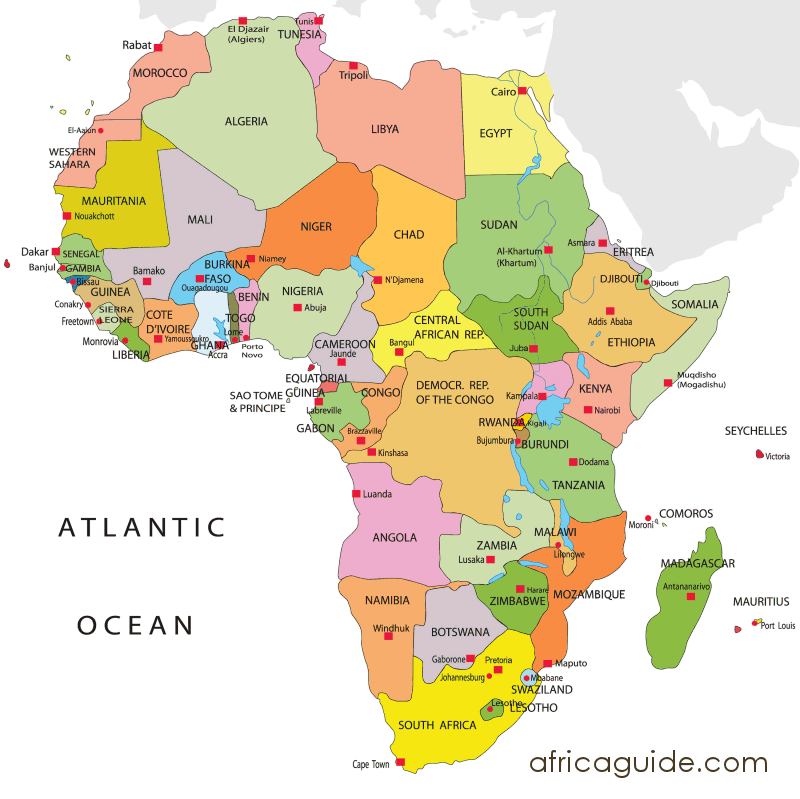
map of africa

By Dipo Olowookere

Global and African financial heads identified country risk as the biggest challenge to their ability to lend more to African countries. Speaking in Abidjan during a one-day forum on investment risks in Africa hosted by the African Trade Insurance Agency (ATI), experts acknowledged that the abundance of current liquidity in the market did nothing to alleviate the capacity constraints faced by most banks when doing business in Africa.

Lenders are bound by regulations that prevent them from lending significant amounts to sub-investment grade sovereigns, which is the case for most African countries.

Institutions such as ATI that can offer investment insurance can help to mitigate the risks and thereby bring added lending and investment capacity to African markets. Without an increased ceiling in limits, international lenders will continue to be constrained on the amounts they are able to lend both at the sovereign and corporate levels.

Experts attending the forum also noted positive movements in countries such as Ghana and Senegal for instance, which were recently put on positive watch by the rating agency S&P. This was largely based on the dividends anticipated from key infrastructure developments and investor-friendly policies. In Senegal, for example, the country has restructured its commercial laws, implemented a Public Private Partnership law that ensures all signed public contracts in the oil and gas sector are published and created a department of competition tasked with working hand in hand with investors.

Risk analysis experts at the conference cited Botswana, Côte d’Ivoire, Ethiopia, Rwanda and Zimbabwe as countries to watch in the coming months based on strong reserves in Botswana, political transitions in the case of Ethiopia and Zimbabwe, a strategy to transform its economy into a services hub in the case of Rwanda, and creating an enabling environment to attract investors in the case of Côte d’Ivoire.

Most government representatives at the meeting also noted their countries efforts to ramp up value addition in the agriculture sector along with an emphasis on removing barriers to trade within the continent.

Jean-Louis Ekra, the former President of Afreximbank observed that Africa is in fact moving in a different direction than the current protectionist tendencies of Western countries. In contrast, Africa is uniting under the banner of the African Continental Free Trade Area, which will become the world’s largest trade area.

While participants agreed that the risk perception in Africa is typically greater than the on-the-ground reality, they also recognized that making Africa less risky would require a concerted focus aimed at improving the overall business environment in order to address the risks that do exist.

According to a recent Moody’s report, 40 to 50 percent of defaults in developing markets are directly linked to country risks. During the forum, panellists discussed low-cost solutions that could help countries reduce their risk including ensuring fair adherence to existing regulations.

“One of our roles at ATI is to educate governments to make them aware of the elements that international investors consider in their assessment of country risks. If countries are made aware that any drastic changes they make to legislation, for instance, could be a key political risk factor, they may make better choices and create more fertile environments for the private sector,” commented John Lentaigne, ATI’s Chief Underwriting Officer. He added that “a stable investment climate can be demonstrably and directly linked to growth.”

Despite Africa’s perceived risks, ECGC, India’s export credit agency and international broker, BPL Global, who have a combined $142 billion worth of exposures, noted a relatively low claims and reasonable recovery experience in Africa.

Out of BPL’s $42 billion in current exposures which is insured with international investment risk providers 8 billion of this exposure is in Africa, where the company has historically recorded USD230 million in claims of which $123 million has subsequently been recovered.

International lenders and insurers commented on the importance of ATI’s participation to make projects bankable through its preferred creditor status and relationships with African governments. This was seen as ATI’s core value proposition.

In his address to participants, Pierre Guislain the Vice-President responsible for Private Sector, Infrastructure and Industrialization of the African Development Bank noted the Bank’s commitment to transform the relationship with ATI into a strategic partnership that can leverage its reach and help countries accelerate regional integration.

ATI, a multilateral investment and trade credit insurer posted record results in 2017 for the sixth consecutive year with $10 million in profits representing a 55 percent increase over 2016 and $2.4 billion in gross exposures.


Dipo Olowookere is a journalist based in Nigeria that has passion for reporting business news stories. At his leisure time, he watches football and supports 3SC of Ibadan. Mr Olowookere can be reached via [email protected]

Click to comment

Leave a Reply

Your email address will not be published. Required fields are marked *

Economy

Insurance Firms Must Submit 2025 Assessment Returns by May 31—NAICOM

Published

on

NAICOM Conplaint Management Portal

By Adedapo Adesanya

The National Insurance Commission has issued new guidelines for the collection, management, and administration of the Insurance Policyholders’ Protection Fund.

In a circular issued to all insurance institutions on Tuesday, the regulator also set May 31, 2026, as the deadline for insurers to submit their assessment returns for the 2025 financial year.

Recall that on August
 5, 2025, 
President Bola Tinubu signed
 into 
law
 the 
Nigerian 
Insurance 
Industry Reform 
Act (
NIIRA
2025).


This 
landmark legislation 
repeals 
the 
Insurance 
Act 
2003, 
and
 consolidates 
related 
provisions, 
ushering 
in 
a 
modern regulatory framework. It lays a strong foundation for sustainable growth and increased investment in the country’s insurance sector.

The commission said the guidelines were issued in exercise of its powers under the 2025 Act and other existing insurance laws and regulations to provide regulatory clarity, improve guidance, and ensure ease of compliance across the industry.

According to NAICOM, the guidelines establish a comprehensive structure for the operation of the IPPF, which serves as a statutory safety net to protect insurance policyholders in the event of distress or insolvency of a licensed insurer or reinsurer. The framework also provides direction on the reimbursement of loans by insurers and reinsurers.

NAICOM stated, “The guidelines ensure regulatory clarity, guidance and ease of compliance, as it provides a comprehensive regulatory framework for the collection, management, and administration of the Fund, which serves as a statutory safety net designed to protect insurance policyholders against distress and insolvency of a licensed insurer or reinsurer, including guidance for the reimbursement of loans by an insurer or reinsurer.

“Please be informed that the IPPF Assessment Returns in respect of the year 2025 shall be submitted to the Commission not later than 31st May 2026, while subsequent submissions shall be in line with Section 4.3 of the Guideline on Insurance Policyholders Protection Fund.”

Continue Reading

Economy

Dangote Refinery Sells Petrol at N1,200/L as Global Oil Prices Slump

Published

on

Dangote refinery import petrol

By Adedapo Adesanya

The Dangote Refinery on Wednesday returned the petrol price to N1,200 per litre, less than 24 hours after it increased it by 5 per cent.

The private refinery had raised the ex-depot price by N75 on Tuesday, citing pressure from volatile global oil markets, but quickly brought it back to N1,200 per litre from N1,275 per litre.

The swift downward review is directly linked to a sharp drop in international crude prices. Brent crude has plunged to $95.05 per barrel, after a 13 per cent decline, while the US West Texas Intermediate (WTI) crude closed at $97.18, recording nearly a 14 per cent drop.

This development comes after US President Donald Trump announced a conditional two-week ceasefire with Iran, which eased fears of immediate supply disruptions in the global oil market.

“This will be a double-sided CEASEFIRE!” Trump said on social media, marking a sharp reversal from his earlier warning that “a whole civilisation will die tonight” if Iran failed to comply with US demands.

Iran’s Foreign Minister, Mr Abbas Araqchi, confirmed that the country would halt attacks provided strikes against Iran cease and transit through the Strait of Hormuz is coordinated by Iranian forces.

Despite the breakthrough, tensions remain elevated across the region, with several Gulf states reporting missile launches, drone activity, or issuing civil defence warnings.

While oil prices have fallen back below $100, they remain significantly elevated after surging by a record amount in March. Market analysts noted that regardless of how successful the ceasefire is, geopolitical risk related to the Strait of Hormuz is likely to remain elevated for the foreseeable future under the control of Iran.

Continue Reading

Economy

Crude Deliveries Double to Dangote Refinery in Mix of Naira, Dollar Supply

Published

on

Dangote refinery petrol

By Adedapo Adesanya

Crude oil deliveries from the Nigerian National Petroleum Company (NNPC) Limited to the Dangote Petroleum Refinery doubled in March, boosting prospects for improved fuel availability.

This was revealed by the chief executive of Dangote Industries Limited, Mr Aliko Dangote, on Tuesday, when he received the Deputy Secretary-General of the United Nations, Mrs Amina Mohammed, at the industrial complex in Ibeju-Lekki, Lagos.

While speaking on feedstock supply, Mr Dangote commended the NNPC for increasing crude deliveries to the refinery in March, noting that volumes rose to 10 cargoes—six supplied in Naira and four in Dollars—to support domestic fuel availability, according to a statement by the Refinery.

“Last month, they gave us six cargoes for Naira and four cargoes for Dollars,” he said.

Despite the improvement, Mr Dangote noted that the supply remains below the 19 cargoes required for optimal operations, with the refinery continuing to bridge the gap through imports from the United States and other African producers.

He also expressed concern over the unwillingness of international oil companies operating in Nigeria to sell to the refinery, stating that their preference for selling crude to traders forces it to repurchase at higher costs, with broader implications for the economy.

Mr Dangote added that the refinery is seeking increased access to domestically priced crude under local currency arrangements as part of efforts to moderate fuel costs and enhance long-term energy and food security across the continent.

On her part, Mrs Mohammed underscored the strategic importance of Dangote Industries Limited -particularly Dangote Fertiliser Limited—in addressing Africa’s mounting food security challenges, while calling for stronger global partnerships to scale its impact.

Mrs Mohammed said the United Nations would prioritise amplifying scalable solutions capable of mitigating the continent’s food crisis, describing Dangote’s integrated industrial model as a critical pathway.

“I think the UN’s job here is to amplify and to put visibility on the possibilities of mitigating a food security crisis, and this is one of them,” she said. “I hope that when we go back, we can continue to engage partners and countries that should collaborate with Dangote Industries.”

Continue Reading

Trending