Connect with us

General

Delta South Youths Vow to Stop Senator James Manager’s 2019 Ambition

Published

on

By Olubori Oduntan

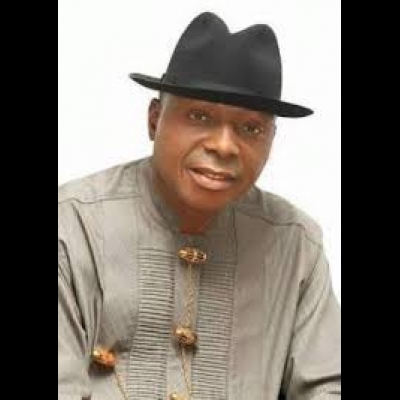
The dream of Senator James Manager, the four-tenure senator representing Delta South Senatorial District of Delta State at the Senate to launch a return for the fifth time has suffered some setbacks as youths in the district have vowed to scuttle his moves to that effect.

Delta South Youth Liberation Movement (DSYLM), a formidable political pressure group comprising the three major ethnic nationalities in Delta South Senatorial District, namely (Ijaw, Isoko and Itsekiri), voiced this plan recently at a news conference held in Ughelli, Delta State.

Speaking specifically concerning the 2019 elections as it affects the senatorial district, president of the group, Mr Saviour Ayibanengiyefa, said the Senator has overstayed his welcome in the upper legislative house and his representation of over close to 16 years has not translated to adequate wellbeing of his people.

“Senator Manager shouldn’t even think of contesting primary not to talk of going back to the senate. He has failed us, for over 15 years he has been at the senate, nothing to show for it. You cannot point a single landmark project he facilitated into the district. For 2019, it’s a no, no for him,” Mr Ayibanengiyefa declared.

Continuing, the DSYLM leader who was flanked by Mr Prosper Ewomazino and Miss Aminoma Oritsetimeyin, his vice-president and secretary respectively, said the region is blessed with more experienced and tactful politicians who can do better at the senate.

“Fortunately for us, our district has been blessed with highly experienced people who could negotiate well at the national level for the sake of the development of our area.”

“We call on Senator James Manager to retire from the senate after this tenure to make room for such individuals to put their experience to test. I’m saying this because we hear rumours that Manager is considering another shot at the senate. This is wrong. This is not good enough for us,” he said.

“Take a look at the road leading to his area, it is in a deplorable state. If we had a good representation, the reverse would have been the case. Senator Manager only cares about his pocket, he doesn’t have the development of the area at heart and this must come to an end in 2019,” concluded the DSYLM president.

Interestingly, the incumbent senator, James Manager, an Ijaw man has been returned to the senate on four occasions consecutively. By the end of 2019, James Manager would have spent a total of 16 years in the red chamber and feelers from the district reveal that the people are tired of his representation.


Modupe Gbadeyanka is a fast-rising journalist with Business Post Nigeria. Her passion for journalism is amazing. She is willing to learn more with a view to becoming one of the best pen-pushers in Nigeria. Her role models are the duo of CNN's Richard Quest and Christiane Amanpour.

Advertisement
Click to comment

Leave a Reply

Your email address will not be published. Required fields are marked *

General

Minister Advocates Coordinated, Trust-Driven Government Communication

Published

on

trust-driven government communication

By Aduragbemi Omiyale

The Minister of Information and National Orientation, Mr Mohammed Idris, has emphasised that unified government messaging remains very critical to restoring public trust, especially in delivering the Renewed Hope Agenda of President Bola Tinubu.

He said this on Thursday in Abuja at an interactive session with Directors of Information and Resident Information Officers (RIOs) on grade level 14-17, deployed across Ministries, Departments and Agencies (MDAs).

The event, according to a statement issued on Friday by the Director Public Relations and Protocol of the ministry, Mr Suleiman Haruna, was themed Aligning Public Information with the Renewed Hope Agenda: Rebuilding Trust Through Effective, Transparent Communication.

The Minister noted that government officials must adopt a unified, coordinated, and trust-driven approach to government communication.

He posited that public trust remains the most valuable asset of government communication, stressing that information officers must be guided by honesty, credibility, and consistency in their work.

“Public trust is our most important capital. Once credibility is lost, no amount of messaging can fix it,” the Minister said, warning that fragmented messaging and parallel communication channels weaken government credibility and confuse citizens, insisting that the government must speak with a single, clear, and consistent voice.

“We are one government serving one national interest, and our communication must reflect that unity,” he said.

Mr Idris urged Resident Information Officers to see themselves as active partners within their host MDAs rather than passive observers, encouraging them to engage proactively with Ministers, Permanent Secretaries, and agency leadership, noting that professionalism, relevance, and initiative are key to earning trust and influence.

Addressing the growing pressure of misinformation and the speed of digital media, the founder of Blueprint Newspaper stressed the importance of timely and accurate communication, noting that delays often create space for false narratives. While reaffirming the federal government’s commitment to freedom of expression, he said such freedom must be exercised responsibly.

The Minister also outlined steps being taken to strengthen professionalism within the information cadre, including mandatory periodic reporting, improved deployment processes, continuous training, and stronger institutional support. He disclosed that the Federal Government has begun restoring the National Institute of Public Information to boost capacity building for public communicators.

He called for teamwork and mutual respect, reminding participants that they are central to the projection of government policies and achievements and that they must align their work with the priorities of the Renewed Hope Agenda.

Continue Reading

General

Senate Forms Seven-Man Committee to Harmonise Electoral Act Amendment Bill

Published

on

Godswill akpabio Senate President

By Adedapo Adesanya

The Senate has constituted a seven-man committee to harmonise contributions and opinions on the Electoral Act Amendment Bill, 2026, with a mandate to present a consolidated report to the chamber next Tuesday.

The decision followed over two hours of consideration of the bill’s provisions during a closed-door session on Thursday.

The committee is chaired by the Chairman of the Senate Committee on Judiciary, Human Rights and Legal Matters, Mr Niyi Adegbomore.

Other members are Senators Adamu Aliero, Aminu Tambuwal, Adams Oshiomhole, Danjuma Goje, Tony Nwoye, and Titus Zam.

The group has three days to conclude its assignment and submit its report for consideration at the next plenary session scheduled for next week.

The Senate on Thursday commenced consideration of the Electoral Act 2022 (Repeal and Re-enactment) Bill 2026, moving into a closed-door session to review documents submitted by the Chairman of the Senate Committee on Electoral Matters, Mr Simon Lalong.

The Electoral Act (Repeal and Enactment) Bill, 2025 would expand voter participation, safeguard against electoral fraud, and strengthen institutional capacity of the Independent National Electoral Commission (INEC).

The closed session was convened to allow lawmakers to thoroughly examine the proposed amendments and supporting documents before engaging in further legislative debate on the bill.

This development comes after the upper chamber deferred consideration of the bill on Wednesday, giving lawmakers time to prepare for a detailed review.

Although the House of Representatives has already passed the bill, Senate President Senator Godswill Akpabio underscored the need for thorough scrutiny, given the bill’s implications for the nation’s electoral process.

“This is a very important bill, especially as it is election time. We must take our time to ensure justice is done to all, so that we do not end up at the tribunal,” he said.

According to the committee’s findings, a clause-by-clause analysis of the bill indicates that enacting the legislation would leave Nigerians with an enduring legacy of electoral integrity, enhance transparency, and boost public confidence.

The bill contains more than 20 key innovations distinguishing it from previous electoral frameworks, including provisions recognising the voting rights of prisoners and mandating INEC to register eligible inmates in correctional facilities nationwide.

It also prescribes sanctions for vote-buying ranging from a fine of N5 million to a two-year jail term, as well as a 10-year ban from contesting elections. It also recommends mandatory jail terms and higher fines for offences such as result falsification and obstruction of election officials.

Others include standardising delegates for indirect party primaries to prevent arbitrary determination of delegate criteria by party leaders, while addressing perennial funding challenges to the Independent National Electoral Commission (INEC) by mandating the release of election funds at least one year before polling day.

Continue Reading

General

Dangote Cement Ibese Plant Launches Safety FairPlay Initiative

Published

on

Dangote cement unclaimed dividends

By Modupe Gbadeyanka

A Safety FairPlay initiative designed to drive behavioural change and cultural shift towards safety conducts among its employees has been launched by the Ibese Plant of Dangote Cement Plc.

This programme will drive lasting behavioural and cultural change through an equitable and transparent framework that promotes safe conduct. Built on three core pillars—Recognition, Correction (Coaching) and Discipline.

It rewards positive safety behaviour, ensures consistency in addressing at-risk actions, and encourages open reporting of incidents, near-misses and errors, the company said in a statement on Thursday.

The scheme will be replicated at all the plants of Dangote Cement, marking a significant milestone in strengthening the Company’s safety culture, the organisation added.

The pilot launch of this policy recorded impressive participation from both the management and employees, thus underscoring a shared commitment to safer work practices.

The Technical Director of the cement giant, Mr Anandam Duraisamy, emphasized the strategic importance of the initiative to the business and called on employees to champion a safety culture anchored on fairness, accountability, recognition, and continuous improvement.

He noted that the Safety Fairplay marks a defining moment in the company’s journey toward building a workplace where safety is not just a policy, but a shared mindset—an everyday habit that defines who we are and how we work. We are here to launch an initiative that aims to transform not only what we do, but how we think, act, and respond when it comes to safety.

“Safety FairPlay is about building trust, consistency, and accountability in how we manage safety. When people know that safe behaviour is recognised, risky actions are fairly addressed, and everyone is treated equitably, safety becomes a shared responsibility and a true part of our culture.

“This initiative is about behavioural and cultural change. It recognises that true safety excellence goes beyond equipment, procedures, or compliance; it begins with people-our attitudes, our choices, and our willingness to look out for one another.

“Every incident prevented, every risk spotted, and every safe action taken strengthens our organisation. And that strength comes from you—from each member of our workforce embracing safety as a personal responsibility and a collective value,” he stated.

Also speaking, the Ibese Plant Head of Health, Safety and Environment (HSE), Mr Elvis Akalusi, commended the management for driving the programme and applauded employees for their enthusiastic embrace of the initiative.

He affirmed that the Safety FairPlay Initiative would be fully embedded into the plant’s daily operations, with the full collaboration of all heads of departments.

“This initiative will offer the tools, coaching, recognition, and accountability needed to help each of us make safer decisions. But its success depends on our shared commitment—our courage to consistently do the right thing, even when no one is watching.

“Let us approach this new chapter with open minds and a determination to improve. Let us build a culture where speaking up is encouraged, learning is continuous, and mistakes become opportunities to grow—not reasons for fear,” he stated.

Continue Reading

Trending