Connect with us

Feature/OPED

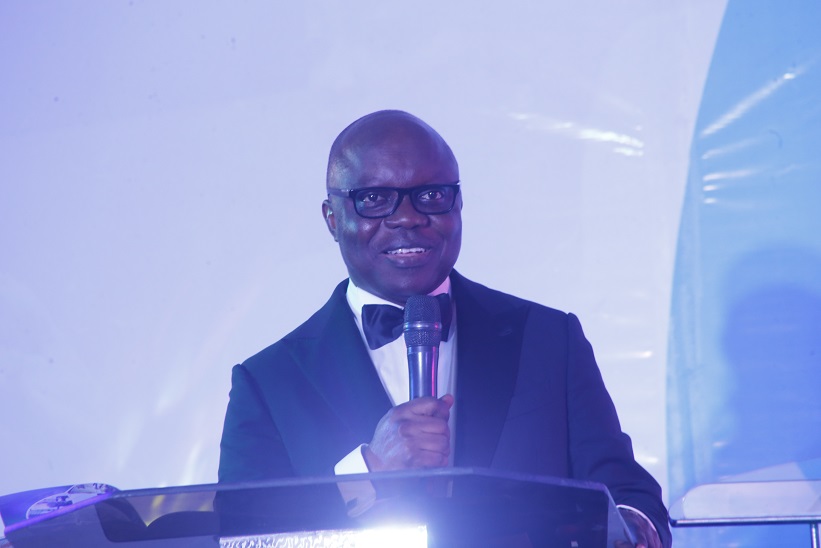
Uduaghan: 64 Garlands for Indefatigable Achiever

Published

on

By Julius Akpovire-Enyeh

When great men celebrate, even the stars bow in solemn hallow. As the immediate past governor of Delta State and the All Progressives Congress candidate for Delta South Senatorial District, Dr. Emmanuel Eweta Uduaghan celebrates his 64th birthday today (October 22, 2018), the periscope is focused on a man who has given his all to create peace, tranquillity and progress for his people and the Niger-Delta region as a whole.

Gradually, the former governor is stepping into the septuagenarian club, healthy, hearty, resolute and focused. As he ages, it is never a dull moment for a man who has spent the greater part of his life to render selfless service to humanity.

Describing Uduaghan as a child of circumstances with a great destiny is like stating the obvious. It is often said that some were born great, while others attained or achieved greatness. For Uduaghan, it is a combination of being born great and working hard to attain greatness.

At 64, Dr. Uduaghan has packed in that relatively old age, a record of achievements that is the envy of his peers. Born on October 22, 1954 in Abigborodo – Warri North Local Government Area of Delta State, his parents Chief Edmund D. Uduaghan and Mrs Cecilia Uduaghan, may not have imagined the great heights their then little child was destined for. But as the legendary Professor Chinua Achebe would say, a chick that will grow to be a cock is known the day it was hatched.

That wise saying became manifest in the boy, Emmanuel, when he enrolled in Baptist Primary School, Mosogar in Ethiope West Local Government Area of Delta State, between the years 1961 and 1966 marking the commencement of his intellectual quest that saw him pass through the famous Federal Government College, Warri, between 1968 and 1974 and the prestigious University of Benin (UNIBEN) where he studied medicine and graduated with a Bachelor of Medicine and Surgery (MBBS) degree and a Diploma in Anesthesia.

Uduaghan began work in 1983 at the Delta Steel Company, as a medical officer. From 1989 to 1994, he worked in a number of hospitals including Westend Hospital, Warri; Benoni Hospitals, Benin City and Shell Hospital, Ogunu, where he was a Consultant Anaesthesiologist. In 1994 he set up a private medical practice. He has held positions in the Nigerian Medical Association in Warri, Bendel State and Delta State. He was also active in the Junior Chamber International (Jaycees) leadership development organization. A founding member and Chairman of the All Nigeria Congress Association for the Warri South Local Government Area in Delta State, a founder and executive member of the Grassroots Democratic Movement (GDM), and a foundation member of the Peoples Democratic Party (PDP).

A former Commissioner for Health, a former Secretary to the Delta State government and a two-term governor of the ‘Big heart state’. For those familiar with activities in Delta State, you will agree with me that one thing that is synonymous with the name, Uduaghan is development. As commissioner for health, Dr. Uduaghan improved the pay of medical staff and upgraded infrastructure.

For eight years that he was at the helm of affairs of Delta State, the state experienced massive development in all the sectors. His achievements are endless. He succeeded in turning the fortunes of the state around with the available resources. Dr. Uduaghan’s developmental strides speak volumes. Most of his legacies are still being enjoyed in the state presently.

Uduaghan distinguished himself in all the sectors he served. He is arguably one of the most successful politicians the Niger Delta have produced in recent times. His influence and popularity were not earned through a walk in the park, rather by the dint of his determination to make his people happy. His story is a very loaded one, his development efforts also extended to the Niger Delta region even though he was the governor of a state. He was deeply involved in negotiations with Niger Delta agitators and militants alike which let to peace in the region. Of course, where there is peace, there is development.

If one counts every infrastructure dotted all over the state, a greater percentage of them would definitely bear his finger of approval.

Even his ardent critics concede to him that his sojourn in office garnered stellar propensities that have till date remained a yardstick for measuring performance in that resource – rich state.

Uduahan, a man of peace and a man of the people is married to another achiever and distinguished professional, Her Excellency, Mrs. Roli Uduaghan. Their marriage is blessed with two children.

As this enigma celebrates his birthday today, I join other teeming Deltans and Nigerians to wish him a happy birthday and pray that God grant him more strength to carry on’. Amen.

Happy birthday sir!

Julius Akpovire-Enyeh is a Delta-born journalist.

Modupe Gbadeyanka is a fast-rising journalist with Business Post Nigeria. Her passion for journalism is amazing. She is willing to learn more with a view to becoming one of the best pen-pushers in Nigeria. Her role models are the duo of CNN's Richard Quest and Christiane Amanpour.

Advertisement
Click to comment

Leave a Reply

Your email address will not be published. Required fields are marked *

Feature/OPED

If Capital is the Answer, What Exactly is the Problem with First Holdco?

Published

on

first holdco subsidiaries

By Blaise Udunze

The Olayemi Cardoso-led Central Bank of Nigeria’s 24-month compliance timeline for the recapitalization of Nigeria’s banking system is about to conclude on March 31, 2026, which is framed as an unavoidable solution to systemic fragility, weak balance sheets, and the demands of a larger, more complex economy. Bigger capital, regulators argue, will produce stronger banks. Though First Bank may have met the CBN’s N500 billion minimum requirement, the latest financials from Femi Otedola-led First HoldCo Plc, which is the parent of Nigeria’s oldest commercial bank, offer a sobering counterpoint, revealing that capital alone cannot cure structural weakness, governance failure, or deep-rooted risk management flaws. If capital is the answer, what exactly is the problem?

What is truly astonishing to many is that beneath the headline growth in earnings lies a financial institution struggling with collapsing earnings quality, surging credit impairments, volatile fair-value exposures, and rising operating inefficiencies. First HoldCo’s numbers are not merely a company-specific disappointment; they are a mirror reflecting the deeper fault lines within Nigeria’s financial system and a warning that recapitalisation, in its current form, risks becoming another cosmetic reset rather than a genuine reform.

On the surface, the topline appears encouraging. The figures showed that gross earnings rose by 17.1 percent to N2.64 trillion in the nine months to 2025, while interest income surged by over 40 percent to N2.29 trillion. Figuring it out, investors, depositors, and analysts understand that these figures, however, are largely the product of a high-interest-rate environment driven by aggressive monetary tightening. They reflect repricing, not necessarily improved lending quality or superior balance-sheet strength. In an economy under strain, rising interest income often signals the transfer of macroeconomic stress from borrowers to banks, rather than sustainable growth.

This becomes evident once attention shifts from revenues to profitability. The performance disclosed that profit before tax declined by 7.3 percent to N566.5 billion, while profit after tax fell nearly 13 percent to N458 billion. Earnings per share dropped by a steep 27.7 percent, a sharper decline than headline profit suggests, pointing to dilution pressures and reduced value accruing to shareholders. More striking still is the full-year picture, where profit after tax from continuing operations collapsed by about 92 percent, plunging to N52.7 billion from N663.5 billion in the prior year. Such a dramatic fall cannot be explained by temporary volatility; it is the consequence of long-suppressed risks finally surfacing.

The most damaging of these risks is asset quality. The most critical figure is the impairment charges that rose by nearly 69 percent in the nine months to N288.9 billion, and by over 75 percent on a full-year basis to N748 billion, and invariably, these numbers tell a story of borrowers buckling under FX exposure, weak cash flows, and a deteriorating operating environment. They also raise uncomfortable questions about credit underwriting standards, concentration risk, and the effectiveness of internal risk controls in earlier lending cycles. After impairments, much of the benefit from higher interest income evaporated, exposing the fragility of earnings built on stressed credit.

Compounding this weakness was a sharp reversal in fair-value accounting. First HoldCo recorded a net loss of N87 billion on financial instruments measured at fair value, a stark contrast to the N549 billion gain recorded a year earlier. Due to this outcome, larger chunks of shareholders’ value were wiped out because this single swing accounted for a negative variance of over N636 billion year-on-year.

The episode highlights a dangerous dependence on market revaluations and FX-driven gains to prop up earnings, as seen that the moment conditions turn, paper profits vanish just as quickly, raising questions about the transparency, sustainability and economic substance of reported results.

Non-interest income provided little cushion. In the nine months to 2025, it declined by 44.5 percent, falling from N618.7 billion to N343.7 billion. While net fees and commission income rose by about 25 percent, the increase was too small to offset the collapse in other income lines. The result is a revenue base that is narrow, volatile, and overly exposed to market swings. Recapitalising banks without addressing this lack of income diversification simply amplifies vulnerability.

At the same time, operating costs surged. Operating expenses climbed by nearly 40 percent to N942.7 billion, while other operating expenses jumped over 43 percent on a full-year basis. Inflation, FX depreciation, energy costs, and technology spending all played a role, but the deeper issue is efficiency. Costs are rising far faster than sustainable income, eroding margins and weakening internal capital generation at precisely the moment banks are being asked to shore up capital buffers. Injecting fresh capital into institutions with broken cost structures does not resolve inefficiency; it merely postpones the inevitable days.

These financial stresses revive longstanding concerns about governance and risk culture in Nigeria’s banking system. Large impairment charges and valuation reversals do not emerge overnight. They accumulate through years of weak credit governance, excessive sector and obligor concentration, insider-related exposures, inadequate stress testing, and regulatory forbearance. Recapitalisation does not answer the most important questions: who gets credit, how risks are approved, how boards exercise oversight, and whether management is truly accountable. Without reform in these areas, more capital simply provides a thicker cushion for future losses.

Foreign exchange risk remains the system’s most dangerous and least resolved fault line. Currency devaluation inflates asset values and boosts interest income on paper, while simultaneously crushing borrowers with FX-denominated obligations. Banks may book translation or revaluation gains even as credit quality deteriorates beneath the surface. This contradiction fuels earnings volatility and undermines confidence in financial reporting. A stronger capital base does not neutralise FX mismatch risk; only disciplined risk management, credible macro policy, and transparent reporting can.

Perhaps most troubling is what First HoldCo’s results imply about regulatory credibility. Many of the impairments and valuation losses reflect risks that were visible long before they crystallised in the income statement. When losses arrive suddenly and in clusters, concerns from different quarters are raised and markets begin to question whether supervision is proactive or merely reactive. Recapitalisation without restoring trust in regulatory oversight risks being interpreted as an admission that deeper problems remain unaddressed and by extension, this erodes trust in the system and a stronger banking sector must also be a fairer and more accountable one.

Nigeria has travelled this road before. Bigger banks and higher capital thresholds have previously delivered reassuring headlines, only for familiar weaknesses to resurface in new forms. First HoldCo’s numbers demonstrate that capital adequacy, while necessary, is far from sufficient. Without the CBN confronting governance failures, asset quality deterioration, concentration risk, FX exposure, transparency gaps, and weak risk culture, recapitalisation risks will become another exercise in delay rather than reform.

The uncomfortable truth is that real stability requires more than fresh equity. It demands honest loss recognition, credible financial reporting, disciplined credit practices, diversified income streams, and regulators willing to enforce standards consistently. Until these missing pieces are addressed, recapitalisation will remain what it too often has been in Nigeria’s financial history, as a larger buffer for the same old problems, and a temporary comfort masking unresolved fragilities.

Blaise, a journalist and PR professional, writes from Lagos, can be reached via: [email protected]

Continue Reading

Feature/OPED

Why the Future of PR Depends on Healthier Client–Agency Partnerships

Published

on

Moliehi Molekoa Future of PR

By Moliehi Molekoa

The start of a new year often brings optimism, new strategies, and renewed ambition. However, for the public relations and reputation management industry, the past year ended not only with optimism but also with hard-earned clarity.

2025 was more than a challenging year. It was a reckoning and a stress test for operating models, procurement practices, and, most importantly, the foundation of client–agency partnerships. For the C-suite, this is not solely an agency issue.

The year revealed a more fundamental challenge: a partnership problem that, if left unaddressed, can easily erode the very reputations, trust, and resilience agencies are hired to protect. What has emerged is not disillusionment, but the need for a clearer understanding of where established ways of working no longer reflect the reality they are meant to support.

The uncomfortable truth we keep avoiding

Public relations agencies are businesses, not cost centres or expandable resources. They are not informal extensions of internal teams, lacking the protection, stability, or benefits those teams receive. They are businesses.

Yet, across markets, agencies are often expected to operate under conditions that would raise immediate concerns in any boardroom:

  • Unclear and constantly shifting scope

  • Short-term contracts paired with long-term expectations

  • Sixty-, ninety-, even 120-day payment terms

  • Procurement-led pricing pressure divorced from delivery realities

  • Pitch processes that consume months of senior talent time, often with no feedback, timelines, or accountability

If these conditions would concern you within your own organisation, they should also concern you regarding the partner responsible for your reputation.

Growth on paper, pressure in practice

On the surface, the industry appears healthy. Global market valuations continue to rise. Demand for reputation management, stakeholder engagement, crisis preparedness, and strategic counsel has never been higher.

However, beneath this top-line growth lies the uncomfortable reality: fewer than half of agencies expect meaningful profit growth, even as workloads increase and expectations rise.

This disconnect is significant. It indicates an industry being asked to deliver more across additional platforms, at greater speed, with deeper insight, and with higher risk exposure, all while absorbing increased commercial uncertainty.

For African agencies in particular, this pressure is intensified by factors such as volatile currencies, rising talent costs, fragile data infrastructure, and procurement models adopted from economies with fundamentally different conditions. This is not a complaint. It is reality.

This pressure is not one-sided. Many clients face constraints ranging from procurement mandates and short-term cost controls to internal capacity gaps, which increasingly shift responsibility outward. But pressure transfer is not the same as partnership, and left unmanaged, it creates long-term risk for both parties.

The pitching problem no one wants to own

Agencies are not anti-competition. Pitches sharpen thinking and drive excellence. What agencies increasingly challenge is how pitching is done.

Across markets, agencies participate in dozens of pitches each year, with success rates well below 20%. Senior leaders frequently invest unpaid hours, often with limited information, tight timelines, and evaluation criteria that prioritise cost over value.

And then, too often, dead silence, no feedback, no communication about delays, and a lack of decency in providing detailed feedback on the decision drivers.

In any other supplier relationship, this would not meet basic governance standards. In a profession built on intellectual capital, it suggests that expertise is undervalued.

This is also where independent pitch consultants become increasingly important and valuable if clients choose this route to help facilitate their pitch process. Their role in the process is not to advocate for agencies but to act as neutral custodians of fairness, realism, and governance. When used well, they help clients align ambition with timelines, scope, and budget, and ensure transparency and feedback that ultimately lead to better decision-making.

“More for less” is not a strategy

A particularly damaging expectation is the belief that agencies can sustainably deliver enterprise-level outcomes on limited budgets, often while dedicating nearly full-time senior resources. This is not efficiency. It is misalignment.

No executive would expect a business unit to thrive while under-resourced, overexposed, and cash-constrained. Yet agencies are often required to operate under these conditions while remaining accountable for outcomes that affect market confidence, stakeholder trust, and brand equity.

Here is a friendly reminder: reputation management is not a commodity. It is risk management.

It is value creation. It also requires investment that matches its significance.

A necessary reset

As leadership teams plan for growth, resilience, and relevance, there is both an opportunity and a responsibility to reset how agency partnerships are structured.

That reset looks like:

  • Contracts that balance flexibility and sustainability

  • Payment terms that reflect mutual dependency

  • Pitch processes that respect time, talent, and transparency for all parties

  • Scopes that align ambition with available budgets

  • Relationships based on professional parity rather than power imbalance

This reset also requires discipline on the agency side – clearer articulation of value, sharper scoping, and greater transparency about how senior expertise is deployed. Partnership is not protectionism; it is mutual accountability.

The Leadership Question That Matters

The question for the C-suite is quite simple:

If your agency mirrored your internal standards of governance, fairness, and accountability, would you still be comfortable with how the relationship is structured?

If the answer is no, then change is not only necessary but also strategic. Because strong brands are built on strong partnerships. Strong partnerships endure only when both sides are recognised, respected, and resourced as businesses in their own right.

The agencies that succeed and the brands that truly thrive will be those that recognise this early and act deliberately.

Moliehi Molekoa is the Managing Director of Magna Carta Reputation Management Consultants and PRISA Board Member

Continue Reading

Feature/OPED

Directing the Dual Workforce in the Age of AI Agents

Published

on

Linda Saunders Trusted AI

By Linda Saunders

We will be the last generation to work with all-human workforces. This is not a provocative soundbite but a statement of fact, one that signals a fundamental shift in how organisations operate and what leadership now demands. The challenge facing today’s leaders is not simply adopting new technology but architecting an entirely new operating model where humans and autonomous AI agents work in concert.

According to Salesforce 2025 CEO research, 99% of CEOs say they are prepared to integrate digital labor into their business, yet only 51% feel fully prepared to do so. This gap between awareness and readiness reveals the central tension of this moment: we recognise the transformation ahead but lack established frameworks for navigating it. The question is no longer whether AI agents will reshape work, but whether leaders can develop the new capabilities required to direct this dual workforce effectively.

The scale of change is already visible in the data. According to the latest CIO trends, AI implementation has surged 282% year over year, jumping from 11% to 42% of organisations deploying AI at scale. Meanwhile, the IDC estimates that digital labour will generate a global economic impact of $13 trillion by 2030, with their research suggesting that agentic AI tools could enhance productivity by taking on the equivalent of almost 23% of a full-time employee’s weekly workload.

With the majority of CEOs acknowledging that digital labor will transform their company structure entirely, and that implementing agents is critical for competing in today’s economic climate, the reality is that transformation is not coming, it’s already here, and it requires a fundamental change to the way we approach leadership.

The Director of the Dual Workforce

Traditional management models, built on hierarchies of human workers executing tasks under supervision, were designed for a different era. What is needed now might be called the Director of the dual workforce, a leader whose mandate is not to execute every task but to architect and oversee effective collaboration between human teams and autonomous digital labor. This role is governed by five core principles that define how AI agents should be structured, deployed and optimised within organisations.

Structure forms the foundation. Just as organisational charts define human roles and reporting lines, leaders must design clear frameworks for AI agents, defining their scope, establishing mandates and setting boundaries for their operation. This is particularly challenging given that the average enterprise uses 897 applications, only 29% of which are connected. Leaders must create coherent structures within fragmented technology landscapes as a strong data foundation is the most critical factor for successful AI implementation. Without proper structure, agents risk operating in silos or creating new inefficiencies rather than resolving existing ones.

Oversight translates structure into accountability. Leaders must establish clear performance metrics and conduct regular reviews of their digital workforce, applying the same rigour they bring to managing human teams. This becomes essential as organisations scale beyond pilot projects and we’ve seen a significant increase in companies moving from pilot to production, indicating that the shift from experimentation to operational deployment is accelerating. It’s also clear that structured approaches to agent deployment can deliver return on investment substantially faster than do-it-yourself methods whilst reducing costs, but only when proper oversight mechanisms are in place.

To ensure agents learn from trusted data and behave as intended before deployment, training and testing is required. Leaders bear responsibility for curating the knowledge base agents access and rigorously testing their behaviour before release. This addresses a critical challenge: leaders believe their most valuable insights are trapped in roughly 19% of company data that remains siloed. The quality of training directly impacts performance and properly trained agents can achieve 75% higher accuracy than those deployed without rigorous preparation.

Additionally, strategy determines where and how to deploy agent resources for competitive advantage. This requires identifying high-value, repetitive or complex processes where AI augmentation drives meaningful impact. Early adoption patterns reveal clear trends: according to the Salesforce Agentic Enterprise Index tracking the first half of 2025, organisations saw a 119% increase in agents created, with top use cases spanning sales, service and internal business operations. The same research shows employees are engaging with AI agents 65% more frequently, and conversations are running 35% longer, suggesting that strategic deployment is finding genuine utility rather than novelty value.

The critical role of observability

The fifth principle, to observe and track, has emerged as perhaps the most critical enabler for scaling AI deployments safely. This requires real-time visibility into agent behaviour and performance, creating transparency that builds trust and enables rapid optimisation.

Given the surge in AI implementation, leaders need unified views of their AI operations to scale securely. Success hinges on seamless integration into core systems rather than isolated projects, and agentic AI demands new skills, with the top three in demand being leadership, storytelling and change management. The ability to observe and track agent performance is what makes this integration possible, allowing leaders to identify issues quickly, demonstrate accountability and make informed decisions about scaling.

The shift towards dual workforce management is already reshaping executive priorities and relationships. CIOs now partner more closely with CEOs than any other C-suite peer, reflecting their changing and central role in technology-driven strategy. Meanwhile, recent CHRO research found that 80% of Chief Human Resources Officers believe that within five years, most workforces will combine humans and AI agents, with expected productivity gains of 30% and labour cost reductions of 19%. The financial perspective has also clearly shifted dramatically, with CFOs moving away from cautious experimentation toward actively integrating AI agents into how they assess value, measure return on investment, and define broader business outcomes.

Leading the transition

The current generation of leaders are the crucial architects who must design and lead this transition. The role of director of the dual workforce is not aspirational but necessary, grounded in principles that govern effective agent deployment. Success requires moving beyond viewing AI as a technical initiative to understanding it as an organisational transformation that touches every aspect of operations, from workflow design to performance management to strategic planning.

This transformation also demands new capabilities from leaders themselves. The skills that defined effective management in all-human workforces remain important but are no longer sufficient. Leaders must develop fluency in understanding agent capabilities and limitations, learn to design workflows that optimally divide labor between humans and machines, and cultivate the ability to measure and optimise performance across both types of workers. They must also navigate the human dimensions of this transition, helping employees understand how their roles evolve, ensuring that the benefits of productivity gains are distributed fairly, and maintaining organisational cultures that value human judgement and creativity even as routine tasks migrate to digital labor.

The responsibility to direct what comes next, to architect systems where human creativity, judgement and relationship-building combine with the scalability, consistency and analytical power of AI agents, rests with today’s leaders. The organisations that thrive will be those whose directors embrace this mandate, developing the structures, oversight mechanisms, training protocols, strategic frameworks and observability systems that allow dual workforces to deliver on their considerable promise.

Continue Reading

Trending