Connect with us

Technology

Meet Most Followed World Leaders on Instagram

Published

on

Smartphone

By Dipo Olowookere

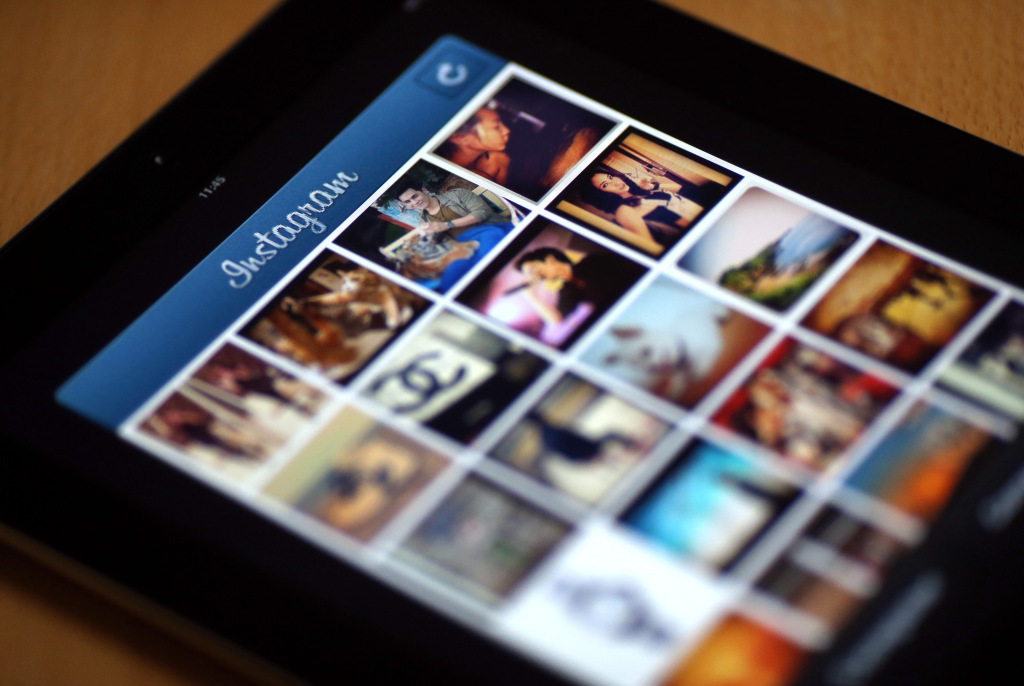
Indian Prime Minister, Narendra Modi, is the most followed world leader on Instagram with 14.8 million followers. He is closely followed by Indonesian President, Joko Widodo, with 12.2 million followers, who more than doubled his followers over the past 12 months, according to the newly released 2018 World Leaders on Instagram study by leading global communications agency BCW (Burson Cohn & Wolfe). With 10 million followers, the United States President, Mr Donald Trump, is in third position.

Pope Francis is in fourth position with 5.7 million followers, just ahead of Queen Rania of Jordan, Turkey’s President Recep Tayyip Erdoğan and the White House account, each with more than 4 million followers. The UK Royal Family has almost tripled its followers over the past 12 months in large part thanks to the pictures of the royal wedding of Prince Harry and Meghan Markle which increased the account’s followers by 570,000 on May 19, 2018.

The study analyses the activity of the 426 Instagram accounts of heads of state and government and foreign ministers, 100 more than in the 2017 study, using aggregate data from Facebook’s CrowdTangle tool.

As of October 1, 2018, the accounts have a combined total of 98.3 million followers and published 98,372 posts in the past 12 months which have garnered a total of 860.4 million interactions (comments and shares).

U.S. President Donald Trump leads the rankings in terms of total interactions (comments and likes). Over the past 12 months, @realDonaldTrump has garnered more than 218 million interactions, more than three times as many as Indian Prime Minister Narendra Modi who has more followers but only 69 million interactions on his 80 photos and videos over the past year. However, considering the number of interactions (comments and likes) per post, India’s Prime Minister Narendra Modi is the most effective world leader on Instagram, with each of his 80 posts receiving, on average, 873,302 interactions. Turkey’s President Erdoğan is in second position with 413,934 interactions and Indonesia’s President Joko Widodo’s Instagram posts receive an average of 411,673 interactions per post.

“This third installment of the BCW study shows Instagram has become the social media network where world leaders garner the most interactions,” said Chad Latz, Chief Innovation Officer, BCW. “What is astounding is that the average size of world leaders’ Instagram accounts is less than half the size of their Facebook pages – with five times fewer posts over the past 12 months. However, all Instagram accounts together total 860 million interactions, which is 162 million (23 percent) more than the total interactions on Facebook over the same period.”

The World Leaders on Instagram study also found that 156 of the 193 United Nations member states maintain an official Instagram account, 16 more than in the 2017 study. Ninety-two heads of state, 48 heads of government and 36 foreign ministers maintain personal pages on the platform, which tend to get better engagement than institutional accounts.

Instagram is not the most obvious social network to make sweeping policy statements, however Instagram Stories have become a secondary channel for digital diplomacy, where word leaders meet, greet and tag each other.

Ghana’s President Nana Akufo-Addo is Sub-Saharan Africa’s most followed leader on Instagram with 431 million followers, ahead of Rwanda’s President Paul Kagame and Nigerian President Muhammadu Buhari with more than 160,000 followers each.

Also, Jordan’s Queen Rania is the most followed Arab leader with more than 4.8 million followers, surpassing Sheikh Mohammed, the Vice President and Prime Minister of the United Arab Emirates, with more than 3.3 million followers.

In addition, Argentina’s President Mauricio Macri is the most followed Latin American leader on Instagram with 880,000 followers ahead of outgoing Mexican President Enrique Peña Nieto and Paraguay’s Mario Abdo Benítez who each boast more than half a million followers.

The British Royal Family tops the Instagram ranking in the European Union with 3.5 million followers, far ahead of French President Emmanuel Macron, with 1.1 million followers, and Germany’s Chancellor Angela Merkel with 684,000 followers.

The Information Department of the Government of Brunei is the most active government account, with more than 17 posts per day on average. Imran Khan, Pakistan’s Prime Minister, is in second position with more than 10 posts per day and the Foreign Ministry of Kuwait is the third most prolific with more than eight posts per day.

Since June 2018, 15 percent of the 426 accounts have created Instagram TV (IGTV) channels which allow users to upload up to 60-minute-long videos in vertical format.


Dipo Olowookere is a journalist based in Nigeria that has passion for reporting business news stories. At his leisure time, he watches football and supports 3SC of Ibadan. Mr Olowookere can be reached via [email protected]

Technology

Airtel Subscriber Base Crosses 650 million, Now World’s Second-Largest Telco

Published

on

Bharti Airtel

By Modupe Gbadeyanka

Bharti Airtel has crossed 650 million mobile subscribers worldwide to emerge as the world’s second-largest telecommunications firm.

The Indian company has operations in several countries, including Nigeria, where it has continued to scale infrastructure at a pace unmatched in its recent history.

Over the past three years, the telco has increased its national site count from just above 13,000 to nearly 17,200 sites, including more than 1,560 added in the last 12 months.

This expansion deepens capacity in high-demand corridors and extends high-speed coverage to previously underserved regions.

The latest industry data from the Nigerian Communications Commission (NCC) underscores the significance of this growth. As of December 2025, Nigeria recorded 145,141 base stations across 2G, 3G, 4G and 5G layers.

Of this national infrastructure, Airtel accounts for 46,918 base-station layers, reflecting its substantial contribution to the country’s radio access network and its push to absorb rising data consumption.

Nearly 99 per cent of Airtel Nigeria’s sites are now 4G-enabled, positioning the operator as one of the few with a near-ubiquitous high-speed broadband footprint. Thousands of sites have been upgraded for capacity in the past year alone, enabling improved speeds and more stable performance during peak usage.

That expansion underpins Nigeria’s rising internet adoption. According to the latest regulator figures, Nigeria’s internet penetration recently climbed above 50 per cent, with Airtel recording among the largest monthly increases in new internet subscribers, driven by network upgrades across states and rural corridors.

Strategic Connectivity and Redundancy

Airtel is also tackling a critical infrastructure challenge for the Nigerian digital economy: reliance on a single international internet gateway. The company is advancing plans for its second submarine cable internet breakout point at Kwa Ibo in Akwa Ibom State, early in the 2Africa cable system rollout, to provide faster and more resilient national connectivity across regions. This significant investment aligns with global best practices in network diversity and redundancy, ensuring a more stable digital experience for consumers and enterprises alike.

Digital Finance at Scale: SmartCash

Airtel’s digital finance arm, SmartCash, has gained traction in Nigeria’s competitive mobile money ecosystem, now serving over 3 million active users. The platform is supported by an expansive agent network and digital services that lower barriers for everyday financial transactions and savings.

Outstanding Human Touch: Retail Reach

Across Nigeria, Airtel’s retail distribution network stands as one of the sector’s most extensive, with approximately 4,000 exclusive outlets bringing services, support, and products closer to customers in small towns, communities, and high-traffic urban hubs. That footprint drives both access and engagement in a market where localised presence remains a competitive differentiator.

As Nigeria’s digital economy continues to evolve, Airtel is committed to sustained innovation — from expanded fibre backbones and advanced mobile broadband to future-ready services that include satellite-enabled solutions and enterprise-grade digital platforms. These efforts help ensure that connectivity, commerce, and creativity thrive across Nigeria and beyond.

Continue Reading

Technology

Nigeria to Launch NIGCOMSAT Satellites in 2028, 2029

Published

on

NIGCOMSAT Satellites

By Adedapo Adesanya

Nigeria has set 2028 and 2029 as the timeline for the deployment of its new satellites, NIGCOMSAT-2A and 2B, respectively.

The Managing Director of NIGCOMSAT, which is Nigerian Communications Satellite Limited and the premier satellite operator in Nigeria, Mrs Jane Nkechi Egerton-Idehen, disclosed this at the second Nigerian Satellite Week in Abuja on Monday. She noted that the development is expected to boost military intelligence, surveillance, and regional connectivity.

“For 2A and 2B, we have started the process. We have closed the tender and are now back into the financing and implementation stage. 2A is built to come up in 2028, and 2B for 2029.

“When they are up and running, they are expected to provide security within the borders and neighbouring countries. They will support the security agencies because data collection and intelligence in real time is important. Satellites like communication satellites allow that, irrespective of where they are,” she said.

In his remarks, the Minister of Communications and Digital Economy, Mr Bosun Tijani, said the satellites form part of the nation’s strategy to strengthen digital infrastructure.

Mr Tijani explained that the satellites will complement ongoing investments in 90,000 kilometres of fibre-optic cable and nearly 4,000 telecom towers, which are being rolled out nationwide and extended to neighbouring countries, including Cameroon, Niger, Chad, Burkina Faso, and the Republic of Benin.

He stressed that satellite technology is critical for national development, affecting education, agriculture, business, and emergency response.

“The president’s approval of NIGCOMSAT-2A and 2B demonstrates a clear commitment to building the future. These satellites will enhance security, connect remote communities, and extend our fibre-optic network into neighbouring countries,” he said.

“Some of these neighbouring countries pay up to ten times more for internet capacity than Lagos. Extending our fibre network will not only improve connectivity but also enhance border security and regional collaboration.

“Satellite technology affects everything, from how a child in a rural community accesses the internet to how farmers make critical decisions and how businesses operate across distance,” the Minister said.

Also speaking, the Chief of Army Staff (COAS), Lieutenant General Waidi Shaibu, welcomed the development, saying the military will leverage the satellites for operational efficiency.

“The Nigerian Army will continue to use space assets to improve intelligence gathering, surveillance, and operational coordination across all theatres of operation,” he said at the event, represented by Major General Kennedy Osemwegie, Commander of the Nigerian Army Cyber Warfare Command (NACWC).

Continue Reading

Technology

Interswitch, KCB Group to Deliver Innovative Financial Solutions in East Africa

Published

on

Interswitch KCB group

By Modupe Gbadeyanka

A partnership to advance digital payments and financial inclusion across East Africa has been strengthened between Interswitch and KCB Group.

Both parties have agreed to expand digital payment infrastructure and deliver innovative financial solutions that meet the evolving needs of individuals, businesses, and institutions across the region.

The aim is to accelerate seamless, secure, and inclusive digital payments in East Africa, where the leading Africa-focused integrated payments and digital commerce enabler, Interswitch, recently announced an expansion of Verve card acceptance footprint, leveraging its consolidated partnership with KCB Group, Kenya’s largest financial services group by assets, following a similar move in Uganda through the local KCB Franchise in February 2022.

During a recent executive engagement at KCB Group headquarters in Nairobi, the chief executive of Interswitch, Mr Mitchell Elegbe, held high-level discussions with KCB leadership, including its chief executive, Paul Russo.

At the core of the strengthened collaboration is the integration of Interswitch’s robust payment rails, card scheme, and emerging digital token solutions with KCB Group’s expansive regional footprint and trusted banking franchise.

This integration enables the acceptance of Verve cards and tokenised payment solutions across KCB’s extensive merchant point-of-sale network in Kenya and Uganda, significantly enhancing everyday usability for customers while strengthening KCB’s digitally driven retail payments offering.

The consolidated partnership is expected to drive increased merchant acquisition, improve interoperability across payment ecosystems, and expand access to secure, cashless transactions. It also reinforces both organisations’ shared objective of deepening financial inclusion and accelerating digital commerce across East Africa.

“Our collaboration with KCB Group represents a powerful alignment of vision and capability. By combining our technology-driven payment solutions with KCB’s strong regional presence, we are unlocking new opportunities to scale access, drive innovation, and deliver greater value to customers across East Africa,” Mr Elegbe stated.

Continue Reading

Trending