Connect with us

General

Nigeria Outlines Strategies to Boost Economic Ties with Russia

Published

on

By Kester Kenn Klomegah

Nigeria is an economic powerhouse in West African region. As it is publicly known, Nigeria is one of the Africa’s fastest growing economies and it boosts the largest population.

Under President Muhammadu Buhari, Nigeria has taken practical steps to continue bolstering economic and strategic ties with Russia.

Interestingly, Russia and Nigeria’s two-way trade remains minimal, far below expected level, given the fact that Russia is the biggest market in the Eurasian region and Nigeria the biggest market in Africa.

Relations between Nigeria and Russia can be traced back to the former Union of the Soviet of Social Republics era when diplomatic relations between the two countries were established. Since then, economic relations between both countries have steadily developed with a number of leading Russian companies establishing their presence in Nigeria. Russian investment in Nigeria covers such areas as energy, iron and steel, and hydrocarbon.

The Russian-Nigerian Business Council was also established to oversee economic activities between the two countries. It is also a platform for the two countries to sit down and draw up agreements and Memorandum of Understanding (MoU) on how to conduct effective businesses and investment in both countries.

Now, new hopes in Moscow and Abuja are that the countries’ annual commercial ties have to be increased rapidly to billions of dollars during the next few years. Russia plans to help Nigeria explore for oil and gas.

Furthermore, Russia has expressed deep interest in Nigeria, highly pledging to build nuclear power plants, petroleum pipelines, railways and infrastructure.

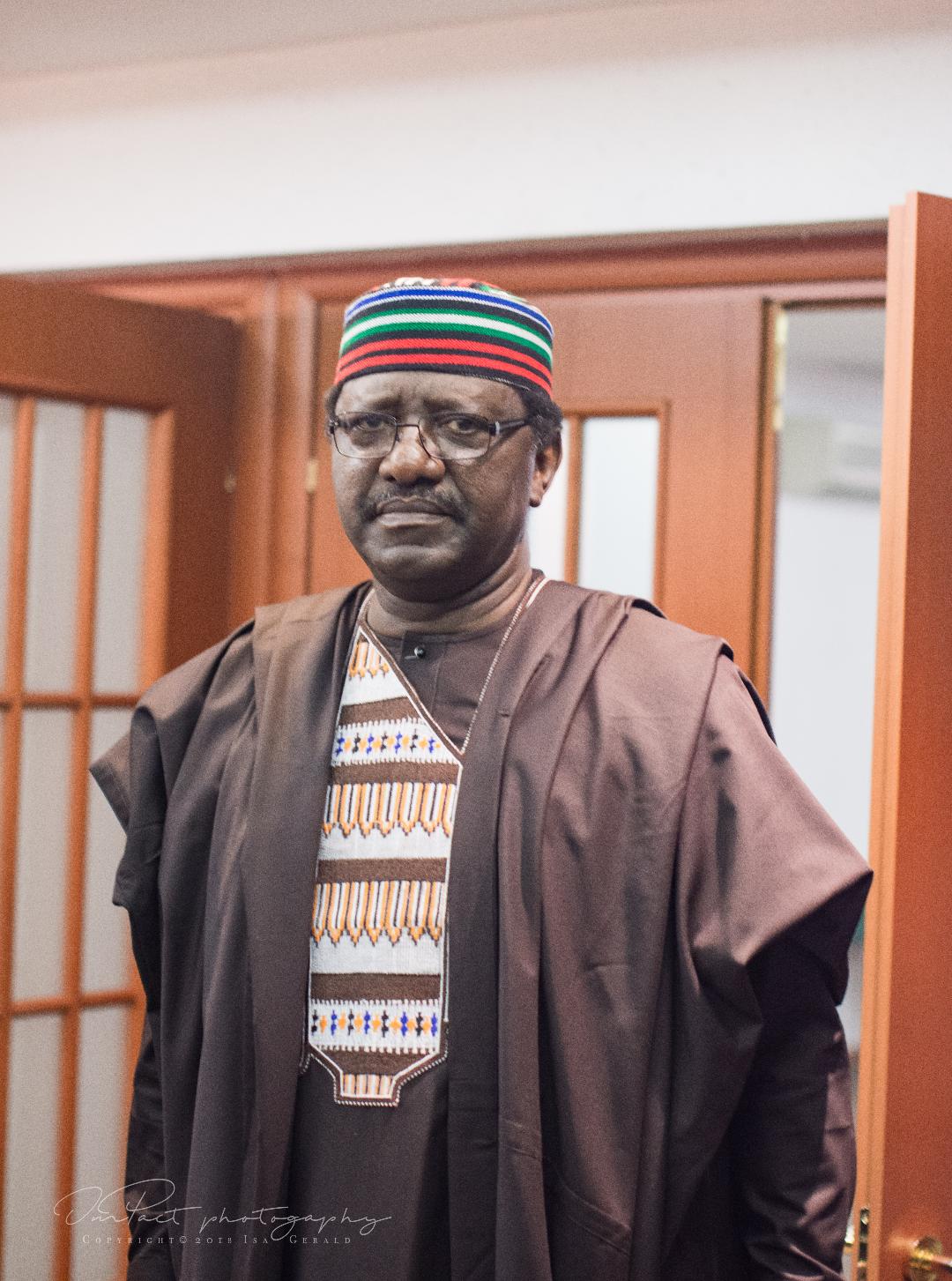
Kester Kenn Klomegah recently interviewed Professor Steve Ugbah, Nigerian Ambassador to the Russian Federation, who discussed the current Nigeria and Russia economic cooperation, ways to improve trade and other key foreign policy priorities.

In addition, Professor Ugbah shares hopes and optimism for the future relations between the two countries.

How do you see the economic relations developing currently between Russia and Nigeria?

The economic relations between Nigeria and Russia are not consistent with the long-standing cordial relations between both countries. This may be attributed to the apparent inadequate knowledge of the many investment opportunities in both countries. Nigeria is a vast market with huge potentials for prospective foreign investors and so is Russia. Regrettably, investors from both sides appear to know little or nothing about these opportunities.

However, in recent times, efforts have been made to improve the economic relations between both countries through rigorous sensitization interfaces and negotiations by the embassies of both countries. Since, my resumption of office as Nigerian Ambassador to the Russian Federation, I have held talks with several Russian companies who have demonstrated keen interest to invest in Nigeria, as well as resuscitating several abandoned economic projects.

I would like to add that, with our current sensitization drive on the economic potentials in both countries, there is an encouraging upsurge of interest that we have observed recently with an increasing number of interactions between private businesses in both countries. So given this development, I believe in a short time there will be tremendous improvement in the economic relations between both countries.

By the way, what are the Federal Government’s key priorities and expectations from the Russian Federation?

The priorities of the Federal Government of Nigeria from the Russian Government include the following: to promote mutually beneficial interests, particularly the promotion of friendly and cordial relations between the government and people of Nigeria and those of the Russian Federation; as well as to facilitate good socio-economic partnership and establish business ties that will be beneficial to both countries.

In addition, also a key component of Nigeria’s interest is to protect and promote the security and wellbeing of Nigerian citizens resident in the Russian Federation.

These priorities are pursued majorly through interactions at official levels between both governments and between the peoples of the two countries; exchange of official visits and cultural programmes and the signing of series of agreements including the Bilateral Education Agreement (BEA) which has brought many Nigerian students to various institutions in the Russian Federation.

What is the state of development regarding infrastructure projects already began by Russia, at least, a decade ago, in Nigeria?

There are two major infrastructural Russian projects in Nigeria: ALSCON and Ajaokuta Steel Plant. ALSCON has been resuscitated, while negotiations are ongoing to operationalize Ajaokuta Steel Plant.

Since the establishment of diplomatic relations with Soviet Union and now with Russia, trade figures have never balanced. What are your views about this trend and in what ways the trade imbalance could be reversed?

As I have stated earlier, the problem of low volume of trade and trade imbalance may be traced to the apparent poor or inadequate information on the vast investment opportunities in both countries. Concrete efforts have been made by the Embassy to increase awareness among Nigerian investors and their Russian counterparts on the many available investment opportunities.

I have held series of meetings with the Russian Chambers of Commerce and Industry, Russia-Nigerian Business Council and several companies and private owned business establishments here in the Russian Federation to promote economic partnership between both countries.

My duties as Nigerian Ambassador in the Russian Federation include: to deepen the existing cordial relations between our two friendly countries; to open Nigeria to Russian investors with regards to our vast business opportunities; and to expose investment openings in the Russian Federation to Nigerian investors.

In order to improve the trade imbalance, the Economic, Trade and Investment Section of the Embassy has been rigorously involved in educating and informing Nigerian investors of the investment opportunities in Russia, as well as providing necessary assistance they may require to invest in Russia.

In Nigeria, how do political elite and business people perceive the economic changes, and what they make out from the changes, emerging opportunities in Russia?

Economic changes are keenly observed by both, the political elite and business people, as it helps them to make informed decisions that would improve the state of the nation and business, respectively. Nigeria views Russia as a strategic partner therefore, efforts are being made to harness emerging opportunities in Russia by Nigeria.

Could you please give us your interpretation of future perspectives of the relations between Russia and Nigeria. How would you like to see the relations develop into the future?

Nigeria-Russia relations have come a long way since diplomatic ties were established between both countries, dating back to the Soviet Union Era. This can be seen in the different levels of cooperation between Nigeria and Russia. Worthy of mention in this regard is the diligent implementation of the Bilateral Education Agreement (BEA); Russia military assistance to end the Nigerian Civil War from 1967-1970; and, in recent times, military and technical assistance to help end the Boko Haram insurgency in the North East of Nigeria.

Recently, exchange of visits by senior public officials and private sector players from both sides have facilitated the prospects for even greater bilateral cooperation. I am hopeful that this cordiality will expand into various partnerships in different sectors that would be beneficial to both countries. Russia, as the successor state to the defunct USSR, is a strategic partner, with a lot of promise for greater mutually beneficial relations into the future.


Dipo Olowookere is a journalist based in Nigeria that has passion for reporting business news stories. At his leisure time, he watches football and supports 3SC of Ibadan. Mr Olowookere can be reached via [email protected]

Click to comment

Leave a Reply

Your email address will not be published. Required fields are marked *

General

Umahi: Ebonyi Police Reject Bid to Halt Autopsy in Physiotherapist’s Death

Published

on

mary habila physiotherapist

By Adedapo Adesanya

The Ebonyi State Police Command has insisted on conducting a post-mortem examination to determine the cause of death of Miss Mary Habila, a physiotherapist who died at the residence of the Minister of Works, Mr David Umahi, in Uburu, Ohaozara Local Government Area of Ebonyi State.

The demise of the deceased, which occurred in late June, recently became public and has sparked calls for a probe from many quarters.

Meanwhile, the family of the deceased has approached the court to stop the autopsy, but experts tell Business Post that the family has no authority to file an affidavit, as this is a case of suspected murder against the state and not the family.

Mr Umahi has also called for a probe.

The Ebonyi Police Command said the autopsy was necessary to establish the cause of death and support its ongoing investigation, despite objections from the deceased’s family.

The Police Public Relations Officer (PPRO), SP Joshua Ukandu, disclosed this in a statement issued on Wednesday, stating that the police had commenced a comprehensive investigation into the circumstances surrounding Ms Habila’s death.

Mr Ukandu said preliminary investigations revealed that the deceased and a colleague were members of the medical team attached to the Minister of Works and had accompanied him to his hometown in Uburu, where she later died in a room within the compound of his residence.

According to him, detectives from the State Criminal Investigation Department (SCID) have visited the scene, documented relevant evidence and obtained statements from persons connected to the incident.

He added that the command had concluded arrangements to engage a qualified pathologist to carry out a post-mortem examination, which it considers crucial to determining the actual cause of death.

Mr Ukandu explained that the police became involved in the matter after receiving a distress call on June 27, 2026, from the Divisional Police Officer (DPO), Ohaozara Division, informing the command of a medical emergency involving Habila and requesting his presence at the David Umahi Federal Teaching Hospital, Uburu.

“On arrival, the DPO was informed by hospital authorities that Miss Mary Habila had been brought in dead.

He immediately briefed the Commissioner of Police, who directed that the matter be transferred to the State Criminal Investigation Department (SCID) for thorough investigation,” the statement read.

The police spokesperson disclosed that while the family of the deceased had opposed the conduct of an autopsy, the command considered the procedure necessary in view of the circumstances surrounding the death.

“The Command therefore awaits the attendance of the family or their duly appointed representative, as their presence is essential to the conduct of the post-mortem examination,” Mr Ukandu said, assuring the public that the investigation would be conducted professionally, transparently and without bias, stressing that every necessary step would be taken to uncover the circumstances surrounding Habila’s death.

Mr Ukandu further assured that the command would continue to provide updates as the investigation progresses.

Family Seeks to Stop Autopsy

The family of the deceased, who is a staff member of the David Umahi Federal University of Medical Sciences and was seconded to the Federal Ministry of Works, formally requested the withdrawal of further investigation into her death and declined an autopsy.

In an affidavit titled Affidavit of Withdrawal of Case filed before the High Court of Justice of Ebonyi State, her father, Tanko Habila Wisdom, said the family was not alleging any foul play in her death and wished to proceed with her burial.

According to the affidavit, Mary Habila died on June 27, 2026, in Uburu, Ohaozara Local Government Area of Ebonyi State.

The deponent stated that before her death, Habila was a staff member of the David Umahi Federal University of Medical Sciences and had been seconded to the Federal Ministry of Works in Mabushi, Abuja, where she served in the Office of the Minister of Works for about three years.

Continue Reading

General

Aisha Achimugu: Court Orders Forfeiture of N4.6bn Jewellery, N4.3bn Vehicles, Cash

Published

on

Aisha Achimugu

By Adedapo Adesanya

A Federal High Court in Apo, Abuja, has ordered the final forfeiture of billions of Naira worth of assets linked to businesswoman and socialite, Ms Aisha Achimugu, to the federal government.

Justice Jude Onwugbuzie granted the order following an application by the Economic and Financial Crimes Commission (EFCC), directing the permanent forfeiture of jewellery valued at N4.645 billion, 11 exotic vehicles worth N4.293 billion, $50,000 and N30 million in cash.

The ruling followed the EFCC’s request for the final forfeiture of the assets, which the commission said were linked to Ms Achimugu.

The forfeited assets include: Jewellery valued at N4,645,170,294.90; 11 exotic vehicles worth N4,293,000,000; $50,000 in cash; and N30,000,000 in cash.

The court’s judgment vests ownership of the assets in the federal government, bringing the forfeiture proceedings to a close.

In March, Justice Emeka Nwite of the Federal High Court in Abuja affirmed the final forfeiture of $13 million linked to the Lagos socialite. However, in an interview in April, she denied that $13 million was discovered by the EFCC in her residence, describing the claim as inaccurate and misleading.

Justice Nwite had, on August 22, 2025, granted the anti-graft agency’s motion ex parte for an interim order forfeiting the sum of $13 million linked to Oceangate Ltd to the federal government over allegations that the fund was proceeds of unlawful activity.

The judge had then directed the commission to publish the order in a national daily for interested people to show cause within 14 days why the fund should not be permanently forfeited to the federal government.

In 2024, the businesswoman gained significant media attention for a seven-day birthday celebration in Grenada, which was attended by high-profile guests, reportedly including Lagos State Governor Babajide Sanwo-Olu.

The socialite also defended her widely publicised birthday celebration, noting that it had been “planned for 10 years” and was not funded with any money under investigation.

Continue Reading

General

Renaissance, Indorama Seal 16-Year Gas Deal to Boost Fertiliser Production

Published

on

Indorama fertilizers

By Adedapo Adesanya

To boost fertiliser production, strengthen food security and advance Nigeria’s domestic gas utilisation agenda, Renaissance Africa Energy Company Limited has signed a 16-year Gas Sale Agreement (GSA) with Indorama Fertiliser FZE for the supply of up to 60 million standard cubic feet of natural gas per day from the Assa North Ohaji South (ANOH) Gas Processing Facility.

The agreement was signed by the chief executive of Renaissance, Mr Tony Attah, and Indorama’s counterpart, Mr Manish Mundra, with both executives describing the deal as a significant milestone in advancing Nigeria’s domestic gas utilisation agenda, industrial development, and agricultural growth aspirations.

“This agreement reflects our commitment to unlocking the value of Nigeria’s abundant gas resources through partnerships that create real and lasting impact,” Mr Attah said, adding: “By supplying natural gas to a major fertiliser producer such as Indorama, we are supporting a value chain that is critical to food security, agricultural productivity, industrial growth, and economic development.”

The agreement will provide Indorama Fertiliser with a secure and reliable source of natural gas to support uninterrupted production and enable the company to meet growing domestic and regional demand for fertiliser products.

The resulting increase in fertiliser availability is expected to contribute to improved crop yields, enhanced agricultural productivity, and strengthened food security across Nigeria and Africa.

Commenting on the agreement, Mr Mundra said the deal was an important milestone for the company in its ambition of supporting Nigeria’s agricultural transformation agenda.

“Reliable access to natural gas is fundamental to fertiliser production, and this long-term arrangement provides a strong foundation for sustainable operations and future growth,” Mr Mundra said. “We appreciate the partnership with Renaissance and look forward to leveraging this collaboration.”

The transaction aligns closely with Nigeria’s Decade of Gas initiative and further demonstrates the strategic role of natural gas in driving industrialisation, supporting manufacturing, enhancing energy security, and enabling economic diversification.

Continue Reading