General
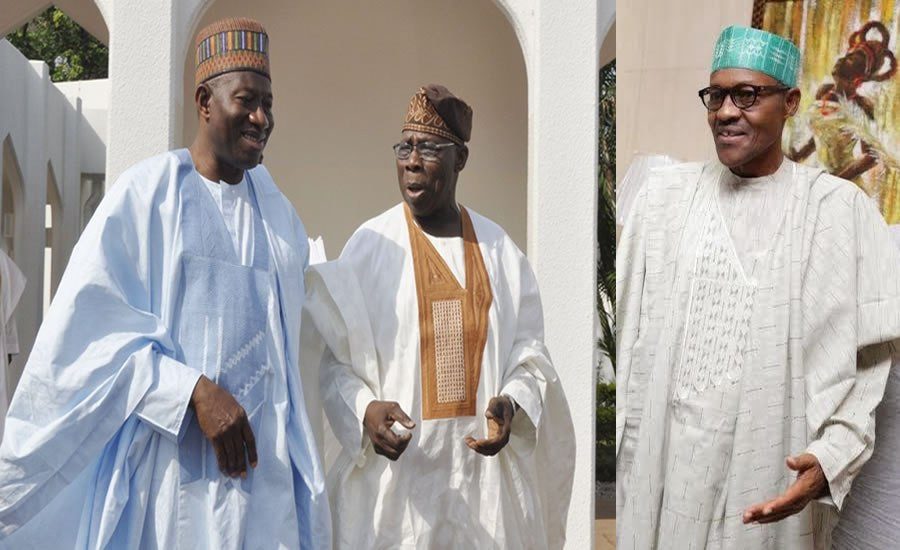
SERAP Demands Asset Declarations of Buhari, GEJ, OBJ, Govs
By Dipo Olowookere
A Freedom of Information (FoI) request has been sent to the Chairman of Code of Conduct Bureau (CCB), Mr Muhammed Isah, by a prominent anti-corruption group known as Socio-Economic Rights and Accountability Project (SERAP).
The group wants Mr Isah to use his “good offices and leadership position to urgently provide information on specific details of asset declarations submitted to the CCB by successive presidents and state governors since the return of democracy in 1999.”
According to SERAP, it is seeking information on “details of asset declarations by successive presidents and state governors between 1999 and 2019, including details of declarations made immediately after taking offices and thereafter, and for those who have left public offices, at the end of their term of office.”
The group also said it wants information “on the number of asset declarations so far verified by the CCB and the number of those declarations found to be false and deemed to be in breach of the Code of Conduct for Public Officers, by the Bureau.”
In the FOI request dated April 18, 2019, and signed by SERAP deputy director, Mr Kolawole Oluwadare, the organisation said, “While we welcome the judgment by the Code of Conduct Tribunal on Justice Walter Onnoghen, we now urge the CCB to extent its mandates to enforce constitutional provisions on asset declarations by public officers to cover elected officers and to vigorously pursue the prosecution of any such officers who use their powers either as presidents or state governors over public funds to enrich themselves.”
According to SERAP, “While judicial corruption is bad, the level of corruption involving many politicians since 1999 and the entrenched culture of impunity of perpetrators is equally appalling. Publishing the asset declarations of elected public officers since the return of democracy in 1999 to date would improve public trust in the ability of the Bureau to effectively discharge its mandates. This would in turn put pressure on public officers like presidents and state governors to make voluntary public declaration of their assets.”
The FOI request read in part: “SERAP is concerned that many politicians hide behind the fact that members of the public do not have access to their asset declarations to make false declarations, and to cover up assets illegally acquired in corruption or abuse of office. The CCB can use the opportunity presented by the Onnoghen judgment to increase the accountability of politicians through the asset declaration provisions if it is not to be accused of witch-hunting the judiciary.
“The grim condition of many of our citizens since 1999 has been worsened by the deterioration of public services whereby access to clean water and affordable health-care has become a pipe dream and the supply of electricity became epileptic and irregular due to years of grand corruption by many politicians at the highest level of government.
“We would be grateful if the requested information is provided to us within 14 days of the receipt and/or publication of this letter. If we have not heard from you by then, the Registered Trustees of SERAP shall take all appropriate legal action under the Freedom of Information Act to compel you to comply with our request.
“The persistent refusal by successive presidents and state governors to make public their asset declarations is entirely inconsistent with the letter and spirit of the 1999 Constitution, and has been particularly harmful to the country and its people, especially given the widespread evidence of grand corruption among politicians holding public offices in Nigeria.
“The Nigerian Constitution of 1999 (as amended) seeks to prevent corruption and abuse of office through its provisions on the declaration of assets not just by judicial officers but by all public officers including elected officers like presidents and governors.
“Nigerians can no longer accept the excuse by high-ranking government officers that declaring their assets before the CCB is enough, as such pretext is not supported by the oaths of office by elected public officers. The failure by successive presidents and state governors to voluntarily make public their asset declarations would seem to suggest that they have something to hide.
“Given that many public officers being tried for or convicted of corruption are found to have made a false declaration of their assets, the CCB should no longer allow politicians to undermine the sanctity and integrity of the asset declaration provisions of the Constitution by allowing them to continue to exploit legal gaps for illicit enrichment.
“SERAP believes that while elected public officers may not be constitutionally obliged to publicly declare their assets, the Freedom of Information Act 2011 has now provided the mechanism for the CCB to improve transparency and accountability of asset declarations by elected public officers.
“Asset declaration forms are public documents within the meaning of section 109 of the Evidence Act, and therefore, Nigerians are entitled to have access to such information. SERAP urges the CCB to vigorously push for change in law to provide penal sanctions for politicians that fail to make public their asset declarations.
“By Section 1 (1) of the Freedom of Information (FOI) Act 2011, SERAP is entitled as of right to request for or gain access to information, including information on the asset declarations by elected public officers since the return of democracy in 1999.
“SERAP notes that provisions on the declaration of assets by all public officers in Nigeria are entrenched in the Code of Conduct for Public Officers, contained in Part I of the Fifth Schedule to the 1999 Nigerian Constitution. The primary objective is to prevent corruption and abuse of office and to ensure transparency in public officers.
“SERAP also notes that public officers for the purposes of the Code include the President and the Vice-President of the Federation, state governors and their deputies; the President and Deputy-President of the Senate, the Speaker and Deputy-Speaker of the House of Representatives and Speakers, the Chief justice of Nigeria, justices of the Supreme Court, the President and justices of the Court of Appeal, and other judicial officers and all staff of courts of law.”
SERAP, therefore, urged the CCB to disclose including by publishing on a dedicated website, details of asset declarations submitted by presidents and state governors since the return of democracy in 1999; disclose details on the number of asset declarations so far verified by the CCB and the number of those declarations found to be false and deemed to be a breach of the Code of Conduct for Public Officers by the Bureau; and immediately take cases of false asset declarations to the Code of Conduct Tribunal for effective prosecution of suspects, and include banning the politicians involved from holding public offices for at least a period of 10 years and seeking refund of stolen public funds as part of the reliefs to be sought before the Tribunal.
Business Post reports that since 1999, four persons have governed Nigeria as Presidents and they are Mr Olusegun Obasanjo, late Mr Umaru Musa Yar’Adua, Mr Goodluck Ebele Jonathan and Mr Muhammadu Buhari.
General
New USCIS Policy: Banwo Law Offers Legal Support to Green Card Applicants
By Modupe Gbadeyanka
An announcement by the administration of Mr Donald Trump on May 22 regarding Green Card applications has continued to ruffle feathers among immigrants.
In the new memo issued by the United States Citizenship and Immigration Services (USCIS), foreign nationals seeking to adjust their immigration status to permanent residence (Green Card) have been asked to apply through consular processing at a US embassy or consulate in their home country, rather than adjusting status while present in America.
Commenting on this latest stance, a foremost immigration attorney, Mr Ope Banwo, said this development could expose many Green Card applicants to severe re-entry penalties if not properly managed, stressing that this carries major legal implications for many immigrants already residing in America.
He noted that the policy may impact not only undocumented immigrants, but also individuals currently living legally in the United States on temporary visas such as H1B workers, F1 students, B1/B2 visitors, exchange visitors, and other non-immigrant visa categories.
“For years, Adjustment of Status allowed many immigrants to avoid the risks associated with departing the United States after overstaying visas,” Mr Banwo stated.
“The danger now is that some immigrants may unknowingly trigger automatic three-year or ten-year re-entry bans once they leave the U.S. for overseas visa processing,” he added.
Mr Banwo explained that many immigrants are unaware that unlawful presence accumulated in the United States can activate harsh immigration penalties immediately upon departure from the country, stating that marriage-based Green Card applicants, employment-based immigrants, temporary workers transitioning to residency, and visa overstays could all face serious complications under the evolving policy framework.
Despite the growing concerns, he urged immigrants not to panic, stressing that informed legal guidance remains the key to navigating the changing immigration landscape successfully.
He also cautioned against depending on social media speculation, “TikTok lawyers,” or unverified online immigration advice when making critical decisions.
According to him, Banwo Law, accessible through SpeakWithOpe.com, is already assisting potentially affected immigrants nationwide by reviewing immigration histories, assessing waiver eligibility, and developing strategic legal solutions tailored to individual situations.
The law firm is also helping clients determine whether they may still qualify for Adjustment of Status inside the United States and advising them on safer legal alternatives where necessary.
Mr Banwo stressed that immigrants should seek experienced legal counsel before travelling outside the United States or taking immigration steps that may affect their ability to return or obtain lawful permanent residency.
General
SERAP Urges Finance Minister to Reveal Recipients of Abuja CCTV Funds
By Adedapo Adesanya
The Socio-Economic Rights and Accountability Project (SERAP) has urged the Minister of Finance, Mr Taiwo Oyedele, to immediately disclose the identities of all entities that benefited from the payments under the National Public Security Communication System project in Abuja, commonly referred to as the $460 million Abuja CCTV Project.
The Federal Ministry of Finance, in response to SERAP’s contempt proceedings, had recently disclosed that: “Records from the Ministry of Police Affairs indicate that while local subcontractors may have been engaged, there is an absence of detailed subcontracting records identifying specific local companies that received funds directly from the Chinese loan.”
The Ministry made the disclosure in a letter dated May 15, 2026, signed by its Permanent Secretary, R. O. Omachi.
Responding, SERAP, in a letter dated May 23, 2026, signed by its deputy director, Mr Kolawole Oluwadare, said: “We are concerned that although the judgment was delivered in May 2023, the Ministry only released some information after we commenced contempt proceedings and served a Notice to Show Cause in January 2026.”
According to SERAP, “Nigerians still do not know exactly the names of local contractors for the project. The absence of this information raises serious concerns about record keeping, transparency and accountability, and whether the project was implemented in a manner consistent with the public interest.”
On May 15, 2023, the Federal High Court ordered the Ministry of Finance to disclose the total amount paid under the $460 million Abuja CCTV loan, the identities of local and Chinese contractors who received the funds, the status of the project’s implementation, and details relating to the N1.5 billion reportedly paid for the Code of Conduct Bureau headquarters project.
SERAP said, “The details provided amount to only partial compliance with Justice Emeka Nwite’s judgment. Key questions remain unanswered, and further clarification is needed to ensure full and effective compliance with the judgment.”
The organisation noted that while it appreciates the steps taken by the Ministry to provide some information concerning the Chinese loan drawdown, counterpart funding arrangements, and certain records on equipment deliveries connected with the project, there is still no explanation regarding the missing 6,035 items as part of the status of implementation of the project.
“It remains unclear whether the items were subsequently delivered, whether payment was made for them, whether the contractor defaulted, whether Nigeria suffered any financial loss, and whether any steps were taken to recover public funds.
“The Ministry lists items reportedly delivered in 2013. However, it has failed to clarify how many cameras were installed, if any; where they were installed; whether the cameras are currently operational; and whether the project delivered value for money.
“For a project financed through public borrowing—debt Nigerians continue to repay—full transparency over all beneficiaries, foreign and domestic, is essential. Nigerians have the right to know how public funds were spent, who received them, and what was delivered in return,” the group said.
General
NIMASA Confirms Oil Spill from Bonny Channel Vessel Collision
By Adedapo Adesanya
The Nigerian Maritime Administration and Safety Agency (NIMASA) has confirmed that a collision between vessels in the Bonny Channel, Rivers State, led to oil pollution in the affected area.
The agency’s Deputy Director and Head of Public Relations, Mr Osagie Edward, disclosed this in a statement, noting that the Deep Blue Forward Operating Base in Bonny received a distress call at about 11:30 a.m. regarding the collision.
He said the incident involved MV Valparaiso, a Singapore-flagged container vessel with IMO Number 9433054, and MT Lady Martina, a Nigerian-flagged oil products tanker.
According to the statement, the Deep Blue Base immediately deployed 10 armed personnel aboard the interceptor boat DB 214 to the scene.
The agency said five crew members aboard MT Lady Martina sustained varying degrees of injuries during the incident.
The spokesperson said the injured crew members were evacuated to the Forward Operating Base sickbay in Bonny for immediate medical treatment.
“Following the collision, MT Lady Martina drifted ashore and is currently aground along the Bonny Channel.
“MV Valparaiso also remains grounded at the Bonny Inner Anchorage pending damage assessment and further investigation,” Edward said.
He said the management of MAERSK had officially reported the incident to the agency.
Mr Edward said the Director-General of NIMASA, Mr Dayo Mobereola, had ordered a full investigation into the immediate and remote causes of the collision.
He added that NIMASA had established a Situation Monitoring Room to coordinate emergency response efforts and monitor developments from the incident.
Mr Mobereola had personally visited Rivers to inaugurate the monitoring room and oversee response operations in the state.
The Director-General also directed the agency’s Marine Environment Management Department to begin an Environmental Impact Assessment (EIA) of the affected area immediately.
Mr Mobereola urged officials to take necessary measures to mitigate the impact of the Tier One oil sheen and safeguard the marine environment.
-
Feature/OPED6 years agoDavos was Different this year
-
Travel/Tourism10 years ago
Lagos Seals Western Lodge Hotel In Ikorodu
-
Showbiz3 years agoEstranged Lover Releases Videos of Empress Njamah Bathing
-
Banking8 years agoSort Codes of GTBank Branches in Nigeria
-
Economy3 years agoSubsidy Removal: CNG at N130 Per Litre Cheaper Than Petrol—IPMAN
-
Banking3 years agoSort Codes of UBA Branches in Nigeria
-
Banking3 years agoFirst Bank Announces Planned Downtime
-
Sports3 years agoHighest Paid Nigerian Footballer – How Much Do Nigerian Footballers Earn