Connect with us

Economy

European Shares Rise on Friday

Published

on

European Shares

By Investors Hub

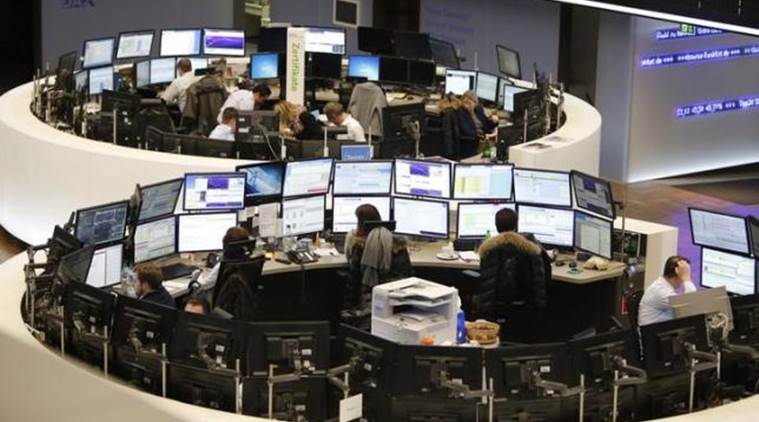
European shares have risen on Friday, as investors cheer positive earnings updates from regional banks and the upbeat U.S. jobs data.

While the U.K.?s FTSE 100 Index has advanced by 0.8 percent, the German DAX Index is up by 0.6 percent and the French CAC 40 Index is up by 0.4 percent.

Adidas shares have moved sharply higher. The German sportswear maker affirmed its full-year outlook after reporting forecast-beating earnings for the first quarter, thanks to high-margin ecommerce.

Societe Generale has also rallied after the bank’s first quarter profit fell 26 percent but still beat expectations. The lender managed to significantly improve its risk-based capital ratios with its (risk-weighted asset) management measures.

Miners Anglo American, Antofagasta and Glencore have also risen after Tesla said it expects global shortages of minerals like nickel and copper.

HSBC Holdings has also moved notably higher after the lender beat forecasts with a 31 percent jump in quarterly profit.

On the other hand, Air France-KLM has tumbled after its first quarter loss widened on the back of higher fuel costs and tough price competition.

Reinsurer Swiss Re has also shown a notable move to the downside after its first quarter results came in below expectations.

Shopping centre landlord Intu Properties has also slumped after the company said it expects the remainder of 2019 to be challenging.

In economic news, eurozone consumer price inflation accelerated more than expected in April to its highest level in five months, led by higher energy prices and services costs, preliminary data from Eurostat showed.

The consumer price index rose 1.7 percent year-on-year following a 1.4 percent increase in March. Economists had forecast 1.6 percent inflation.

Producer price inflation eased slightly to 2.9 percent in March from 3 percent in February. Economists had forecast 3 percent price growth.

Separately, a survey showed U.K. service sector activity jumped back into the expansion territory in April. The seasonally adjusted IHS Markit/CIPS U.K. Services PMI Index rose to 50.4 from 48.9 in the previous month.


Modupe Gbadeyanka is a fast-rising journalist with Business Post Nigeria. Her passion for journalism is amazing. She is willing to learn more with a view to becoming one of the best pen-pushers in Nigeria. Her role models are the duo of CNN's Richard Quest and Christiane Amanpour.

Click to comment

Leave a Reply

Your email address will not be published. Required fields are marked *

Economy

For Third Straight Month, Nigeria Meets OPEC Quota in July

Published

on

crude oil output

By Aduragbemi Omiyale

Nigeria slightly surpassed its quota set by the Organisation of the Petroleum Exporting Countries (OPEC) in July 2026.

In the month under review, the country produced about 1.57 million barrels of crude oil per day.

It was the third consecutive month Africa’s largest oil-producing nation was meeting its monthly quota, set to stabilise the price of the commodity on the global market by the oil cartel.

Data released by the Nigerian Upstream Petroleum Regulatory Commission (NUPRC) on Wednesday showed that the 1.5 million barrels per day ceiling for Nigeria was surpassed last month.

The agency disclosed in a statement today that the country produced 1.505mbpd of crude oil and 0.17mbpd of condensate, bringing the combined daily production to 1.67mbpd.

In the month under review, the daily peak production of crude oil and condensate was 1.78mbpd, while the lowest daily production was 1.57mbpd.

Although Nigeria met its OPEC quota in the month of July, the statistics show that on a month-on-month basis, production fell by 4 per cent.

This was attributed to the decline in production due to operational challenges experienced at the Erha and Akpo fields, which impacted crude oil output during the period under review.

These disruptions constrained production volumes and contributed significantly to the overall reduction in national crude oil output.

Despite the challenges, production operations across most other producing assets remained relatively stable, with operators implementing measures aimed at maintaining production efficiency and minimising the impact of operational constraints, NUPRC stated.

Continue Reading

Economy

Lasaco Assurance Lists N18.5bn Shares from Rights Issue on Stock Exchange

Published

on

Lasaco Assurance New Logo

By Aduragbemi Omiyale

The over 9 billion shares of Lasaco Assurance Plc issued to shareholders of the company via a rights issue have been listed on the Nigerian Exchange (NGX) Limited.

The equities were brought to Customs Street on Wednesday by the organisation, increasing its total issued and fully paid-up share capital.

Lasaco Assurance, which scaled the recapitalisation hurdle of the National Insurance Commission (NAICOM) in July 2026, raised fresh capital from the capital market to shore up its capital base.

The underwriting firm got about N18.5 billion from the rights issue, which involved the issuance of 9,236,321,546 ordinary shares at a unit price of N2.00.

The exercise was on the basis of five new ordinary shares for every existing six ordinary shares held as of the close of business on Friday, February 20, 2026.

Confirming the listing of the additional stocks of Lasaco Assurance today, the Head of Issuer Regulation Department of NGX RegCo, Mr Godstime Iwenekhai, announced in a circular that, “Trading licence holders are hereby notified that an additional 9,236,321,546 ordinary shares of 50 Kobo each of Lasaco Assurance Plc were today, Wednesday, August 12, 2026, listed on the daily official list of Nigerian Exchange Limited.

“The additional shares arose from the company’s rights issue of 9,236,321,546 ordinary shares of 50 Kobo each at N2.00 per share on the basis of five new ordinary shares for every existing six ordinary shares held as of the close of business on Friday, February 20, 2026.

“With the listing of the additional 9,236,321,546 ordinary shares, the total issued and fully paid-up share capital of Lasaco Assurance Plc has now increased from 11,083,585,855 to 20,319,907,401 ordinary shares of 50 Kobo each.”

Continue Reading

Economy

Recapitalisation: Well-Capitalised Insurers Will Strengthen Nigeria’s Economy—NIA

Published

on

insurance industry

By Adedapo Adesanya

The Nigerian Insurers Association (NIA) has said the successful recapitalisation of the insurance industry will strengthen the sector’s ability to support financial stability and economic growth.

NIA Chairman, Mrs Ebelechukwu Nwachukwu, said a well-capitalised insurance industry would be better positioned to meet its obligations promptly, underwrite complex and large-scale risks and serve as a dependable pillar of the Nigerian economy.

She made the remarks while commending the National Insurance Commission (NAICOM) for its structured implementation of the new minimum capital requirements under the Nigerian Insurance Industry Reform Act (NIIRA) 2025.

Mrs Nwachukwu said NAICOM’s clear guidelines, systematic verification process, defined timelines and rigorous supervision had provided operators with a credible framework for navigating the recapitalisation exercise.

She described the outcome as a major milestone for the industry and congratulated the 43 insurance and reinsurance companies that have successfully met the prescribed minimum capital requirements.

According to her, the exercise represents “a major win not just for regulators and operators, but for policyholders, investors and the wider Nigerian economy.”

Mrs Nwachukwu said the association would continue to work with NAICOM and other stakeholders to consolidate the gains of the exercise, with emphasis on sustainable industry growth, stronger market conduct and improved consumer confidence.

The official also expressed solidarity with the eight companies still undergoing final verification and regulatory review, urging them to remain confident as NAICOM completes the process within the 14-day review period.

The NIA chairman assured policyholders and the wider business community that the insurance industry would emerge from the recapitalisation exercise stronger, more resilient and better positioned to contribute to Nigeria’s economic development.

Continue Reading