Economy
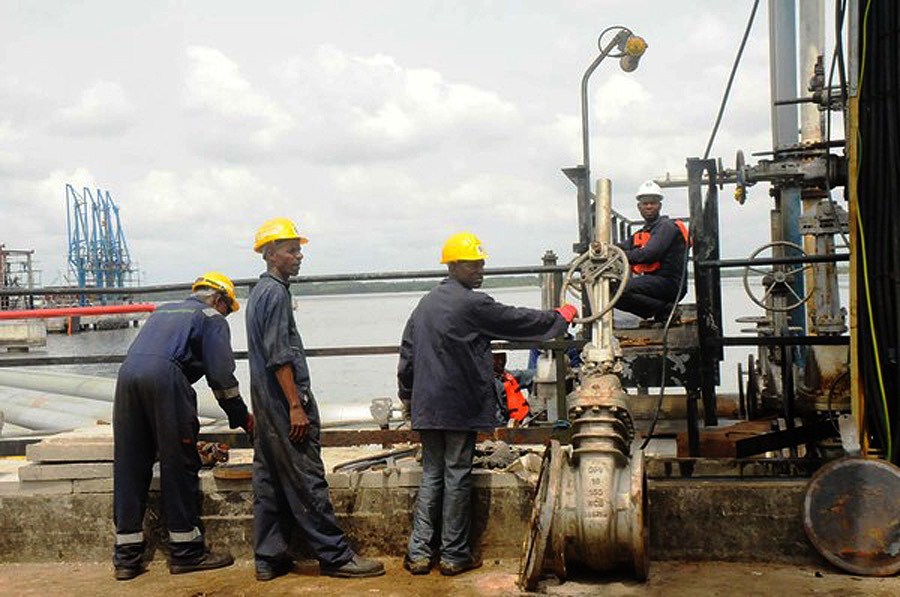
Crude Oil Accounts for 74.45% of Nigeria’s Exports in Q1 2019
By Dipo Olowookere
It seems efforts by the administration of President Muhammadu Buhari to diversify the nation’s economy so as to stop the heavy reliance on crude oil as Nigeria’s major exports are not yielding any meaningful results.
This is because the commodity is still the main driver of the economy despite attempts to make the non-oil industry contribute significantly to revenue generated.
Last week, the National Bureau of Statistics (NBS) released the Foreign Trade in Goods Statistics for the first quarter of 2019, but the figures showed that much of the trades carried out by the Africa’s largest economy was still in the oil sector.
According to the stats office, Nigeria’s export in the first quarter of this year was still oil dependent, with exports trade dominated by crude oil exports, which contributed N3.377 trillion or 74.45 percent to the value of total exports in Q1, 2019.
However, the non-oil products accounted for 25.55 percent of total exports in the quarter under review.
In Q1 2019, Nigeria exported most products to Europe, Asia and Africa equivalent to N1.833 trillion or 40.43 percent of total exports, N1.325 trillion or 29.2 percent and N936.8 billion or 20.67 percent respectively.
Furthermore, Nigeria exported goods worth N405.8 billion or 8.95 percent to the Americas and N34.5 billion or 0.76 percent to Oceania.
Within Africa, Nigeria exported goods valued at N300.6 billion to ECOWAS member states, representing 32.08 percent of total merchandise exports to Africa.
By country of destination, Nigeria exported goods mainly to India, Spain, Netherlands, South Africa and France, valued at N745.0 billion or 16.43 percent, N487.1 billion or 10.74 percent, N405.4 billion or 8.9 percent, N325.5 billion or 7.2 percent and N302.3 billion or 6.7 percent respectively.
In the report, the NBS said the total trade recorded in Nigeria in the first quarter of 2019 grew by 2.50 percent when compared with what was achieved in the fourth quarter of and by 7.52 percent as against the corresponding quarter in 2018.
In the period under consideration, the country’s total exports was recorded at N4.535 trillion, which represents a 1.78 percent rise compared with the fourth quarter of 2018 but a 3.9 percent fall compared to the first quarter of 2018.
Similarly, the value of total imports increased to N3.704 trillion, representing an increase of 3.39 percent relative to Q4 2018 and 29.84 percent compared with Q1 2018.
It further stated that the trade balance of Nigeria remained positive at N831.6 billion in the first quarter of this year, boosted by increase in both exports and imports, with the boost also helped total trade increase to N8.239 trillion.
A breakdown of the imports showed that imported agricultural products were 7.98 percent higher in value than in Q4 2018, and 28.1 percent higher than in Q1, 2018, while the value of raw material imports grew 6.62 percent more than the value recorded in Q4, 2018 and 20.76 percent more than the value recorded in Q1 2018.
Also, the value of solid minerals imports was 1.26 percent more than the value of imports in Q4, 2018 and 35.90 percent higher than the value recorded in Q1 2018, while the value of energy goods imports was 20.28 percent lower than in Q4, 2018. Compared with the corresponding quarter of 2018, a decrease of 0.94 percent was recorded.
In the report analysed by Business Post, the stats office said the value of imported manufactured goods increased by 25.81 percent in Q1, 2019 against the value recorded in Q4, 2018 and rose by 130.7 percent against its value in Q1, 2018. The increase in value of imported manufactured goods was partly as a result of the importation of hygienic/ pharmaceutical product for humanitarian purposes during the quarter.
In addition, the value of other oil products imported was 58.4 percent lower than in Q4, 2018 and 72.71 percent lower than the corresponding quarter of 2018.
For the exports, the value of agricultural exports in Q1 2019 was 11.89 percent lower than in Q4, 2018 but 17.5 percent higher than Q1 2018.
The value of raw material exports in Q1, 2019 was 10.67 percent lower than the value in Q4, 2018 but 11.57 percent higher than in Q1 2018.
The value of solid minerals exports increased by 16.88 percent relative to Q4 2018 but decreased by 66.6 percent compared to the corresponding quarter in 2018.
The exports of energy goods decreased in value by 1.3 percent compared to Q4, 2018 but increased by 2.17 percent when compared with Q1 2018.
The value of manufactured goods exports rose by 511.19 percent in Q1 2019 when compared with the value recorded in Q4 2018 and 6.43 percent compared to the corresponding quarter in 2018. The increase in export during the quarter was due to the re-export of vessels and other floating structures during the quarter, amongst other high value re-exports.
The value of crude oil exports in Q1 2019 was 7.78 percent lower than in Q4 2018 and 5.67 percent lower than in Q1 2018.
The value of other oil products exports decreased by 1.42 percent compared to Q4 2018, and 1.44 percent compared to Q1 2018.
Economy
NCDMB Unveils $100m Equity Investment Scheme for Local Energy Firms
By Adedapo Adesanya
The Nigerian Content Development and Monitoring Board (NCDMB) has unveiled a $100 million Equity Investment Scheme among a raft of fresh initiatives to bolster indigenous capacity and participation in the oil and gas industry.
The Executive Secretary of the NCDMB, Mr Felix Ogbe, announced this in a keynote address he delivered at the 14th Practical Nigerian Content Forum, noting the $100 million Equity Investment Scheme would provide financing to high-growth indigenous energy service companies, while diversifying the income base of the Nigerian Content Development Fund (NCDF).
In furtherance of the $100 million Equity Investment Scheme, a memorandum of understanding was signed at the event between Engr. Ogbe and the Managing Director of the Bank of Industry, Mr Olasupo Olusi, toward management of the scheme, which is a new product of the Nigerian Content Intervention Fund, NCI Fund.
The NCDMB boss also announced that 61 per cent Nigerian Content level was already attained in the oil and gas sector by the third quarter of 2025 from the projects being monitored by the Board.
Another major announcement was the Board’s readiness to onboard a new set of Project 100 Companies after the successful implementation of approved interventions relating to the first set of Project 100 Companies, launched in 2019, for which an exit plan is slated for April 2026.
Project 100 Companies is an initiative of the Ministry of Petroleum Resources and the NCDMB under which 100 indigenous companies in the oil and gas industry are nurtured and empowered to higher levels of competitiveness through capacity building and access to market opportunities.
He also said the Board has concluded plans to launch its NCDMB Technology Challenge in the first quarter of 2026 and to hold a Research and Development Fair in the second quarter of 2026. In addition, a review of the Board’s seven current guidelines is to be undertaken between the first and second quarter of 2015.
Mr Ogbe further disclosed that the Board has completed the framework for issuance of NCDF Compliance Certificate, an instrument to confirm that a company in the oil and gas industry has complied with the one per cent remittance obligations. The Certificate will become effective on 1st January 2026 and would be required to obtain key permits and approvals from the Board.
Among recent accomplishments of the Board announced by the NCDMB boss was the expansion of access to community contractors under the Community Contractors Scheme, with over 94 disbursements made in 2025 alone.
In addition, the Nigerian Content Academy has commenced operation as a full-fledged division of the Board, with seven of its Lecture Series on key industry issues already organised.
On human capacity development, he noted that the NCDMB has rolled out its Oil and Gas Field Readiness Training Programme for top 10 skills in high demand, on the back of the surge in final investment decisions, FIDs, on big-ticket projects in the oil and gas industry and over 20 Field Development Plans recently approved by the Nigerian Upstream Petroleum Regulatory Commission, NUPRC. The Programme is to ensure availability of indigenous technical capacity at the take-off of the projects.
The construction of the multibillion-naira Oloibiri Museum and Research Centre, OMRC, at Otuabagi in Ogbia Local Government Area of Bayelsa State has also taken off, with the execution of a contract between the construction firm, Julius Berger Plc, and OMRC Limited in December 2024, while mobilisation to site was achieved in July 2025. Jointly sponsored by the Petroleum Technology Development Fund, PTDF, NCDMB, Shell Petroleum Development Company (now Renaissance Africa Energy Limited), and Bayelsa State Government, the project is expected to be delivered within 30 months.
In a presentation, the Chairman, Senate Committee on Local Content, Mr Joel Thomas, expressed concern that some indigenous companies have consistently flouted provisions of the Nigerian Oil and Gas Industry Content Development, NOGICD Act, 2010, as relates to one per cent remittance to the Nigerian Content Development Fund, NCDF.
His counterpart in the House of Representatives, Boma Goodhead, commended the NCDMB for sustaining the PNC Forum and Exhibition over the years and for ably guiding industry drive toward attainment of objectives of the NOGICD Act.
In his ministerial address, the Minister of State for Petroleum Resources (Gas), Ekperikpe Ekpo, said the theme of the PNC Forum, “Securing Investments, Strengthening Local Content, and Scaling Energy Production,” captures Nigeria’s national priorities that guide interventions by the Board and his Ministry.
He emphasised that “Investment remains the lifeblood of the energy sector,” and that the Board and the Ministry are committed to providing stable policies, transparent processes, and market-driven incentives, to attract long-term capital. He assured that they would continue strengthening local capacity across fabrication, engineering, technology services, manufacturing of components, and research and development.
On his part, Mr Olusi, said that the collaboration between the NCDMB and BOI marked a significant expansion of a longstanding relationship, while assuring that through the $100 million NCIF Equity Investment Fund, the Bank of Industry will deploy equity and quasi-equity capital to support high-potential Nigerian companies, to complement traditional debt financing and strengthening access to the long-term risk capital required for scale, competitiveness, and value creation.
According to the BOI boss, with a single obligor limit of $5 million, the Fund is designed to catalyze multiple high-impact investments while maintaining strong governance and prudent risk management.
Economy
Stock Market Gives up N34bn Despite Strong Investor Sentiment
By Dipo Olowookere
It was another bearish outcome for the Nigerian Exchange (NGX) on Wednesday due to persistent profit-taking.
The local bourse shed 0.05 per cent at midweek as investors tread cautiously, causing the All-Share Index (ASI) to contract by 78.28 points to 146,862.01 points from 146,940.29 points, with the market capitalisation giving up N34 billion to settle at N93.625 trillion compared with the previous day’s N93.659 trillion.
Chams ended the trading day as the worst-performing stock after it lost 10.00 per cent to trade at N3.06, Haldane McCall declined by 8.88 per cent to N4.00, UAC Nigeria slumped by 8.18 per cent to N80.80, and Sunu Assurance moderated by 6.98 per cent to N4.00.
The best-performing stock for the session was Japaul due to its 10.00 per cent rise, closing at N2.53. Prestige Assurance expanded by 9.40 per cent to N1.63, MeCure inflated by 7.72 per cent to N34.90, The Initiates rose by 7.30 per cent to N12.50, and Consolidated Hallmark gained 6.97 per cent to close at N4.30.
Business Post observed that despite the loss, the market breadth index was positive after Customs Street finished with 28 price gainers and 23 price losers, implying a strong investor sentiment.
The most traded equity was Cutix with 122.9 million units sold for N369.1 million, FCMB exchanged 80.7 million units worth N879.3 million, Consolidated Hallmark transacted 71.2 million units valued at N286.4 million, Fidelity Bank traded 63.8 million units worth N1.2 billion, and Tantalizers had a turnover of 57.8 million units valued at N136.5 million.
In all, investors bought and sold 747.1 million shares for N12.4 billion in 19,161 deals versus the 2.0 billion shares worth N30.2 billion executed in 23,038 deals on Tuesday, indicating a decline in the trading volume, value, and number of deals by 62.65 per cent, 58.94 per cent, and 16.83 per cent, respectively.
Economy
Naira Weakens 0.24% to N1,455/$1 at NAFEX on Yuletide Demand Pressure
By Adedapo Adesanya
The Naira depreciated against the United States Dollar by N3.52 or o.24 per cent in the Nigerian Autonomous Foreign Exchange Market (NAFEX) to N1,455.38/$1 on Wednesday, December 8, from the N1,451.86/$1 it was traded a day earlier.
It was a similar story for the local currency against the Pound Sterling in the same market window yesterday as its value shrank by N2.51 to close at N1,937.26/£1 versus the preceding session’s N1,934.75/£1 and lost N1.63 against the Euro to settle at N1,692.76/€1 compared with Tuesday’s closing value of N1,691.13/€1.
In the black market segment, the Naira weakened against the greenback yesterday by N5 to sell for N1,470/$1 compared with the previous day’s N1,465/$1 but traded flat at N1,460/$1 at GTBank.
The domestic currency faces pressures from increasing year-end Dollar demand as importers and retailers are actively sourcing FX for Christmas and New Year’s sales.
However, this is still stable, reflecting divergent currency dynamics between the regulated official segment and the informal markets as the Naira’s movement remains within the trading band.
This suggests that the FX market is adjusting gradually to seasonal pressures while awaiting further policy signals from the Central Bank of Nigeria (CBN).
Meanwhile, the cryptocurrency market tumbled despite the Federal Reserve’s decision to trim its fed funds rate range by 25 basis points. Traders were spooked by comments by Federal Reserve’s chairman Jerome Powell who sounded both dovish and hawkish.
While the rate cut is largely anticipated by market participants, looser financial conditions with a resilient US economy could help bolster risk appetite on markets. According to Mr Powell, the US labour market might be weaker than previously thought, while also sounding cautious about gains made in fighting inflation.
Cardano (ADA) depreciated by 7.0 per cent to $0.4311, Solana (SOL) fell by 5.9 per cent to $131.06, Dogecoin (DOGE) slid by 5.6 per cent to $0.1385, Litecoin (LTC) crashed by 3.9 per cent to $81.26, and Ripple (XRP) declined by 3.7 per cent to $2.01.
Further, Ethereum (ETH) moderated by 3.4 per cent to $3,209.84, Binance Coin (BNB) retreated by 2.6 per cent to $871.20, and Bitcoin (BTC) lost 2.5 per cent to sell at $90,316.82, while the US Dollar Tether (USDT) and the US Dollar Coin (USDC) remained unchanged at $1.00 each.
-
Feature/OPED6 years agoDavos was Different this year
-
Travel/Tourism9 years ago
Lagos Seals Western Lodge Hotel In Ikorodu
-
Showbiz3 years agoEstranged Lover Releases Videos of Empress Njamah Bathing
-
Banking7 years agoSort Codes of GTBank Branches in Nigeria
-
Economy3 years agoSubsidy Removal: CNG at N130 Per Litre Cheaper Than Petrol—IPMAN
-
Banking3 years agoFirst Bank Announces Planned Downtime
-
Banking3 years agoSort Codes of UBA Branches in Nigeria
-
Sports3 years agoHighest Paid Nigerian Footballer – How Much Do Nigerian Footballers Earn