General
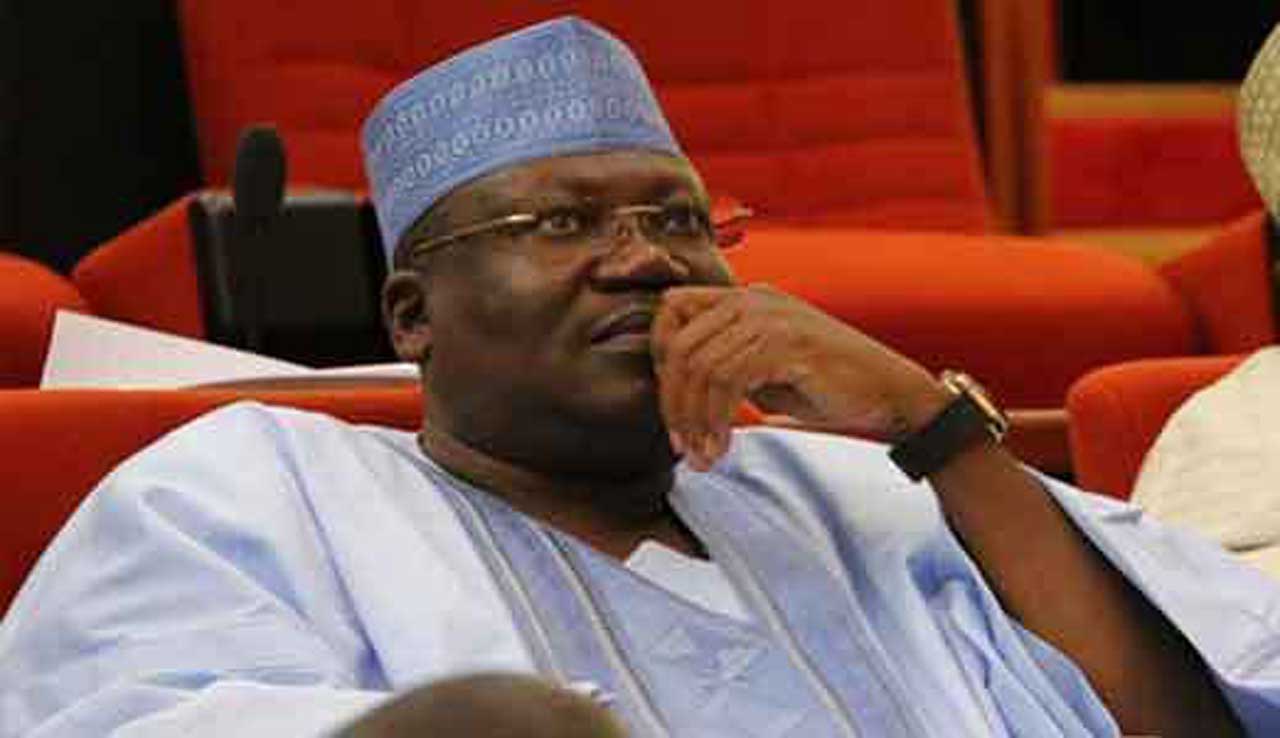
BREAKING: Ahmed Lawan Emerges Nigeria’s Senate President
By Dipo Olowookere
Senator Ahmed Lawan representing Yobe North Constituency of Yobe State in the National Assembly, has been elected as the Senate President of the 9th Senate.
The Senator beat his only rival for the position, Senator Ali Ndume from Borno South of Borno State, to clinch the post.
Out of the 107 votes cast by the lawmakers on Tuesday, Mr Lawan polled 79, while Mr Ndume raked 28 votes.
The new Senate President was the preferred candidate for the position by his political party, the All Progressives Congress (APC).
With his election and victory, Mr Lawan will lead the Senate and become the nation’s number three citizen as well as the Chairman of the National Assembly.
During the last Senate, Mr Lawan, who has been in the Senate since 1999, was the Senate Leader, while Mr Bukola Saraki, who is not returning to the Senate, was the Senate President.
General
NLC Hints at Fresh Nationwide Strike as New Minimum Wage Review Stalls
By Adedapo Adesanya
The Nigeria Labour Congress (NLC) has warned that it is ready for a major nationwide struggle to secure a new national minimum wage and better pensions for retired workers.
NLC President, Mr Joe Ajaero, said the union would not accept a review of workers’ salaries without a corresponding increase in pension benefits, adding that organised labour would also push for the creation of a National Minimum Pension.
Mr Ajaero made this known during the commissioning of the Comrade Godwin Abumisi Pensioners Legacy House and Multipurpose Hall in Abuja, noting that rising inflation and the high cost of living have made the current minimum wage and pension inadequate, leaving many workers and retirees struggling to survive.
“We are currently preparing for a major national struggle for a comprehensive review of the national minimum wage,” Mr Ajaero said.
“But it is no longer acceptable to discuss the welfare of workers without also discussing the welfare of those who have retired after years of service.”
He said the NLC would campaign for both a new minimum wage and a National Minimum Pension.
“It is a historical injustice that men and women who devoted their youth and productive years to serving this nation should be forced to live below the poverty line after retirement,” he said.
According to the unionist, the rising cost of food, healthcare and transportation has made life increasingly difficult for pensioners.
“We cannot continue to allow our senior citizens to survive on pensions that have become poverty wages. Every retiree deserves to live with dignity after decades of faithful service to the nation,” he added.
The NLC president urged pensioners to remain united and prepare for the struggle ahead, describing the newly inaugurated Legacy House as a centre for mobilisation and solidarity
He also called on workers to stand together, saying unity would strengthen labour’s ability to compel the government to fulfil its obligations to both serving workers and retirees.
Mr Ajaero further demanded the immediate payment of outstanding pension arrears and the implementation of a pension system that guarantees every retiree a decent standard of living.
“Together, we shall continue to fight until every Nigerian worker and pensioner receives the justice, respect and welfare they deserve,” he said.
General
Preparing Pot of Jollof Rice Now Costs Nearly N30,000—SBM Jollof Index
By Adedapo Adesanya
Preparing a pot of Nigeria’s most valued delicacy, jollof rice, costs as much as N29,578 in June 2026 compared to N25,798 in July 2025, an increase of 14.6 per cent, according to a new survey by SBM Intelligence.
The data and research firm, in its Jollof Index Q2 2026 report, titled Rebasing, Redefining, and the Weather’s Toll on the Pot, stated that it rebased the index in the July edition to a higher standard as of July 2025 and introduced re-standardised ingredient measures.
According to the report, the index now more accurately captures how households navigate the current affordability crisis.
The study collected monthly price data on 12 key ingredients: rice, vegetable oil, turkey or chicken, beef, tomatoes, pepper, onions, tinned tomatoes, salt, curry, thyme, and seasoning cubes from 13 markets across Nigeria’s six geopolitical zones.
The markets include Nyanya and Wuse II (North Central), Bauchi (North East), Kano (North West), Awka and Onitsha (South East), Port Harcourt, Calabar Municipal, and Bayside Mbakpa (South South), and Bodija, Dugbe, Trade Fair, and Balogun (South West).
The report stated that the upward trajectory in the cost of jollof rice since July 2025 was non-linear, with prices dipping in September and October 2025 before accelerating from November through the first half of 2026.
It revealed that the index has risen from N4,087 in July 2016 to N29,578 in June 2026, a staggering 624 per cent increase over 10 years.
“The data confirms that food inflation is not a cyclical phenomenon but a structural crisis, embedded in Nigeria’s failure to secure supply chains, stabilise its currency, invest in agricultural resilience, and now adapt to a changing climate,” the SBM survey stated.
Throughout the second quarter of 2026, Nigeria’s agricultural supply chain has been gripped by a compounding crisis driven by extreme weather patterns and structural logistical failures, the report stated.
From April through June, reports from urban markets across the country- Port Harcourt, Calabar, Onitsha, Lagos, Ibadan, Bauchi, Kano, and Abuja- revealed a consistent pattern of food scarcity and sharp price volatility.
Meanwhile, the National Bureau of Statistics (NBS) said Nigeria’s food inflation stood at 17.52 per cent on a year-on-year basis in June.
“The crisis has been most acute for perishable crops, particularly tomatoes and peppers, but its reach has extended to staples such as yams, plantains, garri, and even grains.
“Across every region, the story is the same: heavy rains have flooded roads, damaged farmland, delayed harvests, and driven up transport costs. Consumers are adapting, but their options are narrowing,” the report stated.
According to the report, consumers across the country are responding in similar ways: buying in smaller quantities, substituting fresh produce with dried or processed alternatives, and reducing portions.
“But these are coping strategies, not solutions,” the report added.
Geographically, the gap between Nigeria’s cheapest and most expensive markets has widened to N14,700.
According to the SBM report, Calabar Municipal is the most expensive market to cook a pot of jollof rice at N34,750, while Awka is the cheapest at N22,050.
“The most expensive markets are either in the South-South (where protein costs and import restrictions have surged) or in Lagos (the import gateway).
“The cheapest markets are in the South-east, which has benefited from local farming and shorter supply chains,” the report stated.
In North-central, ingredient prices at Abuja’s two markets, Nyanya and Wuse II, rose significantly.
Over the year to June 2026, Nyanya rose from N24,300 to N25,450, a modest 4.7 per cent increase, while Wuse II climbed from N28,150 to N29,200, a 3.7 per cent increase.
The report stated that Abuja’s food economy is fundamentally distorted by its dependence on distant supply corridors.
“Every grain of rice, every tomato, every onion must travel from Benue, Kaduna, Nasarawa, Niger, or beyond.
“When diesel prices surge, when insecurity blocks roads, when checkpoints multiply, or when heavy rains flood roads, Abuja’s markets feel it first and most acutely,” the report stated.
In the North-east, Bauchi recorded the most dramatic price movement of any market. The index fell from N38,850 in July 2025 to N32,350 by June 2026, a 16.7 per cent decline.
This correction followed a period of hyperinflation in mid-2025, during which Bauchi’s index peaked above N41,000.
“The decline reflects a combination of factors: a localised influx of early harvest yields, a collapse in demand as prices became unsustainable, and some improvement in supply routes,” the report stated.
In the North-west region, Kano’s Jollof Index rose from N24,520 in July 2025 to N25,820 in June 2026, a 5.3 per cent increase.
The modest rise showed a deeper reality because Kano’s index has been structurally expensive for years, driven by high protein costs and logistical challenges in moving goods into the region.
“Customers will have less money to spend on beauty products when they are struggling to buy food,” a cosmetics seller in Kano captured the sentiment.
Additionally, the South-east remains Nigeria’s cheapest region for jollof, but the gap with the rest of the country is narrowing.
At Awka, the index price of jollof rice rose from N21,700 in July 2025 to N22,050 in June 2026, a 1.6 per cent increase, while the index price at Onitsha market climbed from N22,200 to N22,550, a similar increase.
“These are the only markets below N23,000. The region’s relative affordability reflects its strong local farming culture and shorter supply chains,” the report stated.
It further clarified that the trend is upward because of the South-east’s reliance on food imports from North-central states for staples such as yams and vegetables.
The report stated that this reliance exposed the region to the same transport cost increases that impact Abuja and Kano.
The South-south region recorded the steepest increases of any zone, driven by a combination of structural shifts, policy changes, weather disruptions, and logistics costs.
Port Harcourt rose from N26,400 in July 2025 to N31,200 in June 2026, an 18.2 per cent increase.
Calabar Municipal jumped from N25,500 to N34,750, a 36.3 per cent surge, while Bayside Mbakpa climbed from N25,500 to N34,650, a 35.9 per cent increase.
The South-west region, and Lagos in particular, recorded dramatic price increases.
According to the report, the index price at Trade Fair and Balogun markets rose from N23,200 in July 2025 to N34,700 in June 2026, a 49.6 per cent increase, the sharpest of any market.
“The surge reflects Lagos’s position as Nigeria’s import gateway,” the SBM report stated.
According to the survey, when global oil prices spike, when the naira weakens, when shipping costs rise, or when heavy rains disrupt supply routes, Lagos feels it first.
The Iran war fuel shock in March 2026 pushed both markets from N20,400 in February to N25,200 in March, a 23.5 per cent monthly increase, the report stated.
The upward momentum continued through April, May, and June.
At Ibadan’s markets, Bodija and Dugbe, prices rose more moderately but still significantly.
Both increased from N25,930 in July 2025 to N28,550 in June 2026, a 10.1 per cent rise.
“The gap between Lagos and Ibadan has widened, reversing a trend of convergence seen in previous years.
“In Oyo State, researchers reported that fresh pepper, tomatoes, yam, and plantain are in extreme short supply,” the report stated.
General
Xenophobia: Reps to Document Losses, Seek Compensation For Nigerians in South Africa
By Adedapo Adesanya
The House of Representatives has called for a comprehensive investigation into the losses, casualties and properties abandoned by Nigerians following recent xenophobic attacks in South Africa.
This development comes after the final batch of Nigerians was evacuated from South Africa following mass protests calling for the exit of other Africans from their country, leaving many to abandon their livelihoods and businesses.
The lawmakers urged the federal government to intensify diplomatic engagements, pursue legal measures and strengthen bilateral cooperation with South Africa to ensure the safety and protection of Nigerians living in the country.
The resolution followed the adoption of a motion sponsored by the member representing Ikorodu Federal Constituency of Lagos State, Mr Babajimi Benson, during Tuesday’s plenary session presided over by Speaker Abbas Tajudeen.
The motion seeks to mandate the House Committees on Diaspora and Foreign Affairs to document the human and economic losses suffered by Nigerians during the attacks, compile an inventory of abandoned properties and recommend diplomatic and legal measures to improve the protection of Nigerians residing in South Africa.
Lawmakers argued that a thorough assessment of the impact of the attacks is necessary to support affected Nigerians and strengthen the country’s response to future incidents.
Also at plenary, the House considered a motion calling for a comprehensive audit of all seized, forfeited and recovered assets since May 29, 1999.
The motion, sponsored by Ibe Osonwa, who represents Arochukwu/Ohafia Federal Constituency of Abia State, advocates the creation of a national digital registry of recovered assets and the establishment of an ad hoc committee to enhance transparency, accountability and legislative oversight in asset management.