Connect with us

Feature/OPED

Rumour and Propaganda are Negative to Abia Development

Published

on

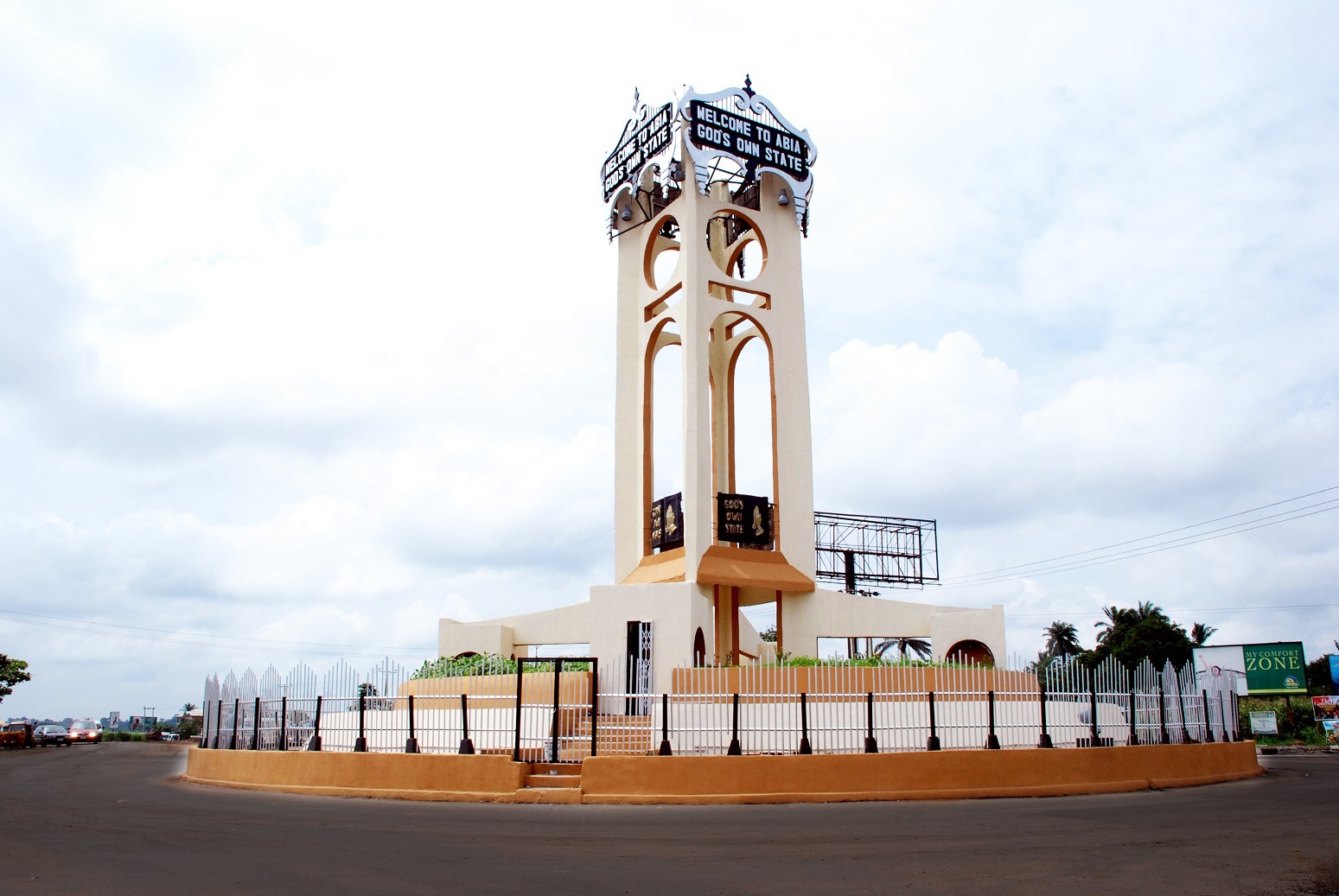
Abia state tower

By Okechukwu Keshi Ukegbu

Rumour and propaganda are serious antithesis to the development of a place. They are instruments usually deployed by debased minds and unscrupulous elements to achieve selfish ends.

While rumour manifest in unfounded and unsubstantiated claims, half-truth, and outright lies, sometimes, propagandists manipulate these instruments to change and influence people’s beliefs, attitudes and perspective on issues and as a result persuade them to believe or see these as real.

Rumours are assumptions or stories and statements in circulation without confirmation or certainty as to source or veracity. Rumours may or may not contain elements of truth, but their veracity is anyone’s guess; they carry no factual certainty.

Apostle James in his classical imagery in the Book of James 3:6 warns us thus: “The tongue also is a fire, a world of evil among the parts of the body. It corrupts the whole body, sets the whole course of one’s life on fire, and is itself set on fire by hell.”

The point here is that like fire, the words we speak have the potential for causing great harm. This is similar to the admonition in Proverbs 18:21: “The tongue has the power of life and death, and those who love it will eat its fruit.”

As James 3:6 rightly pointed out, rumours are inimical to society’s progress. They undermine good human relations. They generate tension, chaos, panic and can cause a city to evacuate, even when a single bullet has not been shot.

Throughout history, infernos are usually caused by mere sparks from passing trains or a strike of the match-stick. This may not be an exception to what is described as the most-deadly forest fire in the history of the United States that engulfed the dry Woodlands of north-eastern Wisconsin in early October 1871. As the fire raged on, the flames and intense heat killed more than 1,200 people and consumed some two billion trees.

Recently, elements whose stock-in-trade have been to deploy arm twisting measures to subdue government into gaining one favour or the other, took to their usual trade by invading some social media platforms and reeled out some unfounded claims to malign and denigrate some public officials.

Away from the moral burden of peddling rumours and propaganda, these elements also grossly breached the  Nigerian Press Ethical Codes of Conduct which include the respect for the truth; the respect for the freedom of the individual; the respect for constituted authorities; avoidance of publication of bad taste in language and pictures; avoidance of libel and sedition; avoidance of malicious publication; not settling personal quarrels on the pages of newspapers and airwaves; not promoting sectional interest; among others.

No matter what, a chameleon will always alter the shade of its skin to blend into the environment. We should not be surprise when a chameleon alters the shade of its skin because it is rather trying to broadcast its mood rather than evading a predator.

These propagandists are chameleon as well turncoats. Whenever they shade their colour of their skins, they are rather broadcasting their moods and not evading predators. They are full blown personification of the character in Aesop’s fable and juvelinia” The Wolf Crying Boy”.

We know them. Hughes Stanford was one of them. Stanford sought to appease the Christian mission which explored the Niger areas (later Nigeria). Stanford poured invectives on Africans only to be keenly avoided by the church leaders who rightly felt that they needed diplomats, committed missionaries and lovers of humanity, not raving racist and hate-monger who would ignite African resistance to their new values. He died without a job and without a penny in the world. But this was a time some more positive colonial agents were building their career in the emerging colonies.

David Dion, the renegade Jew, thought he could buy a lifesaving friendship into the German power caste by betraying his people but the reverse was the case.

Joseph Goebbel became Adolf Hitler’s propaganda minister in 1933.He exploited mob emotions and by employing all modern methods of propaganda Goebbels helped Hitler to power. His work as a propagandist materially aided Hitler’s rise to power in 1933. When Hitler seized power in 1933, Goebbels was appointed Reichsminister for propaganda and national enlightenment. From then until his death, Goebbels used all media of education and communications to further Nazi propagandistic aims, instilling in the Germans the concept of their leader as a veritable god and of their destiny as the rulers of the world. In 1938 he became a member of the Hitler cabinet council. Late in World War II, in 1944, Hitler placed him in charge of total mobilization. Unfortunately, despite Goebbel’s propaganda wizardry, Germany lost the war. On May 1, 1945, as Soviet troops were storming Berlin, Goebbels committed suicide.

What of Benedict Arnold (1741-1801), the American hero of the Revolutionary War (1775-83) who later became one of the most infamous traitors in U.S. history after he switched sides and fought for the British. Arnold was involved in several landmark battles for the US such as the capture of the British garrison Fort of Ticonderoga in 175, warding off British invasion of New York at the Battle of Chaplain. Arnold also played a crucial role in bringing about the surrender of British General John Burgoyne’s (1722-92) army at Saratoga.

Unfortunately, Arnold felt he was not adequately rewarded and became a turncoat. He entered into secret negotiations with the British, agreeing to turn over the U.S. post at West Point in return for money and a command in the British army. The plot was discovered, but Arnold escaped to British lines.

After fleeing to the enemy side, Arnold received a commission with the British army and served in several minor engagements against the Americans. After the war, which ended in victory for the Americans with the Treaty of Paris in 1783, Arnold resided in England. He died in London on June 14, 1801, at age 60. The British regarded him with ambivalence, while his former countrymen despised him. Following his death, Arnold’s memory lived on in the land of his birth, where his name became synonymous with the word “traitor”.

Even in the Bible, strong opposition from Sanballat and Tobias did not deter Nehemiah’s efforts to rebuild the walls of Jerusalem. We may have been offended one way or the other, but the best way to vent our anger is not to become a turncoat by standing against a collective aspiration.

Abia will be a better place for all of us if the rumour-mongers and propagandists could heed the biblical injunctions of Exodus 23:1: “You must not pass along false rumours. You must not cooperate with evil people by lying on the witness stand;” and Leviticus 19:16: “You must not go around spreading false stories against other people; don’t do anything that would put your neighbour’s life in danger. I am the Lord.”

Finally, rumour and propaganda are twin concepts because they serve the same purpose.  Propaganda is a powerful weapon, especially in war. It is used to dehumanise and create hatred towards a supposed enemy, either internal or external, by creating a false image in the mind of soldiers and citizens. On the other hand, rumours are as dumb as the people who start them and as fake as the people who help spread them.


Dipo Olowookere is a journalist based in Nigeria that has passion for reporting business news stories. At his leisure time, he watches football and supports 3SC of Ibadan. Mr Olowookere can be reached via [email protected]

Click to comment

Leave a Reply

Your email address will not be published. Required fields are marked *

Feature/OPED

On Onaiyekan—When Heaven Becomes Corruption’s Laundromat

Published

on

corruption in nigeria

By Prince Charles Dickson Ph.D

Nigeria is perhaps the only country where a politician may steal enough money to build three universities, donate twenty bags of rice to a prayer house, and immediately be introduced as “a great philanthropist and pillar of the faith.” The congregation applauds. The cleric smiles. Cameras flash. Heaven receives a bank alert it never requested.

“Sai Baba! Sai Malami!” the praise singers thunder, while the distinguished guest adjusts his cap, grips his prayer beads and looks humbly into the middle distance. By evening, another politician is occupying the front pew of a cathedral, lifting two hands in worship, although one suspects the third invisible hand is still inside the public treasury.

This is the Nigerian religious-political circus: spectacular costumes, sacred vocabulary, endless pilgrimages and remarkably little evidence of moral transformation.

We must begin with an important correction. It is neither fair nor provable to claim that 99.99 per cent of corrupt politicians are practising Muslims and Christians. What can be said is that Nigeria is overwhelmingly populated by people who identify as Muslim or Christian. Pew Research Centre estimates that Muslims and Christians together constitute virtually the entire population. Consequently, most politicians, honest or dishonest, will publicly identify with one of those religions.

The real scandal, therefore, is not that corrupt politicians belong to religions. It is that corruption appears perfectly comfortable living beside loud professions of faith. It eats breakfast with Christianity, attends afternoon prayers with Islam, and sleeps peacefully beneath framed quotations from scripture.

Nigeria has produced a curious creature: the devout kleptocrat.

He fasts, but the treasury must break the fast. He pays tithe, but not tax. He performs ablution, but refuses institutional cleansing. He kneels before God and places the country beneath his shoe.

He asks forgiveness every week without returning what he took.

He sponsors pilgrimages with money that could have equipped hospitals, then asks the pilgrims to pray for Nigeria’s development. This is like stealing somebody’s generator and requesting prayers for the darkness in his house.

Christianity does not teach this. Islam does not teach it. African traditional morality does not teach it. Even ordinary home training does not teach it.

Both Islam and Christianity treat public trust, justice, compassion, honesty and care for the vulnerable as serious moral obligations. Neither faith provides a theological washing machine into which stolen funds can be inserted and brought out smelling of incense. A pilgrimage is not a corruption amnesty. A church donation is not a plea bargain. Sponsoring religious programmes does not convert public theft into charity.

You cannot steal a community’s borehole and donate bottled water during Ramadan. You cannot divert teachers’ salaries and build a church auditorium. You cannot inflate a road contract, abandon the road, then organise a thanksgiving service after surviving an accident on that same road.

At some point, even hypocrisy deserves professional embarrassment.

The economic context makes the performance more offensive. Claims that “over 79 per cent” of Nigerians are poor depend on the definition and dataset being used, so that figure should not be repeated as a settled fact. However, the verified picture is already grim enough. The World Bank estimated that more than half of Nigerians were living in poverty in 2025, while its Nigeria country assessment says poverty remains widespread and that poorer households may spend up to 70 per cent of their income on food.

Meanwhile, nearly 35 million Nigerians were projected to face acute or severe food insecurity during the 2026 lean season, the highest level recorded for the country in the relevant analysis.

These are not decorative statistics. They represent children arriving at school too hungry to learn, parents dividing one meal into three diplomatic portions, pensioners choosing between medication and food, and graduates discovering that their certificates have become expensive bookmarks.

Against this background, unexplained political wealth is not merely vulgar. It is morally violent.

The statement that any present or former officeholder possessing ₦5 billion must automatically be a thief may satisfy public anger, but law and fairness require greater care. Some politicians had legitimate businesses, inheritances or investments before entering office. Wealth alone is not proof of theft.

However, unexplained wealth is a legitimate basis for scrutiny. Where a public officer’s assets are wildly inconsistent with lawful earnings, the burden of public explanation becomes unavoidable. Nigeria’s Code of Conduct system requires public officers to declare their assets and liabilities, while the Code of Conduct Bureau is responsible for receiving, examining and monitoring those declarations.

The correct democratic question is therefore not simply, “Are you rich?”

It is: What lawful activity produced this wealth, when was it earned, was it properly declared, were taxes paid, and can the explanation survive independent investigation?

A senator cannot tell citizens that wealth is a “mystery of God” when his declared salary is public knowledge. Divine favour is not an accounting category. “Grace” cannot explain twenty-seven properties, twelve companies and a warehouse full of dollars. Even manna came with distribution rules.

The deeper problem is that parts of Nigeria’s religious establishment have become involved in an unhealthy exchange with political power. Politicians provide money, access, vehicles, land and proximity to government. Religious leaders provide legitimacy, titles, photographs, prayers and a moral raincoat.

The politician arrives as “His Excellency, the divinely chosen servant-leader.” Nobody asks how the servant acquired a private jet while the people he serves cannot afford transport. Nobody wants to upset the offering basket. Prophecy suddenly develops selective eyesight.

To be balanced, many Nigerian clerics, Muslim and Christian, speak courageously against corruption, defend vulnerable communities and refuse political capture. Many politicians also practise their faith sincerely and serve without stealing. The disease is not universal.

But the silence of influential religious institutions is often too expensive to ignore.

A cleric who constantly condemns young people for indecent dressing but cannot condemn officials who undress the national treasury has misplaced his moral measuring tape. A preacher who sees spiritual danger in hairstyles but none in budget padding needs more than revelation. An imam who lectures poor traders about honesty while celebrating officials with inexplicable fortunes has reduced religion to ceremonial wallpaper.

Religious leaders must recover the courage to ask unpopular questions. Before accepting a massive donation from a public official, they should ask whether the donor’s known income can reasonably support it. Institutions should publish major political donations and establish ethical rules governing gifts from politically exposed persons. Stolen money does not become holy because it enters a religious account.

The state must also stop outsourcing accountability to divine judgement. Nigerians frequently say, “God will judge them,” which is true within religious belief, but God also gave the country auditors, investigators, courts, journalists, voters and laws. Waiting exclusively for celestial prosecution is institutional laziness wearing a prayer shawl.

Asset declarations should be effectively verified, and greater public access would strengthen accountability. The ICPC has itself previously advocated publication of public servants’ declared assets as an anti-corruption measure.  Investigative institutions must follow money without consulting party membership, regional origin, denomination or prayer vocabulary. A thief speaking in tongues and a thief reciting Arabic remain thieves requiring evidence-based investigation and lawful prosecution.

Citizens also have work to do. We cannot condemn corruption in Abuja while celebrating it when “our son” returns home with unexplained wealth. Communities organise receptions. Traditional titles multiply. Clerics pronounce blessings. Relatives announce that God has finally remembered the family. Nobody asks what job produced the convoy.

Our outrage is often tribal, partisan and denominational. We investigate opponents and interpret allies. When their politician steals, it is corruption. When ours steals, it is strategic empowerment of the constituency.

Nigeria will not defeat corruption until stolen wealth becomes socially shameful rather than socially impressive.

The politician who cannot explain his fortune should not receive a chieftaincy title, front-row seat, honorary doctorate or harvest-launch chairmanship. He should receive questions. Many questions. Questions with documents attached.

Religion must become more than pilgrimage photographs, prayer caps, rosaries, flowing gowns and amplified declarations of righteousness. True faith must disturb injustice. It must make theft uncomfortable, generosity accountable and leadership answerable.

Otherwise, the mosque becomes a photo studio, the church becomes a reputation-repair workshop, and religion becomes perfume sprayed over the odour of public theft.

The final question is not whether Nigerian politicians pray. Many clearly do.

The question is whether their prayers have ever met their consciences. Because a nation cannot shout “Amen” loudly enough to convert corruption into governance. Either way—May Nigeria win.

Continue Reading

Feature/OPED

Bashir Ahmad, Stop Manipulating the Facts

Published

on

kano state map

By Abba Dukawa

Self-accountability is very important in politics because it encourages political leaders to take responsibility for their actions, decisions, and promises rather than blaming others for their failures. In fact, it is essential for effective and trustworthy political leadership. It promotes transparency and responsibility while ensuring that political leaders remain focused on serving the interests of the people rather than pursuing personal interests.

During the 2022 All Progressives Congress (APC) primary election for the Gaya, Ajingi and Albasu Federal Constituency, the then-incumbent member, Abdullahi Mahmud Gaya, decisively defeated Bashir Ahmad, then an aide to President Muhammadu Buhari, by 109 votes to 16.

Following his defeat, Ahmad took to Facebook to explain his absence from the venue, claiming that he had left to protect his supporters, whom he alleged were being intimidated by thugs.

He wrote: “As an aspirant, I left the venue of the primary election for Gaya, Ajingi and Albasu Federal Constituency, because of the security of our majority delegates. If you want to compete with the best, thugs shouldn’t be part of any election.”

For those who witnessed the process, however, the account presented on social media bears little resemblance to what transpired on the ground. Perhaps the most curious part of Ahmad’s statement was his reference to “majority delegates.” The question is simple: who were these majority delegates?

Even before and after Ahmad had not established a substantial grassroots political base, either in his own local government or across the three local governments that make up the federal constituency. His emergence from Abuja, aided by his position as a presidential appointee, did not automatically translate into political acceptance among the delegates. The delegates ultimately demonstrated this at the primary. They overwhelmingly backed Hon. Abdullahi Mahmud Gaya, whose 109 votes against Ahmad’s 16 left little ambiguity about their preference.

It is also important not to rewrite the events surrounding the primary. Who brought security escorts from Abuja to the venue? Was it not Ahmad and members of his camp? And what was the purpose of their presence at the Islamic Centre in Gaya, where the primary was conducted?

When the political contest failed to produce the desired outcome, the matter subsequently moved to the courts. The legal challenge, however, did not overturn the primary result. The Federal High Court and the Court of Appeal in Kano affirmed Hon. Abdullahi Mahmud Gaya’s victory.

That raises a legitimate question: why continue to resurrect an issue whose political and legal outcomes have already been established?

If the delegates rejected you, the primary result rejected you, and the court affirmed that result, what exactly remains to be contested?

Politics is not a permanent entitlement. Holding a government appointment does not confer ownership of the grassroots, just as proximity to Abuja does not replace the democratic choice of party delegates.

The delegates spoke. The result was recorded. The court affirmed it.

Rather than repeatedly reopening a chapter that ended in a decisive political defeat, perhaps the more responsible course is to accept the verdict of the delegates and move forward. Political narratives may be contested, but established records cannot simply be rewritten.

There is, however, another issue that Bashir Ahmad should address.

The question of whether he was eligible to contest the 2022 primary while still holding a government appointment deserves clarification. Under the electoral framework applicable at the time, public officers seeking elective office were subject to resignation requirements.

According to records available to me, Ahmad did not resign before participating in the electoral process and continued to receive his government salary during the relevant period. I personally have copies of payslips covering that period.

If Ahmad is prepared to make claims about political events on social media, he should equally be prepared to address questions about his own record.

The same principle applies to the 2026 APC stakeholders’ consensus process.

At the stakeholders’ consensus meeting held at the Kano State Government House for the Ajingi, Gaya and Albasu Federal Constituency, Hon. Abdullahi Mahmud Gaya reportedly secured 33 of the 55 recorded stakeholder votes across the three local government areas.

The incumbent member, Hon. Ghali Panda, received the remaining 22 votes, while Bashir Ahmad, despite being one of the aspirants, reportedly received zero votes.

The figures become even more revealing when broken down by local government area. Based on the information available to me, Hon. Abdullahi Mahmud Gaya secured 19 votes in Gaya, 10 in Ajingi and 4 in Albasu.

These are matters that should not be reduced to social-media propaganda or political storytelling. They are claims capable of being tested against the relevant records.

Ahmad therefore owes the public straightforward answers to straightforward questions. Why you did nit resign from your government appointment before contesting in 2022? Why Did you continue receiving your government salary during the period in question?

How many votes did you receive at the 2026 stakeholders’ consensus meeting? And, perhaps most importantly, why did you receive no vote at that meeting?

These questions are not intended to diminish anyone’s political ambition. They are questions of accountability and public credibility.

Politics should be about facts, accountability, integrity and the confidence of the people, not selective storytelling. Political disagreements are legitimate, but they should not become an excuse to distort established records or mislead the public.

The people from far-away Kano deserve to know what happened in 2022 and what happened in 2026.

The records exist.

Let the records speak for themselves.

Dukawa can be reached at [email protected]

Continue Reading

Feature/OPED

What Has Nigeria Truly Gained from N160trn FAAC Allocations?

Published

on

N160trn FAAC Nigeria

By Blaise Udunze

Could it be said that Nigeria’s true identity today represents a country suffering and grappling with soaring inflation, mass unemployment, failing public infrastructure and multidimensional poverty despite almost three decades of enormous public revenue inflows? With the look of things, one question therefore deserves urgent national attention. Without missing any words, what exactly has government at all levels done with the trillions of naira shared through the Federation Account Allocation Committee (FAAC)?

One obvious fact is that since the return to democratic governance in 1999, Nigeria has witnessed a remarkable expansion in federal revenue sharing since the existence of this country.

Findings based on monthly allocations reported by FAAC and the National Bureau of Statistics (NBS) showed that over the past 27 years, the FAAC has distributed an estimated N160 trillion among the Federal Government, the 36 states and the 774 local governments. The obvious here is that the figure represents one of the largest transfers of public resources in Nigeria’s history.

One would definitely assume that, since the removal of the fuel subsidy in June 2023, government revenues have risen dramatically. Not to miss out on other gains from crude oil earnings, statutory revenue, Value Added Tax (VAT), exchange-rate adjustments, electronic money transfer levies, customs collections and other federally collected revenues, resulting in unprecedented monthly FAAC allocations.

In 10 years alone, FAAC distributed approximately N25.58 trillion to the three tiers of government, with states and the FCT receiving about N13.8 trillion during the period. One would also wonder that since President Bola Tinubu assumed office in May 2023, more than N56 trillion has been distributed through FAAC.

Surprisingly, amidst it all, in just over three years, President Tinubu’s administration has presided over FAAC distributions amounting to approximately 35 per cent of the estimated N160 trillion shared since the return to democracy in 1999. In other words, more than one in every three naira ever distributed through FAAC over 27 years has been shared under the current administration. But this recent figure represents only a fraction of the larger national story.

The more important question is not simply how much money has been shared. The question is what Nigeria has built with more than N160 trillion in public allocations over nearly three decades.

What is of concrete concern is that the sheer size of N160 trillion is difficult to comprehend until placed beside Nigeria’s major economic indicators.

Nigeria’s total public debt stood at approximately N149.39 trillion as of March 31, 2025. This means that the estimated FAAC allocations shared since 1999 are larger than the country’s entire current debt stock. While FAAC funds cannot directly be compared with debt because they serve different fiscal purposes, the comparison highlights a critical reality that shows that Nigeria has generated and distributed enormous financial resources, yet still carries one of Africa’s largest debt burdens.

The comparison with national budgets is equally revealing. Come to think of it, Nigeria’s proposed N58.18 trillion 2026 budget represents one of the largest annual spending plans in the country’s history, whilst the cumulative FAAC allocations since 1999 are equivalent to almost three times the size of Nigeria’s 2026 federal budget.

No doubt, the implication is profound. A country that has shared resources equivalent to several annual national budgets should reasonably demonstrate significant improvements in infrastructure, healthcare, education, electricity, industrialisation and citizens’ welfare. But the reality remains different.

One thing is obvious today and cannot be disputed by the political players, both past and present: Nigeria continues to struggle with poor roads, unreliable electricity, inadequate healthcare facilities, overcrowded classrooms, high unemployment and widespread poverty.

The truth is that the comparison becomes even more striking when looking at specific sectors, as this would provide a clearer picture. Considering that Nigeria’s recent proposed 2026 budget allocates approximately N3.52 trillion for education, N2.48 trillion for health and N3.56 trillion for infrastructure, bringing the combined allocation for these three critical sectors to about N9.56 trillion. The estimated N160 trillion shared through FAAC since 1999 is more than 16 times the combined 2026 federal allocation for education, health and infrastructure.

This raises a fundamental question: if Nigeria has received resources sufficient to finance these strategic sectors multiple times over, why do citizens continue to experience declining social services?

The comparison with capital investment is also significant. Nigeria’s proposed 2026 capital expenditure of N26.08 trillion is only a fraction of the estimated FAAC allocations shared since 1999. Had a substantial portion of these revenues been consistently channelled into productive capital projects, Nigeria could have developed world-class transportation networks, reliable electricity systems, modern healthcare facilities, industrial clusters and globally competitive education infrastructure.

That is the scale of the opportunity Nigeria has had. Instead, millions of Nigerians continue asking a painful question: Where is the evidence?

Economic theory is straightforward. When governments receive large financial resources, citizens expect corresponding improvements in their standard of living. Public revenue exists to create public value, not merely to finance government administration. Imagine what N160 trillion could have achieved if strategically invested over 27 years.

Nigeria has an estimated housing deficit exceeding 28 million units. A sustained investment programme using only a fraction of FAAC resources could have delivered millions of affordable homes while creating massive employment opportunities across construction, cement, steel, furniture and logistics industries.

Strategic agricultural investment could have transformed Nigeria into a food-secure nation through irrigation systems, mechanised farming, storage facilities, rural roads and agro-processing industries.

Investment in healthcare could have ensured that every local government has functional primary healthcare centres equipped with trained personnel, essential medicines and modern facilities.

Education could have been completely transformed through improved teacher training, digital learning infrastructure, modern classrooms, research facilities and expanded access to quality education.

Nigeria’s electricity challenge could have received far greater attention through investments in transmission networks, renewable energy, gas-powered generation and embedded power solutions that would reduce the cost burden on businesses and households.

A significant portion of FAAC resources invested in small and medium-sized enterprises could have created millions of jobs, expanded local production and strengthened Nigeria’s private sector.

None of these ambitions was beyond Nigeria’s financial capacity. The resources existed. The challenge has been utilisation.

Across many states, FAAC has gradually become less of a development catalyst and more of a monthly survival mechanism. Salaries, recurrent expenditure, political appointments, administrative costs and government overheads consume substantial portions of public resources, while capital projects remain insufficient.

The dependence on FAAC has also discouraged many states from aggressively developing sustainable internally generated revenue. Many states still depend heavily on federal allocations, weakening fiscal innovation and reducing accountability. A system where governments wait monthly for federal transfers creates little incentive to build productive economies.

Ironically, decades of increased allocations have coincided with worsening economic realities. Food prices continue rising. Millions remain unemployed or underemployed. Hospitals struggle with inadequate equipment. Schools remain overcrowded. Roads continue deteriorating. Manufacturers battle high energy costs. Businesses continue closing. Families spend more of their income meeting basic needs.

This contradiction raises serious governance questions. In Nigeria’s case, painfully, revenue growth does not automatically create development. Development requires transparency, accountability, strategic planning and effective implementation.

Nigeria must therefore move beyond celebrating monthly FAAC figures and begin measuring the outcomes generated from those resources.

Every month, Nigerians hear announcements of billions and trillions shared among governments. But rarely do they hear: How many hospitals were completed? How many schools were renovated? How many kilometres of roads were delivered? How many jobs were created? How many communities gained access to clean water? How many businesses were supported?

Revenue announcements must never replace performance reports. Every state and local government should publish transparent FAAC utilisation reports showing allocations received, projects funded, costs, locations and measurable outcomes.

Technology makes this possible. Open budgeting platforms, public expenditure dashboards and digital monitoring systems can ensure citizens know how their resources are being deployed.

Transparency should no longer be optional. The Federal Government equally has a responsibility.

Higher revenues must translate into improved national infrastructure, stronger institutions, better security, industrial growth and enhanced social protection.

Nigeria cannot continue borrowing heavily while simultaneously receiving record public revenues without demonstrating corresponding developmental outcomes.

Public finance is not simply about collecting money. It is about creating lasting value. Roads improve commerce. Electricity supports industries. Education increases productivity. Healthcare strengthens human capital. Agriculture reduces dependence on imports. Digital infrastructure enhances competitiveness. These are investments that create future prosperity.

When public revenue is consumed mainly by recurrent obligations, future generations inherit debts without corresponding assets.

Nigeria must strengthen accountability institutions, including auditors-general, public accounts committees, anti-corruption agencies and civil society organisations, to monitor how FAAC resources are utilised.

Citizens also have a responsibility. Public money belongs to the people. Communities must demand evidence of projects funded by government resources.

The tragedy of Nigeria is not simply a shortage of revenue. It is the failure to convert revenue into development. Nigeria has demonstrated remarkable ability to generate public income. What remains lacking is the political discipline and institutional capacity to transform that income into national prosperity.

The estimated N160 trillion shared through FAAC since 1999 represented a historic opportunity to rebuild Nigeria’s economy and improve citizens’ lives.

Millions of jobs could have been created. Infrastructure could have been transformed. Poverty could have been reduced. Investor confidence could have strengthened. Living standards could have improved.

Instead, many Nigerians continue to experience economic hardship despite decades of enormous public revenue distribution.

History will not judge governments by how much FAAC they received. History will judge them by what those allocations built.

The real question is no longer whether Nigeria has enough money. The question is whether Nigeria has the leadership, accountability and political will to convert public wealth into public prosperity. Not to focus on using the FAAC as an electoral tool to weaponise the opposition. Until that happens, N160 trillion in FAAC allocations will remain a symbol of missed opportunity rather than a foundation for national transformation.

Blaise, a journalist and PR professional, writes from Lagos and can be reached via: [email protected]

Continue Reading