Connect with us

World

Experts Say Africa’s Small-Scale Fisheries Critical to Food Security

Published

on

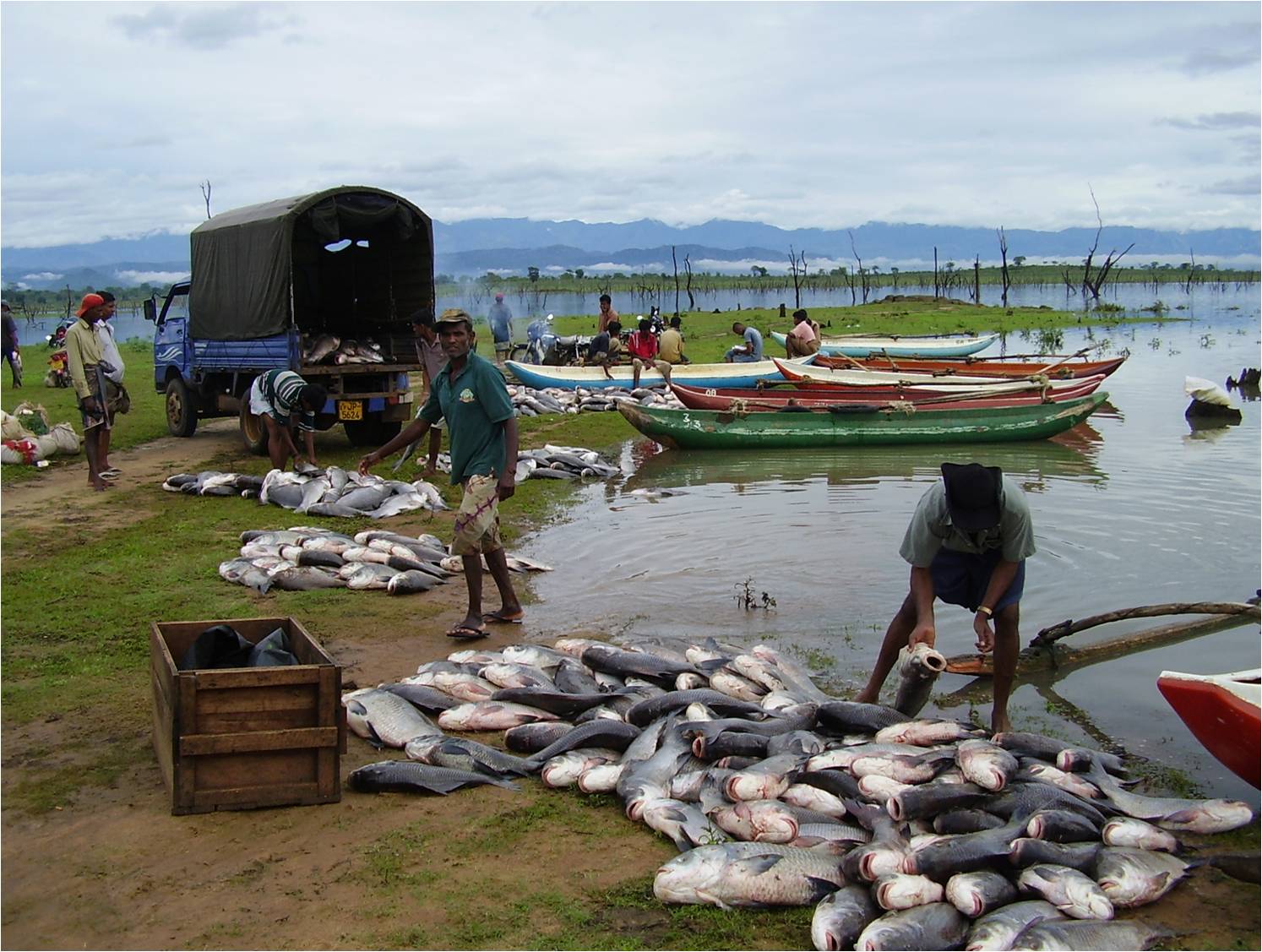
International and African experts have said small-scale fisheries on the continent play a critical role in global food security and must be supported with greater research and investment.

Industry, NGO, government and academic representatives attended Murdoch University’s second Blue Economy Symposium in Tunis some days ago as part of the Africa Blue Economy Forum (ABEF) 2019 and Murdoch University’s Third Commission, a research investigation focusing on issues of public concern to Africa.

Fish accounts for more than one-fifth of the protein intake of African south of the Sahara and provides a livelihood to millions of people.

Murdoch University Adjunct Professor, Dr. Jeremy Prince, who attended the symposium and is contributing to the work the Third Commission in this area, said the collective value of the small-scale fisheries of Africa was too big to ignore.

“It is critical that we stabilise and rebuild these fisheries to ensure both food security and the future of the blue economy,” Dr Prince said. “The time to act is now.”

Discussions at the Tunis symposium provided useful insights and contributions to the fine-tuning of the focus and narrative of the Blue Economy chapter of the Third Commission’s report. A strong emphasis was placed on the need to highlight clear and innovative actions to effect lasting transformation of the blue economy in Africa.

Participants in the symposium called on all nations and international institutions to recognise the value and economic impact of small-scale fisheries in Africa. Their recommendations included:

Increasing investment to allow fishing communities to be more involved in the co-management of fisheries; and Directly engaging with fishing communities to collect and share relevant data regarding the state and economic value of small-scale coastal fisheries.

In keeping with Murdoch University’s commitment to quality research and teaching in public policy at both the national and international levels, Murdoch Commissions are exercises in applied public policy informed by rigorous scholarly research and analytical thinking. They bring together senior practitioners, international experts and thought leaders from Australia and around the world to work on pressing problems and issues of public concern.

The first Murdoch Commission, “Western Australia and the evolving regional order: challenges and opportunities” published its final report in November 2013 and the second Murdoch Commission, “Food security, trade and partnerships: Towards resilient regional food systems in Asia” released its report in December 2015.

Murdoch’s Third Commission commenced in June of 2018 and is focused on six themes firmly rooted in the agenda for action identified by the Africa Progress Panel (APP) as being in need of more significant research attention, bolder policy innovation, faster implementation on the ground, enhanced political leadership and the conceptualisation and roll out of innovative research solutions.


Dipo Olowookere is a journalist based in Nigeria that has passion for reporting business news stories. At his leisure time, he watches football and supports 3SC of Ibadan. Mr Olowookere can be reached via [email protected]

Click to comment

Leave a Reply

Your email address will not be published. Required fields are marked *

World

Germany Acquires Equity Stake in ATIDI to Strengthen Economic Partnership With Africa

Published

on

ATIDI KfW Development Bank

By Aduragbemi Omiyale

About $32 million has been put into the African Trade and Investment Development Insurance (ATIDI) by Germany through KfW Development Bank.

This funding package allows the European nation to become a D2-class shareholder of ATIDI, a status dedicated to Export Credit Agencies and Non-African Public Entities.

Of this amount, $18.4 million is funded from BMZ budget resources, with the remaining $13.6 million coming from KfW’s own resources. As such, it will assume the obligations and benefits related to its new shareholding status, including representation in ATIDI Governance and decision-making structures, and equally participating towards improving German trade and investments in Africa in alignment with the G20 Compact with Africa (CwA 2.0).

KfW’s subscription in ATIDI is the culmination of a dynamic partnership between the two organisations.

On behalf of the German Federal Ministry of Economic Cooperation and Development (BMZ), KfW has supported several countries’ membership in ATIDI with over $100 million in financing, thus strengthening the organisation’s capital base and expanding its ability to mitigate risk and mobilise private investment across African markets.

The new equity participation adds a direct shareholding to this long‑standing cooperation.

KfW is the 13th Institutional shareholder in Africa’s premier development insurer, further strengthening the organisation’s capital base and its capacity to support trade and investment across the continent.

At the official signing of the subscription agreement in Nairobi, Kenya, a member of the executive board of KfW, Ms Christiane Laibach, said, “Our membership is executed on behalf of the Federal Republic of Germany. It is only the latest culmination of a successful cooperation that has enabled the ATIDI membership of several African states and has created innovative insurance solutions to attract foreign investment on the continent.”

The chief executive of ATIDI, Mr Manuel Moses, said, “This milestone is iconic in many ways. First, it elevates our already dynamic bond with KfW and creates more opportunities for German investors looking to engage in Africa. It is also a recognition of ATIDI’s earned status as Africa’s top development insurer and the acknowledgement of the soundness of our business. Last, it underscores the power of partnerships in a global context increasingly marked by volatility and uncertainty. ATIDI will spare no effort to make this partnership a successful one.”

Established in 1948, KfW is Germany’s state-owned promotional and development bank and a key implementing partner of BMZ in international financial cooperation. Its shareholding in ATIDI is expected to stimulate up to $500 million in trade and investment between German companies and African markets.

Over the past 25 years, ATIDI has grown to become Africa’s premier provider of development insurance and one of its highest-rated financial organisations. It leverages its partnerships with leading multilaterals and regional bodies, including the African Union, the World Bank Group, COMESA, the European Investment Bank (EIB), and the Norwegian Agency for Development Cooperation (NORAD), to offer innovative credit and investment insurance products that foster sustainable and transformational growth across the continent.

Continue Reading

World

Essent Slashes Contact Centre Technology Costs by 50%

Published

on

Essent Energy provider

By Modupe Gbadeyanka

The Netherlands’ largest energy provider, Essent, has cut the technology costs of its contact centre infrastructure by half.

The organisation, which serves 2.5 million customers, recorded zero critical incidents post-migration and improved agent workplace satisfaction by 36 per cent.

The migration was delivered in partnership with AI-first customer experience transformation specialists, Sabio Group, and was completed in under 12 weeks for an operation spanning over 1,000 agents across two locations.

Agents were forced to juggle multiple disconnected screens simultaneously — a workflow that was as inefficient as it was stressful.

“Our agents were constantly working with different screens — multiple chat instances open at once, multiple agent desktop instances. It was messy, and in some cases, quite stressful,” SAFe Product Manager for Customer Interaction, Omnichannel and Digital Transformation at Essent, Michiel Kouijzer, stated.

“A lot of colleagues were saying I was mad for even suggesting this approach. It kind of feels like a victory on a personal level that it did work out. You just have to be a little ambitious — and have the right expert partner who can make it work,” Kouijzer added.

With stable cloud infrastructure now firmly in place, Essent is turning its attention to the capabilities that were impossible in its legacy environment: AI-powered call summarisation, agentic customer self-service, and next-generation workforce optimisation.

Rather than a reckless ‘big bang’ cutover that could have affected service to millions of households, Sabio engineered a phased migration strategy — beginning with Essent’s SME segment to validate technical readiness before scaling to the full enterprise operation.

“This project showcases Sabio’s unique position in the contact centre technology landscape. We’re not just moving Essent to the cloud — we’re establishing a foundation for continuous improvement in their customer experience delivery,” the Country Manager for Sabio Group Benelux, Wouter Bakker, commented.

Continue Reading

World

Africa: A New Market for Russian Business

Published

on

New Market for Russian Business

By Kestér Kenn Klomegâh

On April 11, the presentation of the book “Africa: a new market for Russian business” took place, which aroused lively diverse interests among business representatives, entrepreneurs and employees of federal structures of Russia. The event was dedicated to discussing the prospects of Russian companies entering the African market and became a platform for the exchange of views and experiences.

Participating guests, packed in the small hall, included:

– representatives of business circles,

– entrepreneurs interested in new directions of development,

– employees of federal agencies curating foreign economic activity.

The presentation was held in a constructive and friendly atmosphere. The author of the book, Serge Fokas Odunlami, detailed the key ideas and conclusions presented in the publication. Particular attention was paid to the practical aspects of operating in the African market, as well as the analysis of opportunities and risks for Russian companies.

During the lively discussion, participants asked questions, shared their experiences and made suggestions for developing cooperation with African countries. This format allowed not only to get acquainted with the content of the book, but also to discuss topical issues of expanding business relations.

Meaning of the book: The publication, “Africa: a new market for Russian business” offers readers not only analytical, but also practical recommendations on investment and market trends, and how to enter the African market. The book will be a useful tool for those considering Africa as a promising destination for investment and business development.

The presentation of the book became a significant event for the Russian business community interested in expanding cooperation with Africa. Serge Fokas Odunlami introduced the participants to the new edition, which is a comprehensive business guide that gives an impetus for dialogue and implementation of joint entrepreneurial projects and corporate initiatives across Africa.

Continue Reading

Trending