General
12 million Nigerians Became Poor in 10 Years—UNDP
By Adedapo Adesanya
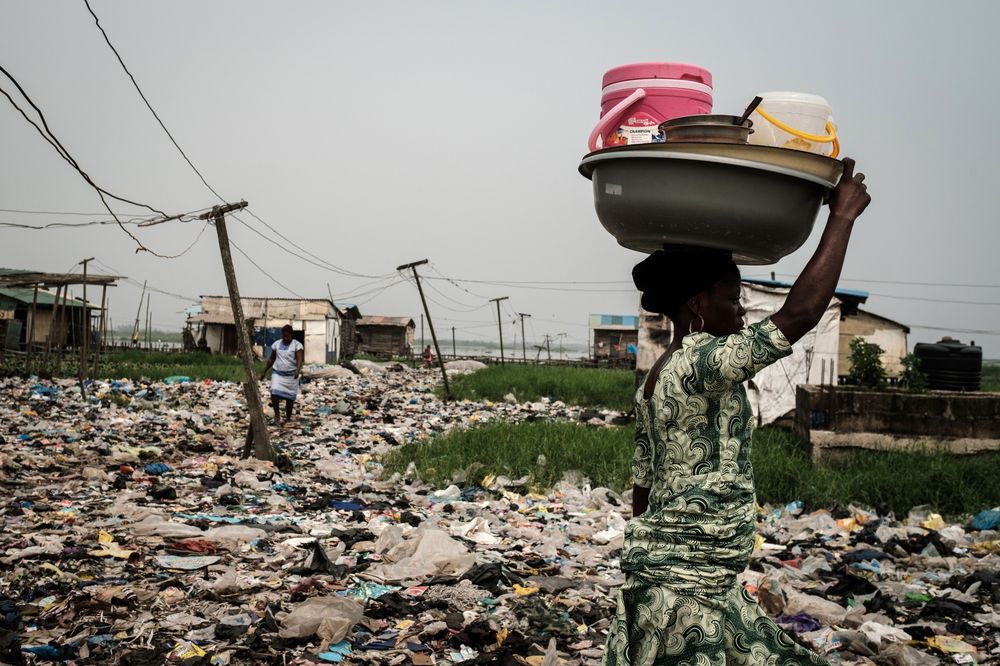
The 2019 Global Multidimensional Poverty Index (MPI) Report has revealed that the number of “multi-dimensionally poor” Nigerians increased by 12 million from 86 million to 98 million between 2007 and 2017.
The report, released in New York on Thursday by the United Nations Development Programme (UNDP) and the Oxford Poverty and Human Development Initiative, noted that the proportion of people who “are multi-dimensionally poor” had remained constant at just over 50 percent over the past decade up to 2017.
Multidimensional poverty includes the various deprivations experienced people in their daily lives – such as poor health, lack of education, inadequate living standards, disempowerment, poor quality of work, the threat of violence, and living in areas that are environmentally hazardous, among other indicators.
It explained that the global MPI highlighted inequalities at the global, regional, national, sub-national and even household level.
The study further revealed that the poorest countries exhibited not just higher incidence of multidimensional poverty, but also higher intensity, with each poor person deprived in more indicators.
This year’s MPI report presented that more than two-thirds of the multi-dimensionally poor – 886 million people – live in middle-income countries, while a further 440 million live in low-income countries.
In both groups, figures show simple national averages can hide enormous inequality in patterns of poverty within countries.
In Nigeria’s case, the report showed that even though the national average showed that around 50 per cent of Nigerians were multi-dimensionally poor, state and local government levels would reveal a completely different scenario.
It stated, “In Nigeria, even though the proportion of people who are multi-dimensionally poor has remained constant at just over 50 per cent over the past decade (up to 2017), the actual number of people who are multi-dimensionally poor increased from 86 million to 98 million over the same period.
“Also, important to note is that when compared to the national poverty line which measures income/consumption, a larger proportion of Nigerians (51 per cent) are multi-dimensionally poor than those that are income poor (46 per cent).”
The MPI, according to the UNDP, is the product of the incidence and the intensity of multidimensional poverty, and both are important aspects, noting that any reduction in intensity reduces MPI even if incidence remains unchanged and reflects progress towards moving people out of poverty.
General
African Energy Bank Plans to Raise $15bn in Three Years
By Adedapo Adesanya
The African Energy Bank (AEB) plans to raise $15 billion in its first three years of operations to fund strategic energy projects.
The Secretary General of the African Petroleum Producers’ Organisation (APPO), Mr Farid Ghezali, made this known at the opening session of the Nigeria International Energy Summit (NIES 2026) on Tuesday.
The bank which is set to launch in Abuja in the first half of 2026 has set a target of mobilising $200 billion for midstream and downstream energy projects across the continent.
“The African Energy Bank is designed to unlock the 200 billion needed for our midstream-downstream project by 2030.
“Our goal is to raise $15 billion in just three years with this increased liquidity,” Mr Ghezali stated.
The APPO secretary general decried that Africa’s energy still faces huge export of its oil and gas despite having a huge market for its utilisation within the continent.
“We are still exporting about 70 per cent of our crude oil and 45 per cent of our natural gas, losing $15 billion per year. This is an added value that we could generate locally, especially in the midstream and downstream segments.”
He pinpointed that financing hurdles remained the main bottleneck for the continent, as the cost of financing in Africa was 15 to 20 per cent, compared to only 4 to 6 per cent in Asia.
He said the disparity was unacceptable and had stalled over 150 projects, including refineries and the Ajaokuta–Kaduna–Kano (AKK) Natural Gas Pipeline.
Mr Ghezali also said that APPO’s 18 national oil companies face isolation, “Our 18 national oil companies’ NOCs in APPO often operate in isolation, without a common stock exchange, which severely limits regional synergies.
He noted that the AEB was set to offer “competitive regional pricing” through unified intra-African gas and oil pricing for “savings of up to 30 per cent on their energy imports, a potential gain of $1.4 billion for Africa,” plus “direct access to investors.
He highlighted the three-phase road map for the AEB to include: “Phase one, which, as I said in the first half of 2026, launches the African Energy Bank platform with 10-pillar projects involving countries such as Nigeria, Angola, and Libya. APPO certification and integration of IOCs such as Shell or ENI.”
“Phase two, in 2027, we plan to start a regional gas-oil trade, integrating the principles of the Bassari Declaration for 15 per cent local content.”
Phase three, reaching 2030, the African Energy Bank will be a true African financial hub, with $200 billion mobilised.”
He said expected results included, “Project financing for billions of dollars, regional savings of around 30 per cent of import costs, 500,000 direct jobs created in the local midstream.”
General
DSS Accuses Malami, Son of Terrorism Financing in Court
By Adedapo Adesanya
The Department of State Services (DSS) has arraigned the former Attorney General of the Federation (AGF) and Minister of Justice, Mr Abubakar Malami, and his son, Mr Abudlazizz Malami, on a five-count charge of abetting terrorism financing and illegal possession of firearms.
They were arraigned before Justice Joyce Abdulmalik of the Federal High Court in Abuja, where they pleaded not guilty to the charges.
In the charge, the former AGF was accused of knowingly abetting terrorism financing by refusing to prosecute terrorism financiers whose case files were brought to his office as the AGF in the last administration for prosecution.
Recall that the secret police had arrested Mr Malami, shortly after his release from Kuje prison in Abuja more than two weeks ago after Justice Emeka Nwite of the Federal High Court in Abuja granted him and two others bail in the sum of N500 million in another case involving the Economic and Financial Crimes Commission (EFCC).
Mr Malami and his son are also accused by the DSS of engaging in conduct in preparation to commit act of terrorism by having in their possession and without licence, a Sturm Magnum 17-0101 firearm, 16 Redstar AAA 5’20 live rounds of Cartridges and 27 expended Redstar AAA 5’20 Cartridges.
His arrest in January followed weeks of reports of surveillance by the secret police in front of the prison facility since the time Mr Malami, his wife and son were remanded there over the money laundering charges.
As per reports, Mr Malami had gathered that he would be picked up upon regaining his temporary freedom and so decided to wait out the DSS. However, after his eventual emergence, the operatives took the ex-AGF into detention again.
General
Lagos Launches Coastal Community Responder Programme for Waterways Safety
By Adedapo Adesanya
The Lagos State Waterways Authority (LASWA) has initiated an inter-agency partnership with the Centre for Rural Development (CERUD) to establish the Coastal Community First Responder Programme (CCFRP).
The first responder programme is aimed at promoting safe and secure transportation across Lagos waterways.
The initiative was unveiled during a meeting between a LASWA delegation and officials of the Ministry of Local Government, Chieftaincy Affairs and Rural Development at the secretariat in Alausa.
Leading the LASWA team, Mr Olademeji Shittu said the programme is designed to reduce fatalities and material losses on Lagos waterways, particularly in hard-to-reach coastal communities.
According to Mr Shittu, the CCFRP will focus on empowering community volunteers through targeted capacity building for sustainable rural development, while also equipping them with relevant skills that can enhance employability within the maritime sector.
He noted that trained volunteers will serve as community-based first responders, working in close collaboration with LASWA to strengthen search and rescue operations.
Providing the rationale for the programme, Mr Shittu highlighted the recurring cases of marine incidents and fatalities on Lagos waterways, often worsened by delayed emergency response in remote coastal areas.
He explained that residents of these communities are usually the first on the scene during accidents, making it necessary to formalise their role through structured training and partnerships.
He added that the collaboration with CERUD will help create a sustainable framework that aligns community development with safety and emergency response, while fostering a sense of ownership and responsibility among coastal residents.
According to a statement, the Coastal Community First Responder Programme is expected to enhance emergency preparedness on Lagos waterways, improve response times during marine incidents, and contribute to safer water transportation across the state.
-
Feature/OPED6 years agoDavos was Different this year
-
Travel/Tourism9 years ago
Lagos Seals Western Lodge Hotel In Ikorodu
-
Showbiz3 years agoEstranged Lover Releases Videos of Empress Njamah Bathing
-
Banking8 years agoSort Codes of GTBank Branches in Nigeria
-
Economy3 years agoSubsidy Removal: CNG at N130 Per Litre Cheaper Than Petrol—IPMAN
-
Banking3 years agoSort Codes of UBA Branches in Nigeria
-
Banking3 years agoFirst Bank Announces Planned Downtime
-
Sports3 years agoHighest Paid Nigerian Footballer – How Much Do Nigerian Footballers Earn