Technology
EcoCash Fetches Cassava Smartech, Comviva Another Global Recognition
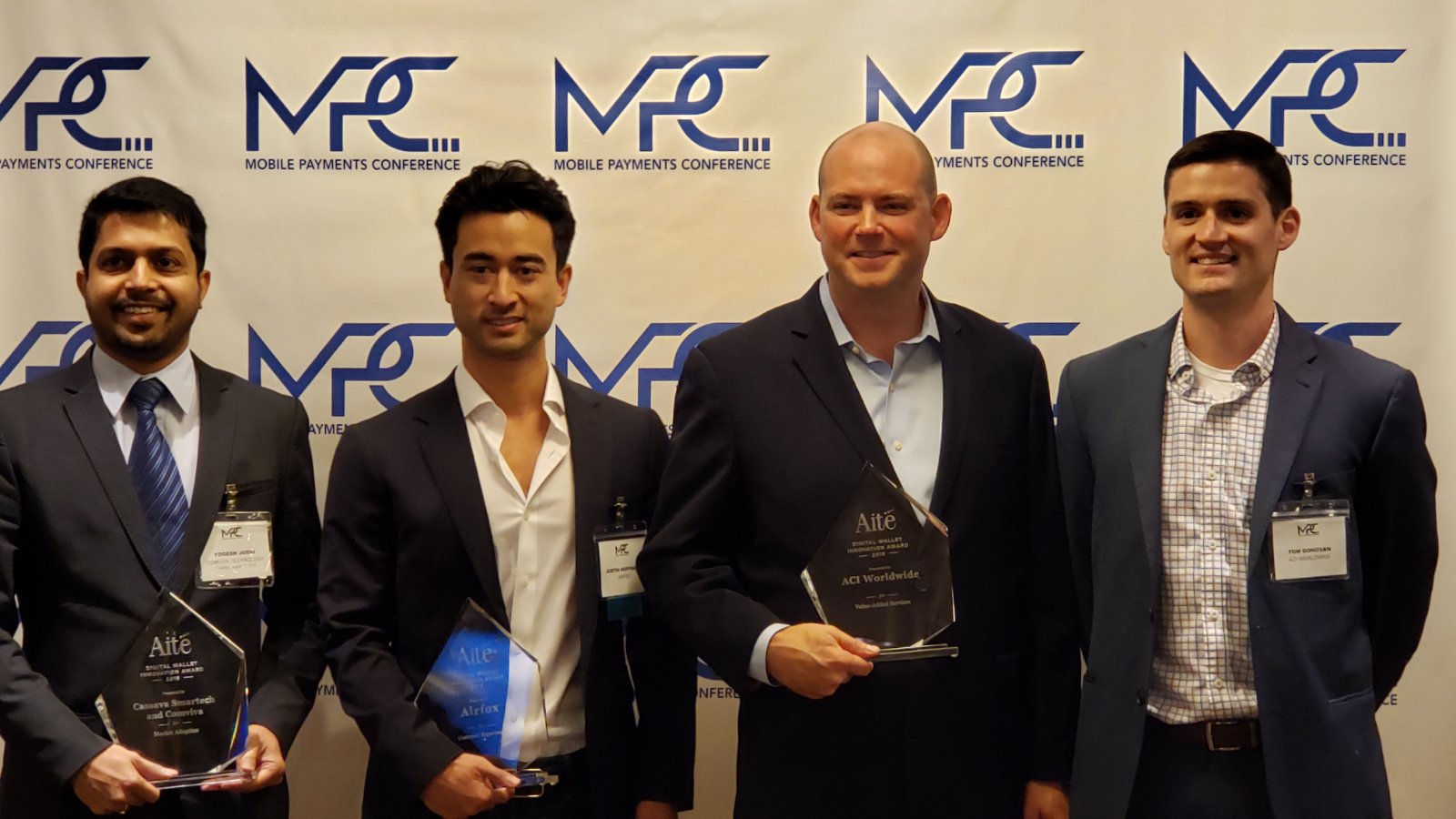
The 2019 Digital Wallet Innovation Award in the ‘Market Adoption’ category has been won by EcoCash, a product from the duo of Cassava Smartech and Comviva.
The award, organized by Aite Group, a global research and advisory firm, recognizes innovation achieved by digital wallet providers that are changing the way that commerce is done.
The winners, selected by a global panel of five external experts on digital payments and wallets. Were announced at the Mobile Payment Conference in Chicago, the United States.
Launched in 2011, EcoCash is Zimbabwe’s largest mobile money service. EcoCash leverages mobile technology to extend digital financial services to the financially underserved consumers. EcoCash has over 9.8 million registered customers facilitating financial inclusion for 90 percent of Zimbabwe’s adult population.
It has digitized various financial transactions in Zimbabwe, ranging from domestic and international remittances and merchant payments, to savings and loans, thus creating a cash-light economy. Over 80% of the Zimbabwe’s National Payment Volume is processed through EcoCash, helping to mitigate an ongoing cash crisis.
Speaking on the win, Eddie Chibi, CEO Cassava Smartech Zimbabwe, said: “At Cassava Smartech our aim is to help people live better lives through the transformative power of mobile money. We shall spare no effort in driving mobile money services in Africa because we believe that mobile money can do more to improve lives in Africa than in any other part of the world. In line with this goal, we aim to continuously improve EcoCash services for a better tomorrow.”
Anil Krishnan, Head of Africa Region at Comviva, said: “We firmly believe that EcoCash services have been truly transformative as they provided the key to solving Zimbabwe’s cash problem while improving financial inclusion. We are very happy to receive this award as it validates our ability to make a difference with truly transformative solutions.”
Thad Peterson, senior analyst at Aite Group, said: “We are delighted to recognize and celebrate innovation achieved by leading digital wallet providers. Digital wallets are leading an explosion of innovation in the payment ecosystem, and it’s great to have an opportunity to recognize the leaders of this revolution.”
EcoCash mobile money service is offered by Cassava Smartech and powered by Comviva’s mobiquity® Money platform. mobiquity® Money is the world’s leading mobile money platform that delivers a host of digital financial services that transform the way consumers save, borrow, transfer and spend money.
It is designed to seamlessly integrate consumer touch points with a wide ecosystem of banks, billers, merchants and third-party payment systems, creating a convergence powered by interoperability.
Apart from delivering convenience to consumers, the solution enables telecommunications service providers to acquire new customers, create long-term loyalty with existing ones, and seize new revenue opportunities to increase their footprint in the market.
mobiquity® Money empowers telecommunications service providers to be agile in their markets, with complete focus on the customers. It has clocked over 60 deployments in more than 45 countries.
It provides financial services to over 110 million consumers globally and processes more than 6.5 billion transactions amounting to over $130 billion annually.
Technology
Telco Ownership Changes Above 10% Now Subject to NCC Approval
By Adedapo Adesanya
The Nigerian Communications Commission (NCC) and the Corporate Affairs Commission (CAC) have introduced a new regulatory requirement mandating prior approval for significant changes in the ownership structure of telecommunications companies operating in Nigeria.
This was contained in a statement jointly signed by the Director of Public Affairs at the NCC, Mrs Nnenna Ukoha and Head of Public Affairs at the Corporate Affairs Commission, Mr Rasheed Mahe.
According to a joint press release issued by the two agencies, the directive, which takes immediate effect, requires all licensed telecom operators seeking to transfer ownership or control of shares amounting to 10 per cent or more of their total share capital to first obtain a Letter of No Objection from the NCC before such transactions can be registered by the CAC.
The statement reads in part, “The directive, which takes immediate effect, requires all licensed communications companies seeking to transfer ownership or control of shares amounting to 10 per cent or more of their total share capital to obtain a Letter of No Objection from the NCC before such transactions can be registered with the CAC.
“The requirement is in line with the provisions of Section 90 of the Nigerian Communications Act 2003, Regulation 28(2) of the Competition Practices Regulations 2007, and Regulation 42 of the Licensing Regulations 2019, which empower the NCC to monitor transactions involving licensees and ensure fair competition within the sector.
“Under the new arrangement, the CAC will only process and register requests for changes in shareholding structures of telecommunications companies where the transaction involves 10 per cent or more of the company’s shares and is accompanied by evidence of prior approval from the NCC.
“According to the two regulatory agencies, the measure is aimed at strengthening oversight of significant ownership changes, preventing anti-competitive practices, and preserving a fair and competitive communications market. It is also expected to enhance transparency, boost investor confidence, provide greater regulatory certainty, and support the long-term stability and sustainability of Nigeria’s telecommunications industry.
The NCC and CAC reaffirmed their commitment to fostering a transparent, stable, and investor-friendly business environment. Both agencies pledged continued collaboration to promote fair market practices, strengthen regulatory compliance, and ensure the orderly development of Nigeria’s communications sector.”
Technology
Rising Cyber Threats Could Undermine Business Sustainability, Profitability—ISSAN
By Modupe Gbadeyanka
The relevant stakeholders have been urged to take urgent action to curb the rising sophistication of cyber threats, which could undermine business sustainability and profitability.
This call was made by the Information Security Society of Africa – Nigeria (ISSAN) during its monthly meeting held in collaboration with MAXUT Consulting.
The group noted that identity theft, mobile fraud, ransomware, and social engineering attacks are threats to organisations, especially those who may struggle to protect information assets, maintain operational resilience, and address vulnerabilities before they can be exploited.
The president of ISSAN, Mr David Isiavwe, who doubles as the Executive Director for Risk Management at Nova Bank, stressed that cybercriminals are deploying increasingly sophisticated attack methods targeting individuals, businesses, critical national infrastructure, and strategic assets.
Among the threats highlighted were identity theft, Business Email Compromise (BEC), phishing, ransomware, WhatsApp account hijacking, Distributed Denial-of-Service (DDoS) attacks, payment card fraud, cryptocurrency-related attacks, and other forms of social engineering.
According to him, the increasing frequency and sophistication of cyberattacks mean cybersecurity can no longer be viewed solely as an IT issue but as a critical business and national security priority.
To address these challenges, he urged organisations to adopt proactive risk management practices, implement continuous monitoring systems, promptly address vulnerabilities, and invest in regular cybersecurity awareness programmes for employees and customers.
Also, the importance of leveraging emerging technologies such as Artificial Intelligence (AI), Machine Learning (ML), and automation to enhance threat detection and response capabilities was emphasised.
“No organisation can successfully confront today’s cyber threats in isolation. Information sharing, collaboration, and collective vigilance remain essential to protecting our digital ecosystem and safeguarding public trust,” the ISSAN leader said at the event, which featured a technical presentation titled, Confronting the New Mobile Threat Landscape: Beyond User Authentication.
ISSAN reaffirmed its commitment to promoting cybersecurity awareness, capacity building, information sharing, and industry collaboration to strengthen Nigeria’s cyber resilience and support a secure digital economy.
Technology
Zoho Launches Nathu La Server
By Modupe Gbadeyanka
A designed-in-house server known as Nathu La has been launched by a global technology company, Zoho Corporation.
Nathu La is engineered with hardware-rooted security at every layer of the stack. Its indigenous IP-driven approach reduces dependency on external entities for security audits, firmware updates, and licensing continuity.
The solution aligns with open-source software principles and reflects Zoho’s broader commitment to building sustainable, secure, and scalable digital infrastructure. It also supports the growing global focus on digital sovereignty, local innovation ecosystems, and high-performance computing capabilities.
The platform was introduced by the company as part of a pivotal step in its journey towards building its full technology stack, from the hardware layer to software applications.
With Nathu La, Zoho has achieved equivalent performance with 12-18 per cent lower power consumption and 20-30 per cent lower total cost of ownership (TCO), thereby reducing inference costs.
The Nathu La server, comprising Intel® Xeon® 6 processors, was developed collaboratively with Intel, leveraging their enablement capabilities and technical expertise.
The design philosophy behind Nathu La is rooted in the Open Compute Project (OCP), emphasising modularity, thermal efficiency, and ease of maintenance. This enables Zoho’s data centres to significantly reduce total cost of ownership and power consumption.
Zoho plans to host its applications on the Nathu La server platform, enabling the company to optimise the full software-hardware stack for its specific workloads, reduce costs, improve performance, and strengthen data governance for its global customers. This will also help bring down inference costs for Zoho’s AI usage.
The Nathu La server motherboard and chassis platform is the result of five years of R&D across hardware, firmware, and systems management. Based on Intel® Xeon® 6 Processors, the server is designed to optimise performance for virtualisation (VM), High Performance Computing (HPC), AI inference, and storage applications. This results in improved performance of Zoho applications for end users.
The server features customised power delivery subsystems, an in-house DC-SCM (Data Centre Secure Control Module) design, and modular chassis options compatible with diverse end-user environments, offering flexibility across deployment types.
All modular components – including the DC-SCM and NIC (Network Interface Card) – were designed in-house by Zoho’s hardware engineering team and assembled through electronics manufacturing partners, enabling tighter integration and quality control across the platform. Over five patents have been filed covering advanced thermal management and cost-optimised server architecture designs.
“Zoho Corporation has invested in building its own technology stack from the ground up over the last three decades. The Nathu La server launch is in line with that goal.
“With our strategy of using contextual, right-sized models, running on our own platform, on our own servers, in our own data centres, we are compounding the benefits accrued from owning and operating our entire technology stack. This ensures that our solutions are more sustainable and accessible for businesses.
“These long-term R&D investments we are making at every layer of the stack are aimed at delivering customer value,” the Country Head for Zoho Nigeria, Mr Kehinde Ogundare, stated.
In 2020, Zoho established a small R&D team in Nagpur, a Tier 2 town in India, focused on projects such as server design and systems engineering.
Members of the Nathu La R&D team include hires from SETU – short for Students’ Engagement for Transformative Upskilling – an initiative designed to build a pipeline of industry-ready engineers, with a focus on advanced learning in Electronics System Design and Manufacturing (ESDM).
-
Feature/OPED6 years agoDavos was Different this year
-
Travel/Tourism10 years ago
Lagos Seals Western Lodge Hotel In Ikorodu
-
Showbiz3 years agoEstranged Lover Releases Videos of Empress Njamah Bathing
-
Banking8 years agoSort Codes of GTBank Branches in Nigeria
-
Economy3 years agoSubsidy Removal: CNG at N130 Per Litre Cheaper Than Petrol—IPMAN
-
Banking3 years agoSort Codes of UBA Branches in Nigeria
-
Banking3 years agoFirst Bank Announces Planned Downtime
-
Sports3 years agoHighest Paid Nigerian Footballer – How Much Do Nigerian Footballers Earn