Feature/OPED
Nigeria/Russia Relations: The Missing Link
By Hussaini Monguno
On November 15, 1884, 14 mainly European countries gathered in Berlin for a meeting which lasted to February 26, 1885. The aim of that conference was to split the continent of Africa and share it to the Europeans who were scrambling over it.
The countries represented were; Austria-Hungary, Belgium, Denmark, France, Germany, Great Britain, Italy, the Netherlands. Others included; Portugal, Russia, Spain, Sweden-Norway (unified from 1814 to 1905), Turkey, and the United States of America. Of these 14 nations, France, Germany, Great Britain, and Portugal were the major players in the conference, controlling most of Africa at the time.
Russia, though present at the conference, was not interested in the greedy project of acquiring Africa by force of arms. The Russians held firmly to the guiding principle of their policy as advocated by one of their founding fathers, V.I. Lenin who advocated equality and peaceful coexistence amongst all the peoples of the world.
It was this same message of equality of mankind that led Khrushchev (the former Soviet leader) to move a motion to end all forms of colonialism by 1960 at the plenary of the XVth session of the United Nations General assembly. The passage of the motion led to the crumbling of colonialism, and sovereign African states began to emerge one after another. Nigeria took its turn to gain independence in 1960.
The Soviet Union – precursor to Russian Federation – built into its foreign policy architecture a sensitive and positive response to assist Africa in building an egalitarian society for themselves.
In the case of Nigeria, the warm response from Russia was instant. Nigeria became independent on October 1, 1960. In less than two months – on November 25, 1960 – the two countries established diplomatic relations.
Foundation of Nigeria’s Foreign Policy
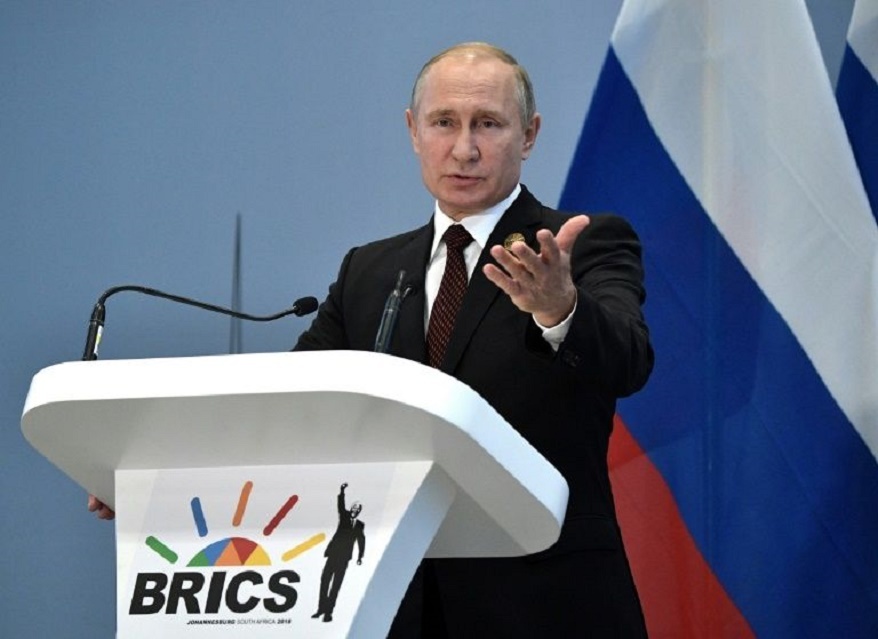
The founding fathers of Nigeria said the foreign policy of the country was based on Africa as its cornerstone. Ordinarily, this should have drafted Nigeria very close to the Russians who took it on themselves to fight for the decolonization of Africa. Ironically, this was not the case because the first Republic leaders were under the heavy influence of the colonial masters.
The colonial masters induced Nigerian leaders to launch heavy, unfriendly propaganda against Russia in Nigeria during the early and mid-1960s. In contrast to this, nations like the United Kingdom, the United States of America, France, Italy, Spain and other countries in Western Europe at large enjoyed positive propaganda which made them seem as ideal and friendly.
The system of governance in most African countries including Nigeria was fashioned after their former colonialists and gave preference to the interests of the colonial masters. With this mindset, the environment was not conducive to friendly Nigeria-Russia relations.
During the early 60’s, the main interest of the Soviet Union was to expand its political influence among the countries of Africa and have more states converted into socialist-oriented nations in the then ideologically polarized world that was popularly referred to as the cold war. Nigeria being a capitalist state was not inclined to change its orientation. Its colonial master and allies were opposed to Nigeria and any of its former colonies having cordial relationship with Russia which they came to identify as a strong iron curtain – not be allowed a space of further expansion in Africa. Any manifestation of or link to the communist ideology was met with censorship and repression.
But there was no let-up on the part of Russia. They seized every opportunity to advertise their goodwill to Nigeria. When the civil war broke out in Nigeria with the Eastern Region declaring itself an independent state of Biafra, it was Russia that came to bail out Nigeria with arms to put down the insurrection. At the time, both the United States and the United Kingdom refused to sale arms to Nigeria. In fact, France went a step further by recognizing Biafra as a sovereign state.
Nigeria Boosted Relations With Russia After Civil War
The Nigerian Civil War opened the eyes of Nigerian leaders to the reality of world politics. Nigerian youths became eager recipients of Soviet scholarships for higher education in the Soviet Union. This was a major opportunity for the Soviet Union to establish itself in sub-Saharan Africa’s major country.
Immediately after the war, General Yakubu Gowon, Nigeria’s Head of State, paid a State Visit to Moscow in 1971. President Olusegun Obasanjo also visited Russia in 2001 and on June 24 2009, Russian President Dimitry Medvedev became the first Russian President to visit Nigeria.
These top-level visits are too far in between and do not reflect the several challenges confronting Nigeria-Russia relations.
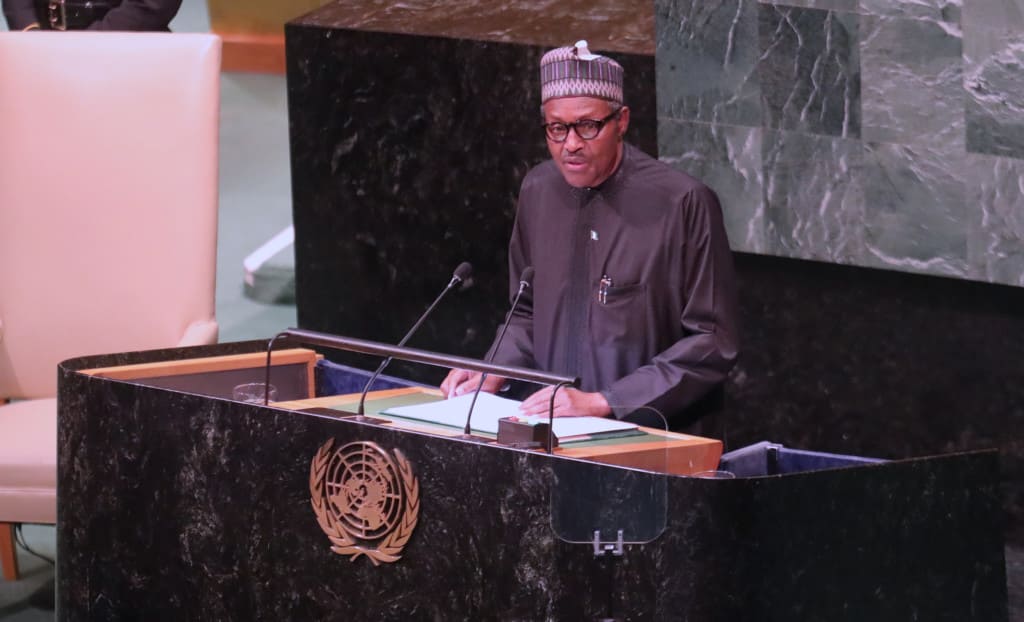
For instance, in order for agreements among nations to become operational, they are to be passed by the National parliament and that forms their legal framework. The agreements signed with Russia during these visits are yet to be ratified by the parliament with particular reference to the Abuja agreement of 2009 which covered six critical areas: Viz- Investment, cooperation in the field of peaceful use of nuclear energy, understanding in the field of exploration of outer space for peaceful purposes, transfer of persons sentenced to imprisonment, declaration on principles of friendly relations and partnership between Nigeria and the Russian Federation and several other agreements on the eventual establishment of the Intergovernmental Commission on Economic and Scientific-Technical Cooperation (ICESTC) between the two countries.
Adequate knowledge and clear understanding of culture, history, language, mentality, world-view, capabilities and potentials of other nations are crucial to foreign policy making. There is weak indication that the two countries have sufficient and adequate perception of each other. This in part is responsible for the lack of the political will to fully implement their existing bilateral agreements.
We have had serial disappointments with the western world from their refusal to help in the fight to keep Nigeria one and their current refusal to help with weapons to put down the Boko Haram insurgency under the spurious claims that the Nigerian military is abusing human rights. The supply of military equipment and materiel notably the MI-35 attack helicopters by Russia have played a high value addition in our fight against Boko Haram. Unfortunately, majority among the Nigeria political elites are under strong influence of London and Washington whose interest is to distance Moscow from the affairs of African countries.
Russia/Nigeria Trade Relations
Still, there has been increased trade between Nigeria and Russia since the civil war experience. Dramatically, the Soviet Union became Nigeria’s best friend and ally such that by the time the civil war ended in 1970 Nigeria had opened its doors to other Soviet imports such as consumer goods and industrial manufacture.
The most significant highlight of the growing economic cooperation between the two countries was the award of contracts to Soviet companies for the establishment of the Ajaokuta Iron and Steel Complex and for the laying of oil pipelines across the country in line with the articles form economic and technical cooperation agreed upon by the two countries.
The project was however not completed as scheduled, and has continued to suffer several setbacks over the decades due to what should be seen as a lack of political will and adequate appreciation of the potential of the steel project to radically transform the economy of Nigeria and its capacity to be the foundation for the industrialization of the nation.
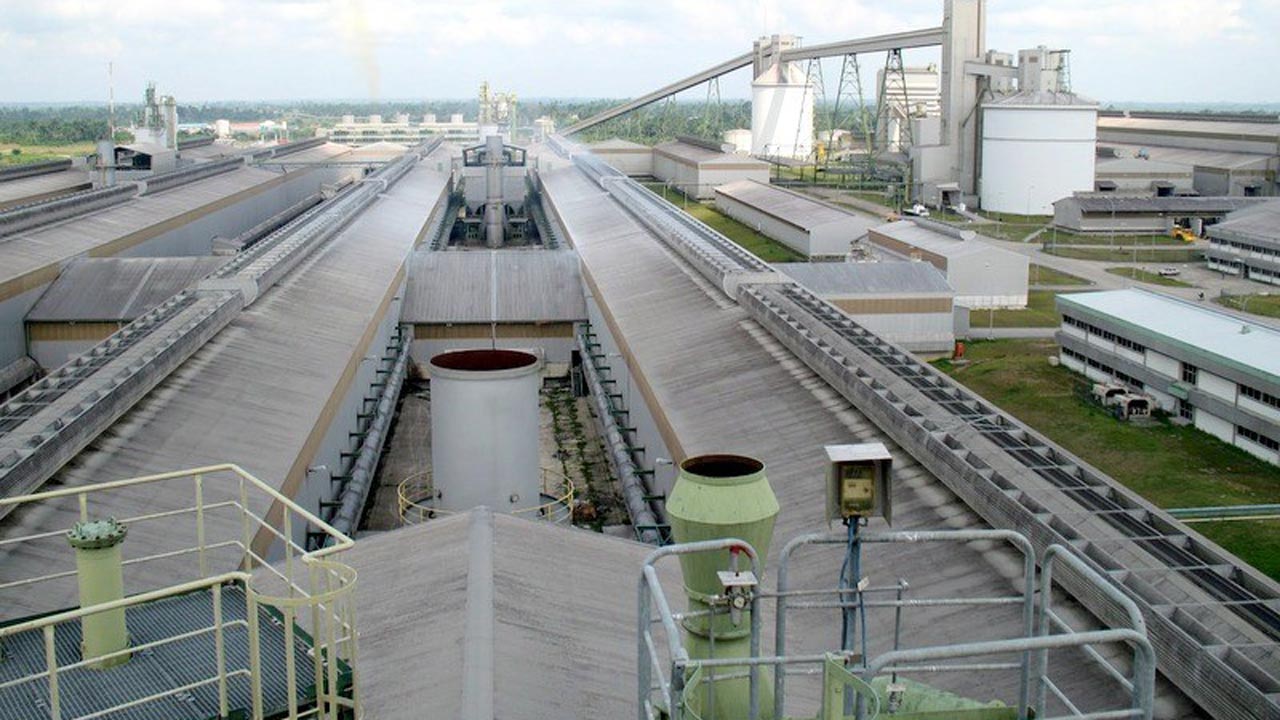
Similarly, ALSCON, Nigeria’s only aluminium smelting plant, handed over to Russian aluminium giant, United Company RUSAL PLC was closed down in 2014. Again, nothing much is heard of Gazprom, the Russian national energy giant, the biggest in the world, who signed a Memorandum of Understanding with the Nigerian National Petroleum Corporation (NNPC) on the exploration and exploitation of the nation’s huge gas reserves with a new joint venture company to be known as NiGaz Energy Company, which will also take part in several other critical infrastructural development projects, including the training of Nigerians among others. Both companies were expected to invest up to 2.5 billion dollars in the joint venture.
Deepening Nigeria/Russia Ties
These are very good signs for Nigeria-Russia relations and should be pursued with vigour because they can lead to slow but steady growth of bilateral trade and the promotion of direct contacts between Nigerian and Russian officials and institutions, agencies and companies, opening up of opportunities for further cooperation in the area of energy, metallurgy, oil and gas and promotion of bilateral cooperation in the cultural sphere.
Nigeria needs Russian technology to boost industrialization just as Russia needs Nigeria as a market for its industrial products and military equipment. All issues on the privatization of ALSCON to Russian RUSAL including the legal tussles require diplomatic solutions in a manner that will bring the company to function at its maximum capacity.
The volume of on-going trade between the two countries still remains very low – a paltry $350 million. This is ridiculous given the rich economic and trade endowments of both Nigeria and Russia. Worse still, there is a consistent huge imbalance in favour of Russia.
Inadequate information on business opportunities in Nigeria poses one of the major problems. Foreign investors including Russians have no access to update and reliable information on business prospects in Nigeria. If and when Russian businesses discover, for example, the rich agricultural products that are available in Nigeria, they’d wonder why they had not known about these all along.
In Nigeria, there are exceptional high-quality agricultural products such as oranges, mangoes, citrus, sweet honey that could easily rise to the top of the market demand in Russia.
There are many options available for the two countries to expand and deepen mutual trade and diplomatic ties in the interest of the two countries, world peace and prosperity. These options must be speedily pursued.
Monguno is member, Board of Directors, FCDA-Abuja-Nigeria.
Feature/OPED
How Christians Can Stay Connected to Their Faith During This Lenten Period
It’s that time of year again, when Christians come together in fasting and prayer. Whether observing the traditional Lent or entering a focused period of reflection, it’s a chance to connect more deeply with God, and for many, this season even sets the tone for the year ahead.
Of course, staying focused isn’t always easy. Life has a way of throwing distractions your way, a nosy neighbour, a bus driver who refuses to give you your change, or that colleague testing your patience. Keeping your peace takes intention, and turning off the noise and staying on course requires an act of devotion.
Fasting is meant to create a quiet space in your life, but if that space isn’t filled with something meaningful, old habits can creep back in. Sustaining that focus requires reinforcement beyond physical gatherings, and one way to do so is to tune in to faith-based programming to remain spiritually aligned throughout the period and beyond.
On GOtv, Christian channels such as Dove TV channel 113, Faith TV and Trace Gospel provide sermons, worship experiences and teachings that echo what is being practised in churches across the country.
From intentional conversations on Faith TV on GOtv channel 110 to true worship on Trace Gospel on channel 47, these channels provide nurturing content rooted in biblical teaching, worship, and life application. Viewers are met with inspiring sermons, reflections on scripture, and worship sessions that help form a rhythm of devotion. During fasting periods, this kind of consistent spiritual input becomes a source of encouragement, helping believers stay anchored in prayer and mindful of God’s presence throughout their daily routines.
To catch all these channels and more, simply subscribe, upgrade, or reconnect by downloading the MyGOtv App or dialling *288#. You can also stream anytime with the GOtv Stream App.
Plus, with the We Got You offer, available until 28th February 2026, subscribers automatically upgrade to the next package at no extra cost, giving you access to more channels this season.
Feature/OPED
Turning Stolen Hardware into a Data Dead-End
By Apu Pavithran
In Johannesburg, the “city of gold,” the most valuable resource being mined isn’t underground; it’s in the pockets of your employees.
With an average of 189 cellphones reported stolen daily in South Africa, Gauteng province has become the hub of a growing enterprise risk landscape.
For IT leaders across the continent, a “lost phone” is rarely a matter of a misplaced device. It is frequently the result of a coordinated “snatch and grab,” where the hardware is incidental, and corporate data is the true objective.
Industry reports show that 68% of company-owned device breaches stem from lost or stolen hardware. In this context, treating mobile security as a “nice-to-have” insurance policy is no longer an option. It must function as an operational control designed for inevitability.
In the City of Gold, Data Is the Real Prize
When a fintech agent’s device vanishes, the $300 handset cost is a rounding error. The real exposure lies in what that device represents: authorised access to enterprise systems, financial tools, customer data, and internal networks.
Attackers typically pursue one of two outcomes: a quick wipe for resale on the secondary market or, far more dangerously, a deep dive into corporate apps to extract liquid assets or sellable data.
Clearly, many organisations operate under the dangerous assumption that default manufacturer security is sufficient. In reality, a PIN or fingerprint is a flimsy barrier if a device is misconfigured or snatched while unlocked. Once an attacker gets in, they aren’t just holding a phone; they are holding the keys to copy data, reset passwords, or even access admin tools.
The risk intensifies when identity-verification systems are tied directly to the compromised device. Multi-Factor Authentication (MFA), widely regarded as a gold standard, can become a vulnerability if the authentication factor and the primary access point reside on the same compromised device. In such cases, the attacker may not just have a phone; they now have a valid digital identity.
The exposure does not end at authentication. It expands with the structure of the modern workforce.
65% of African SMEs and startups now operate distributed teams. The Bring Your Own Device (BYOD) culture has left many IT departments blind to the health of their fleet, as personal devices may be outdated or jailbroken without any easy way to know.
Device theft is not new in Africa. High-profile incidents, including stolen government hardware, reinforce a simple truth: physical loss is inevitable. The real measure of resilience is whether that loss has any residual value. You may not stop the theft. But you can eliminate the reward.
Theft Is Inevitable, Exposure is Not
If theft cannot always be prevented, systems must be designed so that stolen devices yield nothing of consequence. This shift requires structured, automated controls designed to contain risk the moment loss occurs.
Develop an Incident Response Plan (IRP)
The moment a device is reported missing, predefined actions should trigger automatically: access revocation, session termination, credential reset and remote lock or wipe.
However, such technical playbooks are only as fast as the people who trigger them. Employees must be trained as the first line of defence —not just in the use of strong PINs and biometrics, but in the critical culture of immediate reporting. In high-risk environments, containment windows are measured in minutes, not hours.
Audit and Monitor the Fleet Regularly
Control begins with visibility. Without a continuous, comprehensive audit, IT teams are left responding to incidents after damage has occurred.
Opting for tools like Endpoint Detection and Response (EDR) allows IT teams to spot subtle, suspicious activities or unusual access attempts that signal a compromised device.
Review Device Security Policies
Security controls must be enforced at the management layer, not left to user discretion. Encryption, patch updates and screen-lock policies should be mandatory across corporate devices.
In BYOD environments, ownership-aware policies are essential. Corporate data must remain governed by enterprise controls regardless of device ownership.
Decouple Identity from the Device
Legacy SMS-based authentication models introduce avoidable risk when the authentication channel resides on the compromised handset. Stronger identity models, including hardware tokens, reduce this dependency.
At the same time, native anti-theft features introduced by Apple and Google, such as behavioural theft detection and enforced security delays, add valuable defensive layers. These controls should be embedded into enterprise baselines rather than treated as optional enhancements.
When Stolen Hardware Becomes Worthless
With POPIA penalties now reaching up to R10 million or a decade of imprisonment for serious data loss offences, the Information Regulator has made one thing clear: liability is strict, and the financial fallout is absolute. Yet, a PwC survey reveals a staggering gap: only 28% of South African organisations are prioritising proactive security over reactive firefighting.
At the same time, the continent is battling a massive cybersecurity skills shortage. Enterprises simply do not have the boots on the ground to manually patch every vulnerability or chase every “lost” terminal. In this climate, the only viable path is to automate the defence of your data.
Modern mobile device management (MDM) platforms provide this automation layer.
In field operations, “where” is the first indicator of “what.” If a tablet assigned to a Cape Town district suddenly pings on a highway heading out of the city, you don’t need a notification an hour later—you need an immediate response. An effective MDM system offers geofencing capabilities, automatically triggering a remote lock when devices breach predefined zones.
On Supervised iOS and Android Enterprise devices, enforced Factory Reset Protection (FRP) ensures that even after a forced wipe, the device cannot be reactivated without organisational credentials, eliminating resale value.
For BYOD environments, we cannot ignore the fear that corporate oversight equates to a digital invasion of personal lives. However, containerization through managed Work Profiles creates a secure boundary between corporate and personal data. This enables selective wipe capabilities, removing enterprise assets without intruding on personal privacy.
When integrated with identity providers, device posture and user identity can be evaluated together through multi-condition compliance rules. Access can then be granted, restricted, or revoked based on real-time risk signals.
Platforms built around unified endpoint management and identity integration enable this model of control. At Hexnode, this convergence of device governance and identity enforcement forms the foundation of a proactive security mandate. It transforms mobile fleets from distributed risk points into centrally controlled assets.
In high-risk environments, security cannot be passive. The goal is not recovery. It is irrelevant, ensuring that once a device leaves authorised hands, it holds no data, no identity leverage, and no operational value.
Apu Pavithran is the CEO and founder of Hexnode
Feature/OPED
Daniel Koussou Highlights Self-Awareness as Key to Business Success
By Adedapo Adesanya
At a time when young entrepreneurs are reshaping global industries—including the traditionally capital-intensive oil and gas sector—Ambassador Daniel Koussou has emerged as a compelling example of how resilience, strategic foresight, and disciplined execution can transform modest beginnings into a thriving business conglomerate.
Koussou, who is the chairman of the Nigeria Chapter of the International Human Rights Observatory-Africa (IHRO-Africa), currently heads the Committee on Economic Diplomacy, Trade and Investment for the forum’s Nigeria chapter. He is one of the young entrepreneurs instilling a culture of nation-building and leadership dynamics that are key to the nation’s transformation in the new millennium.
The entrepreneurial landscape in Nigeria is rapidly evolving, with leaders like Koussou paving the way for innovation and growth, and changing the face of the global business climate. Being enthusiastic about entrepreneurship, Koussou notes that “the best thing that can happen to any entrepreneur is to start chasing their dreams as early as possible. One of the first things I realised in life is self-awareness. If you want to connect the dots, you must start early and know your purpose.”
Successful business people are passionate about their business and stubbornly driven to succeed. Koussou stresses the importance of persistence and resilience. He says he realised early that he had a ‘calling’ and pursued it with all his strength, “working long weekends and into the night, giving up all but necessary expenditures, and pressing on through severe setbacks.”
However, he clarifies that what accounted for an early success is not just tenacity but also the ability to adapt, to recognise and respond to rapidly changing markets and unexpected events.
Ambassador Koussou is the CEO of Dau-O GIK Oil and Gas Limited, an indigenous oil and natural gas company with a global outlook, delivering solutions that power industries, strengthen communities, and fuel progress. The firm’s operations span exploration, production, refining, and distribution.
Recognising the value of strategic alliances, Koussou partners with business like-minds, a move that significantly bolsters Dau-O GIK’s credibility and capacity in the oil industry. This partnership exemplifies the importance of building strong networks and collaborations.
The astute businessman, who was recently nominated by the African Union’s Agenda 2063 as AU Special Envoy on Oil and Gas (Continental), admonishes young entrepreneurs to be disciplined and firm in their decision-making, a quality he attributed to his success as a player in the oil and gas sector. By embracing opportunities, building strong partnerships, and maintaining a commitment to excellence, Koussou has not only achieved personal success but has also set a benchmark for future generations of African entrepreneurs.
His journey serves as a powerful reminder that with determination and vision, success is within reach.
-
Feature/OPED6 years agoDavos was Different this year
-
Travel/Tourism10 years ago
Lagos Seals Western Lodge Hotel In Ikorodu
-
Showbiz3 years agoEstranged Lover Releases Videos of Empress Njamah Bathing
-
Banking8 years agoSort Codes of GTBank Branches in Nigeria
-
Economy3 years agoSubsidy Removal: CNG at N130 Per Litre Cheaper Than Petrol—IPMAN
-
Banking3 years agoSort Codes of UBA Branches in Nigeria
-
Banking3 years agoFirst Bank Announces Planned Downtime
-
Sports3 years agoHighest Paid Nigerian Footballer – How Much Do Nigerian Footballers Earn