Brands/Products
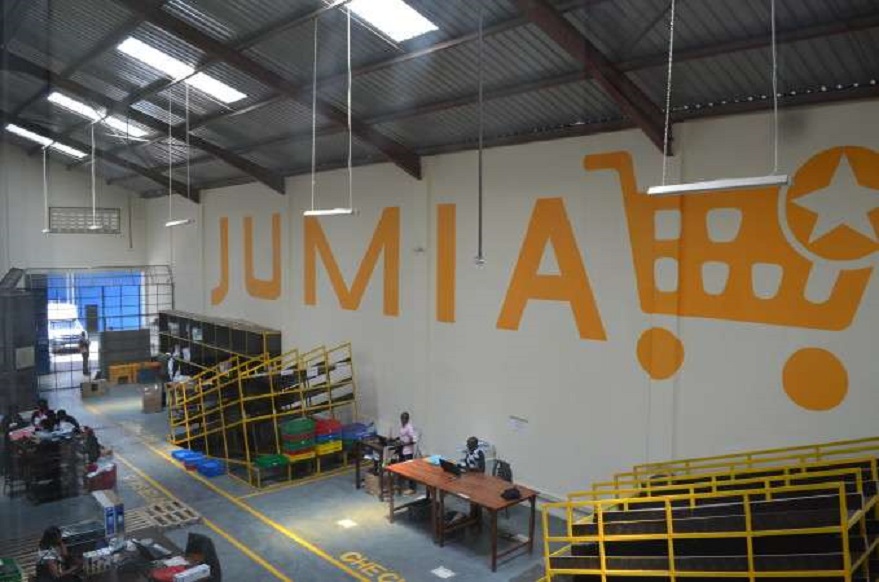
Jumia Begins Corporate Advert Services
Brands and corporate companies wishing to advertise their products and services on Jumia now have the opportunity to do so on the Nigeria’s leading e-commerce platform, a senior official of the organisation has said.
Head of Growth & Partnerships at Jumia, Mr Olusegun Martins, disclosed in an exclusive interview with Marketing Edge that can leverage on its wider audience to reach their target markets.
“Our platform is one of the most visited in Nigeria and Africa. We are in 12 countries of Africa, and in each country, we serve consumers absolutely everywhere. We are much more than e-commerce, we have hotels, flights, restaurants, classifieds portals, and many more platforms, which give us even more data and more ability to target the right audience for brands looking to reach a wider and more targeted audience,” he said.
In 2018, page views on the Jumia website reached over 700 million, but now averaging over 90 million views per month.
“We have bespoke solutions for various needs. We can help brands build awareness, consideration, engagement, sales, even multiple products to tap into. We can segment users in a very unique way based on their real shopping interest at the most granular level.
“We help brands to target users geographically in the most effective way. We have run very successful campaigns in multiple countries and advertisers who choose Jumia can decide to allocate recurring budgets to our platform,” Mr Martins continued.
He further disclosed that Jumia digital advertising platform is growing very fast. Every day, more users access Jumia and use it as a source of research, inspiration and shopping, saying, “No other platform is growing faster.”
Its campaign reporting tools are objective and independent. Jumia is adapting the model of the leading e-commerce platform in the US, Amazon.
“We have an online shopping audience. Amazon Advertising is growing very fast because brands and advertisers see it as a great alternative for other advertising channels,” he added.
Mr Martins informed that the decision by Jumia to veer into the advertising business space arose out of the popular demand by various customers of the company who had long been yearning to have an advertising platform owned by Jumia to expose their services and brands.
According to him, over the last seven years, Jumia had remained one of the top 10 most visible websites in Nigeria, adding that the clamour by customers for an advertising platform from Jumia was on the increase, hence the decision by the company to give it a try this year.
“We decided to open our platform starting from last month (October). There is a huge opportunity for brands to showcase their services and products to our audience and that is why we opened our platform. The way we want the brands to look at it is to think of Jumia as a search engine.
“The perception is that people come to Jumia to buy only. This is not entirely the case. A large chunk of people that come to Jumia come to make informed decisions; at that point when they are searching, their minds are receptive to whatever communication is available. So, people need to look at Jumia as a search engine,” Mr Martins said.
Throwing further light on who are the target audience for the new advertising platform, the Jumia boss observed that every brand that aims to reach Nigerians was a possible target.
According to him, Jumia has already established a close working relationship with a few strategic agencies who have indicated long term interests in partnering with the company over the new advertising platform.
“We have always made it possible for sellers on Jumia to be able to advertise and all our vendors know this. But over the last couple of years, we have been getting inquiries from banks, insurance companies, telcos and different sectors of brands who don’t necessarily sell on Jumia but are interested in reaching their targets by placing an Ad on our platform.
“We want to enable brands to reach out to people we call “quality audience” because the people that are coming to shop on Jumia are not just there to look around. They are at an advanced stage of the purchase funnel. They are in an active mode of purchase and at that point in time, they are receptive to communication,” Mr Martins continued.
Brands/Products
Lagos Raises Alarm Over Circulation of Contaminated Palm Oil
By Adedapo Adesanya
The Lagos State Consumer Protection Agency (LASCOPA) has raised concerns over the circulation of adulterated palm oil in markets across the state, warning residents to be cautious when purchasing the product.
General Manager of LASCOPA, Mr Afolabi Solebo, said complaints from consumers and market surveillance operations revealed that some traders were selling contaminated and artificially enhanced palm oil to unsuspecting buyers.
According to him, the adulterated products may contain harmful substances such as candle wax, chemicals, dyes and other impurities capable of causing serious health complications.
Mr Solebo warned that consumption of such products could lead to food poisoning, stomach disorders, tissue and liver damage, as well as other long-term health risks.
He advised consumers to examine palm oil carefully before purchase by checking for unusual colour, offensive odour, excessive thickness, sediments or any suspicious appearance that may suggest contamination.
The LASCOPA boss also urged residents to patronise only trusted vendors and insist on quality products at all times, according to a statement shared on X (formerly known as Twitter).
While reaffirming the state government’s commitment to consumer protection, Mr Solebo disclosed that the agency had sealed a shop allegedly selling adulterated palm oil at Idutafa Lane, off Oluwa Street near Amodu Tijani Oluwa Mosque in Lagos Island Local Government Area.
He warned traders and distributors involved in the sale of adulterated palm oil to desist immediately or face sanctions in line with consumer protection laws in the state.
The agency further appealed to members of the public to report suspected cases of adulterated food products, deceptive trade practices and other consumer rights violations through its official communication channels for investigation and enforcement action.
LASCOPA added that it would continue market monitoring and consumer sensitisation efforts to ensure residents have access to safe and quality products across the state.
Brands/Products
NAFDAC Declares Bon Bread Safe for Consumption
By Modupe Gbadeyanka
The National Agency for Food and Drug Administration and Control (NAFDAC) has declared that Bon Bread, which had created a controversy after a review by a consumer over a month ago, is safe to consume.
In a statement signed on Sunday by the Director General of NAFDAC, Mrs Mojisola Adeyeye, it was stated that investigations conducted on the safety of the product confirmed that it was not harmful.
A woman named Ms Love Dooshima had posted a video on social media last month claiming that one of the breads in her possession remained free from mould for some weeks, questioning this abnormally.
In her video, she did not mention the name of the bread, but Bon Bread claimed she liked comments mentioning its name in the post, triggering a lawsuit.
In the statement on Sunday night, NAFDAC said it conducted an inspection of the company’s bakery facility in Abuja and collected bread samples from both the production site and the open market for laboratory analysis.
It was revealed that the bread contained calcium propionate, an approved preservative commonly used in bread production, within the permissible limits specified by the Codex Alimentarius, the internationally recognised food standards framework.
According to the agency, the manufacturer of Bon Bread, Food & Food Integrated Company Limited, is in compliance with regulatory standards.
It was stated that although the complainant did not identify the brand, the manufacturer of Bon Bread responded publicly, stating that the product in question was theirs and that the allegation was misleading.
“Laboratory analysis further confirmed that the bread samples did not contain objectionable substances, including bromate or non-nutritive sweeteners.
“NAFDAC also confirmed that the company has maintained regulatory compliance since commencing operations in 2006 and has successfully undergone several licence renewals without penalties or product recalls,” parts of the statement read.
NAFDAC assured “the public that Food & Food Integrated Company Limited is not in violation of any NAFDAC regulation,” encouraging consumers “to report concerns relating to regulated products through any NAFDAC office nationwide or call the agency’s call centre to enable prompt and evidence-based investigation of complaints.”
Brands/Products
Tony Elumelu-Backed Redtech Ranks 32nd in FT Africa Fastest Growing Companies List
By Adedapo Adesanya
Redtech, a technology company backed by Heirs Holdings, has been named in the Financial Times (FT) Africa’s Fastest Growing Companies 2026 list.
The Tony Elumelu-backed startup ranked 32nd out of 130 high-growth companies and also secured a position among Africa’s top 15 fastest-growing fintech companies in its debut appearance on the annual FT/Statista ranking.
Produced by the FT in research partnership with Statista, the ranking identifies Africa’s fastest-growing companies based on compound annual growth rate (CAGR) in revenue between 2021 and 2024. Companies also had to meet additional criteria, including minimum revenue thresholds, independence and primarily organic growth. Redtech’s inclusion provides independent validation of its growth as an African payment infrastructure company.
The recognition comes as Redtech’s flagship platform, RedPay, continues to scale across physical and digital payment channels. Through RedPay, the company enables businesses to collect, process, confirm, reconcile, disburse, and manage funds through secure, scalable technology built for African commerce.
Last week, the company announced a rare fintech-bank-telco alliance with MTN’s mobile fintech unit and UBA, to expand cardless payment access for consumers and merchants across Nigeria.
Speaking on the development, Mr Elumelu, the Group Chairman of Heirs Holdings, said, “Africa’s next growth era will be powered by entrepreneurs, enterprises, and the infrastructure that enables them to succeed. Redtech’s recognition among Africa’s fastest-growing companies demonstrates what is possible when we invest in solutions built for Africa’s realities. Through RedPay, Redtech is helping merchants, fintechs, and financial institutions transact with greater speed, security, intelligence, and control. This is Africapitalism in action: building profitable, sustainable businesses that create prosperity across Africa.”
The numbers have also backed up Redtech’s growth. This is visible across four strategic areas, including a boost in transaction as the company processed $27 billion (N37.2 trillion) to date, more than three times the over $8.9 billion (N12 trillion) processed by the end of 2024; it has deployed 55,000 RedPay POS terminals within 16 months across merchant locations in Nigeria, supporting payment acceptance across sectors including hospitality, energy, banking, fintech, retail, utilities, and enterprise services; while its infrastructure supports payments in five UEMOA countries – Benin, Burkina Faso, Côte d’Ivoire, Mali, and Senegal.
Redtech operates with key regulatory approvals, including licences from the Central Bank of Nigeria as a Payment Terminal Service Provider (PTSP), Payment Solution Service Provider (PSSP), and Super Agent, enabling the company to provide POS, payment gateway, and agency banking services. The company also holds relevant Nigerian Communications Commission (NCC) authorisation for communications-enabled value-added services.
As part of its growth roadmap, Redtech is working to expand its payment infrastructure capabilities across African markets, with a long-term ambition to support merchant collections and financial technology services in 29 African countries within the next year.
Adding his input, Mr Emmanuel Ojo, CEO of Redtech, said: “Redtech’s inclusion in the Financial Times Africa’s Fastest-Growing Companies ranking recognises the infrastructure we are building and the African businesses that rely on it every day. At Redtech, growth is not only about transaction value or market reach; it is tied to a belief that when African businesses have payment systems they can trust, they are better placed to trade, serve customers and expand with confidence.
“That is the Heirs Holdings Africapitalism philosophy in practice – private-sector execution building the rails for African prosperity. Our focus is on strengthening the infrastructure that allows businesses across the continent to collect, pay, and grow.”
-
Feature/OPED6 years agoDavos was Different this year
-
Travel/Tourism10 years ago
Lagos Seals Western Lodge Hotel In Ikorodu
-
Showbiz3 years agoEstranged Lover Releases Videos of Empress Njamah Bathing
-
Banking8 years agoSort Codes of GTBank Branches in Nigeria
-
Economy3 years agoSubsidy Removal: CNG at N130 Per Litre Cheaper Than Petrol—IPMAN
-
Banking3 years agoSort Codes of UBA Branches in Nigeria
-
Banking3 years agoFirst Bank Announces Planned Downtime
-
Sports3 years agoHighest Paid Nigerian Footballer – How Much Do Nigerian Footballers Earn