Connect with us

Economy

Nigeria May Not Have Crude Oil in Next 50 Years, DPR Says

Published

on

crude oil production

By Adedapo Adesanya 

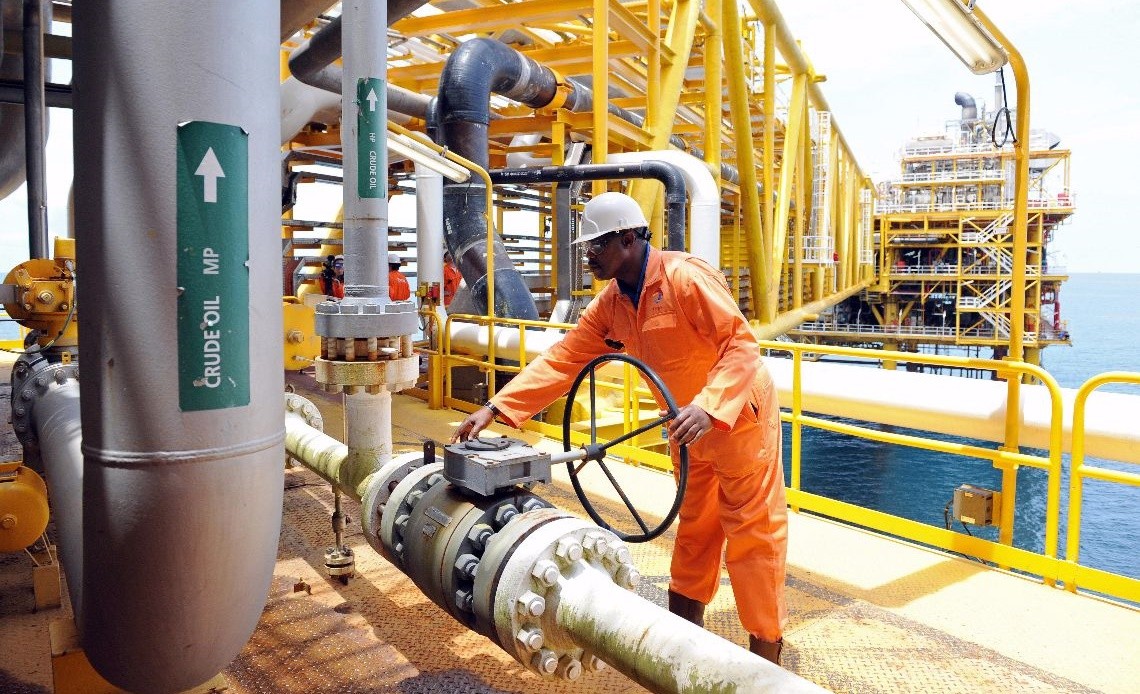
The Department of Petroleum Resources (DPR) has disclosed that Nigeria’s crude oil deposit could be exhausted in five decades from now.

This was contained in its latest Nigerian Oil and Gas Industry Annual Report, which noted that at current reserve depletion rate standing at 2.04 percent per annum, will cease in 2067.

The DPR then warned that this may be brought forward if oil is exploited at a greater rate as Nigeria may resort to a bigger oil production if its volatile economy faces a large scale crisis that upsets its current balance.

“The nation’s depletion rate and life index are 2.04 percent and 49.03 years respectively. These parameters lie within the long-term range.

“However, to achieve the aspiration of the Federal government of 4MMBOPD daily production and reserves of 40MMMB, there is the need for corresponding increase in reserves as production is increases, otherwise, the life index will fall from a sustainable long-term threshold to a less futuristic and sustainable medium to short term range,“ the document said.

The report further disclosed that the nation’s oil and condensate reserves was shared across various contract types namely Joint Venture, Production Sharing Contract, Sole Risk and Marginal Field.

Of this four, the Joint Venture, which is constituted by international oil exploration companies such as Mobil, Chevron and Total, is the highest production rate of nearly 41.64 percent. Interestingly, it has a low depletion rate in the neighbourhood of 1.8 percent and a high life index of 56.34 years.

The Production Sharing Contract, making up 36.08 percent of Nigeria’s total oil output, has the lowest life index of 32.15 years and the highest depletion rate currently 3.10 percent. This means that it poses the biggest threat to Nigeria’s oil future at its current production rate.

The Sole Risk, presently responsible for 20.14 percent of the national production, maintains the lowest depletion rate of 1.5 percent at the same time the highest life index of 65.49 years.

On its part, the Marginal Field contributes 2.14 percent to the nation’s production basket at a 2.7 percent depletion rate while maintaining a life index of 36.83 per cent.

Beyond the challenge that the depletion has on Nigeria’s revenue, it was revealed that oil will continue to face less demand as developed and emerging economies warm up for a large-scale migration from gasoline-powered cars to electric cars, shrinking need to buy the nation’s crude oil from some of Nigeria’s oil partners like the US, India, Brazil, Spain, France, and the Netherlands.

Currently, as the world move to alternative energy, patronage for electric cars is rising spurred in part by the massive campaign for the invention in the Western world and this means no large demand for oil.

Apart from the peerless benefit of offering renewable energy, electric cars easily promote the global massive campaign for environmental friendly initiatives and do not emit carbon which affects the environment.

Oil prices are also affected due to its volatility which faced a free-fall lately with Brent Crude (the international benchmark for Nigeria’s Bonny Light) tumbling from $70 per barrel to $57 a barrel since the year began following the spread of the coronavirus in China, one of Nigeria’s crude destinations.


Adedapo Adesanya is a journalist, polymath, and connoisseur of everything art. When he is not writing, he has his nose buried in one of the many books or articles he has bookmarked or simply listening to good music with a bottle of beer or wine. He supports the greatest club in the world, Manchester United F.C.

Economy

Nigerian Stocks Close 1.13% Higher to Remain in Bulls’ Territory

Published

on

Nigerian Stocks1

By Dipo Olowookere

The local stock market firmed up by 1.13 per cent on Friday as appetite for Nigerian stocks remained strong.

Investors reacted well to the 2026 budget presentation of President Bola Tinubu to the National Assembly yesterday, especially because of the more realistic crude oil benchmark of $64 per barrel compared with the ambitious $75 per barrel for 2025. This year, prices have been between $60 and $65 per barrel.

Business Post observed profit-taking in the commodity and energy sectors as they respectively shed 0.14 per cent and 0.03 per cent.

But, bargain-hunting in the others sustained the positive run, with the consumer goods index up by 3.82 per cent.

Further, the industrial goods space appreciated by 1.46 per cent, the banking counter improved by 0.08 per cent, and the insurance industry gained 0.04 per cent.

As a result, the All-Share Index (ASI) increased by 1,694.33 points to 152,057.38 points from 150,363.05 points and the market capitalisation chalked up N1.080 trillion to finish at N96.937 trillion compared with Thursday’s closing value of N95.857 trillion.

A total of 34 shares ended on the advancers’ chart, while 24 were on the laggards’ log, representing a positive market breadth index and bullish investor sentiment.

Austin Laz gained 10.00 per cent to close at N2.42, Union Dicon also jumped 10.00 per cent to N6.60, Tantalizers increased by 9.80 per cent to N2.69, Aluminium Extrusion improved by 9.78 per cent to N12.35, and Champion Breweries grew by 9.71 per cent to N16.95.

Conversely, Sovereign Trust Insurance dipped by 7.42 per cent to N3.87, Royal Exchange lost 6.84 per cent to trade at N1.77, Omatek slipped by 6.84 per cent to N1.09, Eunisell depreciated by 5.88 per cent to N80.00, and Eterna dropped 5.63 per cent to close at N28.50.

Yesterday, traders transacted 1.5 billion units worth N21.8 billion in 25,667 deals compared with the 839.8 million units sold for N32.8 billion in 23,211 deals in the preceding session, showing a surge in the trading volume by 76.61 per cent, an uptick in the number of deals by 10.58 per cent, and a shrink in the trading value by 33.54 per cent.

Continue Reading

Economy

FrieslandCampina, Two Others Erase N26bn from NASD OTC Bourse

Published

on

FrieslandCampina

By Adedapo Adesanya

Three stocks stretched the bearish run of the NASD Over-the-Counter (OTC) Securities Exchange by 1.21 per cent on Friday, December 19, with the market capitalisation giving up N26.01 billion to close at N2.121 billion compared with the N2.147 trillion it ended a day earlier, and the NASD Unlisted Security Index (NSI) dropping 43.47 points to 3,546.41 points from 3,589.88 points.

The trio of FrieslandCampina Wamco Nigeria Plc, Central Securities Clearing System (CSCS) Plc, and NASD Plc overpowered the gains printed by four other securities.

FrieslandCampina Wamco Nigeria Plc lost N6.00 to sell at N54.00 per unit versus N60.00 per unit, NASD Plc shrank by N3.50 to N58.50 per share from N55.00 per share, and CSCS Plc depleted by N2.91 to N33.87 per unit from N36.78 per unit.

On the flip side, Air Liquide Plc gained N1.01 to close at N13.00 per share versus N11.99 per share, Golden Capital Plc appreciated by 70 Kobo to N7.68 per unit from N6.98 per unit, Geo-Fluids Plc added 39 Kobo to sell at N5.50 per share versus N5.11 per share, and IPWA Plc rose by 8 Kobo to 85 Kobo per unit from 77 Kobo per unit.

During the trading day, market participants traded 1.9 million securities versus the previous day’s 30.5 million securities showing a decline of 49.3 per cent. The value of trades went down by 64.3 per cent to N80.3 million from N225.1 million, but the number of deals jumped by 32.1 per cent to 37 deals from 28 deals.

Infrastructure Credit Guarantee Company (InfraCredit) Plc finished the session as the most active stock by value on a year-to-date basis with 5.8 billion units valued at N16.4 billion, followed by Okitipupa Plc with 178.9 million units transacted for N9.5 billion, and MRS Oil Plc with 36.1 million units traded for N4.9 billion.

The most active stock by volume on a year-to-date basis was still InfraCredit Plc with 5.8 billion units worth N16.4 billion, trailed by Industrial and General Insurance (IGI) Plc with 1.2 billion units sold for N420.7 million, and Impresit Bakolori Plc with 536.9 million units traded for N524.9 million.

Continue Reading

Economy

Naira Crashes to N1,464/$1 at Official Market, N1,485/$1 at Black Market

Published

on

Official FX Market

By Adedapo Adesanya

It was not a good day for the Nigerian Naira at the two major foreign exchange (FX) market on Friday as it suffered a heavy loss against the United States Dollar at the close of transactions.

In the black market segment, the Naira weakened against its American counterpart yesterday by N10 to quote at N1,485/$1, in contrast to the N1,475/$1 it was traded a day earlier, and at the GTBank forex counter, it depreciated by N2 to settle at N1,467/$1 versus Thursday’s closing price of N1,465/$1.

In the Nigerian Autonomous Foreign Exchange Market (NAFEX) window, which is also the official market, the nation’s legal tender crashed against the greenback by N6.65 or 0.46 per cent to close at N1,464.49/$1 compared with the preceding session’s rate of N1,457.84/$1.

In the same vein, the local currency tumbled against the Euro in the spot market by N2.25 to sell for N1,714.63/€1 compared with the previous day’s N1,712.38/€1, but appreciated against the Pound Sterling by 73 Kobo to finish at N1,957.30/£1 compared with the N1,958.03/£1 it was traded in the preceding session.

The market continues to face seasonal pressure even as the Central Bank of Nigeria (CBN) is still conducting FX intervention sales, which have significantly reduced but not remove pressure from the Naira. Also, there seems to be reduced supply from exporters, foreign portfolio investors and non-bank corporate inflows.

President Bola Tinubu on Friday presented the government’s N58.47 trillion budget plan aimed at consolidating economic reforms and boosting growth.

The budget is based on a projected crude oil price of $64.85 a barrel and includes a target oil output of 1.84 million barrels a day. It also projects an exchange rate of N1,400 to the Dollar.

President Tinubu said inflation had plunged to an annual rate of 14.45 per cent in November from 24.23 per cent in March, while foreign reserves had surged to a seven-year high of $47 billion.

Meanwhile, the cryptocurrency market was dominated by the bulls but it continues to face increased pressure after million in liquidations in previous session over accelerating declines, with Dogecoin (DOGE) recovering 4.2 per cent to trade at $0.1309.

Further, Ripple (XRP) appreciated by 3.9 per cent to $1.90, Cardano (ADA) rose by 3.5 per cent to $0.3728, Solana (SOL) jumped by 3.4 per cent to $126.23, Ethereum (ETH) climbed by 2.9 per cent to $2,982.42, Binance Coin (BNB) gained 2.0 per cent to sell for $853.06, Bitcoin (BTC) improved by 1.7 per cent to $88,281.21, and Litecoin (LTC) soared by 1.2 per cent to $76.50, while the US Dollar Tether (USDT) and the US Dollar Coin (USDC) traded flat at $1.00 each.

Continue Reading

Trending