Economy
Nigeria May Not Have Crude Oil in Next 50 Years, DPR Says
By Adedapo Adesanya
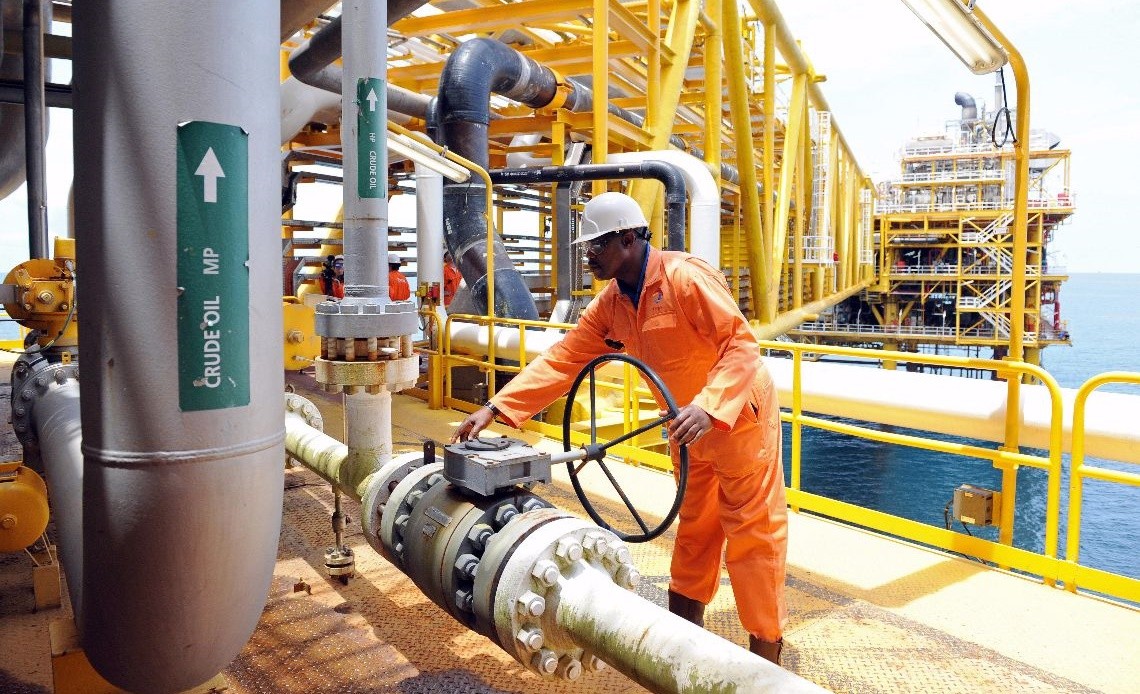
The Department of Petroleum Resources (DPR) has disclosed that Nigeria’s crude oil deposit could be exhausted in five decades from now.
This was contained in its latest Nigerian Oil and Gas Industry Annual Report, which noted that at current reserve depletion rate standing at 2.04 percent per annum, will cease in 2067.
The DPR then warned that this may be brought forward if oil is exploited at a greater rate as Nigeria may resort to a bigger oil production if its volatile economy faces a large scale crisis that upsets its current balance.
“The nation’s depletion rate and life index are 2.04 percent and 49.03 years respectively. These parameters lie within the long-term range.
“However, to achieve the aspiration of the Federal government of 4MMBOPD daily production and reserves of 40MMMB, there is the need for corresponding increase in reserves as production is increases, otherwise, the life index will fall from a sustainable long-term threshold to a less futuristic and sustainable medium to short term range,“ the document said.
The report further disclosed that the nation’s oil and condensate reserves was shared across various contract types namely Joint Venture, Production Sharing Contract, Sole Risk and Marginal Field.
Of this four, the Joint Venture, which is constituted by international oil exploration companies such as Mobil, Chevron and Total, is the highest production rate of nearly 41.64 percent. Interestingly, it has a low depletion rate in the neighbourhood of 1.8 percent and a high life index of 56.34 years.
The Production Sharing Contract, making up 36.08 percent of Nigeria’s total oil output, has the lowest life index of 32.15 years and the highest depletion rate currently 3.10 percent. This means that it poses the biggest threat to Nigeria’s oil future at its current production rate.
The Sole Risk, presently responsible for 20.14 percent of the national production, maintains the lowest depletion rate of 1.5 percent at the same time the highest life index of 65.49 years.
On its part, the Marginal Field contributes 2.14 percent to the nation’s production basket at a 2.7 percent depletion rate while maintaining a life index of 36.83 per cent.
Beyond the challenge that the depletion has on Nigeria’s revenue, it was revealed that oil will continue to face less demand as developed and emerging economies warm up for a large-scale migration from gasoline-powered cars to electric cars, shrinking need to buy the nation’s crude oil from some of Nigeria’s oil partners like the US, India, Brazil, Spain, France, and the Netherlands.
Currently, as the world move to alternative energy, patronage for electric cars is rising spurred in part by the massive campaign for the invention in the Western world and this means no large demand for oil.
Apart from the peerless benefit of offering renewable energy, electric cars easily promote the global massive campaign for environmental friendly initiatives and do not emit carbon which affects the environment.
Oil prices are also affected due to its volatility which faced a free-fall lately with Brent Crude (the international benchmark for Nigeria’s Bonny Light) tumbling from $70 per barrel to $57 a barrel since the year began following the spread of the coronavirus in China, one of Nigeria’s crude destinations.
Economy
MTN Nigeria 2025 Tax Remittance to FG, States Rises 15% to N878.7bn
By Aduragbemi Omiyale
About N878.7 billion was remitted to federal and state authorities in taxes, levies and duties by MTN Nigeria Communications Plc in the 2025 financial year.
According to details of the company’s 2025 Sustainability Report, this amount was 15 per higher than the previous year, helping the country achieve its target of expanding non-oil revenue and improving tax collection under its fiscal reform agenda, corporate tax contributions from major private-sector operators.
In 2023, MTN Nigeria paid N543.9 billion in taxes and levies, and a year later, it moved higher by about 62 per cent to N764 billion.
The N878.7 billion remitted to the government in 2025 covered corporation tax, value-added tax, spectrum fees, import duties, NCC levies and contributions under the Rural and Urban Terrestrial Infrastructure (RUTI) tax credit scheme, an initiative with deep roots in MTN Nigeria’s public-private partnership playbook.
The company has long embraced such mechanisms: it participated in the Road Infrastructure Tax Credit Scheme, under which it committed N202.8 billion towards reconstructing the 110-kilometre Enugu-Onitsha Expressway.
In 2025, the RUTI scheme reached 50% completion after securing approval for an additional N23 billion tax credit aimed at expanding fibre and telecoms infrastructure in underserved communities, a model the company argues supports infrastructure development without requiring direct public expenditure.
The report also highlighted the firm’s growing domestic economic footprint, with 62 per cent of procurement spending directed to Nigerian suppliers in 2025. This was up from 59.6 per cent a year earlier.
MTN Nigeria said the policy aligns with the federal government’s local-content objectives and supports sectors including civil construction, logistics, software services and power infrastructure.
The organisation’s operational footprint expanded to 2,087 active base stations nationwide, while active mobile subscribers stood at 85.4 million by the third quarter of 2025. Active data users rose to 51.1 million, supported by smartphone penetration of 65.1 per cent.
During the year, MTN Nigeria renewed its 800MHz spectrum licence for another 10 years, to December 2034, and secured regulatory approval to lease additional spectrum from T2 Mobile, formerly 9Mobile, across 17 states and the Federal Capital Territory.
Economy
NNPC Weighs Giving Chinese Investors 51% Stake in Port Harcourt, Warri Refineries
By Adedapo Adesanya
The Nigerian National Petroleum Company (NNPC) Limited is considering a new partnership model that could give Chinese investors a majority 51 per cent stake in the Port Harcourt and Warri refineries as part of efforts to revive and commercially reposition the struggling national assets.
Details of the proposed arrangement emerged after NNPC signed a Memorandum of Understanding with China’s Sanjiang Chemical Company Limited and Xinganchen (Fuzhou) Industrial Park Operation and Management Co. Ltd. for what the national oil company described as a “potential technical equity partnership”.
The agreement, signed on April 30 in Jiaxing City, China, involved NNPC’s chief executive, Mr Bayo Ojulari, Sanjiang Chemical Chairman, Mr Guan Jianzhong, and Xinganchen Chairman, Mr Bill Bi.
According to reports, the framework is modelled after the Nigeria LNG structure, where investors hold majority equity, participate in governance and remain actively involved in operations over the long term.
Under the proposed arrangement, the Chinese firms are expected to help complete outstanding engineering and rehabilitation work at the Port Harcourt and Warri facilities while also providing operations and maintenance services aimed at delivering sustainable, world-class refinery performance.
Beyond restarting the plants, the partnership is expected to target capacity expansion, improved refining yields, cleaner fuel production and stronger profitability.
The agreement also opens the door to broader industrial ambitions, including petrochemical integration and gas-based industrial projects built around the refinery corridors.
Recall that Mr Ojulari, at the signing ceremony in April, described the deal as a major breakthrough following more than six months of negotiations.
“All parties recognise mutually beneficial opportunities for the development and long-term sustainable profitability of NNPC’s refining assets in Nigeria and the collective weight required for success,” he said.
He added that the MoU marked an important step towards identifying technical equity partners capable of restarting and expanding Nigeria’s state-owned refineries.
“The MoU is a significant step on the journey towards identifying potential technical equity partner(s) to restart and expand NNPC’s refineries and to explore opportunities in co-located petrochemical and gas-based industries,” Mr Ojulari stated.
Reports indicate that the arrangement remains non-binding and subject to technical, financial, legal and regulatory reviews before any final commercial agreements can be executed. Due diligence will cover engineering performance, operational viability, financial structure, commercial feasibility and legal compliance.
The Port Harcourt refinery rehabilitation contract had earlier been awarded to Italian engineering giant Maire Tecnimont, while separate repair efforts were also launched at the Warri refinery.
Economy
Eterna Fully Paid-up Shares Rise to Almost 2.2 billion
By Aduragbemi Omiyale
The total issued and fully paid-up shares of Eterna Plc are almost 2.2 billion after the listing of additional shares of the company on the Nigerian Exchange (NGX) Limited this week.
Precisely on Wednesday, an additional 882,064,158 ordinary shares of the organisation were listed on Customs Street, a regulatory notice confirmed.
These extra stocks were from the rights issue of the firm, issued to shareholders at N22.00 per unit on the basis of three new ordinary stocks for every existing four ordinary stocks held as at the close of business on Thursday, November 27, 2025.
Eterna wanted to sell a total of 978,108,485 units, but investors only picked 882,064,158, indicating a subscription rate of 90.18 per cent.
At midweek, the new equities were brought to the stock exchange for listing, increasing the total issued and fully paid-up shares of the company from 1,304,144,647 units to 2,186,208,805 units.
“Trading licence holders are hereby notified that an additional 882,064,158 ordinary shares of 50 Kobo each of Eterna Plc were on Wednesday, May 20, 2026, listed on the daily official list of NGX.
“The additional shares arose from the company’s rights issue of 978,108,485 ordinary shares of 50 Kobo each at N22.00 per share on the basis of three new ordinary shares for every existing four ordinary shares held as at the close of business on Thursday, November 27, 2025.
“With the listing of the additional 882,064,158 ordinary shares, the total issued and fully paid-up shares of Eterna Plc have now increased from 1,304,144,647 to 2,186,208,805 ordinary shares of 50 Kobo each,” the notice signed by the Head of Issuer Regulation Department at NGX RegCo Limited, Mr Godstime Iwenekhai, stated.
-
Feature/OPED6 years agoDavos was Different this year
-
Travel/Tourism10 years ago
Lagos Seals Western Lodge Hotel In Ikorodu
-
Showbiz3 years agoEstranged Lover Releases Videos of Empress Njamah Bathing
-
Banking8 years agoSort Codes of GTBank Branches in Nigeria
-
Economy3 years agoSubsidy Removal: CNG at N130 Per Litre Cheaper Than Petrol—IPMAN
-
Banking3 years agoSort Codes of UBA Branches in Nigeria
-
Banking3 years agoFirst Bank Announces Planned Downtime
-
Sports3 years agoHighest Paid Nigerian Footballer – How Much Do Nigerian Footballers Earn