Banking
Court Orders CBN to Deduct N183bn from First Bank’s Account


By Adedapo Adesanya
A Federal High Court in Abuja has directed the Central Bank of Nigeria (CBN) to pay a judgment sum with interest of N182.7 billion to Ogoni community from the account of First Bank of Nigeria.
The court gave this directive to the apex bank because First Bank manages the account of Shell Petroleum Development Company (SPDC), which the court compelled to pay the amount of money for causing damage to the community and its environs as a result of oil spillage.
Making the garnishee order absolute, the presiding judge, Justice Inyang Ekwo, ordered the CBN to deduct the sum from the First Bank account and pay the people of Ejama Community in the Eleme Local Government Area of Rivers State.
Mr Ekwo held that the Order Absolute was made upon the Order Nisi on June 3, 2019, compelling the garnishee (CBN) to pay the judgment creditors monies belonging to the guarantor (First Bank of Nigeria Limited) in the garnishee’s custody.
He said the ruling was in satisfaction of the judgment debt in Suit No. FHC/PH/CS/231/2001 (later renumbered Suit No. FHC/ASB/ CS/57/2010) titled Chief Isaac Osaro Agbara and five others vs CBN and two others as well as Suit No: FHC/ABJ/CS/562/19 2/: Agbara and two others, vs the Shell Petroleum Development Company of Nigeria Limited and others.
The ruling read in part, “The guarantor/surety/debtor secured and guaranteed to pay the judgment creditors special damages; and interest for delayed payment for five years from 1996 at 25 percent per annum i.e. 25 percent of the said sum till the date of judgment; N10 billion as general damages; and 10 percent interest on the judgment debt till payment giving a total of N76,871,175,831.18 as at June 14, 2010, being the date of the judgment but with the accrual of post judgment interest totalled N182, 768,696,651.89.”
The case, which started in 1991, was originally instituted at the Rivers State High Court, Nchia Division, by six indigenes of Ogoniland against the Royal Dutch Shell Plc, Netherlands, Royal Dutch Shell Plc, United Kingdom, and SPDC over alleged oil spills that occurred when Shell operated in the community.
The plaintiffs alleged that it was the same case that led to the Ogoni struggle championed by the late Mr Ken Saro Wiwa, who was later killed by the military government of late Head of State, Mr Sani Abacha.
Judgment was eventually entered in their favour against Shell by the state High Court, whereupon the defendant appealed against the said judgment.
However, in 2001, a fresh suit was filed by some representatives of the Ogoni people at the Federal High Court in Port Harcourt presided over by the judge, Mr Ibrahim Buba claiming N17 billion and interests on the said sum for the losses allegedly caused by the oil spills.
The court equally granted the Ogoni chiefs 25 percent interest charge on the principal sum of about N17 billion but SPDC appealed the judgment and applied for a stay of execution pending the appeal.
Providing a condition for granting the request, the court asked Shell’s bankers, First Bank, to provide a guarantee of the judgment sum – a condition that was complied with however, Shell’s appeal failed at the Court of Appeal on technical grounds.
Then in December 2018, the Ogoni representatives commenced garnishee proceedings at the Federal High Court in Owerri and filed contempt proceedings against the bank before the judge, Mr Buba who delivered the judgment in 2010.
After the Appellate Court ruling, Shell and First Bank proceeded to the Supreme Court but their appeal was dismissed.
Following the dismissal by the apex court, Ogoni chiefs resumed the garnishing proceedings.




By Aduragbemi Omiyale
In 2025, Access Holdings Plc lowered its operational emissions by 28.47 per cent by growing its green asset portfolio to N92.15 billion, though still far from its N475 billion target.
Details of its 2025 Sustainability Report showed that operational emissions fell to 49,352 tonnes of carbon dioxide equivalent from 57,176 tonnes in 2024, supported primarily by branch solarisation across 263 locations and the deployment of 323 solar-powered ATMs, largely across Access Bank in Nigeria.
The organisation applies the operational-control approach under the Greenhouse Gas Protocol, accounting for emissions across its African footprint, with Access Bank representing the largest share.
The report reinforces its strategic shift from scale to value by showing how sustainability is being embedded in capital allocation, risk management, product development and operations.
During the year, Access Holdings deployed N72.3 billion under its Sustainable Finance Framework to eligible environmentally beneficial projects and grew its cumulative sustainability-focused loan book to $1.269 billion.
Beyond environmental outcomes, the report highlights the group’s contribution to inclusive economic participation.
In 2025, Access Holdings extended access to finance to 2,528,117 low-income individuals and onboarded 78,438 new MSMEs onto its financing platform.
Across the institution, 2.8 billion transactions were processed during the year, underscoring its role as core financial infrastructure for Africa’s real
economy. Gender-lens lending also progressed, with 354,156 loans extended to women and women-owned businesses, totalling N67.4 billion, equivalent to 24 per cent of the relevant loan portfolio.
Its Corporate Social Investment programmes reached 2,439,480 beneficiaries across education, health, entrepreneurship and the environment, delivered with partners, including UNICEF, HACEY Health Initiative and the Kenya Forest Service.
Employees recorded 359,500 volunteer hours with 100 per cent participation, while more than 50,000 trees were planted. The group notes that 2025 community figures follow a board-mandated tightening of its impact-measurement methodology and are not directly comparable with prior years. Women represent 49 per cent of the workforce, and the Access Holdings board comprised nine directors with 44.4 per cent female representation. Employee satisfaction rose to 87 per cent against an 80 per cent target, while attrition eased from about 13 per cent to about 11 per cent.
For the second straight year, Access Holdings reported zero material regulatory penalties relating to sustainability and zero cybersecurity breaches.
It mobilised $185.38 million, equivalent to N266.83 billion, in concessional funding from development finance institutions during the year and allocated a sustainability budget of N4.8 billion from profit before tax.
Sales-facing staff in the banking subsidiary carry green-portfolio targets within their individual performance measures, linking strategic sustainability goals to day-to-day execution across governance, strategy, risk management, capital allocation, products and operations.
To strengthen credibility and comparability, the report was prepared using the IFRS Sustainability Disclosure Standards, specifically IFRS S1 and IFRS S2, as the primary framework, with the GRI Standards (2021) and the SASB Standards applied as complementary references.
“Our 2025 Sustainability Report reflects the discipline with which we are converting scale into value. We reduced operational emissions by 28.47 per cent,
grew our green asset portfolio to N92.14 billion and extended financial access to about 2.5 million low-income individuals.
“These outcomes show that sustainability is not separate from our business; it is central to how we create value, manage risk and support inclusive growth across Africa,” the chief executive of Access Holdings, Mr Innocent Ike, stated.
Looking ahead, the company promised to deepen the measurable impact of its sustainability agenda, accelerate the transition of its portfolio towards low-carbon and climate-resilient assets, and grow the green asset portfolio towards the N475 billion target.
By Adedapo Adesanya
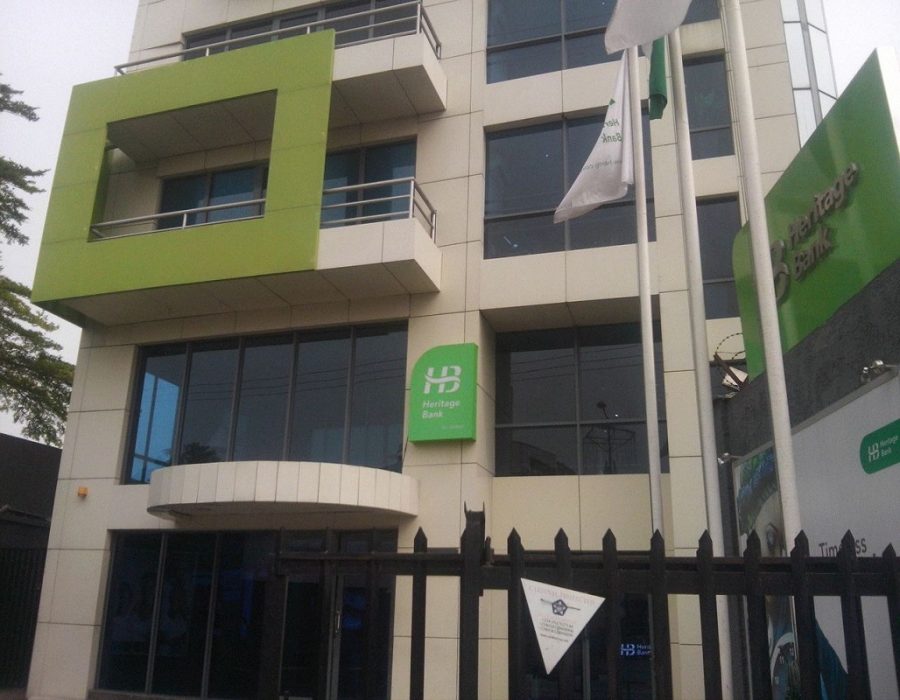
The Nigeria Deposit Insurance Corporation (NDIC) says it has paid the insured deposits of about 700,000 customers of the defunct Heritage Bank and has commenced the reimbursement of depositors of 46 microfinance banks (MFBs) whose operating licences were recently revoked by the Central Bank of Nigeria (CBN).
The chief executive of NDIC, Mr Oludare Sunday, made this known on Wednesday during a retreat for members of the House of Representatives Committee on Insurance and Actuarial Matters in Lagos.
He said the corporation immediately began settling the insured deposits of customers after the CBN revoked the licences of the 46 microfinance banks and appointed the NDIC as their provisional liquidator.
“We are working on those. The CBN revoked the licences, and we were appointed as the provisional liquidator. We have started paying depositors of those banks, and gradually we intend to cover all the insured depositors,” he said.
Mr Sunday explained that the NDIC’s responsibility extends beyond paying insured deposits to recovering outstanding loans owed to the failed institutions and disposing of their assets to generate funds for the settlement of uninsured depositors.
“Our function as liquidator involves the payment of guaranteed sums. Thereafter, we go after those who owe the institutions and have not paid. We also ensure that we sell the available assets and realise their investments towards paying the uninsured portion of the deposits. So, we have started paying the guaranteed deposits. What we are doing now is also realising the assets of those institutions,” he stated.
Although he declined to disclose the exact number of depositors of the failed microfinance banks who had been reimbursed, Sunday said the Corporation was working with the Nigerian Interbank Settlement System (NIBSS) to identify depositors through their Bank Verification Numbers (BVN) to ensure seamless payments.
“So, the more accounts we discover, the more payments we make,” he added.
Providing an update on the liquidation of Heritage Bank, the NDIC chief said about 700,000 depositors had already received their insured deposits, while efforts were ongoing to trace other customers whose identities could not be verified from available records.
He attributed the challenge to legacy accounts created before the introduction of the BVN system, as well as incomplete customer records inherited from banks that were later merged into Heritage Bank.
“If you know Heritage Bank, you know it is an amalgamation of several banks, including the acquisition of Enterprise Bank in 2014. So, if you think of banks like Guardian Express and Spring Bank, they are all part of Heritage Bank.
“There are depositors we have not been able to trace, and this is an opportunity for them to come forward. I am sure many of us did the National Youth Service Corps (NYSC) and may have left some money in an account, but there was no BVN then.
“Even the addresses we had were sometimes things like ‘opposite filling station.’ How do you trace such a person? Once they come forward, and for those we have been able to identify from the institution’s database, we have been paying them,” he explained.
Mr Sunday added that the Corporation would continue to recover outstanding loans and dispose of Heritage Bank’s assets to generate funds for the payment of liquidation dividends to depositors whose balances exceeded the insured limit.
Earlier in his remarks, he described the NDIC as a critical pillar of Nigeria’s financial safety net, stressing the need for stronger collaboration between regulators and the National Assembly as the banking sector responds to recapitalisation efforts and rapid financial technology developments.
According to him, while the ongoing banking recapitalisation programme has strengthened the resilience of financial institutions, it must be complemented by sound corporate governance, effective risk management, strict regulatory compliance and robust supervision to safeguard long-term financial system stability.
He also disclosed that more than 98 per cent of depositors, representing over 281 million accounts across insured financial institutions, are fully protected under the NDIC’s deposit insurance scheme.

By Adedapo Adesanya
Zenith Bank Plc is investigating an incident involving unauthorised access to customers’ data, noting that the breach does not involve financial information and has not compromised its banking services or digital channels.
In an email sent to customers on Wednesday, the bank stated that the incident was part of a broader global cyberattack affecting multiple international organisations across various sectors.
The lender stated that it immediately activated its incident response protocols and intensified its cybersecurity and remediation efforts upon discovering the incident.
“This incident is part of a broader, global cyber-attack targeting multiple international organisations across various sectors. Upon discovery, we promptly activated our incident response protocols, cybersecurity actions and remediation efforts,” the bank said.
The bank reassured customers that its banking services and digital channels remain secure and fully operational.
As a precautionary measure, Zenith Bank advised customers to remain alert to potential phishing attempts and other forms of social engineering.
“As a precaution, we encourage our customers to remain vigilant against phishing emails, text messages, or phone calls, and never to disclose their password, PIN, One-Time Password (OTP), or other security credentials to anyone,” the bank said.
The incident is the latest in a series of cybersecurity challenges facing Nigerian financial institutions, with banks in recent months suspending their social media operations over impersonation and other fraudulent activities.
Earlier in April, the Nigeria Data Protection Commission (NDPC) said it was investigating alleged data breaches involving Sterling Bank, Remita and the Corporate Affairs Commission (CAC).
Nigerian banks have long been prime targets for cybercriminals because of the vast amounts of customer data and financial transactions they handle every day.
While many attacks have traditionally sought to steal funds, cybercriminals are increasingly targeting personal information, which can be used for identity theft, phishing schemes, account takeovers and other forms of financial fraud.
Cybersecurity threats have increasingly targeted Nigerian banks in recent years. In 2025, Union Bank of Nigeria warned customers about fraudulent websites and phishing campaigns designed to steal login credentials and personal information by impersonating the bank.
In August 2024, Guaranty Trust Bank experienced a domain-related security incident that temporarily disrupted access to its official website, although the lender assured customers that their deposits and banking services remained secure while it resolved the issue.