Connect with us

Banking

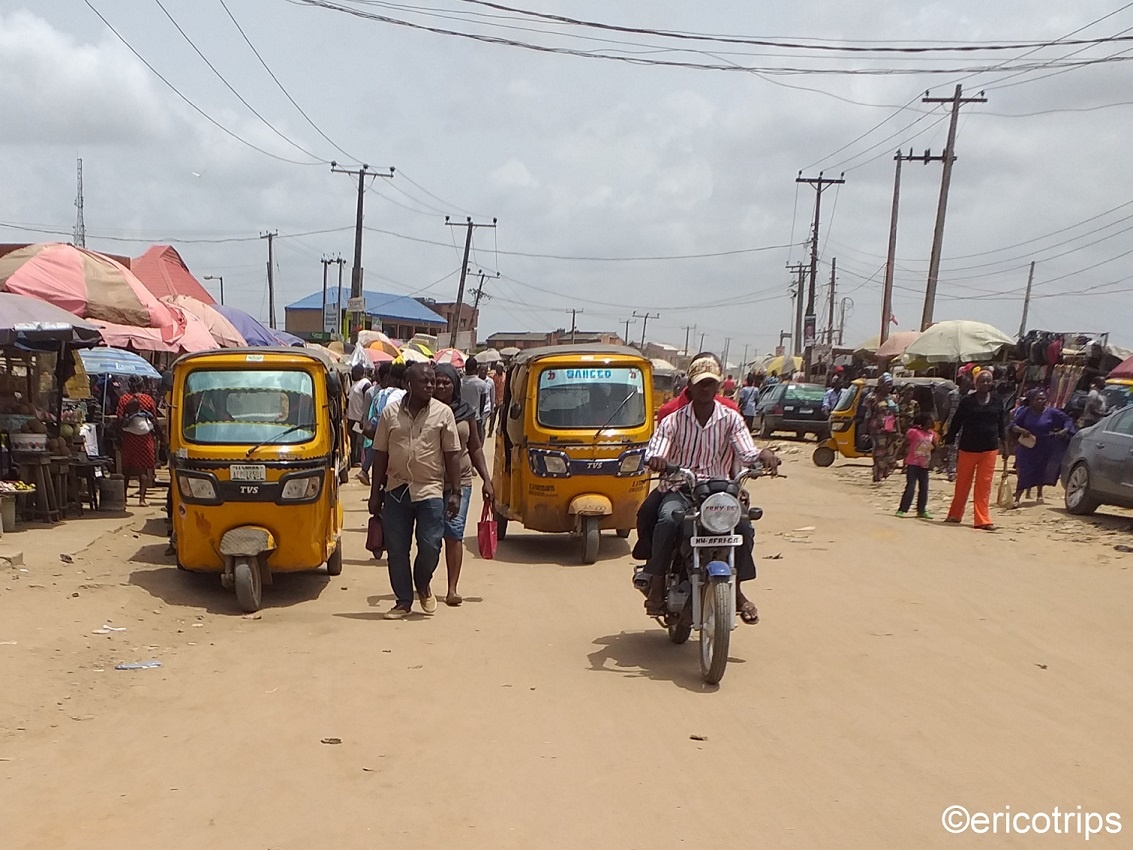
Okada/Keke Ban: Lagos to Flood Roads With Buses in April

Published

on

okada keke riders lagos

Lagos State Commissioner for Information and Strategy, Mr Gbenga Omotoso, has disclosed that from next month, the state government would be assuaging the pain being felt by residents by injecting buses of different sizes and capacities into the public transportation space to serve as alternative to Okada and Keke.

“We are using this opportunity to inform Lagosians that the palliatives promised by the Government will be coming very soon, most likely in April,” the Commissioner said after a security meeting held at the State House in Marina on Wednesday.

The meeting was chaired by Governor Babajide Sanwo-Olu, who chaired the gathering was attended by Commanders of all security formations in the state.

Mr Omotoso said the government was not resting on its oars in providing required infrastructure that would improve traffic situation and transportation across the state.

He disclosed that the government would be holding a ground-breaking ceremony on the long-awaited Red Line rail project, which, he said, would be held on March 25. He added that updates would also be shared on the ongoing Blue Line rail project handling by Lagos Metropolitan Area Transport Authority (LAMATA).

On the closure of Eko Bridge, the Commissioner said the government would work assiduously to lessen the pain of commuters plying the route. He, however, noted that the closure of the bridge was a necessary precautionary measure taken to avert an incident that may result into loss of lives.

The commissioner urged residents to continue to support the government’s efforts at securing the state, stressing that the Mr Sanwo-Olu administration would deploy all resources to ensure safety of lives and property in Lagos.

“About security, Lagosians should be rest assured that Government is on top of the situation and that all is well. Every action we take is to show that we put the interest of Lagosians at heart and their welfare is on the front burner at all times,” Mr Omotoso said.

Also, the Commissioner said the state government has warned uniform men, especially those in the police and the military, to desist from flouting the Lagos State Transport Sector Reform Laws.

He emphasised that it is illegal for any security operative in mufti to ride commercial motorcycles on routes where Okada and tricycles have been restricted, noting that the enforcement of the restriction order would be executed with more force to completely keep Okada and tricycles away from the restricted routes.

Members of the Security Council, the Commissioner said, frowned at a situation in which uniform men flouted the State’s Transport Sector Reform Laws, warning security operatives, especially police officers and military personnel, to stop taking passengers on their motorcycles on restricted routes.

Mr Omotoso said, “We have just concluded the State Security Council meeting, where we reviewed the ongoing enforcement of Okada and Keke restriction order in the six Local Government Areas. Matters concerning uniform men engaging in commercial motorcycle operation came up in our discussion and there has been an order restricting them from doing that.

“Only a uniform man who is fully kitted and who rides motorcycle as his own personal mode of transportation is allowed. If any uniform man ventures into commercial motorcycle operation or Keke, the action of such a person is illegal and such persons are going to be arrested if they are caught.”

The Commissioner reiterated that the State would not relax the laws restricting Okada and tricycles on the highways, praising Lagosians for standing firm behind the Government in the ongoing enforcement of the restriction order.


Dipo Olowookere is a journalist based in Nigeria that has passion for reporting business news stories. At his leisure time, he watches football and supports 3SC of Ibadan. Mr Olowookere can be reached via [email protected]

Click to comment

Leave a Reply

Your email address will not be published. Required fields are marked *

Banking

How to Get a Quick Loan in Nigeria With No Collateral

Published

on

Smart loan Collateral

Needing money fast is a common problem in Nigeria. Rent is due, or a small business runs short on stock money before the next sale. In the past, getting a loan from a bank meant paperwork, a guarantor, and sometimes property as collateral. That process could take weeks. Today, things have changed. Several licensed digital lenders in Nigeria now offer personal loans without collateral, and the entire process can be completed from a phone in under an hour.

This article explains how no collateral loans work in Nigeria, what lenders actually check before approving you, and how to avoid the mistakes that get loan applications rejected or, worse, land borrowers with apps that are not properly registered.

What “No Collateral” Really Means

A collateral loan asks you to pledge something of value, like land, a car, or a fixed deposit, as security. If you fail to repay, the lender has a legal right to seize that asset. Most working Nigerians do not have assets like this sitting idle, which is exactly why no collateral loans exist.

Instead of asking for property, digital lenders look at other signals to judge whether you can repay:

  • Your Bank Verification Number (BVN) or National Identification Number (NIN), used to confirm your identity
  • Your bank account history, which shows whether money moves in and out regularly
  • Your mobile money or airtime usage in some cases, which hints at your financial activity
  • Your repayment history with other lenders, if you have borrowed digitally before

This is why an app like LendSafe can approve a loan in minutes. There is no waiting for a bank manager to review your file. The decision is based on data you provide once, during registration.

Steps to Get a Quick Loan Without Collateral

The process is fairly similar across most reputable Nigerian loan apps, though the details differ slightly.

  1. Download a licensed loan app: Always check that the app is registered with the Federal Competition and Consumer Protection Commission (FCCPC) before installing it. Unregistered apps are the ones most often linked to harassment and hidden charges.
  2. Register with your phone number and basic details: Most apps ask for your name, phone number, and BVN or NIN to verify who you are.
  3. Answer a few simple questions: This usually covers your employment status, income range, and sometimes your address.
  4. Wait for your credit limit: Based on the information provided, the app calculates how much you qualify to borrow. This step typically takes a few minutes.
  5. Choose your loan amount and repayment plan: Pick an amount you are confident you can repay on time, not the maximum offered.
  6. Receive the funds: Once approved, money is sent directly to your bank account, often within minutes.

What to Check Before You Borrow

Before accepting any loan offer, confirm the following:

  • The interest rate and total repayment amount: A lender should show you exactly how much you will repay, not just how much you will receive.
  • The repayment date and any penalty for late payment: Missing a date by accident should not lead to extreme charges.
  • The lender’s registration status: Reputable lenders, such as those operating under the FCCPC’s Digital, Electronic, Online and Non-Traditional Consumer Lending Regulations, are required to disclose their licensing details. If an app cannot show this, treat it as a warning sign.
  • What permissions the app is requesting: A lender does not need access to your entire photo gallery or contact list to process a personal loan. Be cautious of apps that ask for more access than necessary.

Why ‘No Collateral’ Does Not Mean No Responsibility

Some borrowers assume that because no asset is on the line, a missed payment carries no real consequence. This is not true. Digital lenders report repayment behaviour to credit bureaus in Nigeria, including CRC Credit Bureau and CreditRegistry. A pattern of late or missed payments can affect your ability to borrow in the future, even from a different lender entirely.

The safest approach is to borrow only what you need and only when you are sure of your repayment date. A loan app should support a short-term need, not become a constant source of stress.

Conclusion

No collateral loans have made it possible for ordinary Nigerians, salaried or self-employed, to access quick cash without the long process traditional banks require. The key is choosing a lender that is properly licensed, transparent about costs, and respectful of your data and privacy. Apps that are upfront about their fees and regulatory status, like LendSafe by SmartLoans, are generally a safer place to start than apps with no clear company information behind them.

Before your next financial emergency arrives, it is worth knowing which licensed apps you can trust and how the no-collateral process actually works. That knowledge alone can save you from a costly mistake.

Continue Reading

Banking

Paystack Rolls Out Small Business Programme with Funding, Growth Support

Published

on

Paystack

 By Adedapo Adesanya

African payments technology giant, Paystack, has launched the Paystack Small Business Programme to support Nigerian small businesses through a range of initiatives designed to help them grow, connect with relevant opportunities, and access funding for their next stage of growth.

The initiative will support businesses as they start, manage and grow their operations, starting with the Paystack Small Business Bundle.

The bundle gives eligible Nigerian merchants access to up to N4 million in discounts on tools and services from selected partners across key areas of business operations, including commerce, bookkeeping, logistics, design, workspace, customer communication, and digital tools.

In the pilot phase, Paystack is targeting 2,000 Nigerian SMBs for the Small Business Bundle, with additional partner offers expected over time.

According to the company, in a statement on Monday, small businesses play a significant role in Nigeria’s economy, but many still face everyday operational challenges, from managing sales and records, reaching customers, handling deliveries, and accessing affordable tools.

As a result, the programme has been developed to provide practical support for these businesses as they manage daily operations and plan for their next stage of growth. Through the Small Business bundle, eligible merchants can access offers from partners including Bumpa, Ijeworks, Wiicreate, Flowcart, Simplebks, Africaworks, Paystack, Kindlybook, FezDelivery, Gamp, Pressone, Mercurie, Shuttlers and Canva.

The Paystack Small Business Programme will commence with three key initiatives designed to support the growth and sustainability of small businesses. These include the Paystack Small Business Bundle, which offers a range of tools, services, resources, and partner benefits to help businesses operate more efficiently and scale sustainably; the Paystack Small Business Launchpad, which provides dedicated, hands-on support to high-potential businesses, enabling them to maximize the value of Paystack’s solutions and accelerate growth; and the Paystack Small Business Grant, which offers financial support to promising businesses to help fund their next phase of expansion and development.

The Bundle is available to eligible Nigerian merchants with a live Paystack account, at least 10 Paystack transactions in the last 30 days, and operations in Nigeria.

Eligible merchants can visit the Small Business Bundle Page to browse available partner offers, submit their business details and receive redemption instructions once their eligibility has been confirmed.

Continue Reading

Banking

Why Access to Structured Merchant Financing Matters for SME Growth

Published

on

Seun Oyediran

By Seun Oyediran

The Nigerian economic landscape is defined by the resilience of its micro, small, and medium-sized enterprises (SMEs). From the high-traffic supermarkets of Lagos to the critical distribution hubs supporting the hinterlands, millions of entrepreneurs drive our domestic commerce. Yet, a recurring theme persists in our boardroom discussions and macroeconomic reviews: the “missing middle.” While demand remains robust across various sectors, limited access to financing remains one of the several constraints affecting SME growth, effectively putting a limit on how much the country’s economy can grow.

The data provided by the Small and Medium Enterprises Development Agency of Nigeria (SMEDAN) is unequivocal. SMEs constitute approximately 96% of all domestic businesses, contributing nearly 50% of the national GDP and employing over 80% of the workforce. They are not merely a segment of the economy; they are the economy. However, the International Finance Corporation (IFC) continues to highlight a staggering credit gap. This structural bottleneck means that even businesses with proven product-market fit are often unable to fulfill orders, optimize inventory, or expand their footprint, simply because traditional capital remains inaccessible.

Merchant credit represents one financing option available to support working capital and inventory management needs. Unlike the rigid structures of traditional commercial lending, merchant credit is purpose-built for the velocity of trade. By injecting capital directly at the point of need, specifically for inventory replenishment, business expansion and equipment acquisition, it may help address short-term liquidity requirements for eligible businesses. For a merchant, the inability to stock goods is not just a missed sale; it is a loss of market share and a regression in cash flow momentum. Merchant credit may help eligible businesses address short-term liquidity constraints and support inventory management.

From a risk management and credit perspective, the evolution of digital financial services has revolutionised how we view SME creditworthiness. Historically, the absence of collateral or formal credit histories led to the systemic exclusion of many viable businesses. A data-driven approach shifts the focus from static assets to dynamic performance, enabling lenders to deploy capital into businesses demonstrating sustainable operational performance.

The macroeconomic implications of optimising merchant credit are profound. Access to appropriately structured financing may contribute to broader economic activity, employment, and business expansion. In the context of Nigeria’s urgent need to diversify away from hydrocarbon dependence, the private sector, and SMEs in particular, must remain an important contributor to economic development. To build globally competitive brands and export-led enterprises, we must move beyond the rhetoric of “supporting” small businesses and transition toward integrating them into modern credit value chains.

The strategic imperative is clear. The chasm between a local business and a regional champion is rarely a lack of ambition; it is access to capital that remains a significant constraint for many businesses. If we are to foster a new generation of African industry leaders, we must prioritise the deployment of flexible, data-driven financing solutions. When responsibly structured and appropriately deployed, merchant credit can support business growth, inventory management, and operational continuity for eligible enterprises.

Seun Oyediran, Director, Merchant Lending

Continue Reading

Trending