Connect with us

General

COVID-19: Reps Propose Free 2-Month Electricity for Nigerians

Published

on

2-Month Electricity Payment Waiver

Speaker of the House of Representatives, Mr Femi Gbajabiamila, has disclosed that the lower chamber of the parliament is considering a fresh Stimulus Bill that will ensure that Nigerians get free electricity supply for two months to mitigate the effects of the COVID-19 pandemic.

According to him, the proposed bill is to help in boosting the economy through the informal sector as the country prepares for the aftermath of the coronavirus.

He said the bill, which will be the second Stimulus Bill by the Green Chamber, is to be considered immediately the House reconvenes from its ongoing break, declared due to the pandemic.

It has, however, been agreed by the leadership of the National Assembly that the resumption date, initially slated for April 7, will be extended by one week in compliance with government’s 2-week stay-at-home policy.

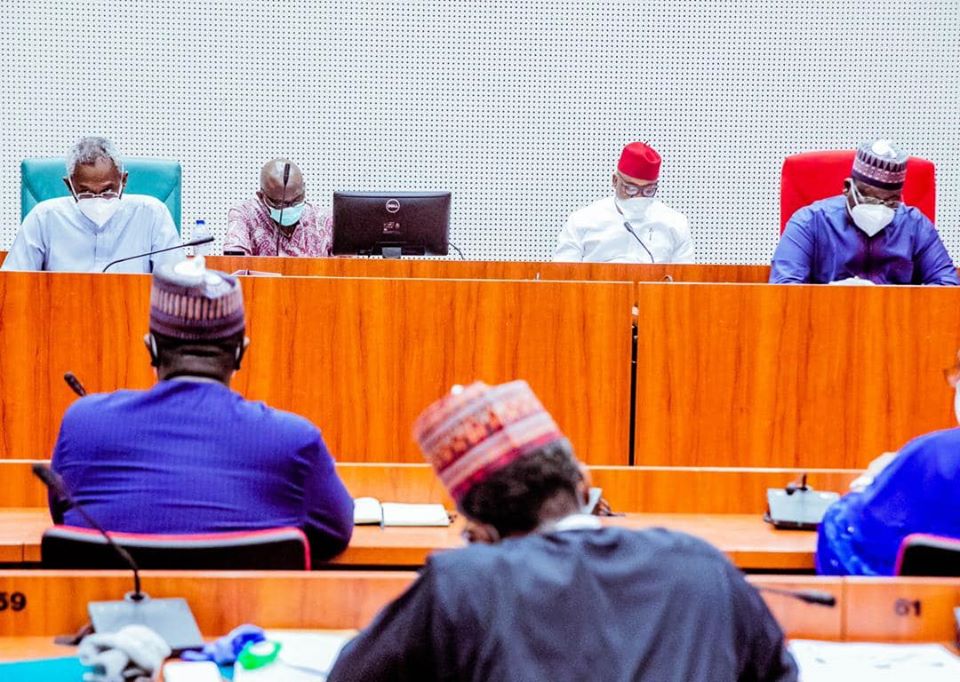
Speaking on Saturday during a meeting between the National Assembly leadership and the Minister of Finance, Mrs Zainab Ahmad; the Director-General of the Budget Office of the Federation, Mr Ben Akabueze, among others, Mr Gbajabiamila said the country could not afford to be unprepared for the effect of Covid-19 on its economy.

Explaining the necessity for the proposed stimulus bill for the electricity sector, the Speaker said electricity, being a commodity consumed by every household, has a greater effect on the people and that since more Nigerians are in the informal sector, the effects would be more felt by the economy.

“The issue of electricity, you’ll agree, because the Minister did say that she has been inundated by the public, just as we are, on several suggestions and ideas and I am almost a hundred percent sure that, from those ideas will be the issue of some kind of shelter, as far as electricity is concerned.

“It is one thing that will touch every household. As I said earlier, when we engaged, I discussed with the electricity Distribution Companies (DisCos) that packaged whatever they would require, if the government can give them, for us to allow for two months free electricity for Nigerians, they would be able to guarantee it.

“We have the figures. I think we should look very seriously into that as part of our package for economic stimulus, because stimulus means something that will stimulate the economy. When you are stimulating the economy, most of it will come from the informal sector.

“When you are saving people their electricity and the fact that they now have stable electricity for two months, you are also saving the monies that would go into the payment of those bills at least for two months,” he said.

On the need by the executive arm to source for funds in the fight against coronavirus and its socio-economic effects, the lawmaker restated the determination of the National Assembly to partner the Executive in efforts aimed at mitigating the effects of the disease on Nigerians and the economy.

He, however, noted that all government funds and private donations must be transparently accounted for.

“Definitely, you will be taking loans from the Special Accounts, and as the Senate President said, it has to be backed by law, which again emphasizes the need to collaborate as earlier stated by the Minister.

“There has to be a collaboration. It cannot be a unilateral decision from the National Assembly; it can’t be a unilateral decision from the Executive; there has to be a collaboration. I’m glad that we are on that trajectory.

“I’m glad that my earlier discussion with the Honourable Minister on food and other items seized by the Nigerian Customs Service (NCS) has been taken care of, as stated by the Minister.

“We need to, as soon as possible, and let the public know. On the issue of Presidential Task Force (PTF), none of us here, I don’t think any legislator can point to, who exactly is in charge. Where does the buck stop?

“Who is in charge of the disbursement? Who is in charge of the distribution of cash? Who decides what money goes where?

“Now, it is incumbent on the National Assembly to follow the money. Constitutionally, any money that comes into Nigeria, there has to be oversight.

“That is why, we in the House have directed our Committees on Health, Disaster Management and Preparedness and Donor Agencies to talk to the PTF, talk to the Minister of Health and the Central Bank of Nigeria.

“I wrote letters to all these people, but I wasn’t sure where exactly the buck stops. We need to clearly define exactly who is handling the money, who is handling what?” he said at the meeting.

Mr Gbajabiamila also urged the Finance Minister and her team to consider all options put forward by experts on preparation against the economic effects of coronavirus outbreak.

On his part, the Senate President, Mr Ahmad Lawan, noted that the meeting, the second in about 10 days, was a testimony of the commitment of both arms of government at addressing the issues holistically.

He assured that the Nigerian parliament would perform its constitutional roles towards ensuring that Nigerians benefit from all efforts aimed at mitigating the effects of the disease.

While noting that Nigerians must be assisted to weather the storm of the virus, Mr Lawan added that critical decisions needed to be taken but must be legal, which makes it important that the legislature is part of the entire process.

Earlier, the Minister for Finance said among other measures, the establishment of a N500 billion COVID-19 Crisis Intervention Fund is on the table.

She said the money is expected to be raised from various Special Funds and Accounts in consultation with and with the approval of the National Assembly.

The intervention fund will be utilized to finance the federal government’s support to state in improving their healthcare facilities and also finance the creation of a Special Public Works Programme

She also explained the need to revisit the 2020 national budget has become imperative, saying, “It has been established that Nigeria is currently facing significant fiscal risks due to the worsening global economic outlook.

“Specifically, Nigeria is highly vulnerable to the current global economic disruption caused by the COVID-19 crisis; and exposed to the risks of both a pronounced decline in oil prices and spikes in risk aversion in the global capital markets.”


Dipo Olowookere is a journalist based in Nigeria that has passion for reporting business news stories. At his leisure time, he watches football and supports 3SC of Ibadan. Mr Olowookere can be reached via [email protected]

Advertisement
Click to comment

Leave a Reply

Your email address will not be published. Required fields are marked *

General

Nigeria Risks Brain Drain in Energy Sector—PENGASSAN

Published

on

energy sector

By Adedapo Adesanya

The Petroleum and Natural Gas Senior Staff Association of Nigeria (PENGASSAN) has warned that Nigeria risks massive brain drain in the oil and gas sector due to poor remuneration.

The president of PENGASSAN, Mr Festus Osifo, said at the end of the National Executive Council (NEC) meeting of the union on Thursday in Abuja that the industry was facing challenges arising from Naira devaluation and inflation, noting that, oil and gas skills remained globally competitive.

Painting an example, he said, “A drilling engineer in Nigeria does the same job as one in the US or Abu Dhabi,” noting that the union must take steps to bridge the wage gap to prevent members from leaving the country for better opportunities abroad.

“If we don’t act, the brain drain seen in other sectors will be child’s play,” he said.

According to him, PENGASSAN has recorded significant gains through collective bargaining across oil and gas branches.

“We signed numerous agreements across government agencies, IOCs, service and marketing sectors,” he said.

He said the agreements brought relief to members facing rising costs of living, adding that, the association’s duty is to protect members’ jobs and enhance their pay.

Mr Osifo urged companies delaying salary reviews and those foot-dragging as a result of the prevailing economic realities, to do the needful.

He said the industry employed some of the nation’s best talents, making competitive pay critical to retaining skilled workers.

“This industry recruits the best. Companies must provide the best conditions,” he said.

On insecurity, Mr Osifo urged government to take decisive action against terrorism and kidnappings across the country.

“We are tired of condemnations. government must expose sponsors and protect citizens,” he said.

He urged government at all levels to prioritise tackling insecurity through better funding and equipment for security agencies.

Mr Osifo said PENGASSAN supported calls for state police to improve local security response, adding that decentralising policing will protect citizens better than rhetoric.

He also said economic indicators meant little, if food prices remained high and farmers could not return to farms due to insecurity.

“Nigerians want to see food on the table, not macroeconomic figures,” he said, urging the government to coordinate fiscal and monetary policies to ensure economic gains reach households.

Continue Reading

General

Bill Seeking Creation of Unified Emergency Number Passes Second Reading

Published

on

Unified Emergency Number

By Adedapo Adesanya

Nigeria’s crisis-response bill seeking to establish a single, toll-free, three-digit emergency number for nationwide use passed for second reading in the Senate this week.

Sponsored by Mr Abdulaziz Musa Yar’adua, the proposed legislation aims to replace the country’s chaotic patchwork of emergency lines with a unified code—112—that citizens can dial for police, fire, medical, rescue and other life-threatening situations.

Lawmakers said the reform is urgently needed to address delays, miscommunication and avoidable deaths linked to Nigeria’s fragmented response system amid rising insecurity.

Leading debate, Mr Yar’adua said Nigeria has outgrown the “operational disorder” caused by multiple emergency numbers in Lagos, Abuja, Ogun and other states for ambulance services, police intervention, fire incidents, domestic violence, child abuse and other crises.

He said, “This bill seeks to provide for a nationwide toll-free emergency number that will aid the implementation of a national system of reporting emergencies.

“The presence of multiple emergency numbers in Nigeria has been identified as an impediment to getting accelerated emergency response.”

Mr Yar’adua noted that the reform would bring Nigeria in line with global best practices, citing the United States, United Kingdom and India, countries where a single emergency line has improved coordination, enhanced location tracking and strengthened first responders’ efficiency.

With an estimated 90 per cent of Nigerians owning mobile phones, he said the unified number would significantly widen public access to emergency services.

Under the bill, all calls and text messages would be routed to the nearest public safety answering point or control room.

He urged the Senate to fast-track the bill’s passage, stressing the need for close collaboration with the Nigerian Communications Commission (NCC), relevant agencies and telecom operators to ensure nationwide coverage.

Senator Ali Ndume described the reform as “timely and very, very important,” warning that the absence of a reliable reporting channel has worsened Nigeria’s security vulnerabilities.

“One of the challenges we are having during this heightened insecurity is lack of proper or effective communication with the affected agencies,” Ndume said.

“If we do this, we are enhancing and contributing to solving the security challenges and other related criminalities we are facing,” he added.

Also speaking in support, Senator Mohammed Tahir Monguno said a centralised emergency number would remove barriers to citizen reporting and strengthen public involvement in security management.

He said, “Our security community is always calling on the general public to report what they see.

“There is a need for government to create an avenue where the public can report what they see without any hindrance. The bill would give strength and muscular expression to national calls for vigilance.”

The bill was referred to the Senate Committee on Communications for further legislative work and is expected to be returned for final consideration within four weeks.

Continue Reading

General

Tinubu Swears-in Ex-CDS Christopher Musa as Defence Minister

Published

on

ex-cds christopher musa

By Modupe Gbadeyanka

The former chief of defence staff (CDS), Mr Christopher Musa, has been sworn-in as the new Minister of Defence.

The retired General of the Nigerian Army took the oath of office for his new position on Thursday in Abuja.

The Special Adviser to the President on Information and Strategy, Mr Bayo Onanuga, confirmed this development in a post shared on X, formerly Twitter, today.

“General Christopher Musa takes oath of office as Nigeria’s new defence minister,” he wrote on the social media platform this afternoon.

Earlier, President Bola Tinubu thanked the Senate for confirming Mr Musa when he was screened for the post on Wednesday.

“Two days ago, I transmitted the name of General Christopher G. Musa, our immediate past Chief of Defence Staff and a fine gentleman, to the Nigerian Senate for confirmation as the Federal Minister of Defence.

“I want to commend the Nigerian Senate for its expedited confirmation of General Musa yesterday. His appointment comes at a critical juncture in our lives as a Nation,” he also posted on his personal page X on Thursday.

The former military officer is taking over from Mr Badaru Abubakar, who resigned on Sunday on health grounds.

Continue Reading

Trending