Connect with us

Health

COVID-19 Has Over 90% Cure Rate—Health Minister

Published

on

COVID-19

By Dipo Olowookere

Nigeria’s Minister of Health, Mr Osagie Ehanire, has advised citizens to come out for testing for the coronavirus disease as it is not a death sentence.

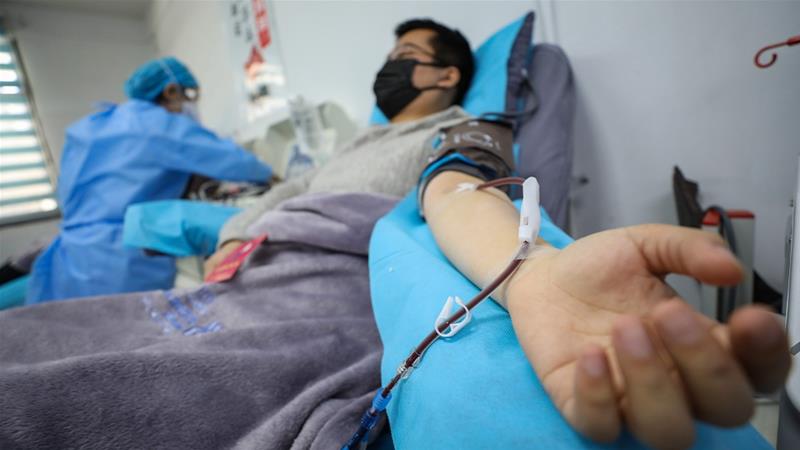
At the Presidential Task Force briefing on Wednesday, April 22, 2020, in Abuja, the Minister said COVID-19, another name the virus is called, has a cure rate of over 90 percent especially for those with typical symptoms, who came out early for testing and treatment or quarantine.

“It can save you from the severe complications of the infection, or also help to reduce spread and save your loved ones from getting infected by you,” he said.

He stated also that those with existing medical conditions like diabetics, hypertension, kidney disease, TB, HIV, and cancer, should obey the injunctions for preventing infection.

The Minister disclosed that to ensure best treatment options for Nigerians, a protocol for a Patient Transport System had been developed for FCT and to be set up in all states of the federation.

This, he said, is meant to smoothly convey patients to specialised treatment centres or between centres, hinting also that, the Nigeria Airforce and NEMA have standby aircrafts.

Mr Ehanire further said the Federal Ministry of Health convened an Emergency National Council of Health (NCH) meeting, via teleconference, with Commissioners for Health of the 36 states.

According to him, it was resolved that all persons diagnosed with covid-19 be henceforth treated in the state where the diagnosis was made, rather than be referred to their states of origin except there is a medical indication to the contrary. This is to avoid the high risk of exposure of other persons in the course of transfer.

He further said it was agreed that Patent and Proprietary Medicine Vendors (PPMVs) and Pharmacists be forthwith prohibited from attempting to treat persons diagnosed as, or suspected to be COVID-19 patients, or else have their operating licenses cancelled.

In addition, private hospitals desiring to manage COVID-19 patients should apply to their state Ministries of Health for permit, meet standard IPC standards and be accredited by a FMoH certified state team after compliance with protocols, before being granted.

Lastly, it was agreed that states should notify FMoH of their isolation and treatment centres for inclusion on the COVID-19 HMIS Platform to ensure a well-coordinated national response.

The Health Minister informed that 27 Rapid Response Teams (RRTs) had been deployed to states by Nigeria Centre for Disease Control (NCDC) to support the COVID-19 response, recently to Abia, Gombe and Sokoto States.

He said active case finding is ongoing in communities with evidence of person-to-person transmission, stating also that the strategy required more testing and diagnostics.

“We are working to increase the capacity and activate additional laboratories, both public and private for COVID-19 testing, with the final purpose of having one or more public health laboratories, with PCR capability in every state,” he stated.

Mr Ehanire commended health worker on the frontlines of the COVID-19 pandemic and urged them to take all necessary precautions for their own safety.

He made aware that estimates suggested that several healthcare workers had already lost their lives in less than two months since COVID-19 first appeared and many dozens, including doctors are idling away in quarantine.

He stressed the need for sound Knowledge of Infection Prevention and Control protocol to be eligible for consideration to manage the infection.

The Minister reminded health workers to be vigilant and protect themselves in the line of duty, asking citizens to call NCDC toll-free number or one’s state emergency number, if they suspect themselves or anyone around who may have symptoms of COVID-19.

He emphasised that the use of tissue covers over one’s mouth and nose when coughing or sneezing had been long advocated to control the spread of COVID-19 infection.

He further urged Nigerians to avoid mass gathering, practice hand and respiratory hygiene, physical distancing, cancel all non –essential travel out of where one resides, wash and sun-dry or iron once reusable cloth masks or face covering daily. Most especially stay home, stay safe.


Dipo Olowookere is a journalist based in Nigeria that has passion for reporting business news stories. At his leisure time, he watches football and supports 3SC of Ibadan. Mr Olowookere can be reached via [email protected]

Click to comment

Leave a Reply

Your email address will not be published. Required fields are marked *

Health

Lagos Commences Screening of Newborns for Sickle Cell Disease

Published

on

sickle cell disease screening Lagos

By Modupe Gbadeyanka

The Lagos State government has kicked off an initiative to ensure that every newborn is screened for Sickle Cell Disease within 48 to 72 hours after birth using a simple heel-prick test.

It was gathered that babies identified as being at risk will immediately be placed on preventive care while awaiting confirmatory testing.

The Head of the Haematology Department at the Alimosho General Hospital, Dr Olubukola Orolu, revealed that an estimated 150,000 babies are born annually with Sickle Cell Disease in Nigeria, giving the country one of the highest SCD burdens globally.

She, however, applauded the Lagos State Government and the Clinton Health Access Initiative (CHAI) for introducing the state-wide newborn screening programme, describing it as a major step towards reducing childhood deaths associated with the disease.

The commencement of this scheme coincides with the 2026 World Sickle Cell Day, themed Young Voices Rising for Sickle Cell Disease – Closing the Survival Gap: Equity in Sickle Cell Disease.

It highlights the importance of listening to the experiences and aspirations of young people living with Sickle Cell Disease.

Mrs Orolu noted that SCD warriors are increasingly breaking barriers as advocates, leaders, students and change-makers, adding that their voices have continued to reshape the narrative through advocacy for equitable, patient-centred healthcare, self-care and experience sharing.

She, therefore, called for equal access to quality healthcare, survival opportunities and dignity for everyone living with Sickle Cell Disease.

Also commenting, the chief executive of Alimosho General Hospital, Dr Akinyele Akinlade, described Sickle Cell Disease as an inherited blood disorder that is not contagious, noting that individuals living with the condition are more susceptible to infections.

He advised SCD warriors to stay well hydrated, avoid stress, and protect themselves from extreme cold or heat, as these are common triggers of sickle cell crises, adding that these preventive measures can significantly reduce the frequency and severity of crises.

One of the participants, Ms Borokini Zainab, an SCD warrior and student nurse, expressed appreciation to the organisers for the enlightenment programme.

Sharing her personal journey, she spoke about the challenges of balancing recurrent pain crises with her academic pursuits and personal life. Despite moments of frustration, she encouraged fellow warriors not to lose hope.

“Don’t let sickle cell put you down. Be encouraged from within. Don’t let your dreams be shattered because of this,” she said, adding that her personal experience with Sickle Cell Disease inspired her to pursue a career in nursing so she could support others living with the condition.

Continue Reading

Health

Evon Labs Unveils Health-Tech Incubation Initiative HealthX Catalyst

Published

on

Evon Labs Isioma Udeozo HealthX Catalyst

By Aduragbemi Omiyale

A 12-week health-tech incubation programme tailored for early-stage founders in Nigeria has been introduced by an innovation and venture-building platform, Evon Labs.

This initiative, known as HealthX Catalyst, will help participants to create scalable, investable solutions for Africa’s urgent healthcare issues.

The programme is underway, with 12 selected founders nearing the final weeks of intensive incubation, ending with a Demo Day on June 24, 2026, at the UNDP innovation centre in Lagos, where the small business owners will present their solutions to an audience of investors, healthcare leaders, development organisations, and technology partners.

The initiative selects early-stage healthcare founders and immerses them in a structured 12-week development process. Throughout this period, participants receive personalised and group mentorship from seasoned professionals across the healthcare, technology, and business sectors.

They also receive structured support for startup development, including refining business models, developing value propositions, and validating markets.

Additionally, participants gain access to a network of healthcare practitioners, sector experts, and industry leaders, along with targeted investment-readiness assistance to prepare them to engage with investors and strategic partners after the programme.

The result is a cohort of founders who move through the programme not simply with a refined pitch, but with a validated business model, a stronger professional network, and a clear pathway to growth.

To accelerate the most promising solutions beyond the programme, monetary grants will be awarded to the top three founders to support product development, pilot implementation, market validation, and early-stage scaling.

It was learned that HealthX Catalyst was developed in response to a structural gap in the African health-tech ecosystem.

Across the continent, a growing number of entrepreneurs are building solutions to healthcare problems from access and diagnostics to service delivery and health data infrastructure. Yet many of these early-stage ideas fail to progress beyond concept, not for lack of vision, but for lack of structured support: mentorship, startup development frameworks, industry access, and early-stage funding pathways. HealthX Catalyst was built to provide exactly that.

“Africa does not have a shortage of healthcare innovators. What it has lacked is the infrastructure to turn its ideas into sustainable businesses. HealthX Catalyst is that infrastructure, a serious, structured programme designed to take founders from early-stage ideas to investable startups.

“What we are seeing from this first cohort is exactly what we set out to create: founders who are not just building products, but building businesses that can scale and create lasting impact,” the founder of Evon Labs, Ms Isioma Udeozo, said of the unveiling of HealthX Catalyst.

The partners of the programme are the United Nations Development Programme (UNDP), Odua Investment Company Limited (OICL), Washington University of St Louis, Missouri, Lagos State Employment Trust Fund (LSETF), and Brooks Insights.

Continue Reading

Health

Binance Promises $250,000 for Ebola in DR Congo, Uganda

Published

on

Binance

By Aduragbemi Omiyale

The sum of $250,000 in humanitarian funding is to be provided by Binance to support the frontline response to the ongoing Ebola disease outbreak in the Democratic Republic of Congo (DRC) and Uganda.

The cryptocurrency exchange said the funds would be used to enable rapid response in high-risk and underserved areas, where access to healthcare infrastructure, protective resources, and timely public health information remains limited.

The money will be shared equally between the Uganda Red Cross Society and Doctors Without Borders / Médecins Sans Frontières (MSF), supporting urgent interventions in affected and high-risk communities.

Binance’s contribution will help strengthen emergency medical care and treatment, community awareness and prevention campaigns, contact tracing and containment support, and the provision of sanitation supplies and protective equipment for frontline workers.

By supporting both immediate response activities and preventative education, Binance aims to contribute to reducing transmission and strengthening community resilience.

“Communities across Africa continue to show extraordinary resilience in the face of complex challenges, but frontline responders should not have to face crises like this alone,” the co-chief executive of Binance, Mr Richard Teng, said.

“The teams working to contain the Ebola disease outbreak are delivering vital, life-saving support under incredibly difficult conditions.

“We are proud to support both the Uganda Red Cross Society and Doctors Without Borders as they work to protect vulnerable populations, strengthen local response efforts, and deliver urgent care where it is needed most,” he added.

Also commenting, the Secretary General for the Uganda Red Cross Society, Mr Robert Kwesiga, said, “Strong partnerships are essential during public health emergencies since we are not able to manage the outbreak alone.

“The support from Binance comes in so timely and handy, and will help us respond more rapidly, reach more at-risk communities, and reinforce the frontline services needed to help contain the outbreak and save lives.”

The MSF Emergency Programme Manager, Trish Newport, while speaking on the initiative, said, “The number of cases and deaths we are seeing in such a short timeframe, combined with the spread across several health zones and now across the border, is extremely concerning. In Ituri, many people already struggle to access healthcare and live with ongoing insecurity, making rapid action critical to prevent the outbreak from escalating further.”

Caused by the Bundibugyo virus, for which there is no approved vaccine or treatment, this Ebola disease outbreak has placed acute pressure on already fragile health systems in eastern DRC and the wider region.

Local authorities, international agencies, and humanitarian organisations are racing to contain it and protect affected communities.

Binance’s support is intended to reinforce these efforts at a critical moment. It reflects the company’s broader commitment to supporting communities across Africa through programmes focused on education, financial inclusion, digital skills development, and community empowerment.

In this case, Binance is extending that commitment to urgent humanitarian and public health needs by working alongside trusted organisations with deep frontline expertise.

Continue Reading

Trending