Connect with us

Banking

Standard Chartered Customers Get Moratorium on Loan, Mortgage Payments

Published

on

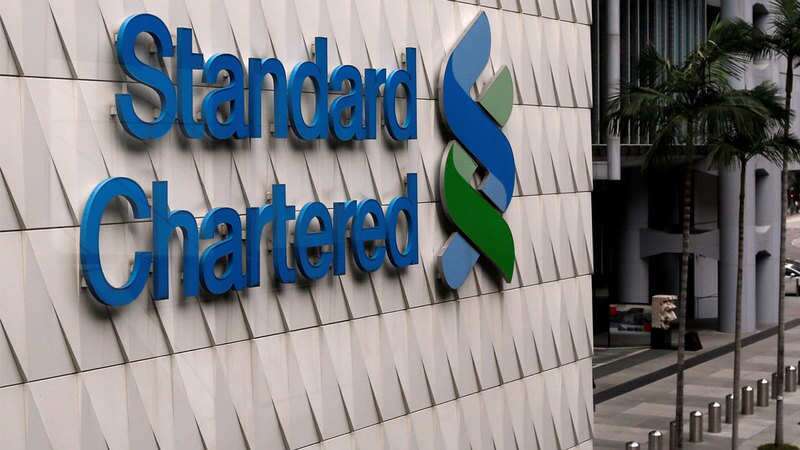
Standard Chartered Bank SC EduEdge

By Adedapo Adesanya

Leading financial services and investment company, Standard Chartered Plc, has introduced a three-month payment holiday on personal loans and retail mortgages to support clients during the current pandemic crisis in Nigeria.

The decision, which was reached by the board and management team of the company, noted that it has positioned itself to help clients through the implementation of several measures to provide relief, one of which is the moratorium on loan payments.

The bank, in a statement released over the weekend, stated that “stemming from our commitment to be socially responsible and client focused at all times, we have put these measures to ease the financial pressure on our clients, through the provision of temporary relief on the following financial obligations.”

The three month long moratorium on loan payments will see holidays on personal loans and retail mortgages, including business mortgages.

The bank also provided a three payment holiday on other retail business loans.

In addition to these, Standard Chartered also extended its relief efforts to its customers’ credit cards.

According to the bank, clients who pay the total amount due on their credit card monthly can now request to change this to a monthly payment of the minimum amount that is due on the card which is one percent of the outstanding balance plus interest. This is subject to a minimum of N5,000.

Speaking on the relief measures in Nigeria, the bank’s CEO, Mr Lamin Manjang, said, “We have put in place this  comprehensive support scheme for retail and business customers, which  covers loan repayment holidays.

“We have done this because our relationship with clients is built on trust and commitment.”

“Our customers have trusted us to grow their investments over the years and for us providing the financial relief is just one of the many ways we continue to reiterate our dedication to them that we are truly Here for good,” he added.

This is in a long line of approaches that the bank has taken in alleviating effects of the pandemic on its trusted clients and stakeholders.

Earlier this month, the bank announced the first set of measures to provide timely strategic support to colleagues, communities and our clients.

These include $1 billion of financing for companies that provide goods and services to help the fight against COVID-19.

The company stated that those planning the switch into making products that are in high demand to fight the global pandemic were not exempted.

It also added that due to high demand for funding, its management has already approved over $75 million of facilities since then.


Adedapo Adesanya is a journalist, polymath, and connoisseur of everything art. When he is not writing, he has his nose buried in one of the many books or articles he has bookmarked or simply listening to good music with a bottle of beer or wine. He supports the greatest club in the world, Manchester United F.C.

Advertisement
Click to comment

Leave a Reply

Your email address will not be published. Required fields are marked *

Banking

CBN Approves BDCs Participation in FX Market, Caps Sale at $150,000 Weekly

Published

on

street FX traders

By Adedapo Adesanya

The Central Bank of Nigeria (CBN) has approved weekly foreign exchange (FX) purchases for Bureaux de Change (BDC) operators, with a cap of $150,000, as part of efforts to improve foreign exchange liquidity in the retail segment of the market and meet the legitimate needs of end users.

This comes as the apex bank once again approved the participation of licensed BDCs in the Nigerian Foreign Exchange Market (NFEM), noting that utilisation complies with existing BDC operational guidelines.

Under the new directive contained in a circular signed by the Director of the Trade and Exchange Department, Mr Musa Nakorji, all BDCs duly licensed by the CBN are permitted to access foreign exchange through any Authorised Dealer Bank of their choice, at the prevailing market rates.

The move, according to the circular, aims to deepen market efficiency and ensure broader access to foreign exchange across the economy.

The central bank, however, imposed strict compliance and risk-management conditions on the transactions. Authorised dealers are required to conduct full Know-Your-Customer (KYC) and due diligence checks on BDC clients before any FX sale.

To strengthen transparency and accountability, the CBN directed that all licensed BDCs must submit timely and accurate electronic returns in line with extant regulations. Any unutilised foreign exchange must be sold back to the market within 24 hours, as BDCs are prohibited from holding FX positions purchased from the NFEM.

The circular further restricts settlement practices, mandating that all FX transactions be conducted through settlement accounts with licensed financial institutions. Third-party transactions are prohibited, while cash settlement is limited to a maximum of 25 per cent of each transaction amount.

Overall, the directive reflects the CBN’s broader strategy to balance market access with strong regulatory oversight, ensuring liquidity in the foreign exchange market while safeguarding financial system integrity.

Recall that earlier this week, the Governor of the Central Bank of Nigeria (CBN), Mr Yemi Cardoso, explained that the central bank now allows the foreign exchange market to largely determine prices, while the bank steps in to buy foreign exchange when necessary.

The CBN boss said recent reforms have also made foreign exchange more accessible to ordinary Nigerians, especially those travelling abroad, while warning that Nigerians who are holding foreign currency without real need that such actions could lead to losses.

Continue Reading

Banking

Proposed Bidvest Bank Acquisition by Access Bank Hits Regulatory Brick Wall

Published

on

roosevelt ogbonna access bank

By Aduragbemi Omiyale

The proposed acquisition of South African financial institution, Bidvest Bank by a Nigerian lender, Access Bank Plc, has hit a brick wall.

Access Holdings Plc, the parent company of the Nigerian bank, had announced on December 12, 2024, its intention to completely takeover Bidvest Bank.

Talks regarding the 100 per cent stake acquisition began between the two banks and January 26, 2026, was fixed as the long-stop date by which all conditions required for the completion of the deal.

However, the day has come and gone with the conclusion of the transaction still hanging, according to Access Bank in a statement on Tuesday, February 10, 2026.

The company disclosed that certain conditions, including regulatory requirements, were not fully met as of the expiration of the long-stop date.

While Access Bank thanked the board and management of Bidvest for their patience and support throughout this process, it noted that the brick wall experienced in the transaction “reflects the complexities and extended timelines associated with multi-jurisdictional regulatory and transactional processes.”

However, the chief executive of Access Bank, Mr Roosevelt Ogbonna, said the organisation remains “constructively engaged with stakeholders on this transaction towards finding a potential path to closure.”

“This initial outcome does not diminish our confidence in South Africa’s financial ecosystem,” he declared, pointing out that the lender remains “focused on building Africa’s most respected financial institution, strengthening our trade finance capabilities and delivering long-term value to customers, partners and communities across all our markets.”

Continue Reading

Banking

CBN Grants Bank of Industry Approval to Operate Non-Interest Banking

Published

on

Bank of Industry BoI MSMEs

By Adedapo Adesanya

The Bank of Industry (BoI) has secured regulatory approval from the Central Bank of Nigeria (CBN) to offer Non-Interest Banking (NIB) services, marking a major expansion of its financing framework.

The approval was disclosed in a statement by the BoI Managing Director, Mr Olasupo Olusi, on Sunday, February 8, 2026.

The move is expected to strengthen the bank’s role in promoting sustainable industrial development and improving access to finance for underserved and high-impact business segments across Nigeria.

With the approval, BoI is authorised to commence non-interest banking operations, providing ethical, asset-backed financing options that prohibit interest and promote risk-sharing.

The initiative aligns with growing demand for alternative financing structures that support inclusive growth and social development objectives.

Mr Olusi described the approval as a significant milestone in the bank’s growth and long-term development agenda, adding that it positions BoI to deepen its contribution to Nigeria’s industrialisation drive through tailored financial solutions.

“This development marks a significant milestone in the Bank of Industry’s growth and long-term development agenda,” Olusi said.
“It positions the bank to further advance Nigeria’s sustainable and inclusive industrial development through tailored financial solutions for underserved and high-impact business segments.”

“Under this framework, BoI will be able to finance assets and raw materials for customers using approved non-interest banking products,” he added.

Mr Olusi noted that the approval underscores the CBN’s confidence in BoI’s governance and commitment to responsible financing.

He said the licence would allow the bank to scale its operations, introduce innovative financing solutions, deepen support for Micro, Small and Medium Enterprises (MSMEs), and reach a new category of borrowers who were previously unable to access BoI’s funding.

Reconstructed in 2001 from the former Nigerian Industrial Development Bank (NIDB) Limited, BoI was originally incorporated in 1959 to transform the country’s industrial sector by providing long-term, low-interest financing and advisory support to various enterprises.

The introduction of a non-interest banking window is expected to broaden BoI’s financing toolkit and attract new pools of ethical and faith-based capital.

Continue Reading

Trending