Connect with us

Banking

Standard Chartered Customers Get Moratorium on Loan, Mortgage Payments

Published

on

Standard Chartered Bank SC EduEdge

By Adedapo Adesanya

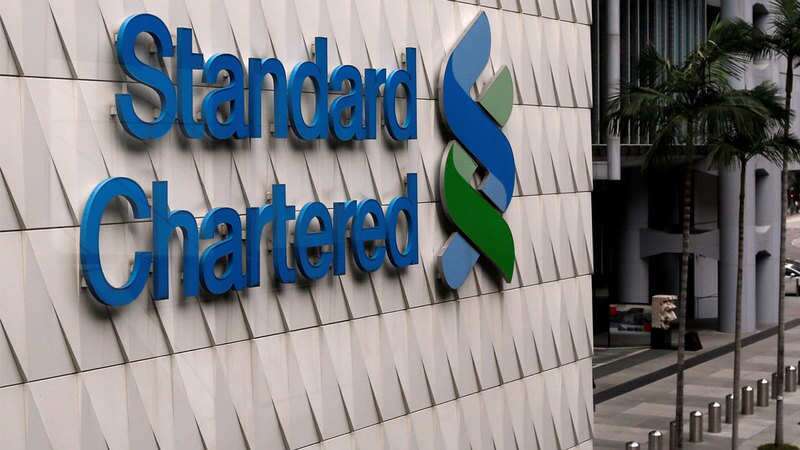
Leading financial services and investment company, Standard Chartered Plc, has introduced a three-month payment holiday on personal loans and retail mortgages to support clients during the current pandemic crisis in Nigeria.

The decision, which was reached by the board and management team of the company, noted that it has positioned itself to help clients through the implementation of several measures to provide relief, one of which is the moratorium on loan payments.

The bank, in a statement released over the weekend, stated that “stemming from our commitment to be socially responsible and client focused at all times, we have put these measures to ease the financial pressure on our clients, through the provision of temporary relief on the following financial obligations.”

The three month long moratorium on loan payments will see holidays on personal loans and retail mortgages, including business mortgages.

The bank also provided a three payment holiday on other retail business loans.

In addition to these, Standard Chartered also extended its relief efforts to its customers’ credit cards.

According to the bank, clients who pay the total amount due on their credit card monthly can now request to change this to a monthly payment of the minimum amount that is due on the card which is one percent of the outstanding balance plus interest. This is subject to a minimum of N5,000.

Speaking on the relief measures in Nigeria, the bank’s CEO, Mr Lamin Manjang, said, “We have put in place this  comprehensive support scheme for retail and business customers, which  covers loan repayment holidays.

“We have done this because our relationship with clients is built on trust and commitment.”

“Our customers have trusted us to grow their investments over the years and for us providing the financial relief is just one of the many ways we continue to reiterate our dedication to them that we are truly Here for good,” he added.

This is in a long line of approaches that the bank has taken in alleviating effects of the pandemic on its trusted clients and stakeholders.

Earlier this month, the bank announced the first set of measures to provide timely strategic support to colleagues, communities and our clients.

These include $1 billion of financing for companies that provide goods and services to help the fight against COVID-19.

The company stated that those planning the switch into making products that are in high demand to fight the global pandemic were not exempted.

It also added that due to high demand for funding, its management has already approved over $75 million of facilities since then.


Adedapo Adesanya is a journalist, polymath, and connoisseur of everything art. When he is not writing, he has his nose buried in one of the many books or articles he has bookmarked or simply listening to good music with a bottle of beer or wine. He supports the greatest club in the world, Manchester United F.C.

Advertisement
Click to comment

Leave a Reply

Your email address will not be published. Required fields are marked *

Banking

Summit Bank Commences Non-Interest Banking Operations in Nigeria

Published

on

Summit Bank

By Faridat Yusuf

Nigeria’s new non-interest bank, Summit Bank Limited, has started full operations, promising to give Nigerians honest, clear, and fair banking services.

The Central Bank of Nigeria (CBN) listed Summit Bank as a regional non-interest bank with its head office in Abuja. It joins other non-interest banks in Nigeria like Jaiz Bank, Taj Bank, and Lotus Bank.

The Managing Director, Mr Sirajo Salisu, during a press briefing in Abuja, said that the bank was seeking to serve Nigerians very well.

“We are live, well-regulated, fully operational, and ready to serve Nigerians with clarity, integrity, and purpose.”

He also talked about people thinking the bank was linked to a big bank, saying, “We have followed the conversations with interest and gratitude, and the curiosity we have carefully observed tells us that people care about us and about ethical finance, now is the time for clarification, as Summit Bank’s establishment and operation have gone beyond speculation,” he stated.

On his part, the bank’s Executive Director, Mr Mukhtar Adam, said, “While some of our directors have built accomplished careers at frontline financial institutions such as Zenith Bank, Summit Bank is an independent financial entity governed by a professional board and fully compliant with Central Bank of Nigeria regulations.”

He added, “Our offerings promise no hidden costs or complicated banking for both banked and unbanked Nigerians, with clear, compliant banking services backed by robust technology, sophisticated banking infrastructure, and tested human resources.”

The bank was started in July 2024 and got its CBN licence in February 2025.

Continue Reading

Banking

BoI Reaffirms Commitment to Economic Transformation in Tech, Creative Sectors

Published

on

Bank of Industry BoI MSMEs

By Adedapo Adesanya

The Bank of Industry (BoI) has reaffirmed the federal government’s commitment to boosting Nigeria’s tech and creative sectors through strategic investments.

This comes as Nigeria, through its Investment in Digital and Creative Enterprises (iDICE) programme, made its first investment in a venture capital fund in Ventures Platform $64 million raise.

The iDICE program, managed by the bank and co-financed by the African Development Bank (AfDB), the Islamic Development Bank (ISDB) and Agence Française de Développement (AFD), was established to channel public and private capital into Nigeria’s digital and creative sectors.

The Managing Director of the bank, Mr Olasupo Olusi, said the investment is part of Nigeria’s drive to transform its economy through innovation in high-growth tech and creative enterprises.

“By investing in Ventures Platform’s Fund II, which serves as iDICE’s Technology Equity Fund for Nigerian startups, we are deepening the Federal Government’s objective of upscaling the Nigerian technology and creative sectors by catalyzing strategic investments in high-growth, technology-enabled enterprises and the innovation ecosystem,“ adding, Thereby contributing meaningfully to the nation’s broader economic transformation agenda, with a goal to create jobs at scale, but also empower high-growth entrepreneurs across the country.”

At its core, the iDICE programme seeks to equip Nigerians aged 15-35 with the skills to thrive in emerging digital and creative industries, to heighten their employability, spark innovation, and support entrepreneurs.

Under the iDICE programme, three broad components were established: Skills and Enterprise Development, Expanding Access to Finance, and Enabling Environment. The first pillar focuses on training youths in in-demand creative and technology skills, building a community of talent, and linking these young people either to employment or to the opportunity to launch their own ventures.

The second component which covers the investment in Ventures Platform, is Expanding Access to Finance, which addresses the persistent financing gap in Nigeria’s technology and creative sectors. The programme intends to provide equity or quasi-equity funding to startups, while also offering capacity-building support and grants to prepare enterprises for success.

Meanwhile, the Enabling Environment arm of the initiative focuses on regulatory, policy, and institutional reforms, putting in place the laws, programmes and business-environment enhancements necessary to make it easier for technology and creative firms to operate and flourish.

By combining training, funding access, and policy support within a five-year programme timeframe, the federal government aims to generate sustainable jobs, promote innovation, and create a more vibrant creative and technology sector.

Continue Reading

Banking

Access Bank and Mastercard: Enabling Seamless Africa-Global Payments

Published

on

Access Bank and Mastercard

In today’s interconnected world, seamless cross-border payments are vital for economic growth, business expansion, and personal empowerment. For decades, millions of Africans faced steep barriers in sending or receiving money internationally: high fees, opaque exchange rates, and long delays that made transactions uncertain and costly. Whether theyare students paying tuition abroad or traders settling import bills and families depending on remittances, these challenges have touched every layer of society.

Africa’s fragmented payments landscape, marked by multiple currencies, varying regulations, and limited banking infrastructure, has long slowed financial inclusion. In this system, a trader in Lagos might wait weeks for funds from Nairobi, while a Ghanaian student in the United States could lose a significant portion of tuition to intermediary charges. For many, especially in rural or informal sectors, formal banking channels were out of reach, forcing reliance on informal and risky alternatives.

Recognising the need for change, Access Bank, one of Africa’s largest and most innovative financial institutions, has partnered MasterCard, a global payments leader, to reimagine how money moves across borders. The collaboration aims to make cross-border payments faster, cheaper, and more transparent, empowering individuals and businesses to participate more fully in the global economy.

“By combining our strengths, we can unlock new opportunities, bridge the financial divide, and create a more inclusive and prosperous future for all Africans,” says Robert Giles, Senior Advisory, Retail Banking at Access Bank.

The partnership leverages Access Bank’s extensive African footprint and its Access Africa platform alongside MasterCard’s global network, treasury infrastructure, and advanced technology, particularly through the Mastercard Move system. Together, they have built an ecosystem that finally delivers on the promise of speed, convenience, and reliability.

The solution is designed to be inclusive and versatile, allowing users to send and receive money via multiple channels: bank accounts, cards, mobile wallets, and even cash. Whether a student in Ghana paying tuition in Europe, a trader in Lagos importing goods from China, or a family in Kenya receiving remittances, cross-border transactions are now simpler and safer.

For MasterCard, the goal extends beyond expanding services; it is about deepening financial inclusion. “This partnership transforms payment experiences, extending MasterCard’s digital ecosystem to ensure millions from underserved communities can participate in the evolving digital economy,” says Mark Elliott, Mastercard’s Division President for Africa.

The alliance builds on mutual strengths, Access Bank’s deep local knowledge and MasterCard’s global reach, to create a seamless payments corridor connecting Africa to the world.

A critical element of this innovation is the technical integration led by Fable Fintech, a MasterCard Express Partner under the Move Programme. Integrating Access Bank’s operations across multiple African markets was a massive undertaking, given diverse currencies and regulatory frameworks. The result is a unified cross-border payment experience, reducing complexity and delays.

“We were fortunate to be the fulcrum of the seamless multi-country integration of one of Africa’s largest banks using MasterCard’s cross-border assets,” a Fable Fintech representative noted. The platform now supports real-time or near-real-time transactions, offering resilience, scalability, and strong fraud protection.

Apart from technology, this partnership signals a paradigm shift, from dependency to empowerment, from financial fragmentation to unity. By democratising access to affordable and transparent payments, Access Bank and MasterCard are enabling millions of Africans to engage in international trade, education, and family support. The impact is tangible: faster transactions, lower costs, and increased financial inclusion.

Already, the ripple effects are visible. Informal traders in Kigali now use formal financial channels instead of risky agents. SMEs in Nairobi can settle invoices with international clients more predictably. Families in Accra receive remittances with less worry about lost payments, while students overseas manage tuition with ease. Each transaction strengthens Africa’s participation in global commerce.

The partnership also prioritises financial literacy and empowerment. Recognising that technology alone isnot enough, Access Bank and MasterCard are educating users on digital payments, security, and the benefits of financial inclusion, particularly in underserved communities where awareness gaps remain.

The collaboration aligns with broader socio-economic goals such as job creation, poverty reduction, and gender inclusion. By expanding access to finance, it empowers women entrepreneurs, youth, and small businesses to thrive. A woman running a rural enterprise can now receive payments from clients abroad and reinvest in her community; a young professional can more easily fund studies or start a venture. The result is a more inclusive and resilient African economy.

This initiative also complements Access Bank’s wider sustainability agenda, seen in projects like the Access Clean Water Initiative, which integrates financial inclusion with social impact. The Bank’s approach underscores that responsible banking and profitability can go hand in hand.

Access Bank and MasterCard are looking at scaling their innovation, embrace emerging technologies, and deepen collaborations with governments and development partners to expand access even further. As Africa’s economies evolve, agile and secure payment systems will be essential to sustaining growth.

The partnership stands as example of what is possible when business, technology, and purpose converge. By harnessing shared vision and innovation, Access Bank and MasterCard are redefining Africa’s role in the global payments ecosystem, breaking down financial barriers and enabling millions to connect, trade, and thrive across borders.

Continue Reading

Trending