Connect with us

Economy

Dividend: Lafarge Africa to Credit Shareholders’ Accounts June 3

Published

on

lafarge africa shareholders

By Adedapo Adesanya

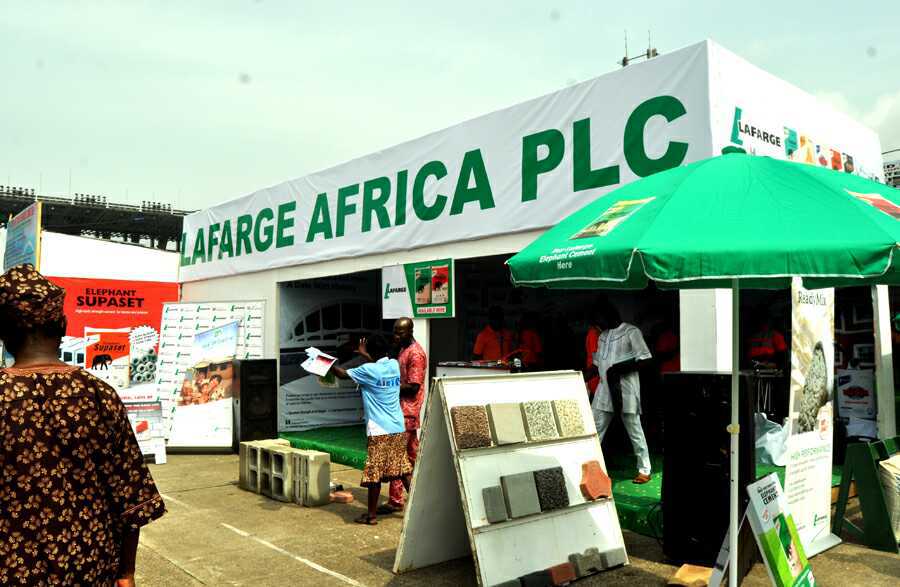
Shareholders of Lafarge Africa Plc will have their bank accounts credited with cash payment of the N1 per share dividend proposed by the board of the cement company.

A statement from the organisation emphasised that this payment would only be made to investors who had shares of the company and their names appear on the register of members as at close of business on Thursday, April 30, 2020.

In the disclosure signed by the Company’s Secretary, Mrs Adeunmi Alode, and sent to the Nigerian Stock Exchange (NSE) on Monday, April 27, the cement manufacturer noted that the final dividend for the year ended December 31, 2019, would need the approval of shareholders at the Annual General Meeting (AGM).

The company’s AGM has been slated to take place on Wednesday, June 3, 2020 at a specific location and time yet to be announced by the board.

The company noted that for the purpose of the final proposed dividend, the register of shareholders will be closed from Monday, May 4 through Friday, May 8, 2020.

Lafarge Africa has called on shareholders who have not completed their electronic dividend payment registration should do that, noting that only those who have mandated the registrar through the registration would have their dividends paid electronically to their bank accounts.

Providing a guide, Lafarge Africa advised its shareholders to download the Registrar’s E-dividend Mandate Activation Form which is also available on the website of the its registrars, Cardinalstone Registrars: at www.cardinalstoneregistrars.com, complete and then submit to the registrar or their respective banks.

It also called on shareholders who are yet to claim their dividend warrants and share certificates to follow the aforementioned procedures or contact its registrars at Number 358 Herbert Macaulay Way, Beside St. Dominic Catholic Church, Yaba, Lagos.

Business Post had earlier reported that the company’s stock received a buy rating from analysts at CardinaStone Research.


Adedapo Adesanya is a journalist, polymath, and connoisseur of everything art. When he is not writing, he has his nose buried in one of the many books or articles he has bookmarked or simply listening to good music with a bottle of beer or wine. He supports the greatest club in the world, Manchester United F.C.

Advertisement
Click to comment

Leave a Reply

Your email address will not be published. Required fields are marked *

Economy

Naira Now N1,386/$1 at Official FX Market, N1,465/$1 at Black Market

Published

on

Domiciliary Accounts to Naira

By Adedapo Adesanya

The Naira maintained its positive performance against the United States Dollar in the different segment of the foreign exchange (FX) market on Friday, January 30.

In the black market, the Nigerian currency appreciated against the greenback yesterday by N5 to sell for N1,465/$1 compared with the previous day’s N1,470/$1, and at the GTBank forex desk, it gained N7 to close at N1,419/$1 compared with Thursday’s closing price of N1,426/$1.

In the the Nigerian Autonomous Foreign Exchange Market (NAFEX) segment, the local currency firmed up against the Dollar during the session by N10.44 or 0.75 per cent to trade at N1,386.55/$1 versus N1,396.99/$1.

Also, the domestic currency appreciated against the Pound Sterling in the official FX market by N25.81 to end at N1,906.23/£1 compared to the N1,932.04/£1 quoted on Thursday, and gained N19.56 on the Euro to close at N1,652.22/€1, in contrast to the preceding session’s closing price of N1,671.78/€1.

The Naira continues to pick form, boosted by stronger FX liquidity, enhanced price discovery at the NAFEX, and a gradual restoration of offshore investor confidence.

Nigeria’s external reserves, which provide the Central Bank of Nigeria (CBN) with the capacity to defend the Naira and stabilise the foreign exchange market, have continued to grow steadily. According to data from the apex bank, gross external reserves rose to $46.17 billion as of January 29, 2026.

FX supply is further supported by strong oil-related inflows and resilient diaspora remittances, which continued to average around $5 billion per quarter, providing a stable and non-cyclical source of foreign exchange liquidity.

Market traders expect the Naira to remain fairly stable and could strengthen further with a bond auction in the coming week.

Nigeria’s external reserves, which provide the CBN with the capacity to defend the naira and stabilise the foreign exchange market, have continued to grow steadily. According to CBN data, gross external reserves rose to $46.17 billion as of January 29, 2026.

In the cryptocurrency market, it further weakened as the US Dollar recovered from a four-year low decline.

Friday’s Dollar strength followed President Donald Trump’s announcement that he would pick former Federal Reserve Governor Kevin Warsh to head the US central bank when Mr Jerome Powell’s term ends in May.

Cardano (ADA) fell by 3.9 per cent to $0.3118, Ethereum (ETH) declined by 2.1 per cent to $2,676.83, Ripple (XRP) depreciated by 1.6 per cent to $1.72, Dogecoin (DOGE) lost 0.9 per cent to sell for $0.1130, and Litecoin (LTC) slid by 0.1 per cent to $64.03.

However, Solana (SOL) added 2.0 per cent to close at $117.67, Bitcoin (BTC) appreciated by 1.0 per cent to $83,416.99, and Binance Coin (BNB) gained 0.6 per cent to sell for $847.49, while the US Dollar Tether (USDT) and the US Dollar Coin (USDC) remained unchanged at $1.00 each.

Continue Reading

Economy

Crude Oil Rises as Market Observes US-Iran Tensions

Published

on

crude oil

By Adedapo Adesanya

Crude oil rose marginally on Friday, consolidating recent gains and holding near six-month highs on Friday, supported by tensions between the United States and Iran.

Brent crude futures settled at $70.69 a barrel after it chalked up 2 cents or 0.03 per cent and the US West Texas Intermediate (WTI) crude futures finished at $65.21 a barrel after adding 21 cents or 0.32 per cent.

US President Donald Trump has threatened to strike Iran and repeatedly called on the oil producer to make a deal, which will see it end its nuclear program, limit its ballistic missile capabilities, and sever ties with armed proxies in the Middle East.

If the Islamic Republic does not accept those terms, President Trump has warned that the country will suffer consequences “far worse” than last year, when the United States joined Israel in bombing Iran’s nuclear sites.

The possibility of the American president weighing actions against Iran that included targeted strikes, raised concerns about supply disruptions.

The US, which has strengthened its military position in the Middle East in recent weeks, issued new sanctions targeting seven Iranian nationals and at least one entity.

A rise in the Dollar from four-year put some pressure on oil prices after President Trump announced that he would pick former Federal Reserve Governor Kevin Warsh to head the US central bank when Mr Jerome Powell’s term ends in May.

A stronger Dollar can limit demand from oil buyers paying in other currencies because it will be more expensive.

More pressure came from rising US crude oil output after shutdowns and Kazakhstan nearing the resumption of production at the Tengiz oilfield.

The Organisation of the Petroleum Exporting Countries and allies (OPEC+) is likely to keep its pause on oil output increases for March when it meets on Sunday, February 1.

The eight producers – Saudi Arabia, Russia, the United Arab Emirates, Kazakhstan, Kuwait, Iraq, Algeria and Oman – raised production quotas by about 2.9 million barrels per day from April through December 2025, roughly 3 per cent of global demand. They then froze further planned increases for January through March 2026 because of seasonally weaker consumption.

Also on Sunday, a separate OPEC+ panel called the Joint Ministerial Monitoring Committee is scheduled to meet. The JMMC does not have decision-making authority on production policy.

Continue Reading

Economy

Nigerian Senate to Pass 2026 Budget March 17

Published

on

Tinubu 2026 Budget presentation

By Adedapo Adesanya

The Senate, through its Committee on Appropriations, has fixed March 17, 2026, as the tentative date for the final consideration and passage of the N58.472 trillion 2026 Appropriation Bill.

This was made known after a special session on Friday, where February 2 to 13, 2026, was approved for the consideration of budget estimates at the committee level.

The committee equally fixed Monday, February 9, 2026, for a public hearing on the budget proposal.

Chairman of the committee, Mr Solomon Olamilekan Adeola, further disclosed that Thursday, March 5, 2026, has been scheduled for an interactive session between members of the committee and key economic managers of the federal government, including the Ministers of Finance and Coordinating Minister of the Economy, Mr Wale Edun, as well as the Minister of Budget and National Planning, Mr Atiku Bagudu.

According to him, February 16 to 23, 2026, has been earmarked for the submission of reports on budget defence by various standing committee chairmen, ahead of the presentation of the Appropriations Committee’s report to the Senate on March 17.

He disclosed that while the Senate leadership initially preferred the budget to be passed by March 12, 2026, he successfully appealed for an additional week to allow for more thorough scrutiny.

To aid detailed examination of the estimates, Senator Adeola said hard copies of the 2026 budget have been printed and distributed to chairmen and members of the Senate’s standing committees.

On December 19, 2025, President Bola Tinubu presented a budget proposal of N58.47 trillion for the 2026 fiscal year titled Budget of Consolidation, Renewed Resilience and Shared Prosperity to a joint session of the National Assembly.

The budget has a capital recurrent (non‑debt) expenditure standing at N15.25 trillion, and the capital expenditure at N26.08 trillion, while the crude oil benchmark was pegged at $64.85 per barrel.

Mr Tinubu said the expected total revenue for the year is N34.33 trillion, and the proposal is anchored on a crude oil production of 1.84 million barrels per day, and an exchange rate of N1,400 to the US Dollar.

In terms of sectoral allocation, defence and security took the lion’s share with N5.41 trillion, followed by infrastructure at N3.56 trillion, education received N3.52 trillion, while health received N2.48 trillion.

Continue Reading

Trending