

General
Biafra Sets the Alarm Clock at Midnight, Time to Wake Up

By Kester Kenn Klomegah
Over the years, high profiled politicians, academics and human rights groups have been talking about the armed attacks with its devastating effects on the economy in the Igbo-dominated South-Eastern States of the Federal Republic of Nigeria.
Nigeria gained its independence in October 1960. Since then, it has strongly witnessed the sharp division of Nigeria into three regions – North, West and East – and this factor has further exacerbated the well-developed economic, political, and social differences among ethnic groups.
The Igbo-dominated Eastern States have been struggling for peace and freedom necessary for development since the Civil War ended in 1970.
That was fought between the Government of Nigeria and the State of Biafra from July 1967 to January 1970. The Igbo leadership could no longer coexist with the Northern-dominated Federal Government. The Eastern River States are devastated, millions of the population deeply impoverished while resources remained untapped.
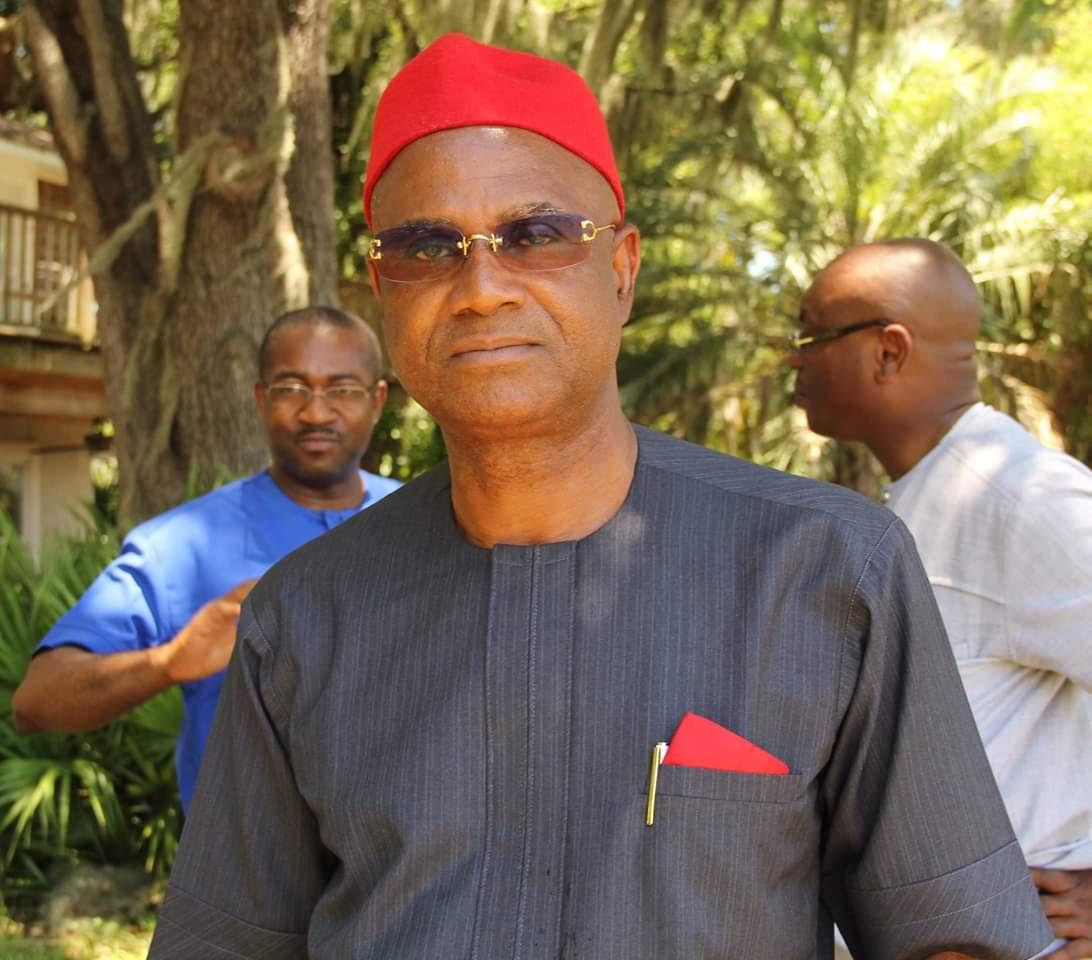
In this interview taken by Kester Kenn Klomegah, for instance, Professor Nathaniel Aniekwu, Secretary at the Alaigho Development Foundation [ADF] in Nigeria, vehemently argues that 50 years after the civil war, the growing threats and frequent attacks by northern ethnic groups and the deepening pitfalls in the federal governance system have negatively affected the development of Biafra.
The Alaigho Development Foundation is a registered NGO with the key aims of addressing development issues in Igboland, and further fight for justice, civil rights and good governance in Nigeria.
Here are the interview excerpts:
How would you argue that 50years after the Civil War [1967 to 1970], growing threats and frequent attacks by ethnic groups have affected the development, particularly in the Eastern States of Nigeria?
It is not rocket science that capital [money] is a coward and, therefore, does not go where there is insecurity. The Biafra/Nigeria Civil war never really ended. What happened 50 years ago was a transition of the war from open shooting battles to economic strangulation war which has translated into asymmetric herdsmen/terrorist-based war.
The initial morphed face of the war started in 1970 and was aimed at strangulating the region through infrastructural/economic deprivation. The federal government policy of offering 20 pounds in return for any amount of wealth deposits an Igbo person had in the bank, especially in the face of the 3Rs [Reconciliation, Rehabilitation and Reconstruction] program of re-establishing the region was not accidental. This was quickly followed by the Nigeria Enterprises Promotion Decree of 1972, which had as one of its main objectives to promote Nigerian indigenous enterprises with a view to increasing indigenous equity participation in the national economy. We were supposed to acquire this equity with the balance of the 20 pounds after feeding.
The current phase of the war is the herdsmen/terrorist-based war, which is aimed at destroying our agricultural base and make us completely dependent and then overrun and take over our ancestral lands. These are all orchestrated by the same people who could not wipe us out on the battlefields. The world community continuously watches the large-scale atrocities committed in the country.
As long as these wars are going on, Nigeria cannot know peace and, therefore, no real progress. The Eastern region is totally out of the equation from the pieces of evidence of our realities. Any progress in the Eastern region must be homegrown and organic. This is the real essence of the ADF’s “Aku ruo’ulo” program. Only the desperate and degenerate Chinese will have the temerity to want to invest in Nigeria, but with conditions that make it better for you to live without their investments.
How would you assess the overall economic development of the Biafra States?
The Biafra States are faring very well given the numerous and insurmountable challenges thrown at them. We have almost no federal presence in the region, no infrastructure, receive the least budget allocations and have the least representation in all the arms of the federal government. This is what has accounted for this current phase of the war. Ndigbos have indomitable spirits and cannot be rendered null and void economically, as long as they are alive.
The Government is, therefore, on their Plan C, which is physical annihilation and possessing their homelands. All economic indices show that in spite of the war against them, marginalization and exclusion from participation in the governance of Nigeria, the Biafra States continue to be very competitive and are very far from being worse off among the Nigerian States.
Do you think it could have been different if the Southeast or the River States were not under the administration of the Federal Government of Nigeria?
I don’t think so, I know it. If they will let us be, even with all the deprivations and infrastructural neglect in place, Ndigbo will grow very quickly to become the go-to place for business. Our detractors know this much and that is what bothers them the most.
What are the economic potentials, especially for foreign investment?
The prognosis is very poor. Nobody goes for a swim in the desert. Only desperate investors still consider Nigeria as an investment destination for the earlier mentioned reasons. Although Nigeria is very richly endowed with natural and human resources, it has quickly lost all its shining advantages.
Moreover, whatever remains had been made in the past, has been squandered, especially as they seek to exclude Biafras from participation in political governance. They failed to deploy the appropriate resources, especially manpower, the broad-minded people who can guide and manage the development of the country, simply because most of them come from the Biafra States.
Under the current circumstances, how can the government make it easier to attract foreign investment to the region?
The bus has already left the station. The trust has been breached and the centre can no longer hold. As a Christian, I believe that nothing is impossible with God. But we are not God. We have squandered a lot of goodwill, which all developmental programs required.
Frankly speaking, only a dedicated team of experts can possibly do a lot, if all the impediments on our paths are removed, the trust deficit reversed, religion seizes to be so dominant in our decision-making process, the herdsmen/terrorists reign in, ethnicity seizes to be criteria for appointments and recognitions.
Furthermore, if the ethnic nationalities will come together and decide on the form and degree of association they will have in a restructured Nigeria, and the level of authority that should reside at the centre: if we shall confess and repent from our sins and seek forgiveness, then perhaps, we stand a chance of reversing the damage.
There are still a lot of challenges in achieving all that you have said above, but do you see any possibilities for national integration and a new leadership paradigm?
National integration is a very clear possibility, especially for The Biafra States. In fact, it is our only hope. Remember that Nigeria is made of many unwilling nations fused into the entity called Federal Republic of Nigeria (FRN). These nations have their inalienable right of association and with whomsoever they chose. These nations must choose their paths of integration.
For Ndigbo, not only that internal cohesion is imperative but also integrating into a union of the agreed is paramount. Leadership is very critical in attaining these objectives and this is where the paradigm shift is called for. Leadership must be looked from the point of view of the governed, at the micro-level of the society. A leadership that is organic and evolves from the people. Not a leadership foisted on the people by a band of degenerates.
A leadership paradigm shift is needed to look at the Igbo man as he is, what his essence is and then, try and appeal to that essence. Being Republican in his core essence means that you cannot lead him the same way you lead the Yorubas nor Hausas. A leadership that achieves this will have followership similar to what we had with Dr Nnamdi Azikiwe in the first republic or the followership General Odumegwu Ojukwu had during the war.
Note that the followership was so strong that during the war. Professor M. A. C. Odu and Ishiozo Mbu Amohuru went into the Nigerian territory, hijacked an aircraft and flew it down to Biafra. Such was the level of risks and sacrifices they could make.
Please note carefully that when the same General Ojukwu joined the NPN upon his return from exile, Ndigbo unfollowed him, because he no longer represented their aspirations. That is the Igbo man. Seen from this perspective, the Igbo man is very easy to lead as long as you the leader is ready to be transparent and represent their aspirations.
Does that mean there are weaknesses in the Federal System of Governance?
I am usually very wary of stereotyping. By my professional training, I seek for solutions where there are problems. I do not believe in looking for problems to fit into pre-existing solutions. I don’t really care too much what you call the system that works: federal system, unitary system, monarchical system, et cetera.
I don’t know if there is anything wrong with the federal system, but problems can arise as a result of the application of systems that are not suitable to the Nigerian environment. Obviously, the federal system of government is not working in Nigerian given the unique nature of the Nigerian political space. We must, therefore, return to the solution domain, seek long-term solutions that are organic [homegrown] and suitable to our environment.
What do you have to say about the next elections of the State Governors and the President?
I believe the forthcoming elections will be business as usual. There is nothing in the horizon that makes me think it will be different. The problems with election is part of the structuring problems bedevilling Nigeria, and unless Nigeria restructures, nothing will change. However, we are waiting when Nigeria will hit “Ground Zero”, then restructuring will become inevitable.


