General
NLC Rejects 6% Tenancy, Lease Agreements Tax
By Adedapo Adesanya
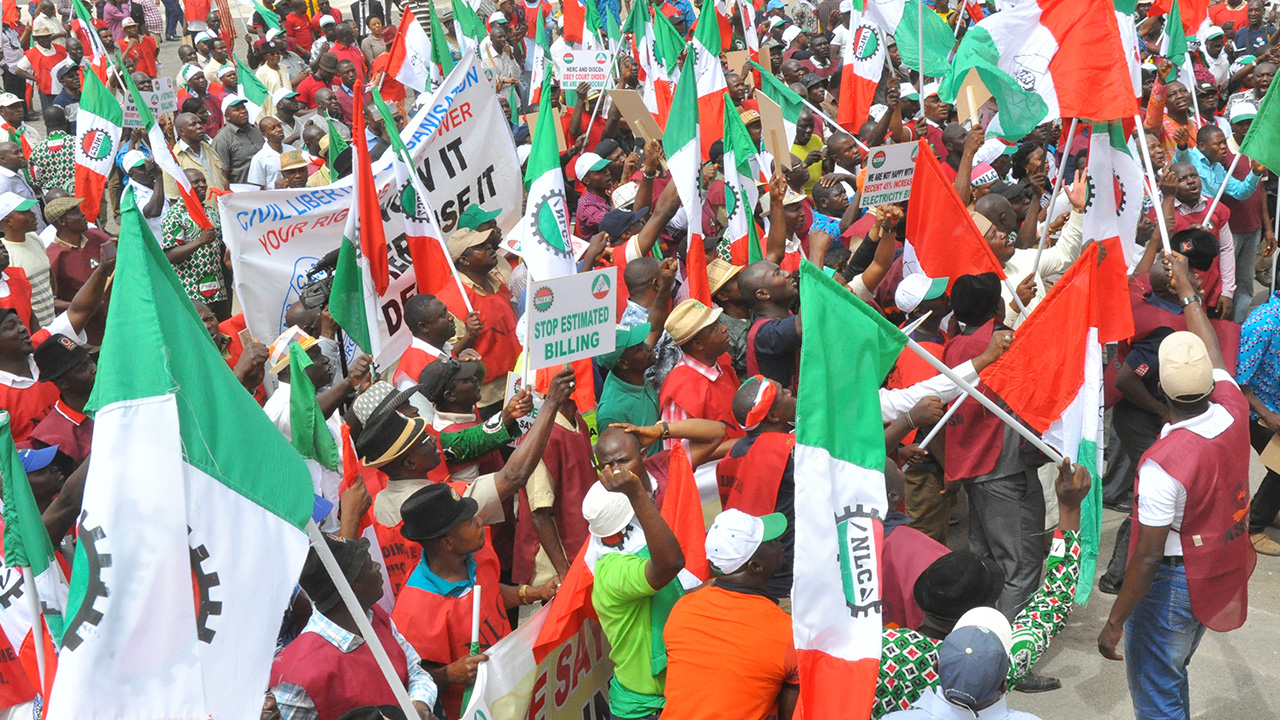
The Nigeria Labour Congress (NLC) has rejected the decision of the federal government to impose a six per cent stamp duty on every tenancy and lease agreement in the country.
The group in a statement issued on Saturday by its President, Mr Ayuba Waba, called the move a harsh fiscal policy that is insensitive to the plights of citizens.
They rejected the new stamp duty policy of the Federal Inland Revenue Service (FIRS) and instead, recommended that the government considers introducing property tax on the numerous unoccupied houses across the country that are presumably owned by the rich.
The statement also described the decision to enforce the tenancy and lease agreement tax as illogical and inhumane, especially because of the harsh economic realities of the COVID-19 pandemic on the poor.
“We call on the federal government and the Federal Inland Revenue Service to rescind this harsh fiscal measure as it is boldly insensitive to the material condition of Nigerians which has been compounded by the COVID-19 health insurgency.
“Nobody would want to be a tenant if they had an alternative. This means that tenants, which this new policy targets, are some of the most vulnerable people in our society. It would be illogical, insensitive and inhumane to churn out laws that make our poor go to bed at night with tears in their eyes.
“The principle of public taxation especially progressive taxation all over the world is that the rich subsidise for the poor. Every tax policy that would be enforceable must create a safety net for the poor.
“Recent policies of government indicate otherwise. Accommodation is a fundamental right guaranteed by Nigeria’s constitution.
“It is unimaginable that tenants who are in the most vulnerable group would be expected to pay six per cent tax for accommodation when sales tax is 1.5 per cent. This is indeed a great injustice against the Nigerian poor.
“Government must take deliberate steps to avoid institutionalizing the widespread belief that it is a crime to be poor in Nigeria,” the statement read in part.
Business Post had reported that FIRS, on July 22, asked landlords and property agents to ensure that they charge six per cent stamp duty on all tenancy and lease agreements they enter into with all renters and remit same promptly to the service so that they do not run foul of the Stamp Duty Act.
According to the Executive Chairman of the FIRS, Mr Muhammad Nami, property-related transactions like tenancy or lease agreement fall under the Ad Valorem category of the stamp duty which attracts six per cent duty payable in the percentage of the total value or sum of the tenancy or lease.
General
INEC Declares Adeleke Winner of 2026 Osun Governorship Election
By Adedapo Adesanya
The Independent National Electoral Commission (INEC) on Sunday, August 16, 2026, declared the incumbent Governor of Osun State, Mr Ademola Adeleke, winner of the 2026 governorship election held a day earlier.
Mr Adeleke, who contested under the Accord Party, defeated his closest challenger, the All Progressives Congress (APC) candidate, Mr Bola Oyebamiji, to secure a second term in office.
The governor polled 511,067 votes, while Mr Oyebamiji scored 444,815 votes, giving Mr Adeleke a winning margin of 66,252 votes.
The African Democratic Congress (ADC) candidate, Mr Najeem Folasayo Salaam, came a distant third with 17,180 votes.
Mr Salaam had entered the election as one of the candidates expected to potentially emerge as a third force, particularly following the backing he received from former Osun Governor and former Minister of Interior, Mr Rauf Aregbesola.
However, that expectation did not translate into the numbers needed to seriously challenge the two leading candidates.
Mr Adeleke’s victory means he becomes only the third governor in Osun State’s history to win a second term through an election.
He joins Mr Olagunsoye Oyinlola and Mr Aregbesola in the state’s political history, although Mr Oyinlola’s tenure was later cut short following a court decision that nullified his election over irregularities.
Mr Aregbesola subsequently succeeded Oyinlola and went on to secure a second term, completing eight years in office.
Mr Adeleke’s re-election comes after a fiercely contested campaign marked by intense competition and reported violence from competing parties.
Despite those challenges, the governor consolidated his support across the state and secured a decisive victory over the APC candidate, extending his administration for another four years in the southwest states.
General
Five Transmission Towers Collapse Along Ikot Abasi–Eket 132kV Line
By Modupe Gbadeyanka
The Transmission Company of Nigeria (TCN) has confirmed the collapse of five transmission towers along the Ikot Abasi–Eket 132kV Double Circuit Transmission Line.
This was attributed to severe acts of vandalism, as TCN disclosed that the structure collapsed after vandals removed critical structural bracing members.
The affected towers were N9, J4, N10, N11 and N12, the organisation said in a statement on Friday.
It explained that the extensive damage was discovered during a routine joint line patrol conducted on August 9, 2026, by TCN linesmen.
Further inspection revealed that structural members from seven additional towers along the same transmission corridor had also been removed and stolen. The towers, J3, N8, N13, N14, N15, N18 and N19, are now structurally compromised and pose a risk of further collapse.
TCN condemned this act of sabotage and reiterated its commitment to working hard to maintain a robust and reliable national grid.
The statement said that to mitigate the impact on electricity supply, the network has been reconfigured to prioritise supply to Ekim transmission station, leaving Ibom Power as the only station without supply.
TCN said it is mobilising an urgent intervention to complete the reconstruction of the affected sections of the line, with security agencies also notified to aid investigations and prevent further acts of vandalism along the line route.
General
Abbas Warns Against Delay in Implementing New Ports Regulatory Act
By Adedapo Adesanya
The Speaker of the House of Representatives, Mr Tajudeen Abbas, has urged all relevant government agencies to promptly initiate actions for the full implementation of the Nigerian Ports Economic Regulatory Agency Act, 2026, following its signing into law by President Bola Tinubu.
The bill, sponsored by Speaker Abbas, was aimed at repealing the Nigerian Shippers’ Council Act, Cap. N133, Laws of the Federation of Nigeria, 2004, and establish the Nigerian Ports Economic Regulatory Agency to ensure effective economic regulation of Nigerian ports while safeguarding the interests of shippers, service providers, and users of regulated port services. With the President’s assent, it has now been enacted as an Act of Parliament.
The legislation represents one of the landmark achievements of the 10th National Assembly. It reflects the Speaker’s commitment to legislative excellence, institutional reform, and sustainable economic growth, according to a press statement by the Special Adviser on Media and Publicity to the Speaker, Mr Musa Krishi.
The bill underwent a rigorous and inclusive legislative process, including extensive stakeholder consultations and a public hearing. It was passed by both Chambers of the National Assembly and subsequently assented to by the President.
The Act provides a robust legal and institutional framework to ensure effective economic regulation of Nigerian ports by fostering transparency, competitiveness, and efficiency in port operations; protecting the rights and interests of shippers, service providers, and other port users; and aligning Nigeria’s port regulatory system with global best practices, thereby enhancing the ease and cost-effectiveness of doing business.
Despite receiving presidential assent, the Act has yet to be fully operationalised.
He warned that any further delay would undermine the legislative intent of the reform, prolong the exposure of port users to arbitrary charges and operational inefficiencies, and deny the nation the anticipated benefits of increased revenue, improved trade facilitation, and stronger investor confidence in the marine and blue economy sector.
The Speaker urged the Federal Ministry of Marine and Blue Economy, in collaboration with all relevant Ministries, Departments and Agencies (MDAs) of the federal government, to take the necessary administrative, institutional, and financial measures for the prompt implementation of the Act.
He said this should include the formal transition to, as well as operational empowerment of, the Nigerian Ports Economic Regulatory Agency to discharge its statutory mandate effectively.
The full implementation of the Act is critical to unlocking the economic potential of Nigeria’s ports, reducing the cost of doing business, strengthening trade competitiveness, and positioning Nigeria as the leading maritime and logistics hub in West and Central Africa.
The statement noted that the Speaker reaffirmed the 10th House’s commitment to exercising the necessary legislative oversight to ensure this landmark legislation, along with others assented to by the President, is fully implemented and achieves its intended goals for the benefit of the Nigerian people.