Connect with us

Technology

Lagos Offers N7m to Develop Smart Meters

Published

on

smart electricity Meters

By Adedapo Adesanya 

The Lagos State government has taken a huge step to reduce the electricity metering deficit in the metropolis by unveiling initiative tagged The Lagos Smart Meter Hackathon 2020.

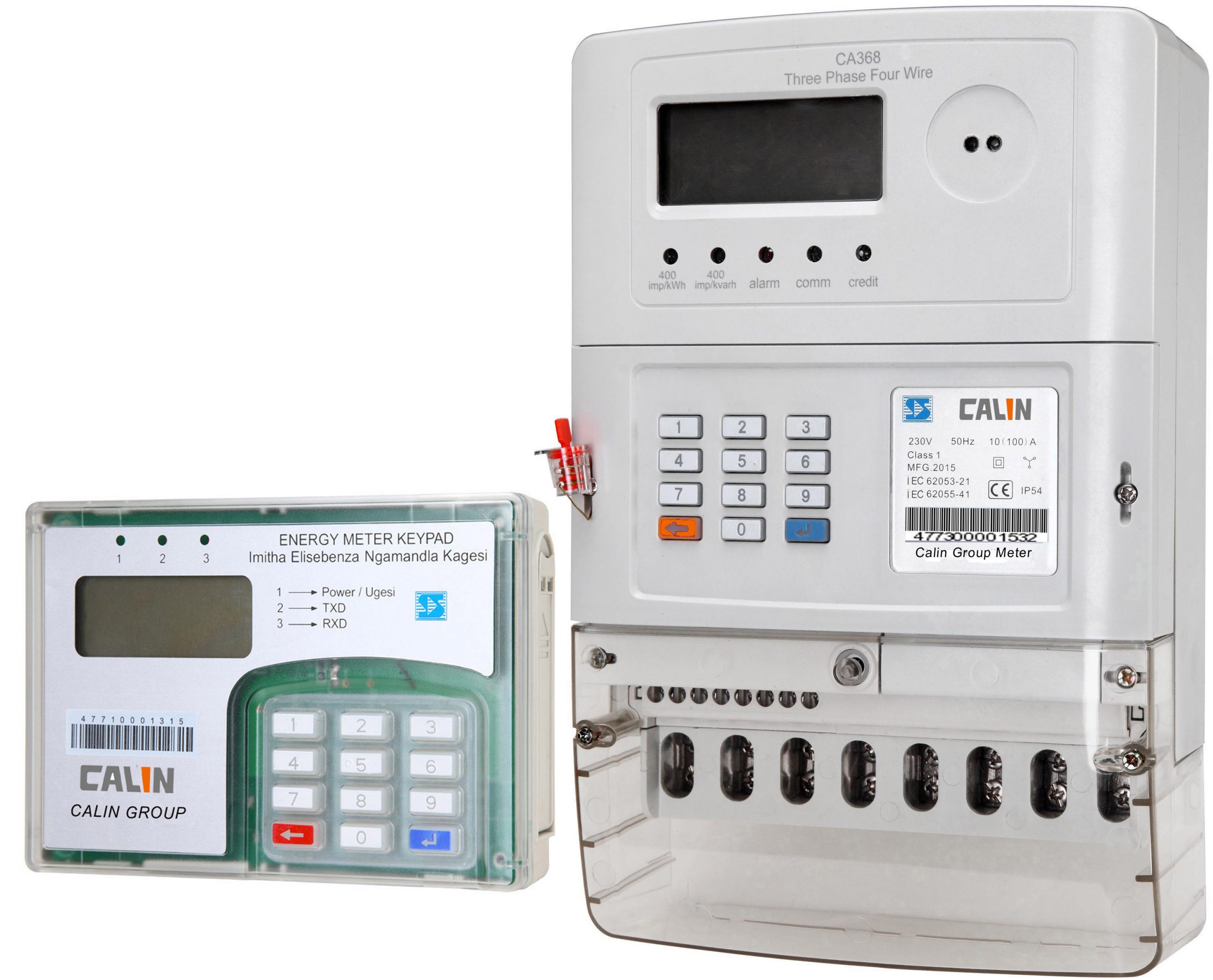
The scheme, which is aimed at improving access to electricity in the state, will offer N7 million cash prize to any local talent who can develop an affordable meter.

The state government wants to make use of Nigerians to develop and produce affordable smart meters for consumers, thereby addressing the metering gap in Lagos and Nigeria through the Smart Meter Hackathon initiative.

It was gathered that the Eko Innovation Centre, in partnership with the Ministry of Energy and Mineral Resources, will facilitate the meter design hackathon to improve energy distribution, monitoring and preventing revenue leakage by calling for affordable smart meter designs.

This scheme was unveiled by the Governor of Lagos, Mr Babajide Sanwo-Olu and the Minister of State of Power, Mr Goddy Jedy-Agba through a virtual press conference.

Speaking at the event, Mr Sanwo-Olu noted that the project marked a significant milestone in the implementation of the state government’s plan.

“This Lagos Smart Meter Initiative is an important way for the Lagos Government to demonstrate its commitment to improving electricity access and reliability for Lagosians.

“We believe that adequate metering of Lagosians and in turn Nigerians would increase willingness to pay for electricity, improve productivity, and more importantly, continue to improve the living conditions of our people,” he said.

He also added that the initiative was in line with the Sustainable Development Goal 7 of the UN which aspires to drive universal access to affordable, reliable, sustainable and modern energy for all by 2030.

The governor further said the success of such an initiative will significantly reduce the revenue leakages in the sector and ultimately improve last-mile electricity supply for consumers.

Mr Sanwo-Olu said that increased electricity access is one of the priority mandates of his administration. He added that it was a key factor in ultimately driving the economic development of the State and achieve the objective of making Lagos a 21st-century economy.

He called on all relevant stakeholders – electricity sector players, technology experts, investors, regulators to support the initiative.

Speaking on the prize, Mrs Doja Ekeruche, Advisory Board Member, Eko Innovation Centre explained that all concepts submitted will be assessed based on strict but transparent criteria to identify the most viable concepts proceeding to the next stage.

She added that the judges will be professionals within the power and tech ecosystem, saying “Judges with knowledge and expertise within the power and tech ecosystem will review the entries and shortlist teams to proceed to the hackathon event.”

Mrs Ekeruche further clarified that “the final winners of the hackathon, in both the hardware and software categories, will win N7 million. They will also be a part of the co-creation phase with other experts, and then proceed to the production and testing stage before the full commercialization of the smart meter.”

The hackathon is open to entrepreneurs, software enthusiasts, hackers and developers. According to the organisers, submissions are welcome from those who want to make a change and contribute to making electricity supply better in Lagos.

It was also added that teams developing from scratch or continuing a previously started project can also participate.

Registration is free and prototype designs can either be submitted as either hardware or software. The registration can be done via https://lagossmartmeter.com/hardware-submission/ or https://lagossmartmeter.com/software-submission/

The deadline for the application submission is August 28, 2020.

Adedapo Adesanya is a journalist, polymath, and connoisseur of everything art. When he is not writing, he has his nose buried in one of the many books or articles he has bookmarked or simply listening to good music with a bottle of beer or wine. He supports the greatest club in the world, Manchester United F.C.

Advertisement
Click to comment

Leave a Reply

Your email address will not be published. Required fields are marked *

Technology

Google Partners African Universities to Launch WAXAL Speech Dataset

Published

on

Google WAXAL Speech Dataset

By Modupe Gbadeyanka

A speech dataset designed to catalyze research and build more inclusive Artificial Intelligence (AI) technologies has been launched by Google in partnership with a consortium of leading African research institutions, which are mainly universities.

The main universities involved in the project known as WAXAL are Makerere University in Uganda, the University of Ghana, and Digital Umuganda in Rwanda.

A statement from Google on Monday said the dataset bridges a critical digital divide for over 100 million speakers by providing foundational data for 21 sub-Saharan African languages, including Hausa, Luganda, Yoruba, and Acholi.

While voice-enabled technologies have become common in much of the world, a profound scarcity of high-quality speech data has prevented their development for most of Africa’s over 2,000 languages. This has excluded hundreds of millions of people from accessing technology in their native tongues.

The WAXAL dataset was created to directly address this gap. Developed over three years with funding from Google, the project features 1,250 hours of transcribed, natural speech, and Over 20 hours of high-quality, studio recordings designed for building high-fidelity synthetic voices.

The WAXAL dataset, which is available starting today, covers Acholi, Akan, Dagaare, Dagbani, Dholuo, Ewe, Fante, Fulani (Fula), Hausa, Igbo, Ikposo (Kposo), Kikuyu, Lingala, Luganda, Malagasy, Masaaba, Nyankole, Rukiga, Shona, Soga (Lusoga), Swahili, and Yoruba.

Commenting on the development, the Head of Google Research for Africa, Ms Aisha Walcott-Bryantt, said, “The ultimate impact of WAXAL is the empowerment of people in Africa.

“This dataset provides the critical foundation for students, researchers, and entrepreneurs to build technology on their own terms, in their own languages, finally reaching over 100 million people.

“We look forward to seeing African innovators use this data to create everything from new educational tools to voice-enabled services that create tangible economic opportunities across the continent.”

Also commenting, a Senior Lecturer at Makerere University’s School of Computing and Information Technology, Ms Joyce Nakatumba-Nabende, said, “For AI to have a real impact in Africa, it must speak our languages and understand our contexts.

“The WAXAL dataset gives our researchers the high-quality data they need to build speech technologies that reflect our unique communities. In Uganda, it has already strengthened our local research capacity and supported new student and faculty-led projects.”

An Associate Professor at the University of Ghana, Mr Isaac Wiafe, said, “For us at the University of Ghana, WAXAL’s impact goes beyond the data itself. It has empowered us to build our own language resources and train a new generation of AI researchers.

“Over 7,000 volunteers joined us because they wanted their voices and languages to belong in the digital future.

“Today, that collective effort has sparked an ecosystem of innovation in fields like health, education, and agriculture. This proves that when the data exists, possibility expands everywhere.”

Continue Reading

Technology

Nigeria Grows Data Protection Industry to N16.2bn

Published

on

Data Protection Bill

By Adedapo Adesanya

The Nigeria Data Protection Commission (NDPC) has disclosed that the country’s data protection ecosystem has grown to N16.2 billion within just two years of formal regulation.

The disclosure was made by the chief executive of the data regulating agency, Mr Vincent Olatunji, during a media workshop and capacity-building engagement held in Lagos recently.

He further said  the growth reflects rising enforcement, compliance activity, and increasing confidence in Nigeria’s digital governance framework, even though the NDPC was not designed as a revenue-generating agency.

Mr Olatunji explained that regulatory compliance fees and enforcement actions under the Nigeria Data Protection Act (NDPA), 2023, have created significant economic value while also contributing to government revenue and job creation across the country, noting that regulatory fees and sanctions after investigations have contributed over N16.2 billion to federal revenue while supporting an estimated 23,000 jobs nationwide.

“These investigations have resulted in 11 major enforcement actions, including significant financial penalties and corrective directives.”

“The message is clear: violations of data privacy will attract serious consequences, regardless of the size or status of the organisation involved,” Mr Olatunji stated, adding that the commission has concluded 246 investigations into data protection and privacy breaches across multiple sectors, signalling that enforcement will remain central to Nigeria’s data governance strategy.

Business Post reports that NDPC has over the last two years carried some sanctions against some top companies including a N766.2 million fine on MultiChoice Nigeria in July 2025 as well as Fidelity Bank, which was fined N555.8 million in 2024 for processing personal data without informed consent.

The NDPC Commissioner linked the Commission’s enforcement milestones to Nigeria’s broader ambition of building a $1 trillion digital economy.

He stressed that accountability and trust are foundational to digital transformation and long-term investment.

“Privacy enforcement is the foundation of digital confidence. By holding violators accountable, we are safeguarding citizens while creating the secure environment required for innovation, investment and sustainable growth,” he said.

He said the Commission has significantly expanded compliance structures across the economy to support this objective, moving beyond sanctions to system-wide institutional strengthening.

The NDPC has registered 38,677 Data Controllers and Processors of Major Importance, licensed 307 Data Protection Compliance Organisations, and received more than 8,155 Compliance Audit Returns.

In addition, the Commission has issued the General Application and Implementation Directive, which takes effect from September 2025, translated the NDPA into three major Nigerian languages, and launched a multi-sector compliance sweep covering banking, insurance, pensions, and gaming, with 1,348 entities already served with compliance notices.

Continue Reading

Technology

Nigeria to Buy Two New Communication Satellites to Drive Digital Growth

Published

on

Communication Satellites

By Adedapo Adesanya

Nigeria will purchase to new communication satellites to boost Nigeria’s digital infrastructure as part of efforts to achieve President Bola Tinubu’s plan to grow the economy to $1 trillion.

The Minister of Communications and Digital Economy, Mr Bosun Tijani, disclosed this on Wednesday in Abuja at a press conference to mark Global Privacy Day 2026, organised by the Nigerian Data Protection Commission (NPDC).

Mr Tijani said the approval marked a significant shift in Nigeria’s digital strategy, noting that the country currently stands out in West Africa for lacking active communication satellites, a gap the new assets are expected to address.

“As you know, Mr President has been very clear about his ambition to build a $1 trillion economy, and digital technology is central to achieving that vision,” adding that, “The President has now approved that we should procure two new satellites. Nigeria today is the only country in West Africa with non-communication satellites. And we have been given the go-ahead to procure two new ones, ensuring that we can use that satellite to connect.”

He also said progress had been made on the Federal Government’s flagship 90,000-kilometre fibre optic backbone project, which is aimed at expanding broadband access across the country. According to the minister, about 60 per cent of the fibre project has been completed, while funding for the remaining work has already been secured.

“The 90,000 kilometres fibre optic project is not a dream. About 60 per cent of the work has already been completed, and the funding for the project is secure. As we bring more Nigerians online, connectivity without protection is incomplete. Privacy is the foundation of trust, safety, and sustainability in the digital world.”

“The success of Nigeria’s digital economy will depend not just on infrastructure and talent, but on trust, and the NDPC remains central to building that trust,” the minister said.

Mr Tijani said the Tinubu administration was positioning digital technology as a key driver of inclusive growth, improved public service delivery, and long-term economic expansion, adding that investments were also being channelled into digital skills, rural connectivity, and institutional reforms.

He stressed that the expansion of connectivity must be matched with stronger data protection, especially as Nigeria’s young and digitally active population continues to grow.

Recall that Nigerian Communications Commission (NCC) recently granted licenses to three global internet service providers – Amazon’s Project Kuiper, BeetleSat-1, and and Germany-based Satelio IoT Services – as part of efforts to strengthen internet connectivity via satellite and to boost competition among existing internet service providers in the country.

Continue Reading

Trending