Connect with us

General

IBEDC Begins Distribution of Smart Meters in Ogun

Published

on

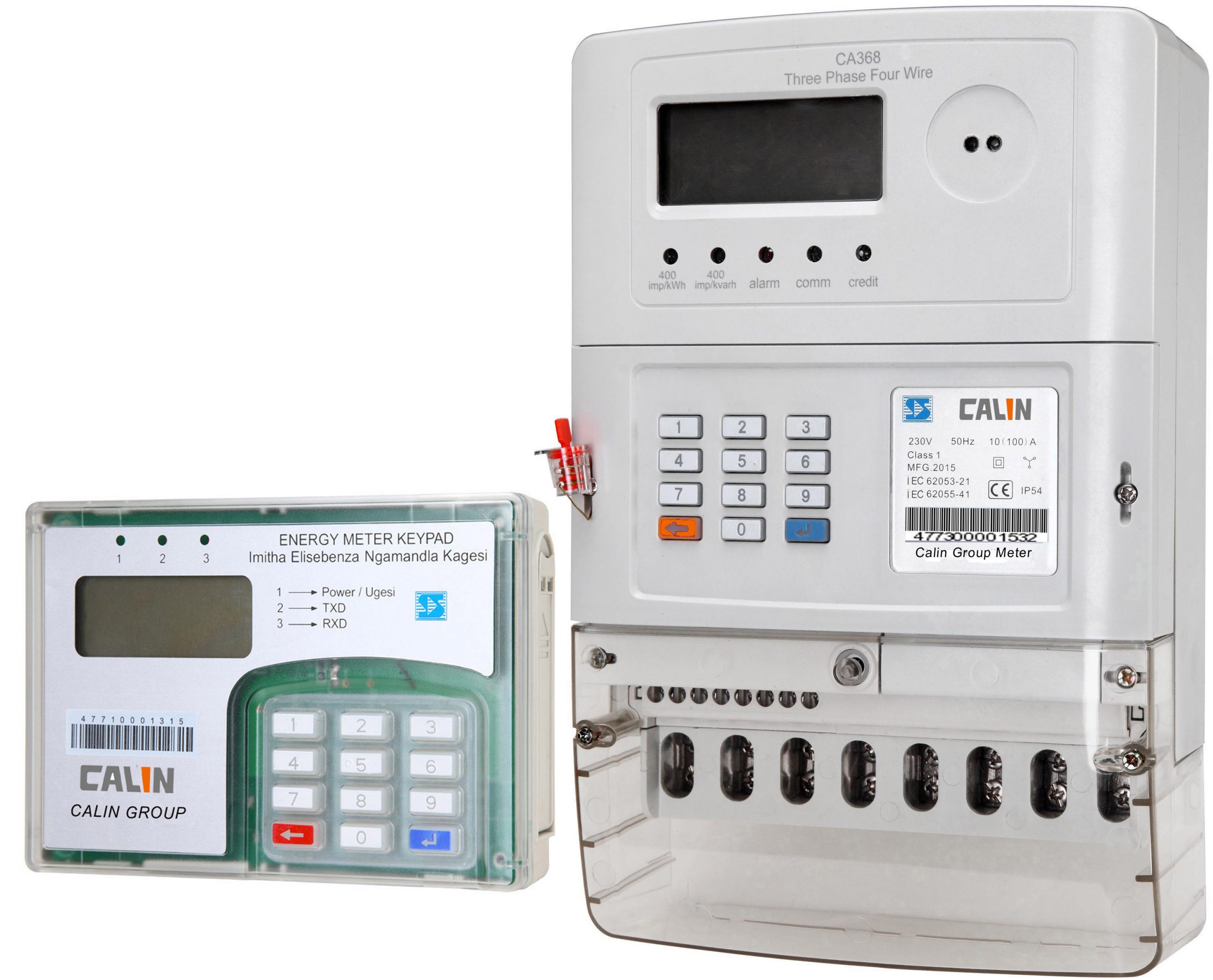
smart electricity Meters

By Ahmed Rahma

The Ibadan Electricity Distribution Company (IBEDC) has commenced the distribution of smart prepaid meters to customers under its franchise in Ogun State.

The programme, which kicked off Thursday, was launched by the Head of Metering of IBEDC, Mr Adewale Obajemu, at Ota.

According to Mr Obajemu, the federal government plans to distribute one million meters to unmetered electricity customers across the country in phase zero of the scheme.

He disclosed that the distribution would be made by the Electricity Distribution Companies (DisCos), adding that IBEDC would distribute 104,000 of the meters to customers in its franchise.

Mr Obajemu said IBEDC had partitioned the entire Ogun area into different groups and that every area would be covered.

He said, “This is phase zero of the programme, which is like testing the grounds. We will soon move to phase one.

“We have about 350,000 customers in Ogun but a good number of them had earlier been metered.

“We will ensure that the process is transparent and sincere to enhance the cooperation of the people,” he said.

Mr Obajemu explained that the meters would be installed, notwithstanding the outstanding bill of any customer.

He, however, stated that customers with outstanding bills would be expected to contact the firm not later than 30 days after installation to discuss such bills, failure of which, he said, such outstanding would be factored into subsequent energy purchases.

The IBEDC official also explained that customer’s Bank Verification Number (BVN) would be required before installation for accounting purpose.

Mr Obajemu stressed that customers must ensure that their service cables were up to standard, saying that it must be, at least, 16 mm and should not extend into the ceiling to prevent tampering.

He warned that meters must only be serviced by technicians of IBDEC and not just any power engineer.

“If you have any issue with the meter, please contact our customer care numbers or our office closest to you.

“If anybody should work on the meter, that will amount to tampering and such customers will face the full wrath of the law.

“Please note that the meters have in-built security seals and tampering sensing devices to detect tampering,” he said.

He explained that the meters were entirely free of charge and pleaded with the customers not to pay anyone for installation.

The IBEDC chief, therefore, appealed to customers to exercise patience, adding that every area targetted under phase zero would have been covered by the end of March.

Mr Segun Daodu, the Chairman of Ifesowapo Community Development Association (CDA), where the programme was launched, commended the federal government for the initiative.

He expressed optimism that the development would bring an end to the challenges associated with estimated billings while assuring that the community, through its WhatsApp platform, would continue to educate and dissuade its members from tampering with the meters after installation.


Ahmed Rahma is a journalist with great interest in arts and craft. She is also a foodie who loves new ideas. She loves to travel and would love to visit other African countries someday. She is a sucker for historical movies and afrobeat.

Click to comment

Leave a Reply

Your email address will not be published. Required fields are marked *

General

NNPC, Afreximbank Partner on African Energy Development

Published

on

NNPC Crude Cargoes pricing

By Adedapo Adesanya

The Nigerian National Petroleum Company (NNPC) Limited on Monday said it is partnering with the African Export-Import Bank (Afreximbank) to chart a path for African energy development.

A statement by the company noted that the partnership was discussed last week, when the Group Chief Executive Officer of NNPC Ltd., Mr Bashir Ojulari, received in audience the President and Chairman of the Board of Directors of the Afreximbank, Mr George Elombi, at the NNPC Towers, Abuja.

NNPC said it set out its direction under the Enterprise First framework, positioning the company as a high-performance Partner of Choice built on execution and profitable growth.

Afterwards, both leaders agreed on a shared agenda for continental energy development and industrialisation, and to hold regular strategic sessions, the first session scheduled later in the year.

On financing, the state oil company said it led the discussion on the planned African Energy Bank (AEB), to be headquartered in Abuja, and confirmed its readiness to deepen its investment.

The Cairo-based lender was instrumental in the founding and funding of the energy bank that is soon to be operational.

Afreximbank affirmed its commitment to the company’s growth through risk-sharing, structured financing, and further refinancing to develop Nigeria’s oil and gas resources, the statement added.

Continue Reading

General

Funding Gap: MTN, SMEDAN Eye 5 million MSMEs Via mySMEville Academy

Published

on

MTN SMEDAN mySMEville Academy

By Modupe Gbadeyanka

To close Nigeria’s $158 billion funding gap for 40 million small businesses, the Small and Medium Enterprises Development Agency of Nigeria (SMEDAN) has joined forces with MTN Nigeria to operate a platform known as mySMEville Academy.

The aim is to reach a target of 5 million MSMEs through the mySMEville Academy, e-commerce integrations, and national policy advocacy.

The platform was created as a one-stop shop for resources, with four core areas: information, funding, infrastructure, and markets, to support a sector that contributes 48 per cent of Nigeria’s gross domestic product (GDP) but remains largely underserved.

On Tuesday, May 12, 2026, SMEDAN visited MTN’s head office alongside Angola’s INAPEM, the National Institute of Support for Micro, Small and Medium Enterprises.

Angola’s agency is studying the collaboration between MTN and SMEDAN, which led to the launch of the mySMEville partnership in November 2025.

After a pilot in Lagos onboarded 200 businesses in December, the platform rapidly grew to include over 2,600 businesses nationwide by May 2026. This rapid expansion is essential given that 80 per cent of Nigerian SMEs are currently informal and only 3.9 per cent access formal credit, leaving a staggering $158 billion annual financing gap.

Emphasising the strategic necessity of this collaboration, the Chief Enterprise Business Officer at MTN Nigeria, Ms Lynda Saint-Nwafor, said, “Our goal is simple, we want to be the best technology partner out there, helping African businesses grow fast, compete globally, and make a real, lasting impact.”

Supporting this view, the Director-General of SMEDAN, Mr Charles Odii, said the initiative represents the future of business on the continent, asserting that

“What we are witnessing here is a formidable force for economic progress. Through this deliberate Public-Private Partnership, Nigeria is aligning its public and private sectors to lead the way for Africa,” he stated.

On his part, the Senior Specialist for ICT Segment Management at MTN Business, Mr Olatunbosun Agosu, demonstrated with a live demo how the mySMEville platform, a joint effort by MTN and SMEDAN, is the “one-stop orchestrator” for Nigeria’s 40 million small businesses.

INAPEM’s Chairman, Mr Bráulio Augusto, confirmed that Angola intends to adapt the framework to its own economic reality, noting, “The key thing I learned here is the strength of the public and private sector partnership. mySMEville clearly shows what’s possible, and we will absolutely use these insights as we adapt this model back home in Angola.”

Continue Reading

General

Marketers Raise Alarm Over Cooking Gas Scarcity

Published

on

5kg cooking gas cylinder

By Adedapo Adesanya

Gas marketers have expressed worries about the scarcity of Liquefied Petroleum Gas (LPG), otherwise known as cooking gas, and rising prices, with consumers paying as high as N2,000 per kg in some areas.

A press statement by the Nigerian Association of Liquefied Petroleum Gas Marketers (NALPGAM) raised concern about the erratic supply and the hike in the price of cooking gas across the country.

According to them, while prices have gone as high, they are forced to pay as much as N26 million for 20MT of cooking gas, depending on location.

“It is sad and rather very pathetic to inform the general public that the citizens of Nigeria have woken up to buy cooking gas, which should be a social item at a prohibitive cost of over N1,500per kg, while the Marketers are made to pay as much as N25,200,000, or, depending on location, N26,200,000 for 20MT of cooking gas.

“We feel that if the situation is not immediately checked, the citizens may rise against the owners of gas filling stations.

“This sad situation has brought untold hardship to millions of Nigerian households, small businesses, food vendors, and low-income families who rely on LPG for daily cooking and livelihood.

“It is rather worrisome to state that this situation is seriously eroding the substantial progress made by the Government on the usage of Clean Energy in the country,” a part of the statement said.

NALPGAM noted that its members face challenges in sourcing LPG due to persistent supply shortages, high depot prices, logistics bottlenecks, and uncontrollable rising operational costs.

“While millions of Nigerians have embraced cooking gas as a result of the national clean energy transition agenda, it is sad to state that those gains are at risk as households are struggling to refill cylinders, small businesses are folding under rising energy costs, while many families are reverting to firewood and charcoal despite the serious implications for public health, environmental degradation, and deforestation,” it said.

The association warned that if urgent and coordinated actions are not taken immediately, the current crisis could trigger broader consequences, including accelerated food inflation, the collapse of small-scale LPG retail businesses, job losses, reduced investor confidence, and a significant setback to Nigeria’s clean energy and climate commitments.

It called on the federal government, the Ministry of Petroleum Resources, the Nigerian Midstream and Downstream Petroleum Regulatory Authority (NMDPRA), the Nigerian National Petroleum Company (NNPC) Limited, domestic producers, terminal operators, international suppliers, and all critical stakeholders in the LPG value chain to take urgent, coordinated steps to stabilise the market before it degenerates further.

It called for immediate measures to improve the availability and accessibility of LPG nationwide, increased domestic LPG allocation to the Nigerian market, ensuring transparent and equitable distribution of available supply across regions, reduction of bottlenecks in product importation, storage, and distribution, implementation of strategic interventions to stabilise retail prices, and protection of consumers.

The marketers also called for other measures, such as investment in critical infrastructure, including storage and distribution facilities, and adoption of policies that support affordability, sustainability, and long-term growth of the sector.

NALPGAM reaffirmed its commitment to constructive engagement and collaboration with government agencies, regulators, producers, and other stakeholders to develop sustainable solutions that will guarantee an affordable, stable supply and continued growth of the LPG sector.

“In conclusion, it is apposite to state that “We cannot stand by and watch millions of Nigerian families suffer in silence while access to clean cooking energy becomes increasingly difficult and unaffordable. For years, Government and industry operators have worked to move Nigerians away from unsafe fuels. Those gains are now under serious threat”, the statement added.

Continue Reading

Trending