Connect with us

General

Marketers Raise Alarm Over Cooking Gas Scarcity

Published

on

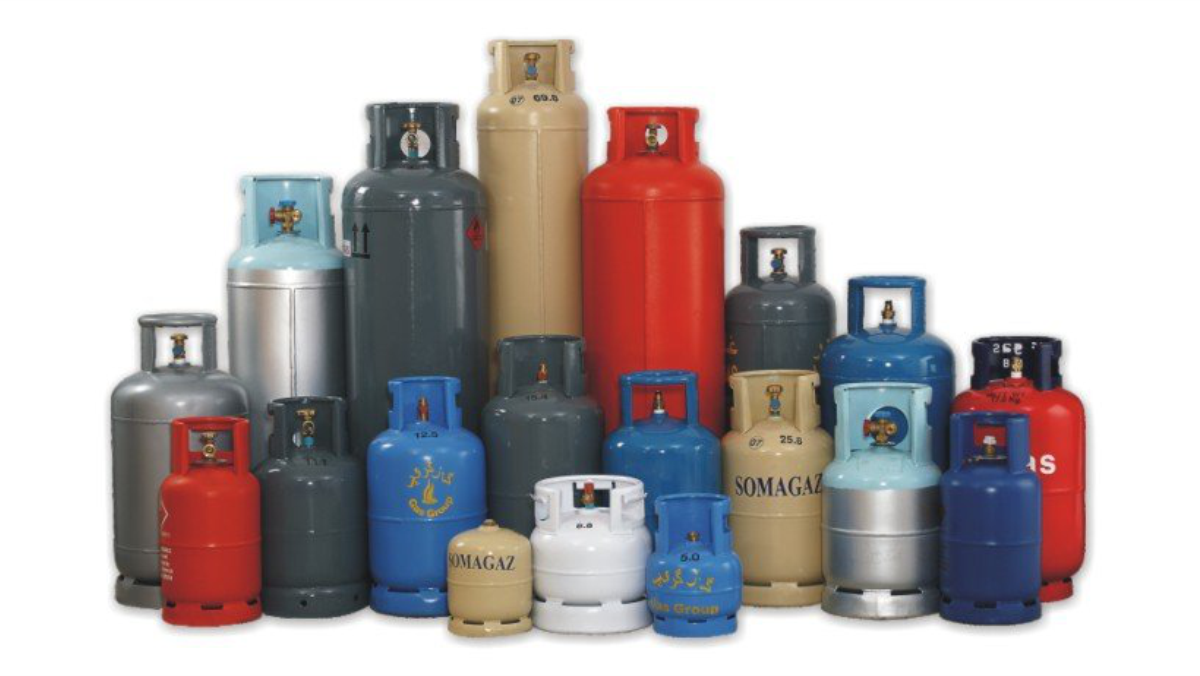
5kg cooking gas cylinder

By Adedapo Adesanya

Gas marketers have expressed worries about the scarcity of Liquefied Petroleum Gas (LPG), otherwise known as cooking gas, and rising prices, with consumers paying as high as N2,000 per kg in some areas.

A press statement by the Nigerian Association of Liquefied Petroleum Gas Marketers (NALPGAM) raised concern about the erratic supply and the hike in the price of cooking gas across the country.

According to them, while prices have gone as high, they are forced to pay as much as N26 million for 20MT of cooking gas, depending on location.

“It is sad and rather very pathetic to inform the general public that the citizens of Nigeria have woken up to buy cooking gas, which should be a social item at a prohibitive cost of over N1,500per kg, while the Marketers are made to pay as much as N25,200,000, or, depending on location, N26,200,000 for 20MT of cooking gas.

“We feel that if the situation is not immediately checked, the citizens may rise against the owners of gas filling stations.

“This sad situation has brought untold hardship to millions of Nigerian households, small businesses, food vendors, and low-income families who rely on LPG for daily cooking and livelihood.

“It is rather worrisome to state that this situation is seriously eroding the substantial progress made by the Government on the usage of Clean Energy in the country,” a part of the statement said.

NALPGAM noted that its members face challenges in sourcing LPG due to persistent supply shortages, high depot prices, logistics bottlenecks, and uncontrollable rising operational costs.

“While millions of Nigerians have embraced cooking gas as a result of the national clean energy transition agenda, it is sad to state that those gains are at risk as households are struggling to refill cylinders, small businesses are folding under rising energy costs, while many families are reverting to firewood and charcoal despite the serious implications for public health, environmental degradation, and deforestation,” it said.

The association warned that if urgent and coordinated actions are not taken immediately, the current crisis could trigger broader consequences, including accelerated food inflation, the collapse of small-scale LPG retail businesses, job losses, reduced investor confidence, and a significant setback to Nigeria’s clean energy and climate commitments.

It called on the federal government, the Ministry of Petroleum Resources, the Nigerian Midstream and Downstream Petroleum Regulatory Authority (NMDPRA), the Nigerian National Petroleum Company (NNPC) Limited, domestic producers, terminal operators, international suppliers, and all critical stakeholders in the LPG value chain to take urgent, coordinated steps to stabilise the market before it degenerates further.

It called for immediate measures to improve the availability and accessibility of LPG nationwide, increased domestic LPG allocation to the Nigerian market, ensuring transparent and equitable distribution of available supply across regions, reduction of bottlenecks in product importation, storage, and distribution, implementation of strategic interventions to stabilise retail prices, and protection of consumers.

The marketers also called for other measures, such as investment in critical infrastructure, including storage and distribution facilities, and adoption of policies that support affordability, sustainability, and long-term growth of the sector.

NALPGAM reaffirmed its commitment to constructive engagement and collaboration with government agencies, regulators, producers, and other stakeholders to develop sustainable solutions that will guarantee an affordable, stable supply and continued growth of the LPG sector.

“In conclusion, it is apposite to state that “We cannot stand by and watch millions of Nigerian families suffer in silence while access to clean cooking energy becomes increasingly difficult and unaffordable. For years, Government and industry operators have worked to move Nigerians away from unsafe fuels. Those gains are now under serious threat”, the statement added.


Adedapo Adesanya is a journalist, polymath, and connoisseur of everything art. When he is not writing, he has his nose buried in one of the many books or articles he has bookmarked or simply listening to good music with a bottle of beer or wine. He supports the greatest club in the world, Manchester United F.C.

Click to comment

Leave a Reply

Your email address will not be published. Required fields are marked *

General

Higher Allocations to States, Renewed Investments Thrill Tinubu

Published

on

Tinubu kill Abu-Bilal Al-Manuki

By Adedapo Adesanya

President Bola Tinubu has said state governments are now receiving substantially higher allocations to drive development, while renewed investor confidence is attracting fresh investments into Nigeria.

Speaking at the maiden State House Media Dinner in Abuja on Thursday, the president described the development as evidence that his administration’s economic reforms are beginning to deliver positive results.

He defended the reforms introduced by his administration, acknowledging that they were difficult but necessary to reposition the economy for sustainable growth.

According to Mr Tinubu, stronger public revenues have enabled increased allocations to states, while improvements in the investment climate have boosted confidence among domestic and foreign investors.

“The difficult but necessary reforms undertaken by this administration are yielding results. Our economy is stabilising. Public revenues have strengthened significantly,” he said.

“State governments are receiving substantially higher allocations to support development. Investor confidence is returning.

“Our foreign reserves have improved considerably. The oil and gas sector is attracting renewed investment. The stock market has witnessed remarkable growth. Key economic indicators are moving in the right direction,” Mr Tinubu stated.

The president also said the administration was laying the groundwork for long-term prosperity through a combination of tax and fiscal reforms, infrastructure development and improvements to the business environment.

“Through tax reforms, fiscal reforms, infrastructure investments, and improvements in the business environment, we are laying the foundations for a more competitive, productive, and prosperous economy,” he said.

Although acknowledging that more work remains, Mr Tinubu maintained that the country was firmly on the path to sustainable economic growth.

“The journey is not yet complete, but the direction is clear, and the foundations for long-term growth are being firmly established,” he added.

On security, the president said his administration had sustained a multi-dimensional strategy that has produced measurable gains across different parts of the country.

He noted that intensified military operations, improved intelligence gathering, stronger inter-agency coordination, and expanded regional and international cooperation had led to the neutralisation of thousands of terrorists and criminal elements, the rescue of numerous hostages, and the recovery of communities previously under siege.

President Tinubu reiterated his administration’s commitment to ensuring peace and security across the country, saying every Nigerian should be able to live, work and prosper without fear.

The president also commended the media for its contribution to Nigeria’s democratic development while urging journalists to uphold professionalism by reporting accurately and responsibly.

“We are adversaries only in the democratic sense, as the media constantly distrust those in power. In nation-building, we are partners,” he said.

He described government and the media as institutions with complementary responsibilities, noting that while government serves through leadership and public policy, the media serves by holding those in power accountable on behalf of the people.

Continue Reading

General

Shell, Nine Banks Open $3bn Credit Window for Oil, Gas Contractors

Published

on

Kwale Gas Facility

By Adedapo Adesanya

Shell Nigeria Exploration and Production Company Ltd (SNEPCo) has launched a $3 billion Contract Finance Facility in partnership with nine Nigerian banks to improve contractors’ access to funding and strengthen local participation in the oil and gas industry.

The facility is designed to provide credit support for local contractors executing projects for SNEPCo operations and will be available in both Naira and US Dollars.

The participating banks are First Bank, Guaranty Trust Bank, Zenith Bank, Access Bank, United Bank for Africa, Stanbic IBTC, Standard Chartered Bank, First City Monument Bank and Fidelity Bank.

Speaking at the signing of the Memorandum of Understanding in Lagos, the SNEPCo Managing Director, Mr Ronald Adams, said, “The initiative reflects the spirit of the Nigerian Oil and Gas Industry Content Development Act, which is aimed at in-country value retention.”

“Our partner banks offer capital and discipline. SNEPCo brings contracts and domiciliation of payments that de-risk lending. On their part, the contractors provide performance. Each is accountable to others, and the mutual accountability gives the arrangement its strength,” he added.

Also speaking, the Vice President for Finance at Shell Nigeria, Mr C. J. Akwaeze, said the scheme reflects Shell’s commitment to the growth of oil and gas operations in Nigeria.

The chairman of the indigenous oil and gas contractor group, the Petroleum Technology Association of Nigeria (PETAN), Mr Wole Ogunsanya, represented by Mrs Joan Faluyi, lauded the scheme as a “gateway to unlocking contractor financing issues which will also drive efficiency in contract execution.”

Representatives of the banks commended SNEPCo for the opportunity to partner on an initiative aimed at empowering contractors and assured the company of their continued support and cooperation.

Nigerian companies have continued to play key roles in supporting SNEPCo’s operation and project execution. Earlier this year, 43 wholly Nigerian companies took part in the turnaround maintenance exercise at the Bonga Floating Production and Offloading (FPSO) vessel out of the total of 53 companies involved.

Continue Reading

General

Nigeria Joins IEA as Associate Member to Boost Energy Access

Published

on

International Energy Agency

By Adedapo Adesanya

Nigeria has joined the International Energy Agency (IEA) as an associate member, making Africa’s largest crude producer the first member of the Organisation of the Petroleum Exporting Countries (OPEC) to do so.

The governing board of the Paris-based agency unanimously agreed for Nigeria to join the IEA family, deepening its cooperation with Africa’s most populous nation in a major advance for global energy governance.

“I am thrilled that Nigeria is joining the IEA – it is Africa’s most populous country and a major international energy player. Nigeria becoming part of the world’s energy authority marks a milestone for global energy governance. I am very thankful to President Tinubu and Minister Ekpo for their trust in the IEA,” said IEA Executive Director, Mr Fatih Birol.

“As Nigeria works to strengthen energy security, support economic growth and expand energy access, deeper cooperation with the IEA will bring important benefits for both sides. We look forward to building on our already strong partnership and welcoming Nigeria to the IEA,” he added.

On his part, Nigeria’s Minister of State for Petroleum Resources (Gas), Mr Ekperikpe Ekpo, lauded the decision, saying it will contribute to helping the country utilise its energy resources.

“I am elated with the decision of the IEA Members to officially welcome Nigeria to the IEA Family as an Association country,” he said. “It is an honour for Nigeria to join this leading energy agency, and I will take this opportunity to encourage the African continent to embrace the IEA, as we all work together to achieve key development goals including universal energy access and industrialisation.”

Nigeria’s growing role in international energy markets has been highlighted by recent developments in its refining sector. During recent periods of market disruption, increased fuel exports from Nigeria helped strengthen resilience in African and international fuel markets.

The IEA, in a statement, noted that Nigeria has emerged as one of the world’s fastest-growing markets for decentralised solar solutions and is stepping up efforts to expand access to electricity and clean cooking.

The IEA governing board’s decision builds on a strong history of engagement and collaboration between Nigeria and the IEA since 2014.

In September 2025, the IEA, Mr Ekpo as Minister of Petroleum Resources and the African Energy Commission (AFREC) jointly convened a Regional Roundtable on Turning Methane Pledges into Action in Abuja, bringing together energy stakeholders from across the region to advance efforts to reduce methane emissions from the energy sector.

As an associated country, Nigeria and the IEA will work more closely across a wide range of energy issues, including on the Agency’s engagement in sub-Saharan Africa.

Created in 2015, the IEA Association programme allows the agency to deepen ties with its partner countries, bringing together major energy-producing and consuming countries from around the world.

Nigeria joins a network of 13 other Association countries that work with the IEA to advance secure, affordable and sustainable energy systems worldwide. As a result of this expansion, the IEA’s share of global energy demand has increased from 40 per cent in 2015 to over 80 per cent today.

Continue Reading

Trending