Connect with us

General

World Bank Okays $114.3m COVID-19 Financing for Nigeria

Published

on

World Bank

By Adedapo Adesanya

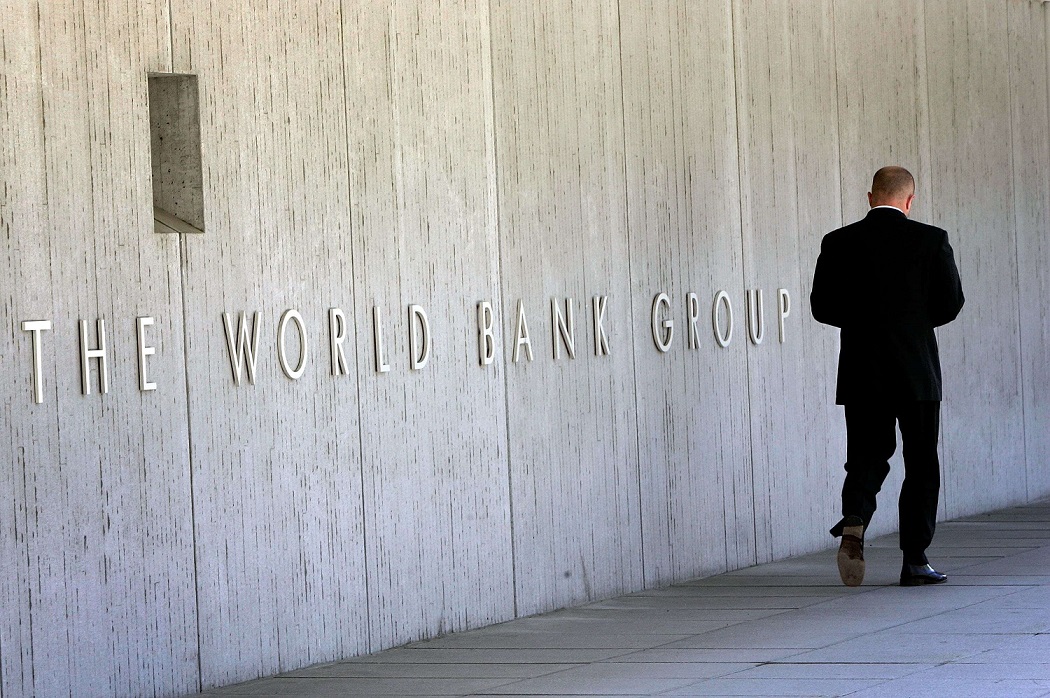
The World Bank Board of Directors on Friday, August 7 approved a $114.28 million financing to help Nigeria prevent, detect and respond to the threat posed by the COVID-19 pandemic with a specific focus on state level responses.

This was made known by the Bretton Wood institution Country Director for Nigeria, Mr Shubham Chaudhuri, who explained that the intervention includes $100 million credit from the International Development Association (IDA) and $14.28 million grant from the Pandemic Emergency Financing Facility.

Mr Chaudhuri said: “Nigeria has ramped up its efforts to contain the COVID-19 outbreak, but more needs to done at the state level, which are at the frontline of the response.

“The project will provide the states with much needed direct technical and fiscal support to strengthen their position in combating the pandemic.”

The World Bank explained that through the COVID-19 Preparedness and Response Project (CoPREP), the federal government will provide grants to 36 States and the Federal Capital Territory (FCT) as immediate support to break the chain of COVID-19 local transmission and limit the spread of coronavirus through containment and mitigation strategies.

However, grants to states will be conditional on states adopting COVID-19 response strategies which are in line with the Federal Government guidelines and strategies.

CoPREP will enhance the institutional and operational capacity for disease detection through provision of technical expertise, coordination support, detection, diagnosis and case management efforts in all states and the FCT as per the WHO guidelines in the Strategic Response Plan.

The support will also help the government mobilise surge response capacity through trained and well-equipped frontline healthcare workers and strengthen the public health care network for future health emergencies.

According to latest data in Nigeria: 44,890 cases had been confirmed, 32,165 cases discharged and 927 deaths recorded in 36 states and the FCT.


Adedapo Adesanya is a journalist, polymath, and connoisseur of everything art. When he is not writing, he has his nose buried in one of the many books or articles he has bookmarked or simply listening to good music with a bottle of beer or wine. He supports the greatest club in the world, Manchester United F.C.

General

Bill Seeking Creation of Unified Emergency Number Passes Second Reading

Published

on

Unified Emergency Number

By Adedapo Adesanya

Nigeria’s crisis-response bill seeking to establish a single, toll-free, three-digit emergency number for nationwide use passed for second reading in the Senate this week.

Sponsored by Mr Abdulaziz Musa Yar’adua, the proposed legislation aims to replace the country’s chaotic patchwork of emergency lines with a unified code—112—that citizens can dial for police, fire, medical, rescue and other life-threatening situations.

Lawmakers said the reform is urgently needed to address delays, miscommunication and avoidable deaths linked to Nigeria’s fragmented response system amid rising insecurity.

Leading debate, Mr Yar’adua said Nigeria has outgrown the “operational disorder” caused by multiple emergency numbers in Lagos, Abuja, Ogun and other states for ambulance services, police intervention, fire incidents, domestic violence, child abuse and other crises.

He said, “This bill seeks to provide for a nationwide toll-free emergency number that will aid the implementation of a national system of reporting emergencies.

“The presence of multiple emergency numbers in Nigeria has been identified as an impediment to getting accelerated emergency response.”

Mr Yar’adua noted that the reform would bring Nigeria in line with global best practices, citing the United States, United Kingdom and India, countries where a single emergency line has improved coordination, enhanced location tracking and strengthened first responders’ efficiency.

With an estimated 90 per cent of Nigerians owning mobile phones, he said the unified number would significantly widen public access to emergency services.

Under the bill, all calls and text messages would be routed to the nearest public safety answering point or control room.

He urged the Senate to fast-track the bill’s passage, stressing the need for close collaboration with the Nigerian Communications Commission (NCC), relevant agencies and telecom operators to ensure nationwide coverage.

Senator Ali Ndume described the reform as “timely and very, very important,” warning that the absence of a reliable reporting channel has worsened Nigeria’s security vulnerabilities.

“One of the challenges we are having during this heightened insecurity is lack of proper or effective communication with the affected agencies,” Ndume said.

“If we do this, we are enhancing and contributing to solving the security challenges and other related criminalities we are facing,” he added.

Also speaking in support, Senator Mohammed Tahir Monguno said a centralised emergency number would remove barriers to citizen reporting and strengthen public involvement in security management.

He said, “Our security community is always calling on the general public to report what they see.

“There is a need for government to create an avenue where the public can report what they see without any hindrance. The bill would give strength and muscular expression to national calls for vigilance.”

The bill was referred to the Senate Committee on Communications for further legislative work and is expected to be returned for final consideration within four weeks.

Continue Reading

General

Tinubu Swears-in Ex-CDS Christopher Musa as Defence Minister

Published

on

ex-cds christopher musa

By Modupe Gbadeyanka

The former chief of defence staff (CDS), Mr Christopher Musa, has been sworn-in as the new Minister of Defence.

The retired General of the Nigerian Army took the oath of office for his new position on Thursday in Abuja.

The Special Adviser to the President on Information and Strategy, Mr Bayo Onanuga, confirmed this development in a post shared on X, formerly Twitter, today.

“General Christopher Musa takes oath of office as Nigeria’s new defence minister,” he wrote on the social media platform this afternoon.

Earlier, President Bola Tinubu thanked the Senate for confirming Mr Musa when he was screened for the post on Wednesday.

“Two days ago, I transmitted the name of General Christopher G. Musa, our immediate past Chief of Defence Staff and a fine gentleman, to the Nigerian Senate for confirmation as the Federal Minister of Defence.

“I want to commend the Nigerian Senate for its expedited confirmation of General Musa yesterday. His appointment comes at a critical juncture in our lives as a Nation,” he also posted on his personal page X on Thursday.

The former military officer is taking over from Mr Badaru Abubakar, who resigned on Sunday on health grounds.

Continue Reading

General

Presidential Directives Helping to Remove Energy Bottlenecks—Verheijen

Published

on

Cut Energy Costs

By Adedapo Adesanya

The Special Adviser to President Bola Tinubu on Energy, Mrs Olu Verheijen, says Presidential Directives 41 and 42 have emerged as the most transformative policy tools reshaping Nigeria’s oil and gas investment landscape in more than a decade, by helping eliminate bottlenecks.

Mrs Verheijen made this assertion while speaking at the Practical Nigerian Content Forum 2025, noting that the directives issued by her principal in May 2025, are specifically designed to eliminate rent-seeking, slash project timelines, reduce contracting costs, and restore investor confidence in the Nigerian upstream sector.

“These directives are not just policy documents; they are enforceable commitments to make Nigeria competitive again,” she declared.

She noted that before the directives were issued, Nigeria faced chronic delays in contracting cycles, which discouraged capital inflows and stalled major upstream projects.

“For years, investment stagnated because our processes were too slow and too expensive. Presidential Directives 41 and 42 are removing those bottlenecks once and for all,” she said.

According to her, the directives have already begun to shift investor sentiment, unlocking billions of dollars in new commitments from international oil companies.

“We are seeing unprecedented investment inflows. Shell, Chevron and others are returning with confidence because they can now see credible timelines and competitive project economics,” Verheijen said.

Speaking on the link between streamlined contracting and local content development, she stressed that the directives were crafted to reinforce, not weaken, Nigerian participation.

“Local content is not an obstacle; it is a catalyst. It helps us meet national objectives, contain costs, and deliver projects faster when applied correctly,” she explained.

Mrs Verheijen highlighted that the directives complement the government’s data-driven approach to refining local content requirements while ensuring Nigerian talent and enterprises remain central to new investments.

“Our goal is to empower Nigerian companies with opportunities that are commercially sound and globally competitive,” she said.

She pointed to the current spike in industry activity, over 60 active drilling rigs, as evidence that the directives are driving real operational change.

“We have moved from rhetoric to results. These directives have triggered a new cycle of upstream development,” she said.

The energy expert added that the reforms are critical to achieving Nigeria’s production ambition of 3 million barrels of oil and 10 billion standard cubic feet (bscf) of gas per day by 2030.

“To meet these targets, we need speed, efficiency, and collaboration across the value chain. The directives are the foundation for that,” she noted.

She also linked the directives to Nigeria’s broader regional ambitions, including its leadership role in the African Energy Bank.

“With a $100 million facility now launched, we are ensuring that investment translates into jobs, technology transfer, and long-term value for Nigeria,” she said.

Mrs Verheijen concluded by urging the industry to uphold the spirit and letter of the presidential instructions.

“These directives are a collective responsibility. Government, operators, financiers, and host communities must work together to deliver the Nigeria we envision,” she said. “We remain committed to ensuring Nigeria remains Africa’s premier investment destination,” she said.

Continue Reading

Trending