Connect with us

General

Nigeria Launches Gas Network Code to Deepen Penetration

Published

on

gas pipelines

By Adedapo Adesanya

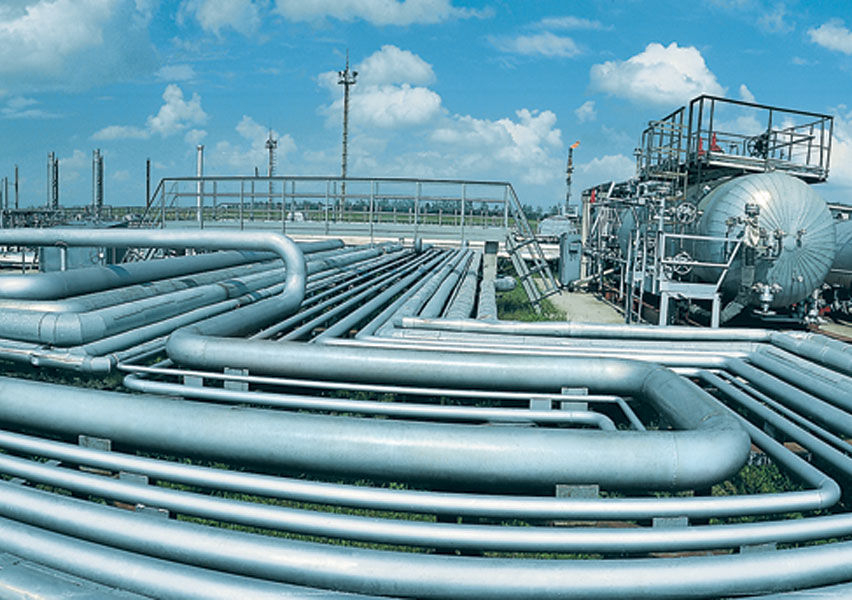
The federal government has inaugurated the Nigeria Gas Transportation Network Code (NGTNC) to deepen the growth of the gas market in the country.

In a statement, it was disclosed that the Minister of State for Petroleum Resources, Mr Timipre Sylva, disclosed this at the virtual launch of The Go-Live of the Nigerian Gas Transportation Network Code, in Abuja on Monday.

He said that following the declaration of 2020 as a year of gas, President Muhammadu Buhari’s administration was driving key policy and regulatory initiatives that would enhance gas reserves growth to support domestic and export project.

Mr Sylva said that another focus was to expand domestic gas supply and address the perennial challenges of gas flaring, with its attendant waste and environmental impact.

He said that the aggregate impact hangs on three anchor programmes on gas, namely the Nigerian Gas Transportation Network Code (NGTNC), National Gas Expansion Programme (NGEP) and Nigerian Gas Flare Commercialisation Programme (NGFCP).

This, he said, would help the sector achieve the presidential mandate of gas penetration, gas-based industrialisation, and economic diversification

“Specifically, it is my firm belief that the implementation of the network code, which is a set of rules and principles, guiding the use and operations of gas transportation network system, would deepen the domestic gas market.

“It will also unleash the potentials of accelerated growth and economic development for our nation. In the coming months, this code together with related interventions would enable an improved gas supply to power, growth of gas-based industries, domestic LNG, LPG and CNG penetration, as well as enhance revenue to the government and create investment opportunities for our people,” he said.

The Minister noted that the Department of Petroleum Resources had developed the Network Code Electronic Licensing and Administrative System (NCELAS), which would be used by the regulator to receive process and issue all applicable licenses to all network players as well as administer all regulatory roles required to ensure the optimal market impact.

“The NCELAS is a secured online environment that would provide optimum value for all stakeholders that would be operating under the network code.

“With the unveiling of the NCELAS and the execution of the network code framework agreement, the regime of gas transportation through a world-class network code would have been firmly established in Nigeria for the benefit of all stakeholders,” he said.

He said that the portal address for NCELAS is https://ncela.support.dpr.go.ng and www.dpr.gov.ng. and urged all stakeholders to effectively make use of the code to enhance their businesses.

Also speaking at the event, the Group Managing to Director of the Nigerian National Petroleum Corporation (NNPC), Mr Mele Kyari said that the code was an opportunity to widen the income source of gas in Nigeria.

He noted that the development was the beginning of progress in the gas sector.

On the part of the DPR, Director Sarki Auwalu said that the gas code will address gas flaring, grow infrastructure and expand the utilisation of gas in the country.

He said that the code would help to achieve the mandate of the year of gas as declared by the minister of state for Petroleum Resources.

“The code will guide the rules that govern the gas transportation system, secure gas transmission and ensure cost-effective tariff for pipeline management.

“The code will also help boost growth in the sector and six months from now, we will witness a lot of achievement,” he said.

He noted that the portal for licensing will ensure enterprise structure and will serve as a one-stop-shop for network administration.

It was noted that the Nigeria Gas Company (NGC), Dangote Fertiliser Limited and the Nigeria Gas Hub signed a framework agreement on the transportation of gas.

Mr Sheyin Omotola signed for the NGC, while Mr Mansur Ahmed signed for Dangote Fertiliser and Mr David Ige signed for the Gas Hub ltd.

Mr Ahmed of Dangote fertiliser limited said the development had shown Nigeria’s seriousness on gas matters, adding that establishing rules for utilisation, selling and transportation of gas was crucial.

He commended the effort of the government in ensuring that the code was in place and urged all stakeholders to key in for effective gas development in the country.


Adedapo Adesanya is a journalist, polymath, and connoisseur of everything art. When he is not writing, he has his nose buried in one of the many books or articles he has bookmarked or simply listening to good music with a bottle of beer or wine. He supports the greatest club in the world, Manchester United F.C.

Click to comment

Leave a Reply

Your email address will not be published. Required fields are marked *

General

IFC, Standard Chartered Unveil Facility to Boost Supply Chains in Nigeria, Seven Others

Published

on

Standard Chartered Bank Nigeria

By Adedapo Adesanya

The World Bank Group’s private-sector arm, the International Finance Corporation (IFC), and Standard Chartered on Wednesday announced a new ‌risk-sharing facility aimed at strengthening supply chains and supporting business growth across Africa.

The programme will roll out across eight markets—Côte d’Ivoire, Egypt, Ghana, Kenya, Nigeria, South Africa, Tanzania and Zambia—targeting sectors including agriculture, healthcare and manufacturing, with a focus on improving access to working capital for suppliers.

This marks the IFC’s first project under its Global Supply Chain Finance Program and the Africa Trade and Supply Chain Recovery Initiative, supported by the International Development Association’s Private Sector Window Blended Finance Facility.

Global demand for supply chain finance continues to rise, reaching an estimated $2.7 trillion in 2025, an increase of 8 per cent year-on-year. However, access in emerging markets remains limited, as financial institutions tend to prioritise developed economies.

The facility will cover up to $300 million in supply chain and trade finance assets originated by Standard Chartered. It includes financing instruments such as payables finance, receivables discounting and pre-shipment finance programmes, which enable businesses to access funds earlier in the payment cycle.

The facility aims to address this imbalance by mitigating risk in short-term trade and supply chain finance portfolios, helping to unlock capital in underserved markets.

By accelerating payments to suppliers, the initiative aims to strengthen supply chain relationships, improve delivery reliability and support job creation across value chains.

IFC will provide guarantees of up to $150 million, with $100 million committed as an initial tranche. The facility will support transactions in both U.S. dollars and selected local currencies.

Over three years, the partnership is expected to enable approximately $1.9 billion in supply chain finance transactions, supporting more than 500 suppliers, including small and medium enterprises. The programme also has the potential to indirectly benefit over 1 million farmers.

Speaking on this development, Mr Mohamed Gouled, Vice President, Products & Clients at IFC, said, “Supply chain finance is among the fastest ways to narrow the growing finance gap that businesses, particularly small and medium enterprises, are facing in emerging economies. By partnering with Standard Chartered to support companies at the centre of strategic value chains, we can unlock much-needed working capital at scale for businesses across Africa, including smaller firms and farmers, making supply chains more competitive and boosting job creation.”

On his part, Mr Dalu Ajene, Chief Executive and Head of Coverage, Standard Chartered Africa, said, “This $300 million facility with IFC underscores our shared commitment to strengthening Africa’s supply chains and enabling sustainable business growth. As a super-connector bank with deep expertise across key trade corridors linking Africa to Europe, Asia, the Middle East and the Americas, we are uniquely positioned to channel capital and innovation into the real economy.”

“By expanding access to supply chain finance, we are helping African companies unlock liquidity, manage risk, and invest with confidence. Our collaboration unites Standard Chartered’s cross-border expertise with IFC’s development mandate to empower businesses – from major corporations to smaller local suppliers – to engage more actively in regional and global trade, fostering job creation and promoting inclusive growth,” he added.

Continue Reading

General

Petrol Prices in Nigeria Rise 22.55% in March 2026 on Hormuz Closure

Published

on

petrol consumption nigeria

By Adedapo Adesanya

The National Bureau of Statistics (NBS) has said that the average retail price of a litre of Premium Motor Spirit (PMS), otherwise known as petrol, rose by 22.55 per cent or N237.07 per litre to N1,288.54 in March 2026 from N1,051.47 in February.

In the Premium Motor Spirit (Petrol) Price Watch for March released on Tuesday, the NBS said on a year-on-year basis, the average retail price of fuel also increased by 2.13 per cent from N1,261.65 recorded in March 2025.

This surge in fuel prices could be linked to global disruptions brought on by the US-Israel war on Iran, which triggered the closure of the Strait of Hormuz and sent prices of crude oil above $100 per barrel.

While the country was not heavily hit by the impact, it felt the ripple effect of crude prices increasing, particularly as Dangote Refinery imported crude from other markets to cover for local feedstock shortfalls.

The data noted that by state, Anambra recorded the highest average retail price of N1,441.22 per litre, followed by Sokoto at N1,377.55 and Borno at N1,375.16.

However, the price was cheapest in Lagos at N1,162.71, followed by Ogun at N1,169.78 and Kaduna state at N1,193.40.

By zone, it was most expensive in the North East at N1,336.50 last month, while the South-West recorded the lowest at N1,232.46.

A look at the Diesel Price Watch Report for March showed that the average retail price paid by users rose by 16.05 per cent on a month-on-month basis to N1,648.08 per litre from N1,420.17 per litre a month earlier.

“On state profiles analysis, the highest average price of diesel in March was recorded in Ebonyi at N2,262.29 per litre, followed by Akwa Ibom at N1,895.72 and Osun at N1,872.15.

“On the other hand, the lowest price was recorded in Kogi at N1,383.40 per litre, followed by Katsina State at N1,438.25 and Enugu at N1,480.06,” parts of the report said.

Continue Reading

General

Datti Baba-Ahmed Dumps Labour Party, Joins PRP

Published

on

datti baba-ahmed

By Modupe Gbadeyanka

The vice-presidential candidate of the Labour Party (LP) in the 2023 general elections, Mr Datti Baba-Ahmed, has left the party to join the Peoples Redemption Party (PRP).

Speaking on Channels Television’s Politics Today, the politician said he’s no longer interested in the way the Labour Party was being run.

He disclosed that there is no more peace in the political party he flew its flag in the last general elections because of greed.

He accused the ruling All Progressives Congress (APC) of destabilising opposition political parties to ensure President Bola Tinubu does not have a credible opponent in the 2027 presidential poll.

“What the Labour Party stood for is not the same now. We have a government of today which is interested in destroying other political parties,” he said.

“I am leaving the Labour Party tomorrow (today) by 12 midnight,” Mr Baba-Ahmed said when asked about his plans for next year.

I am leaving the Labour Party [at] midnight, and I am joining PRP. PRP is the new destination. PRP is the one with a history. It’s about 75 years old,” he further stated.

He further said, “When there was real peace in the Labour Party, someone was redeployed to the Labour Party and because of the antecedents of the person, [I don’t see things getting better].

PRP, a progressive Nigerian political party, was established in 1978 by Mallam Aminu Kano. It is rooted in social democratic principles and populist ideology, often focusing on the empowerment of the talakawa (common people).

Its current National Chairman, according to data obtained from the website of the Independent National Electoral Commission (INEC), is Mr Falalu Bello, while the National Secretary is Mr Babatunde F. Alli.

PRP Data INEC

Continue Reading

Trending