Connect with us

General

Malnutrition: Implementation of SDGs in Nigeria Worries Stakeholders

Published

on

children malnutrition

By Dipo Olowookere

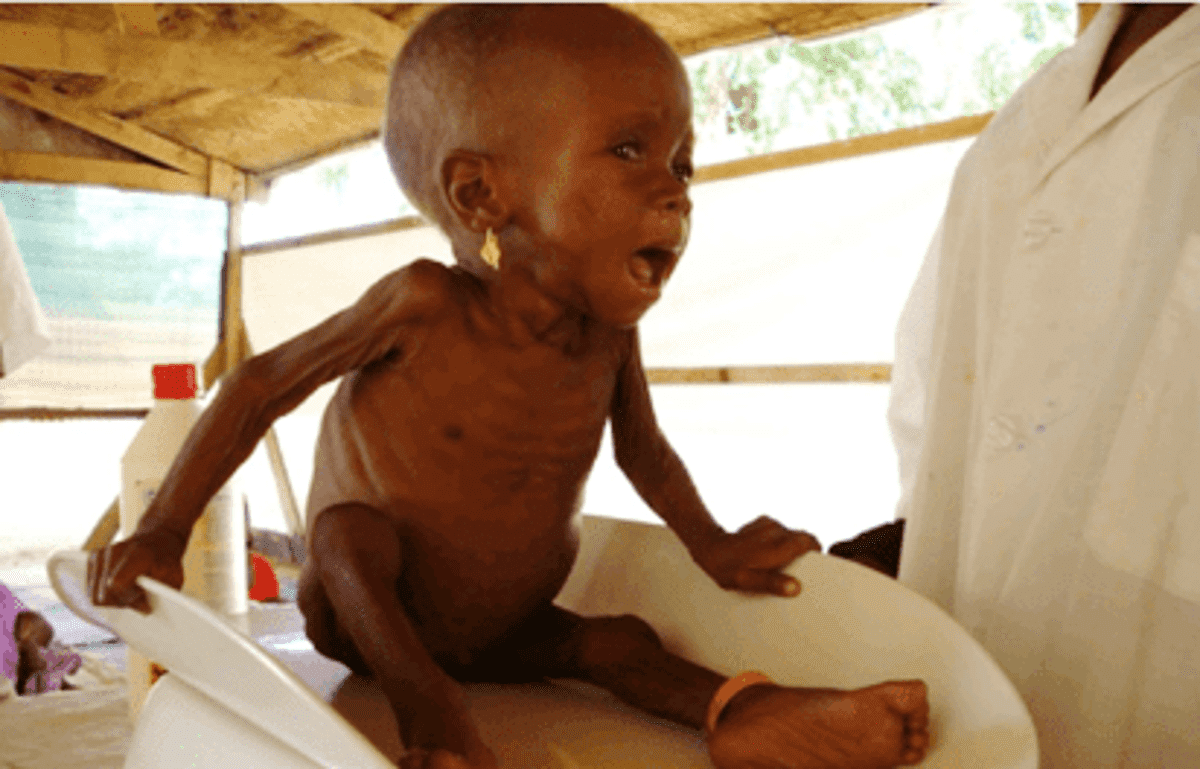
The implementation of the Sustainable Development Goals (SDGs) in terms of alleviating malnutrition in Nigeria has been questioned by stakeholders in the nation’s nutrition and development space.

Experts in the field said they are not impressed with the localisation of the SDGs and have, therefore, called for an urgent review of the implementation.

According to a social development expert with over 25 years of experience, Ms Foyinsola Oyebola, the review is necessary if Nigeria is to achieve any of the SDGs, specifically SDG 2, which is “to eradicate hunger and prevent all forms of malnutrition,” stressing that SDG 2 is critical to achieving all the SDGs.

Speaking at a recent Protein Challenge webinar titled The UN Decade of Action on Nutrition: Connecting the Dots for Nigeria, she argued that, “Nigeria is facing a nutrition crisis on multiple fronts, with rising levels of food insecurity.”

“To ensure that no Nigerian is left behind, we have to bridge the gap between policy statements and implementation at all levels. We must petition the government to mainstream SDG 2 into state and local government programmes,” Ms Oyebola submitted.

On his part, the National Coordinator, Media Centre Against Child Malnutrition (MeCAM), a member of the Civil Society Scaling-Up Nutrition in Nigeria (CS-SUNN), Mr Remmy Nweke, proposed increased budgetary lines in the health and agricultural sectors.

He said that there was an urgent need to review the school feeding programme and to encourage smallholder farmers with better seedlings and other agricultural inputs and decried the persistent insecurity challenges in the country, noting that it negatively impacts access to nutritious food in many parts of Nigeria.

In his remarks, a nutrition consultant, entrepreneur and member of the Nutrition Society of Nigeria (NSN), Mr Collins Akanno, disclosed that individuals need to begin to implement home gardening and good nutrition habits.

“Nigerians need to be properly educated on sustainable agricultural practices. Many people do not know that certain food crops around them are very healthy and nutritious. A lot of nutrition education needs to be done to create awareness on all platforms, from community outreaches to social media,” he said.

“There are local food options in Nigeria that are rich in essential nutrients. Soybeans, egusi (melon seeds), millet, groundnuts, and even pumpkin leaves are particularly highly nutritious,” Mr Akanno said.

He explained that in an ideal health plate, the most food portion on the plate should be proteins and vegetables, followed by fruits and healthy carbs. He pointed out that soybeans are rich in proteins, dietary fibre, and micronutrients.

The nutritionist lamented the neglect of micronutrients, which has caused micronutrient deficiencies or “hidden hunger” in the country. Hidden hunger, or micronutrient deficiency, is the lack of vital nutrients in the body.

He also referred to the Nigerian Protein Deficiency Report, a recent survey that examines the level of protein deficiency in Nigeria and sheds light on the food consumption pattern among Nigerians, and reiterated that the convergence of high cost and availability increased the prevalence of protein deficiency in the nation.

Mr Akanno advised that nutrition education and sensitization, particularly among people in the rural areas, on malnutrition and its effects, would help to curb protein deficiency.

The webinar session was moderated by Martha Okpeke, a Development Enthusiast and Public Relations Practitioner.

It was organised as a part of the Nigeria Protein Deficiency Awareness Campaign (Protein Challenge), which is a media campaign to create awareness about the challenge of protein deficiency in Nigeria, and to mobilise relevant stakeholders to collaborate in mitigating the problem.


Dipo Olowookere is a journalist based in Nigeria that has passion for reporting business news stories. At his leisure time, he watches football and supports 3SC of Ibadan. Mr Olowookere can be reached via [email protected]

General

Pastor Ogbueli’s Abuja Night of Glory Holds Today

Published

on

Abuja Night of Glory

By Blaise Udunze

Momentum is gathering for the Abuja Night of Glory taking place today, Friday, December 5, 2025, at the main bowl of the Moshood Abiola National Stadium.

The crusade is being hosted by Dominion City Church headed by Pastor David Ogbueli and it starts by 7pm.

The all-night programme will feature dynamic worship leaders like Nathanial Bassey, Dunsin Oyekan, Theophilus Sunday, Chioma Jesus, Kaestrings, Sunmisola Agbebi Okeleye, Minister GUC, Ebuka Songs, Anthony Kani, and DC Angels.

Reputed as a teacher of righteousness and anointed minister of the gospel, evidenced by the miracles that have trailed his ministry, and one who champions the cause of the poor through empowerment initiatives, Dr. David Ogbueli will be joined by renowned ministers from within and outside Nigeria, including Evangelist Andres Bisonni, Dr. Charles Ndifon, Evangelist Dan Scott, Apostle Ikechukwu Nnajiofor, and several others.

Night of Glory has, in previous editions held across Nigeria’s cities, recorded remarkable results, such as immediate healings and freedom from chronic ailments, recovery of vision and movement after many years of paralysis, along with liberation from dependencies and emotional distress. Numerous participants have also shared testimonies of breakthroughs and big personal changes after the experience. Organisers state that this year’s event, in Abuja, is anticipated to exceed previous editions.

The event is intended for all individuals trusting God for divine intervention in any area of life.

Understanding the role of faith in the destiny of individuals and nations, a dedicated prayer session for Nigeria will take place during the crusade to tackle some of the current challenges being faced in the country and also to uplift he leaders and institutions before God.

Attendance is free, and registration is encouraged via the QR codes on event banners. Organisers expect a massive turnout as worshippers travel from across the country for what is anticipated to be a transformative encounter.

Adequate security and free transportation have been put in place ALL over the city of Abuja, while those outside Abuja are expected to join online.

Continue Reading

General

Rivers Speaker, 15 Other Lawmakers Leave PDP for APC

Published

on

rivers speaker Martin Amaewhule defect

By Modupe Gbadeyanka

The Speaker of the Rivers State House of Assembly, Mr Martin Amaewhule, has defected to the All Progressives Congress (APC).

At the plenary on Friday, Mr Amaewhule joined the ruling party from the opposition Peoples Democratic Party (PDP), along with 15 other members of the state parliament.

This development comes some months after they had earlier declared their support for the APC in the wake of a crisis with the state governor, Mr Sim Fubura.

The lawmakers had an issue with Mr Fubura, which led to a state of emergency declared on the oil-rich state by President Bola Tinubu in March 2025.

This embargo was only lift in September 2025 after the duration of the six-month emergency rule in the state.

A few days ago, members of the Rivers Assembly passed a vote of confidence on President Tinubu, backing him to remain in office till 2031, when he would have spent eight years in office if re-elected in 2027.

Announcing their defection today, the lawmakers pinned their decision on the crisis rocking the PDP at the national level.

It is not certain if their political godfather, Mr Nyesom Wike, who is the current Minister of the Federal Capital Territory (FCT), will join them in APC.

Mr Wike, who governed Rivers State from 2015 to 2023, has been accused of instigating the crisis in the opposition PDP. He was expelled from the party last month at a national convention held in Ibadan, Oyo State.

Continue Reading

General

Nigeria Risks Brain Drain in Energy Sector—PENGASSAN

Published

on

energy sector

By Adedapo Adesanya

The Petroleum and Natural Gas Senior Staff Association of Nigeria (PENGASSAN) has warned that Nigeria risks massive brain drain in the oil and gas sector due to poor remuneration.

The president of PENGASSAN, Mr Festus Osifo, said at the end of the National Executive Council (NEC) meeting of the union on Thursday in Abuja that the industry was facing challenges arising from Naira devaluation and inflation, noting that, oil and gas skills remained globally competitive.

Painting an example, he said, “A drilling engineer in Nigeria does the same job as one in the US or Abu Dhabi,” noting that the union must take steps to bridge the wage gap to prevent members from leaving the country for better opportunities abroad.

“If we don’t act, the brain drain seen in other sectors will be child’s play,” he said.

According to him, PENGASSAN has recorded significant gains through collective bargaining across oil and gas branches.

“We signed numerous agreements across government agencies, IOCs, service and marketing sectors,” he said.

He said the agreements brought relief to members facing rising costs of living, adding that, the association’s duty is to protect members’ jobs and enhance their pay.

Mr Osifo urged companies delaying salary reviews and those foot-dragging as a result of the prevailing economic realities, to do the needful.

He said the industry employed some of the nation’s best talents, making competitive pay critical to retaining skilled workers.

“This industry recruits the best. Companies must provide the best conditions,” he said.

On insecurity, Mr Osifo urged government to take decisive action against terrorism and kidnappings across the country.

“We are tired of condemnations. government must expose sponsors and protect citizens,” he said.

He urged government at all levels to prioritise tackling insecurity through better funding and equipment for security agencies.

Mr Osifo said PENGASSAN supported calls for state police to improve local security response, adding that decentralising policing will protect citizens better than rhetoric.

He also said economic indicators meant little, if food prices remained high and farmers could not return to farms due to insecurity.

“Nigerians want to see food on the table, not macroeconomic figures,” he said, urging the government to coordinate fiscal and monetary policies to ensure economic gains reach households.

Continue Reading

Trending