General
UN Earmarks $15m for Malnutrition in Northeast Nigeria
By Adedapo Adesanya
The United Nations has earmarked $15 million in emergency funding from the UN Central Emergency Response Fund (CERF) to support urgently needed humanitarian assistance, especially food insecurity and malnutrition in northeast Nigeria.
According to the UN Resident and Humanitarian Coordinator for Nigeria, Mr Matthias Schmale, the CERF allocation will enable humanitarian agencies to improve and strengthen timely and coordinated access to appropriate food and cash aid to the most vulnerable in crisis-affected areas.
“The food security and nutrition situation is deteriorating, with more and more families pushed towards vulnerability, and forced to resort to negative coping mechanisms including child labour and early marriage.
“As desperation pushes extremely vulnerable people to the edge, food and nutrition assistance is critical for their survival. The $15 million CERF allocation comes right on time to respond to the most urgent needs of people at extreme risk as we appeal to member states to provide the resources we urgently need,” he said.
“Thanks to the support of humanitarian agencies and donors, catastrophic food insecurity was averted in 2021. However, danger looms again for the people of north-east Nigeria if efforts are not sustained and the urgently needed resources are not made available, enabling to take immediate action for the people of north-east Nigeria,” added Mr Schmale.
The $15 million is part of the $100 million that the UN allocated to fight hunger in Africa and the Middle East, as the spill-over effects of the war in Ukraine threaten to push millions even closer to famine and exacerbate humanitarian needs.
Violence and conflict over the last 12 years have turned northeast Nigeria into a prolonged and alarming humanitarian crisis which has displaced 2.2 million people.
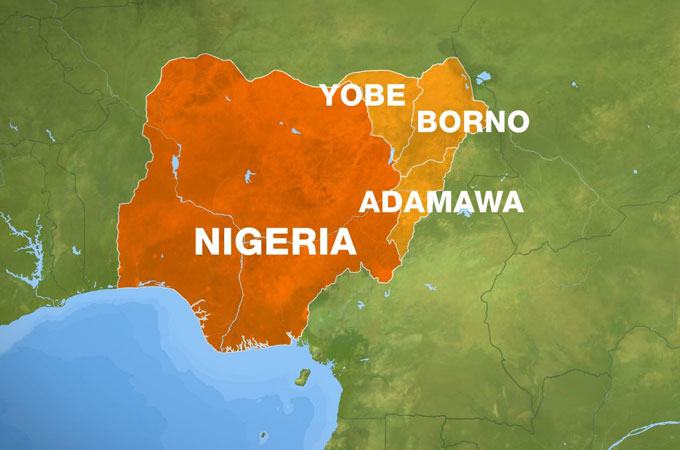
It is projected that about 600,000 people are projected to be in an emergency situation, not knowing where their next meal will come from. They are among 4.1 million people projected to be food insecure in the crisis-affected states of Borno, Adamawa, and Yobe, during the peak of the June to August 2022 lean season.
This is a 19 per cent increase in the number of people in need of food security assistance since the October 2021 analysis, including an alarming 28 per cent increase in the number of people in the emergency category, according to the Cadre Harmonisé food and nutrition analysis published in March 2022.
Malnutrition among children continues to be increasingly threatening, and $351 million is urgently needed by May to deliver life-saving food security and nutrition assistance to the most affected people. In total, the 2022 Humanitarian Response Plan for Nigeria is seeking $1.1 billion to support 5.5 million people.
CERF is one of the fastest and most efficient mechanisms for providing emergency funding to people in need, through rapid allocations to new and deteriorating crises or where there is a shortage of funds.
The fund pools contributions from a range of donors and resources are allocated on strict life-saving criteria to help the most vulnerable.
Over the past six months, CERF has allocated more than $170 million to address rising food insecurity in several countries, including those that will receive the new funding.
General
SEC, FMBN Partner on Non-Interest Mortgage Framework
By Aduragbemi Omiyale
The Securities and Exchange Commission (SEC) and the Federal Mortgage Bank of Nigeria (FMBN) have announced a strategic collaboration to develop a robust Non-Interest Mortgage (NIM) ecosystem.
This significant move is part of efforts to address the nation’s massive housing deficit and deepen financial inclusion.
At a high-level meeting in Abuja of Friday, both parties agreed to create and regulate viable Sharia-compliant financing structures that will enable millions of Nigerians, particularly those excluded from conventional interest-based loans, to access affordable homeownership.
With Nigeria’s housing deficit estimated to be over 28 million units, the initiative is being hailed as a potential game-changer. It directly addresses a key barrier to homeownership: the affordability and religious compliance of mortgage products for a significant segment of the population.
The successful implementation of this framework is expected to not only reduce the housing deficit but also stimulate the construction industry, create jobs, and foster greater financial inclusion, ultimately contributing to national economic growth.
How Non-Interest Mortgage Model Works
Unlike conventional mortgages that charge interest, non-interest financing is based on principles of risk-sharing, asset-backing, and equitable returns. The models under consideration include:
- Musharakah (Diminishing Partnership): The bank and the customer jointly purchase a property. The customer gradually buys out the bank’s share through periodic payments, eventually becoming the sole owner.
- Ijara (Lease-to-Own): The bank buys the property and leases it to the customer for a fixed period. A portion of the rental payments goes towards the eventual ownership transfer.
- Murabaha (Cost-Plus Sale): The bank acquires the property and sells it to the customer at a pre-agreed markup, payable in instalments.
SEC DG Speaks
Commenting on the development, the Director-General of SEC, Mr Emomotimi Agama, said his agency would provide the necessary regulatory guidance and framework to facilitate the issuance of Sukuk (imic bonds) and other non-interest capital market products to fund these mortgages.
“Our collaboration with FMBN is pivotal to unlocking long-term financing for the housing sector. By creating a clear regulatory pathway for non-interest mortgage-backed securities, we can attract ethical investors, both domestic and international, to channel funds into this critical area. This will create a virtuous cycle of funding, construction, and ownership,” he stated.
What FMBN CEO also said
On his part, the chief executive of FMBN, Mr Shehu Osidi, said the partnership marks a critical step in fulfilling the bank’s mandate to provide affordable housing for all Nigerians.
“For a long time, a substantial number of our citizens have been unable to participate in the National Housing Fund (NHF) scheme due to the interest-based nature of conventional mortgages.
“This partnership with SEC is a strategic response to that gap. We are committed to developing non-interest mortgage products that are not only ethical and inclusive but also financially sustainable,” he noted.
An expert opinion
A housing and finance expert, Mr Ebilate McYoroki, welcomed the development he described as “long overdue.”
“This is a masterstroke in financial inclusion. It taps into a vast pool of potential homeowners and investors who have previously been on the sidelines. If implemented transparently, it could significantly accelerate the pace of housing delivery in the country,” he submitted.
General
PENGASSAN Seeks Better Pension Benefits for Oil, Gas Workers
By Adedapo Adesanya
The Petroleum and Natural Gas Senior Staff Association of Nigeria (PENGASSAN) is seeking a change to the poor state of pension in the country’s oil and gas industry.
As a result, the union has expressed deep concern over the poor growth of pensions and widening disparities in retirement benefits for energy workers.
PENGASSAN said many retirees under the Closed Pension Fund Administrations (CPFAs) were trapped in a system that had failed to reflect current economic realities, leaving their pensions stagnant despite rising inflation and devaluation of the Naira.
The president of PENGASSAN, Mr Festus Osifo, while speaking at a one-day summit organised by the union in Abuja this week, said the problem stemmed from policy gaps in Nigeria’s pension system and inconsistent adjustments by oil companies operating CPFAs.
He explained that the 2004 Pension Reform Act introduced the contributory pension scheme while allowing some oil and gas firms to continue running the defined benefits model under CPFAs. However, the 2014 amendment to the law barred new employees from joining the defined benefits system, placing them under the contributory scheme.
According to him, while a few companies have mechanisms for regular pension growth, the majority still depend on management discretion, leaving retirees to face hardship as their fixed benefits lose value over time.
Mr Osifo also criticized the way some companies calculate their pension funds and urged the National Pension Commission (PenCom) to tighten its monitoring of the process, noting that the agency must ensure that pension funds remain adequate to cater for both current retirees and future beneficiaries.
The labour leader further disclosed that PENGASSAN would embark on sustained advocacy across the oil and gas sector to address identified gaps in pension management and improve the welfare of retirees, adding that the union will engage management of CPFAs that fail to meet their obligations to ensure equity and fairness for pensioners.
“Over time, we have realised that there is a serious gap in the system. In many organisations, people who retired several years ago still earn the same amount, even though the cost of living has skyrocketed.
“Only about 10 per cent of CPFAs review their pension benefits yearly, while nearly 90 per cent maintain static payments, depending solely on management discretion.
“PenCom must ensure that pension funds are sufficient to take care of today’s retirees and those that will join them in the future. We have observed gaps in how life expectancy and other variables are calculated, and these affect the overall fund balance.
“One of the institutions that have functioned excellently in Nigeria is PenCom. I pray they continue to maintain that high standard so that Nigeria will not happen to them.
“Those organisations doing what is right, we appreciate them. But for those that are not, we will engage them to make the lives of our pensioners more rewarding. It is our duty to take care of those who laboured before us because tomorrow we will also become pensioners,” he stated.
General
Former Anambra Governor Willie Obiano Debunks Déath Rumour
By Modupe Gbadeyanka
A former Governor of Anambra State, Mr Willie Obiano, has refuted reports that he passed away in London, the United Kingdom.
It was earlier reported that the politician breathed his last after a battle with an illness believed to be cancer.
He was reported to have suffered from “severe heart failure and complications related to urinary cancer,” with his health declining in the past months.
However, in a post on Friday evening, Aguleri-born former banker with Fidelity Bank Plc said, “I am alive, hale, hearty, and in excellent health. By the special grace of God, I am doing very well.”
The graduate of the University of Lagos (UNILAG) said he “woke to hear of a rumour making the rounds about my wellbeing.”
“It is unfortunate that some individuals still find joy in spreading falsehood simply for reasons yet to be established. But we will continue to rise above such mischief.
“To everyone who reached out with calls, messages, and prayers, I sincerely appreciate your concern. Your love and goodwill mean more than words can express,” he wrote, asking well-wishers to “disregard the rumour entirely.”
Mr Obiano was born on August 8, 1955. He became the Governor of Anambra State after the former presidential candidate of the Labour Party (LP) in the 2023 election, Mr Peter Obi, finished his tenure as Governor of the same state.
He was succeeded by the current Governor of Anambra State, Mr Charles Soludo, who secured a second term in office last weekend.
-
Feature/OPED6 years agoDavos was Different this year
-
Travel/Tourism9 years ago
Lagos Seals Western Lodge Hotel In Ikorodu
-
Showbiz3 years agoEstranged Lover Releases Videos of Empress Njamah Bathing
-
Banking7 years agoSort Codes of GTBank Branches in Nigeria
-
Economy2 years agoSubsidy Removal: CNG at N130 Per Litre Cheaper Than Petrol—IPMAN
-
Banking3 years agoFirst Bank Announces Planned Downtime
-
Sports3 years agoHighest Paid Nigerian Footballer – How Much Do Nigerian Footballers Earn
-
Banking3 years agoSort Codes of UBA Branches in Nigeria