General
Suspension of Electricity Tariff Hike Extended by One Week
By Modupe Gbadeyanka
The suspension of the implementation of the recent hike in the tariff of electricity in Nigeria has been extended by one week by the federal government.
The extension was agreed on Sunday during a meeting between the federal government and representatives of the labour unions.
Yesterday, the Secretary to the Government of the Federation (SGF), Mr Boss Mustapha, led the government delegates to meet with the leadership of the Nigeria Labour Congress (NLC) and the Trade Union Congress (TUC).
Recall that on September 28, 2020, at a meeting between both parties held to avert an industrial action because of the hike in prices of petrol and electricity, it was agreed that while the removal of subsidy for fuel should be maintained, the price of electricity should be reversed to the old rate.
It was then agreed that a committee should be set up to have representatives of the government and the labour unions to review the new service-based electricity tariff policy for two weeks.
On Sunday, the suspension of the electricity hike expired and the committee met to look into their findings and at the gathering, it was concluded that another one week should be given.
“The two-week extension for electricity tariffs, which expired this week, will be extended by another one week.” the Minister of Labour, Mr Chris Ngige, announced while reading a communiqué from the meeting.
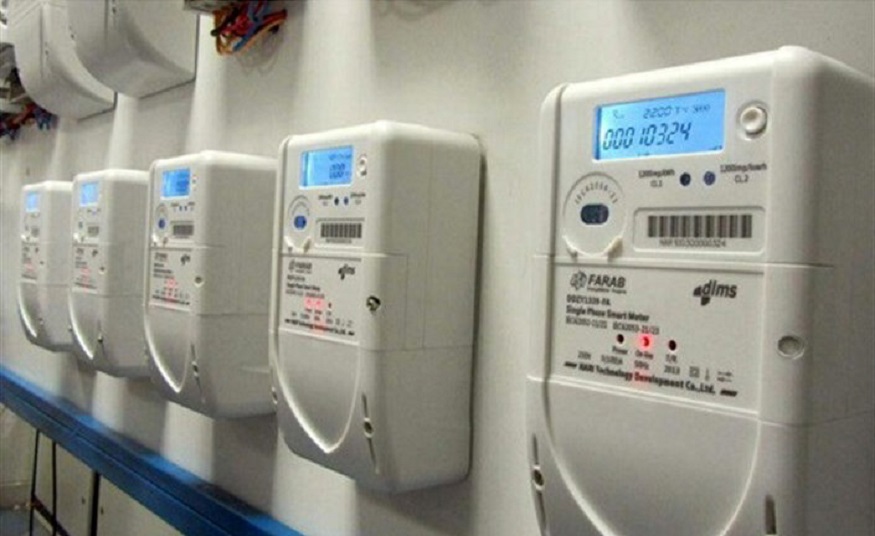
In the communiqué signed by the Minister of State for Labour, Mr Festus Keyamo, the resolutions of the panel on the distribution of one million meters to bridge the metering gap in the country in the first instance was adopted.
This would be done under the National Mass Metering Programme (NMMP) and the target is to provide at least six million meters to Nigerians free of charge based on the funding by the Central Bank of Nigeria (CBN), but the cost would be recovered from the electricity distribution companies.
The six million meters to be procured for the NMMP will only be through local meter manufacturers and assemblers. “This will create jobs and a new meter manufacturing sub-sector in the country,” it was noted.
It was further resolved that there would be a mandatory monthly publication of allowed billings in Naira for unmetered customers by the Nigerian Electricity Regulatory Commission (NERC) to make the capping regulation more effective.
“NERC will publish maximum charges in Naira for consumers without meters (in support of the capping regulation). Current rates at times are published in energy usage kWh and are difficult for consumers to reconcile against their bills,” it was stated.
It was also stressed that “Discos must refund consumers that have evidence that they were overbilled during the transition to the service based tariff. Any evidence of overcharging identified through the extended Ad-hoc committee scope will also be reimbursed by the discos.”
In addition, the parties agreed that after the expiration of the one-week extension, there would be a reduction of the tariffs by 10 per cent for band A, 10.5 per cent for band B and 31 per cent for band C.
“The immediate relief would be provided to citizens for a 2 to 3-month period (not later than December 31, 2020), being the timeline for the conclusion of an extended scope of work for the technical committee,” it noted.
General
GTCO Offers Vendors 204 Free Retail Stalls for 2026 Food and Drink Festival
By Dipo Olowookere
No fewer than 204 free retail stalls would be made available to vendors participating in the 9th GTCO Food and Drink Festival from Friday, May 1, to Sunday, May 3, 2026, at GTCentre, Plot 1 Water Corporation Drive, Oniru, Victoria Island, Lagos.
The prestigious event is the brainchild of a global financial services organisation, Guaranty Trust Holding Company (GTCO) Plc, which is listed on the Nigerian Exchange (NGX) Limited and the London Stock Exchange (LSE).
This year’s theme, Everything Food and Drink, captures the expansive nature of the festival experience, reflecting not only the variety of cuisines on display but also the depth of stories behind them.
Over the years, the GTCO Food and Drink Festival has grown far beyond a seasonal celebration to become a culturally significant platform where food and drink serve as a meeting point for storytelling, innovation, and opportunity.
The provision of the free retail stalls is to showcase the rich diversity and creativity of the Nigerian food culture; from time-honoured traditional dishes preserved across generations, to bold contemporary interpretations of global cuisine, creating space for every flavour, every technique, and every craving to find expression.
Visitors can expect a rich programme featuring interactive masterclasses, live culinary demonstrations, food and wine tastings, and a vibrant marketplace showcasing small and medium-scale food businesses alongside established culinary brands.
In addition to its wide range of food and drink offerings, the GTCO Food and Drink Festival is renowned for its family-friendly atmosphere, with a well-equipped play area and a variety of engaging activities for children, ensuring an unforgettable experience for the whole family.
“The GTCO Food and Drink Festival has, over the years, become a living expression of what we stand for as an institution: innovation, opportunity, and enterprise that is accessible to all.
“What makes this platform special is not just its scale, but its humanity. It brings together people from different walks of life around something universal—food and drink—and in doing so, it breaks barriers and builds connections that extend far beyond the event itself,” the chief executive of GTCO, Mr Segun Agbaje, commented.
Since its inception, the GTCO Food and Drink Festival has positioned itself as one of Africa’s most prominent culinary gatherings, attracting participation from across Nigeria and increasingly from the wider continent and diaspora.
Admission remains free and open to all, reaffirming the festival’s commitment to accessibility as a consumer-focused event that brings people together through food, drink, culture, and enterprise.
General
Edun, Dangiwa Not Sacked—Presidency
By Adedapo Adesanya
The presidency has refuted reports that Mr Wale Edun, former Finance Minister, and Mr Musa Dangiwa, Housing Minister, were sacked by President Bola Tinubu.
In a statement signed by the Special Adviser to the President on Information and Strategy, Mr Bayo Onanuga, it was emphasised that Mr Edun duly tendered his resignation from office, citing health reasons, before President Tinubu announced his replacement on Tuesday.
As for Mr Dangiwa, no reason was given beyond handing in his resignation to the President.
Mr Edun, who clocked 70 on Monday and has battled recent ill health, fittingly submitted his resignation letter on his birthday, thanking the President for the opportunity to serve Nigeria.
“It has been a pleasure and privilege to serve your administration and the Renewed Hope Agenda”, his letter read.
“Under your leadership, Nigeria has emerged stronger, more resilient and more internationally respected.
“I wish you and the administration every success in the future”, he wrote.
According to the presidency, before the Office of the Secretary of the Government of the Federation announced his departure from the cabinet on Tuesday, Mr Edun paid a valedictory visit to the President at the Villa. He held an hour-long discussion with Mr Tinubu and then left to focus on his private businesses.
Mr Dangiwa, an architect, previously served as the managing director of the Federal Mortgage Bank between 2015 and 2022, as well as Secretary to the Katsina State Government, before President Tinubu appointed him as housing minister in August 2023.
Mr Edun, an economist and investment banker, served as Lagos State commissioner for finance between 1999 and 2004, during the tenure of then Governor Bola Tinubu.
Before then, he worked from 1980 to 1986 at Chase Merchant Bank (later Continental) in Lagos. He joined the World Bank in September 1986 through the elite Young Professionals program, where he worked on economic and financial packages for several countries in Latin America and the Caribbean.
In 1989, he co-founded Investment Banking & Trust Company Limited (now Stanbic IBTC) and served as executive director. In 1994, he founded Denham Management Limited, which has since become the Chapelhill Denham Group. He served as chairman from 2008 to 2021.
President Tinubu has expressed deep appreciation to both men for their dedicated service and significant contributions to the administration’s economic reform programme and wished them continued success in their future endeavours.
Mr Edun has been replaced by Minister of State for Finance, Mr Taiwo Oyedele, to consolidate ongoing reforms and advance the administration’s fiscal and economic objectives with renewed focus, discipline, and innovation.
President Tinubu will shortly send the ministerial nominee for housing, Muttaqha Rabe Darma, also from Katsina, like Mr Dangiwa, to the Senate for confirmation.
General
Residents Must Obtain Permit to Install Solar Panels in Our Estates—Lagos
By Modupe Gbadeyanka
The Lagos State government has said residents of its housing estates across the state are not authorised to install solar panels without first obtaining approval from the appropriate quarters.
A statement issued on Wednesday by the Director of Public Affairs in the Lagos State Ministry of Housing, Mr Ganiu Lawal, gave this clarification.
This arose from a recent social media post by a resident who raised concerns over the Ministry’s Monitoring and Compliance Team’s demand for solar panel installation approval during a routine operation at the Lagos State Millennium Housing Estate, Ibeshe.
In the statement, the Permanent Secretary in the ministry, Mr Abdulhafis Toriola, explained that residents are not allowed to make alterations in government-owned housing schemes to protect shared assets, prevent fire incidents and structural damage.
“An allottee must obtain approval from the Ministry for any intended alteration to the flat allocated and the building, and this includes installation of solar panels,” he stated.
Mr Toriola, an Engineer, further explained that the requirement, which is contained in the Letter of Allocation and Allottees Guide issued to all beneficiaries at the point of purchase, also aims to prevent fire incidents linked to unprofessionally installed solar systems.
According to him, the ministry was compelled to develop specific guidelines after solar panel installations began to create more problems than benefits for both users and non-users within government estates.
“In recent times, the ministry had to intervene in fixing leaking rooftops and incessant fire outbreaks caused by solar panel installation by some residents,” he said.
The senior government official noted that government estates are social housing interventions designed with connected shared assets and facilities for residents, with blocks of flats housing between two and thirty-two families.
“In order to minimise risk that will affect the entire building structure, the Ministry made regulations to stipulate guidelines for installation, the quality of materials such as cables and panel configuration, and the technical know-how of the installation personnel,” he added.
The guidelines, he said, are designed to protect other flat owners, insulate the entire building with insurance against damages, and apportion appropriate roof space to all flat owners to prevent disputes when multiple occupants in a block seek to install solar panels on the same roof.
He disclosed that the ministry was open to feedback from residents always, urging all allottees to reach out to the ministry when in doubt and comply with the established process to ensure safety, structural integrity, and harmonious coexistence in all state-owned housing estates.
-
Feature/OPED6 years agoDavos was Different this year
-
Travel/Tourism10 years ago
Lagos Seals Western Lodge Hotel In Ikorodu
-
Showbiz3 years agoEstranged Lover Releases Videos of Empress Njamah Bathing
-
Banking8 years agoSort Codes of GTBank Branches in Nigeria
-
Economy3 years agoSubsidy Removal: CNG at N130 Per Litre Cheaper Than Petrol—IPMAN
-
Banking3 years agoSort Codes of UBA Branches in Nigeria
-
Banking3 years agoFirst Bank Announces Planned Downtime
-
Sports3 years agoHighest Paid Nigerian Footballer – How Much Do Nigerian Footballers Earn