

Connect with us

Economy

IGR of N1.3trn Accounts for 60% of Lagos Budget—Governor

Published

on

Lagos N1.3trn IGR budget

By Dipo Olowookere

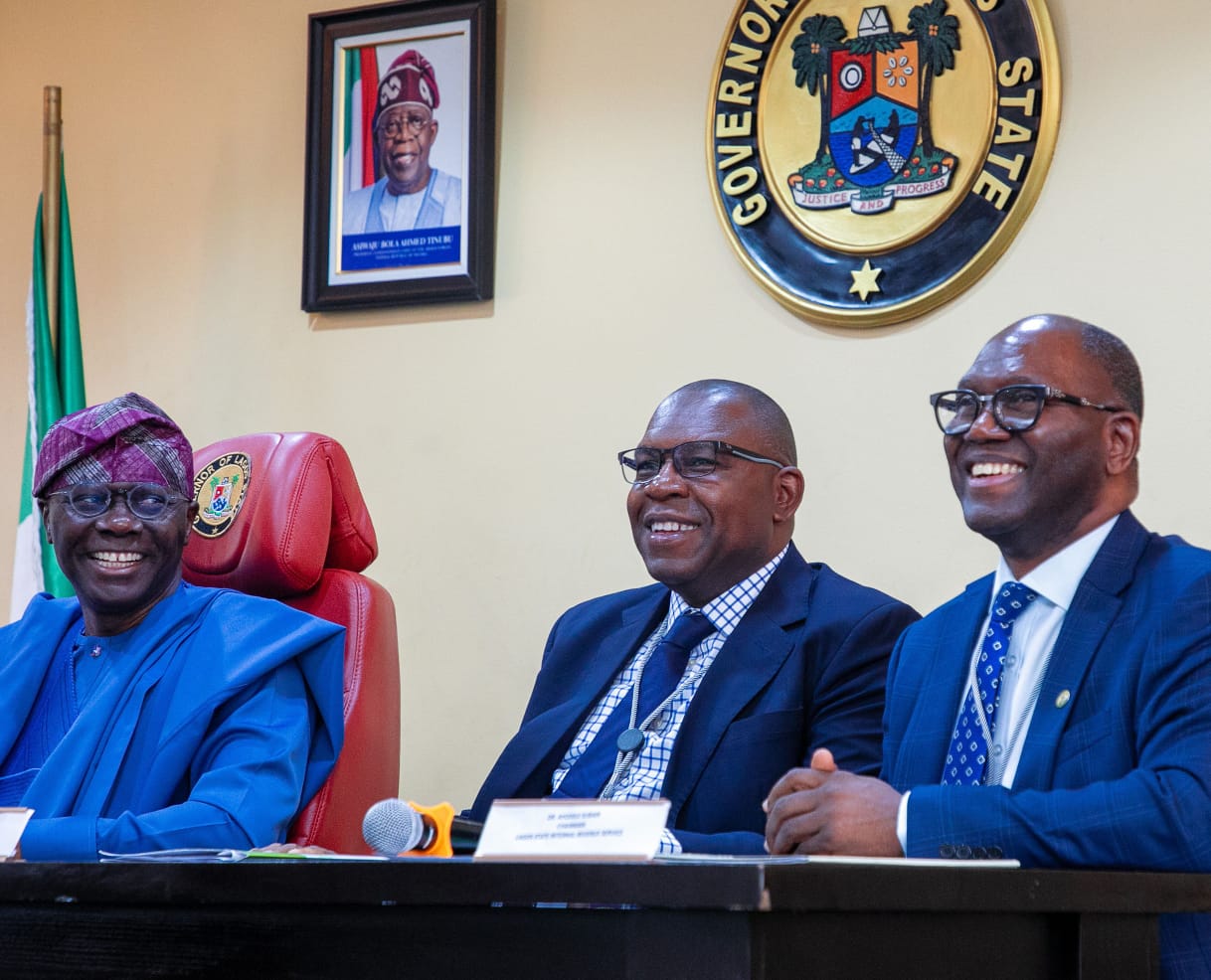
Governor Babajide Sanwo-Olu of Lagos State has revealed that the annual budget of the state is now being funded largely by Internally Generated Revenue (IGR).

Speaking on Wednesday at the State House in Marina, Lagos, the Governor said revenue generated in the state from taxes specifically accounts for over 60 per cent of the appropriation act.

He also disclosed that in 2024, Lagos State earned over N1.3 trillion from IGR, allowing the government to provide basic amenities and others to residents.

Governor Sanwo-Olu attributed this achievement to the stable leadership at the Lagos State Inland Revenue Service (LIRS), charging his colleagues to emulate this.

“Governors need to give revenue agencies clear space to work. They need to give them that independence. They need to give them full tenure to do their work.

“It should not be a situation where a governor comes and wants to disrupt the tenure of the chairman. It is only when they do all of this that the confidence of taxpayers, the confidence of workers and subordinates in the system will be enhanced.

“I will be pushing my brother governors again for them to understand and appreciate that it is only when they give you what you need to work that they can get the benefits of the expertise that you all have,” Mr Sanwo-Olu said at the 159th meeting of the Joint Revenue Board (JRB) in the state.

The JRB, formerly known as the Joint Tax Board (JTB), is made up of the chairman of the Nigeria Revenue Service (NRS), chairmen of the 36 State Internal Revenue Services and the Chairman of the Federal Capital Territory (FCT), as well as representatives of key agencies including the Federal Ministry of Finance, National Identity Management Commission, Revenue Mobilisation, Allocation and Fiscal Commission, Nigeria Customs Service, Nigeria Immigration Service and the Federal Road Safety Corps.

Speaking further, the Governor said the 45 per cent increase in the IGR for 2024 was driven by reforms spearheaded by the LIRS, sustained investment in digital tax systems, expansion of the tax base, and improved engagement with taxpayers.

“We can say that our internally generated revenues now account for well over 60 per cent of our budget. It has not happened by sheer luck. It is the result of years of investment in digital tax systems, a push to expand our tax net, and building trust with our taxpayers,” he stated.

“For us, it is really about our citizens. It is about the people who have given us the trust to believe in us and to pay these taxes. My deputy and I are consistently committed to ensuring that we leave this place a lot better than we met it,” he added.

The chairman of LIRS, Mr Ayodele Subair, noted that Lagos’ hosting of the meeting again after five years reflected its economic importance.

“After a five-year interval, Lagos State is once again honoured to host this important gathering. This reflects the state’s leadership as Nigeria’s economic nerve centre,” he said.

On his part, the chairman of JRB, Mr Zacch Adedeji, represented by the Executive Secretary of JRB, Mr Olusegun Adesokan, commended Lagos for its revenue performance and governance reforms, noting that, “Prior to this, the state’s annual internal revenue was less than N94 billion. But today, Lagos generates over N1.7 trillion annually.”

“These achievements clearly demonstrate how strong revenue performance, when effectively managed, translates into tangible development outcomes for citizens,” he added.

1 Comment

1 Comment

  1. Pingback: IGR of N1.3trn Accounts for 60% of Lagos Budget—Governor – PRIMA NEWS
Leave a Reply

Your email address will not be published. Required fields are marked *

Economy

Nigeria Customs Seeks Slash in N34trn Import Duty Waivers

Published

on

import duty waiver

By Adedapo Adesanya

The Nigeria Customs Service (NCS) is seeking a reduction in import duty exemptions, which rose to N34 trillion, limiting its ability to increase its revenue generation threshold.

The Comptroller-General of the Customs Service, Mr Adewale Adeniyi, disclosed that the value of import duty exemption certificate approvals increased to that level in 2025, describing the policy as one of the major factors restricting its revenue generation.

At an investigative session of the Senate Committee on Finance with revenue-generating agencies in Abuja on Monday, Mr Adeniyi explained that government fiscal policies have continued to impact the revenue-generating capacity of the Customs Service, both positively and negatively.

“The NCS would have generated significantly higher revenue over the years if not for government-approved import duty waivers and other external factors affecting collections,” he said.

He added that the Import Duty Exemption Certificate scheme, introduced in March 2020, accounted for about N34 trillion in approvals in 2025, with nearly 60 per cent covering duty-free importation of military hardware due to Nigeria’s prevailing security challenges.

Other government-backed duty waivers, he noted, covered the importation of Compressed Natural Gas (CNG), electric and hybrid vehicles, healthcare equipment and medical supplies, industrial machinery and manufacturing inputs, as well as food import intervention programmes.

While acknowledging the impact of the waivers on Customs revenue, Mr Adeniyi argued that fiscal policy should not be assessed solely on the basis of revenue generation but also on its broader economic and social objectives.

He, however, urged the federal government to establish stronger monitoring mechanisms to ensure beneficiaries of duty waivers deliver the intended economic outcomes, including lower consumer prices, increased local production and improved healthcare access.

The committee also expressed displeasure over the absence of several heads of government agencies invited to the hearing, including the Nigerian Civil Aviation Authority (NCAA), Small and Medium Enterprises Development Agency of Nigeria (SMEDAN), Industrial Training Fund (ITF), and the Federal Medical Centre (FMC), Jabi.

The Chairman of the Senate Committee on Finance, Mr Sani Musa, warned that the affected chief executives must appear at the committee’s next sitting or face severe sanctions under the Senate’s rules.

Continue Reading

Economy

Is Headway Broker Safe and Legit? A Detailed Look at Regulation and Trust

Published

on

headway broker Demo Account

In the competitive world of online trading, finding a trading brokerage partner that balances reliability, technological innovation, and accessible conditions is essential. Headway broker has emerged as a significant player, currently serving over 4 million users globally.

In this article, we take a detailed look at what makes this broker for trading a notable option for both novice and experienced traders.

Headway Regulatory Foundation and Safety

Safety is the cornerstone of any trading relationship. Headway broker operates under the regulation and licensing of the Financial Sector Conduct Authority (FSCA). This regulatory oversight ensures that the broker adheres to strictly defined standards for transparency and operational conduct, providing traders with an added layer of security and confidence when managing their portfolios.

Trading Platforms and Instruments

Efficiency in trading Forex and other markets is driven by the tools at your disposal. Headway provides a robust technological trading ecosystem:

Industry-Standard Platforms: The broker fully supports MetaTrader 4 (MT4) and MetaTrader 5 (MT5), the most widely used platforms for technical analysis and automated trading.

Proprietary Mobile App: For traders who prioritize mobility, Headway offers its own custom-built trading app. It is readily available for download on both Google Play and the App Store, allowing for seamless account management and trading on the go.

Diverse Market Access: Traders have a wide range of opportunities with access to over 300 trading instruments, ensuring plenty of choice for different strategies and asset classes.

Trading Account Types Offered by Headway

Headway broker understands that every trader enters the market with a different level of experience:

Three Account Tiers: To ensure inclusivity, the broker offers three distinct types of accounts (Cent, Standard and Pro), tailored to suit different levels of expertise and capital requirements.

Demo Account: For those looking to refine their skills without financial risk, Headway provides a comprehensive demo trading account. This is the perfect environment to practice strategies, understand how the platform works, and gain confidence before transitioning to live trading.

Customer Support and Incentives

Headway supports its user base with comprehensive resources and financial incentives:

24/7 Technical Support: Market fluctuations happen at any time. Headway provides round-the-clock technical support for the traders, ensuring that help is always available whenever a question or issue arises.

150$ No Deposit Bonus: To help new traders get started, Headway offers a $150 no deposit bonus. This is an excellent way to test the broker’s execution speed and trading environment with zero initial risk.

IB Partnership Program: Beyond individual trading, Headway fosters growth through its Introducing Broker (IB) partnership program. This allows partners to build their business and earn commissions by referring new traders to the platform.

Conclusion

With its combination of FSCA regulation, a vast range of instruments, and modern platforms like MT4, MT5, and its own proprietary app, Headway FX broker provides a comprehensive environment for modern traders. Whether you are using the demo account to hone your skills or taking advantage of the 150 no deposit welcome bonus, this broker offers the stability and tools needed for your trading journey.

Continue Reading

Economy

Buying Interest Lifts NASD OTC Exchange by 0.40%

Published

on

NASD OTC exchange

By Adedapo Adesanya

The NASD Over-the-Counter (OTC) Securities Exchange rose by 0.40 per cent on Monday, July 13, buoyed by buying interest in 11 Plc, Central Securities Clearing System (CSCS) Plc and UBN Property Plc, which offset the profit-taking in Food Concepts Plc, the parent company of Chicken Republic.

11 Plc gained N20.69 to end at N227.64 per share compared with last Friday’s price of N206.95 per share, CSCS Plc grew by N1.83 to N91.48 per unit from N89.65 per unit, and UBN Property Plc added 1 Kobo to sell at N1.81 per share versus N1.80 per share.

On the flip side, Food Concepts Plc depreciated by 24 Kobo to close at N2.45 per unit, in contrast to the preceding session’s N2.69 per unit.

As a result, the market capitalisation increased by N9.2 billion to N2.587 trillion from N2.578 trillion, and the NASD Security Index (NSI) improved by 15.33 points to 4,311.67 points from 4,296.34 points.

Yesterday, the volume of securities traded by investors surged by 615.9 per cent to 9.1 million units from the previous 1.3 million units, and the value of securities rose by 997.1 per cent to N320.4 million from the preceding session’s N29.2 million, while the number of deals decreased by 12.5 per cent to 28 deals from last Friday’s 32 deals.

At the close of trades, Great Nigeria Insurance (GNI) Plc remained the most active stock by value on a year-to-date basis, with 3.4 billion units valued at N8.4 billion, followed by Infrastructure Credit Guarantee (Infracredit) Plc with 2.3 billion units worth N6.5 billion, and CSCS Plc with 73.9 million units exchanged for N5.2 billion.

GNI Plc also closed the session as the most traded stock by volume on a year-to-date basis, with 3.4 billion units sold for N8.4 billion, followed by Infracredit Plc with 2.3 billion units traded for N6.5 billion, and Resourcery Plc with 1.1 billion units transacted for N415.7 million.

Continue Reading

