Connect with us

Economy

State Governments Borrow N900bn from Capital Market—SEC

Published

on

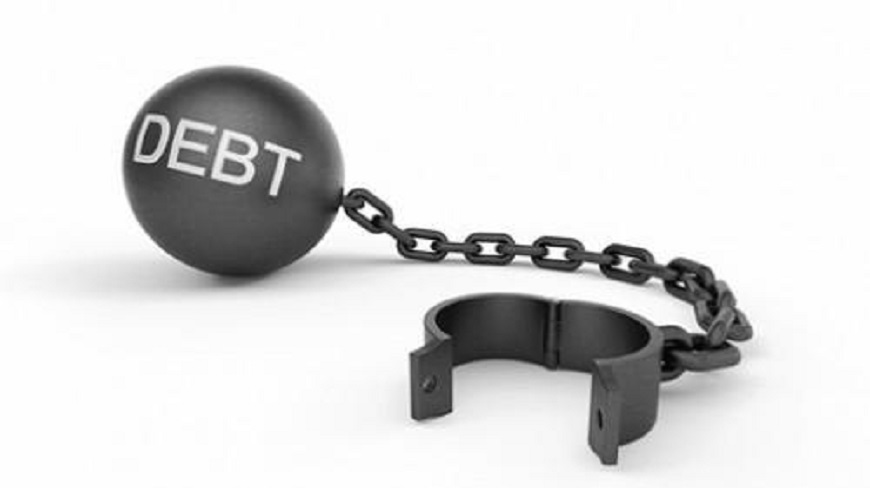
debt to revenue ratio

By Ahmed Rahma

The Director-General of the Securities and Exchange Commission (SEC), Mr Lamido Yuguda, has disclosed that the state governments in Nigeria have borrowed not less than N900 billion from the capital market.

Mr Yuguda made this disclosure on Tuesday at a webinar organised by the Nigerian Stock Exchange (NSE) on ways sub-nationals can raise funds through the sale of state-owned enterprises.

The SEC chief, who was represented by the Executive Commissioner in charge of Legal and Enforcement, Mr Reginald Karawusa, disclosed that this amount was raised from the market through debt issuances since 1978.

Speaking on Privatisation in Nigeria and the Outlook for Subnational Economic Development, the theme for the event organised in partnership with the Nigeria Governors’ Forum (NGF) and the Nigerian Investment Promotion Council (NIPC), the DG said “a significant part of these funds were deployed to finance capital projects across the country.”

“However, the ability of states to continue to borrow in a sustainable manner has been severely impacted in recent times.

“With the huge infrastructure gap, decreased allocation from the federal purse owing to relatively low oil revenue and the depressed level of internally generated revenues, states are barely able to pay salaries after servicing their outstanding loan obligations,” he noted.

He added that, there is indeed no better time to discuss alternative funding sources at the sub-national level given adverse impacts brought about by the COVID-19 pandemic.

“The capital market’s primary role in any economy is to facilitate capital formation. By creating a system for allocation of capital, investors are able to price risk efficiently while issuers have the opportunity to raise funds to finance projects. In doing so, issuers may choose to raise equities or debts,” he mentioned.

The DG also stated that the federal and state governments have the capabilities to unlock enormous potentials through privatisation, which he said “is an avenue for governments to unlock economic potentials inherent in government-owned enterprises.”

“The focus on Nigeria’s journey on privatisation has largely been on the Federal Government. There have been several phases of privatisation exercises in the past with an emphasis on enterprises operating in different sectors of the economy including oil and gas, hospitality, mining etc,” Mr Yuguda added.

He also stated that, “Several enterprises are still owned and controlled by the government, both at the state and federal levels. A number of these entities have the capacities to generate cash flows and corporate profitability.

“However, owing to certain inefficiencies, these entities are underperforming and in some cases subtracting from value. Perhaps this is the time for state governments to revisit the privatisation value proposition. There are several benefits to privatisation.”

Mr Yuguda informed the participants that privatisation has numerous benefits as the proceeds from the sale of government interest in these enterprises would help augment budget shortfalls and can be applied towards funding critical infrastructure.

“Beyond the funds to be generated, governments will enjoy the cost of savings as there would be no further requirements to fund these entities post-privatisation.

“There are further benefits to be enjoyed through the taxes that would be paid in the future by those entities. As they undergo a strategic transformation and become positioned for profitability, these entities are able to create jobs and employ residents of their host states, facilitate infrastructure development and further positively impact the economy in other areas,” he concluded.

The CEO of the NSE, Mr Oscar Onyema, in his address, said privatisation occupies a critical position in economic globalisation and provides an avenue for raising the bar towards economic development.

“Given COVID-19, there is no better time to re-visit privatisation and cascade this to the subnational levels,” he added.

Also speaking, the Chairman of NGF, Mr Kayode Fayemi, said the state governments have been constrained to increase spending in a bid to mitigate the effects of the pandemic.

According to him, “containment is fairly in place but more needs to be done to ensure progress is not lost and that is where privatisation comes in.

“If the private sector takes over in critical sectors, state governments can focus on education and health among others”.


Click to comment

Leave a Reply

Your email address will not be published. Required fields are marked *

Economy

Naira Weakens to N1,364 Per Dollar at Official FX Market

Published

on

Official FX Market

By Adedapo Adesanya

The Naira further slipped against the United States Dollar by N2.33 or 0.17 per cent to N1,364.88/$1 from N1,362.55/$1 in the Nigerian Autonomous Foreign Exchange Market (NAFEX) on Thursday, August 6.

In the same vein, the domestic currency weakened against the Pound Sterling in the official FX market by 71 Kobo yesterday to trade at N1,838.09/£1, in contrast to Wednesday’s value of N1,837.38/£1, but against the Euro, it gained 45 Kobo to close at N1,574.80/€1 compared with the previous day’s N1,575.25/€1.

At the GTBank FX desk, the Naira improved its value against the US Dollar by N4 on Thursday to quote at N1,369/$1 versus midweek”s rate of N1,373/$1, but at the parallel market, it remained unchanged at N1,400/$1.

The NAFEM interbank FX turnover jumped to $98.804 million on Thursday, up by more than 31 per cent from $75.357 million the previous day.

Similarly, the number of deals at the NFEM interbank increased to 106 from 82, confirming higher US Dollar flows at the official FX market.

Traders expect the Naira to hold steady, buoyed ​by dollar sales by the Central Bank of Nigeria (CBN), whose presence in the market will help ease demand pressure.

In the cryptocurrency market, major cryptocurrencies were mostly down as the Senate delayed a vote on the Crypto Clarity Act until at least September.

The bill, which would set out which U.S. regulator oversees which digital assets, needs 60 votes to pass, and it is unclear whether it currently has 50. Several Republican senators have said publicly they oppose it, and Democrats want stricter rules preventing President Donald Trump from profiting from crypto while in office.

Ripple (XRP) shrank by 2.5 per cent to $1.02, Solana (SOL) depleted by 1.5 per cent to $72.86, Binance Coin (BNB) fell by 1.4 per cent to $587.41, Dogecoin (DOGE) tumbled by 0.9 per cent to $0.0692, Bitcoin (BTC) decreased by 0.6 per cent to $64,344.69, and Ethereum (ETH) tumbled by 0.3 per cent to $1,902.03.

However, Cardano (ADA) appreciated by 7.7 per cent to $0.2025, and TRON (TRX) rose by 0.3 per cent to $0.3267, while the US Dollar Tether (USDT) and the US Dollar Coin (USDC) traded flat at $1.00 apiece.

Continue Reading

Economy

Customs Street Rallies 0.12%

Published

on

Customs Street Nigerian Stock Exchange

By Dipo Olowookere

Buying interest in consumer goods, energy and banking stocks further raised the Customs Street by 0.12 per cent on Thursday despite profit-taking in the insurance and industrial goods sectors.

According to data from the Nigerian Exchange (NGX) Limited showed that the banking index grew by 0.62 per cent, the consumer goods space rose by 0.15 per cent, and the energy counter increased by 0.06 per cent, while the insurance sector crashed by 0.93 per cent, with the industrial goods segment flat.

At the close of business, the All-Share Index (ASI) went up by 297.10 points to 245,209.34 points from 244,912.24 points, and the market capitalisation gained N191 billion to finish at N158.278 trillion compared with the previous day’s N158.087 trillion.

Eterna led the gainers’ log yesterday after it chalked up 10.00 per cent to settle at N36.30, ACA Capital improved by 9.63 per cent to N11.95, Legend Internet expanded by 9.52 per cent to N4.60, FCMB jumped by 8.55 per cent to N12.70, and Honeywell Flour surged by 7.98 per cent to N17.60.

On the flip side, Fortis Global Insurance led the losers’ chart after it shed 10.00 per cent to trade at N2.52, Ecobank declined by 9.99 per cent to N72.10, Chellarams depleted by 9.85 per cent to N11.90, Thomas Wyatt dipped by 9.83 per cent to N3.21, and UPDC slipped by 8.45 per cent to N3.25.

During the trading day, 531.8 million shares worth N20.5 billion exchanged hands in 44,826 deals compared with the 824.1 million shares valued at N25.5 billion transacted in 48,114 deals on Wednesday.

This indicated that the volume of trades was down by 35.47 per cent, the value of transactions depreciated by 19.61 per cent, and the number of deals decreased by 6.83 per cent.

The busiest stock for the session was FCMB, which traded 131.7 million units for N1.6 billion, First Holdco transacted 43.5 million units worth N6.0 billion, AVA Capital exchanged 36.3 million units valued at N432.0 million, Chams traded 36.3 million units sold 36.3 million units valued at N149.8 million, and Access Holdings ended with a turnover of 24.4 million units worth N638.8 million.

Continue Reading

Economy

Brent Crude Jumps Nearly 4% on Iran’s Strait of Hormuz Bill

Published

on

Brent crude futures

By Adedapo Adesanya

Brent crude rose by 3.83 per cent or $3.04 to $82.29 per barrel on Thursday after an information that an Iranian parliament committee was reviewing a bill ‌that would ban US and Israeli vessels from the Strait of Hormuz.

Also, the price of the US West Texas Intermediate (WTI) crude futures went up by 81 cents or 1.05 per cent to $77.29 per barrel during the session.

Under the apparent draft, Iran would ban American and Israeli ships from transiting the strait. Other nations that have harmed Iran would not be allowed to transit until compensation is paid, according to the draft. Iran would impose penalties on violators equivalent to 20 per cent of the value of cargo aboard a ship.

Market analysts noted that crude ⁠traders remain focused on the US-Iran agreements, and the longer the delays, the more prices will fade back to the upside.

Iran has warned Gulf states that any new US attack on its territory would trigger attacks on critical energy infrastructure across the region.

Before the Iran conflict began in late February, about one-fifth of global daily ​oil and liquefied natural gas supplies flowed through the Strait of Hormuz.

Meanwhile, Yemen’s Houthis said they carried out missile and drone attacks on “Saudi deployments” in Marib and Hadramout in Yemen on Thursday. This has led to elimination of Saudi-aligned fighters as well as destruction of military camps, weapons depots and vehicles.’

Also, Iran and Oman appear to be close to agreeing on joint management of the Strait of Hormuz with Iran’s foreign ministry spokesman, Esmaeil Baghaei, saying the deal with Oman was “in the final stages.”

Saudi Arabia has slightly lowered the official selling price for its flagship Arab Light crude oil to Asia in September.

Elsewhere, a major ​oil refinery in Russia’s Yaroslavl region was on fire after a big Ukrainian ​drone attack. The ‌President ⁠of Ukraine Volodymyr Zelenskiy said the country’s military had hit two Russian oil refineries – the Bashneft-Novoil refinery in the republic of Bashkortostan, and the Slavneft-Yanos refinery ​in the Yaroslavl ​region.

Continue Reading