Feature/OPED
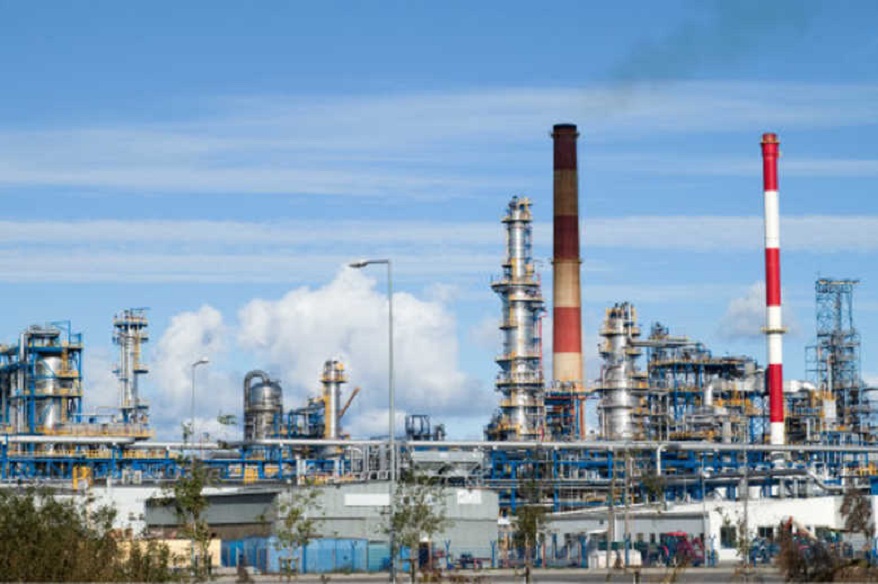
PETROAN, ‘Abiku Refineries’ and the Comfort of Collapse
A sector that keeps reviving what has repeatedly failed, while resisting what works, is not trapped by fate but comforted by collapse. PETROAN’s latest outburst exposes just how invested some interests remain in Nigeria’s ritualised dysfunction.
By Abiodun Alade
Nigeria’s oil and gas sector has endured many seasons of noise masquerading as advocacy. From time to time, pressure is applied not in pursuit of reform, but in defence of habits that have outlived their usefulness. The latest episode is revealing not because it is novel, but because it exposes, with unusual clarity, the discomfort of rent-seeking intermediaries when genuine change threatens familiar margins.
That discomfort has recently found expression in the agitation by the Petroleum Products Retail Outlets Owners Association of Nigeria over comments made by Bayo Ojulari, Group Chief Executive Officer of the Nigerian National Petroleum Company Limited. In demanding his resignation, PETROAN has inadvertently illuminated a deeper problem in Nigeria’s petroleum political economy: the resistance of entrenched intermediaries to reform that narrows the space for easy rent.
Ojulari’s offence was not misconduct. It was candour. He observed, correctly, that the Dangote Petroleum Refinery has provided breathing space at a time when government-owned refineries are shut, and that the NNPC should not rush back into the familiar ritual of pouring millions of dollars into turnaround maintenance for facilities that have become monuments to waste. This is not heresy; it is prudence.
For a quarter of a century, Nigeria has chased the mirage of refinery rehabilitation. Public records suggest that between $18 billion and $25 billion has been spent on turnaround maintenance and rehabilitation of the four state-owned refineries, with little to show for it. Like the abiku of Yoruba lore, these refineries are revived with ceremony, only to relapse almost immediately. Working today, dying tomorrow. To insist that this cycle must continue, regardless of evidence, is not patriotism. It is sabotage dressed as concern.
PETROAN’s reaction is therefore instructive. In a recent statement, its spokesman, Joseph Obele, described it as “most worrisome” that there was no urgency to restart the Port Harcourt Refinery because Dangote is meeting current fuel needs. The association went further, threatening to lobby civil society groups and pursue legal options to force the removal of the NNPC GCEO should the refinery not resume operations by March 1. This is not policy engagement. It is pressure politics.
Why would a body of retailers, whose business model depends largely on buying and reselling products refined elsewhere, be so hostile to domestic refining capacity? The answer lies in incentives. Domestic refineries compress margins. They reduce arbitrage. They expose inefficiencies that thrive in scarcity. For decades, fuel importation and the dysfunction it encouraged created space for unearned profits across the value chain. Local refining threatens that arrangement.
History offers a useful parallel. In Mancur Olson’s classic work The Logic of Collective Action, he explains how small, organised interest groups often prevail over the broader public interest because they are better motivated to defend narrow gains. PETROAN’s conduct fits this pattern. It speaks loudly, often, and with confidence, but for whom does it really speak?
It is also worth recalling PETROAN’s posture during earlier periods of distress in the sector. At moments when the national oil company was accumulating unsustainable obligations, remitting little or nothing to the Federation Account and absorbing enormous costs, commendations flowed freely. Laurels were dished out even as the system bled. That era ended with the Federal Government writing off substantial debts, including about $1.42 billion and N5.57 trillion after reconciliation. Nigerians paid the price for that indulgence.
During the years when Nigeria’s petroleum sector was driven to the brink, PETROAN looked the other way. The record is clear. The national oil company captured the entire value chain, seizing crude exports, monopolising refined product imports, and then forcing the Federal Government to borrow an estimated N500 billion monthly to sustain opaque subsidy claims. By controlling nearly 90 per cent of the roughly $3 billion in monthly crude proceeds routed through the Central Bank, and combining this with subsidy payments and other shocks, fiscal space collapsed, driving the government into massive Ways and Means financing.
At the same time, refinery rehabilitation became an industry without output. About $10 billion was spent over a decade on maintenance with nothing to show for it, not even a litre of petrol. A further $3 billion was later securitised against future crude sales for yet another failed repair cycle, a sum that could have delivered dozens of modular refineries. Even after the Petroleum Industry Act prioritised Domestic Crude Obligation, compliance remained elusive, while Nigeria continued to burn scarce foreign exchange importing substandard fuel into a system with no functional midstream. These were not marginal errors but a business model that plunged the country into crisis. Throughout it all, PETROAN’s voice was conspicuously muted, generous with praise where scrutiny was required.
This is why the current agitation rings hollow. Reform always unsettles those who prospered under disorder. President Bola Tinubu’s administration has signalled, through words and decisions, that it intends to break with the old script. Ojulari’s mandate at NNPC is clear: commercial discipline, efficiency and profitability. That mandate cannot be reconciled with endless rehabilitation theatre.
There is another uncomfortable question PETROAN has not answered. What value does its leadership bring to the petroleum sector beyond television appearances and press statements? Serious business leadership is measured in assets built, jobs created and value added. Publicly available information suggests that some of the companies associated with PETROAN’s leadership are modest in scale, with limited project footprints. Allegations and controversies reported in the public domain around some of these entities, whether in the power metering space or elsewhere, only reinforce the need for caution in elevating moral authority. Perhaps PETROAN’s members would do well to examine the records of those who speak in their name before an association meant to represent many is reduced to the private estate of a few and recast as an adversary of the public interest.
This is not to say that retailers have no role in policy debate. They do. But influence must be earned through insight, integrity and alignment with the national interest. Threats and ultimatums betray a lack of confidence in argument.
Nigeria stands at a fork in the road. One path leads back to ritualised waste, institutional failure and the comfort of familiar inefficiencies. The other leads to local capacity, competition and a petroleum industry that finally works for Nigerians. The Dangote Refinery is not a silver bullet, but it is a signal that the old excuses are losing credibility.
PETROAN’s nuisance value thrives only when reformers flinch. President Tinubu has shown little appetite for cheap blackmail. Ojulari enjoys his confidence for a reason. The task before NNPC is too important to be derailed by those nostalgic for a broken system. If PETROAN wishes to be relevant in this new era, it must evolve from noise to nuance. Otherwise, history will remember it not as a defender of consumers, but as a footnote in Nigeria’s long struggle to escape the tyranny of waste.
Abiodun, a communications specialist, writes from Lagos
Feature/OPED
If Dangote Must Start Somewhere, Let It Be Electricity
By Isah Kamisu Madachi
The news that the Nigerian businessman, Aliko Dangote, plans to expand his business interest into steel production, electricity generation, and port development as part of his broader ambition to accelerate industrialisation in Africa deserves a quick reflection on the promises it carries for Nigeria. It is coming from Dangote at a time when many African countries, including Nigeria, are still struggling with below-average industrial capacity. This move speaks to something important about how prosperity is actually built.
In their Influential book ‘The Prosperity Paradox: How Innovation Can Lift Nations Out of Poverty,’ Clayton Christensen, Efosa Ojomo, and Karen Dillon argue that countries rarely overcome poverty through aid, policy declarations or resource endowments alone. According to them, the effective engine of prosperity has always been market-creating innovations by private and public enterprises that build new industries, generate jobs, and expand economic opportunities for ordinary people.
Even though their theory focuses largely on creating something new or producing it exceptionally, Dangote’s new industrial ambition seems closer to the latter. It is about producing essential things at a scale and efficiency that the existing system has failed to achieve.
Take, for example, the electricity sector in Nigeria. Since the beginning of the current Fourth Republic, billions of dollars have been allocated to power sector reforms, yet electricity supply remains unstable, and many Nigerians still depend heavily on generators to power their homes and businesses. The situation has continued to deteriorate despite the enormous resources committed to the sector by the coming of every new administration.
This is not surprising. In The Prosperity Paradox, the authors explain how nations and even international organisations sometimes keep investing huge resources in certain activities only to realise much later that they were simply hitting the wrong target. The problem is not always the lack of funding; sometimes it is the absence of a functioning market system capable of producing and distributing essential services efficiently.
Seen from this perspective, Dangote’s move into electricity generation may mean more than just an investment. It could be an attempt to tackle one of the most critically lingering bottlenecks in Nigeria’s economic development. If I were to be asked to decide which sector Dangote should begin with in this new industrial plan, I would unhesitatingly choose electricity. It is the most embattled, deeply corrupted and seemingly jeopardised beyond repair, yet the most important sector for the everyday life of citizens.
Stable electricity has the power to transform productivity across every sector. When power supply becomes reliable, small businesses are created, productivity is boosted across all sectors, and households enjoy a better quality of life. Nigeria’s long-standing energy poverty has been strangulating the productive potential of millions of people for decades. Fixing that problem alone would unlock enormous economic possibilities more than expected.
Beyond the issue of productivity, Dangote’s entry into these sectors could also stimulate competition. Healthy competition is one of the most effective drivers of efficiency in any economy. The example of the refinery project already shows how a large-scale private investment can disrupt long-standing structural weaknesses within a sector. A similar dynamic in the proposed sectors could encourage other investors to participate and expand industrial capacity.
Nigeria, by 2030, is projected to need 30 to 40 million new jobs to absorb its rapidly growing population. The scale of this challenge means that the government alone, especially in the Nigerian context, cannot create the necessary opportunities to fill this gap. Private enterprises will have to play a major role in expanding productive sectors of the economy. If supported by the right policy environment, they could contribute significantly to narrowing Nigeria’s widening job gap.
Of course, no single business initiative can solve all structural challenges in the economy. But bold investments of this nature often serve as catalysts for broader economic transformation. With the right support and healthy competition from other investors, initiatives like these could help push Nigeria closer to the kind of industrial foundation that many developed economies built decades ago.
In the end, the lesson is simple: prosperity rarely emerges from policy debates alone. It often begins with large-scale productive ventures that reshape markets, unlock productivity at both small-scale and large-scale businesses, and create direct and indirect economic opportunities for millions of common men and women.
Isah Kamisu Madachi is a policy analyst and development practitioner. He writes via is***************@***il.com
Feature/OPED
Love, Culture, and the New Era of Televised Weddings
Weddings have always held a special place in African culture. They are more than ceremonies; they are declarations of love, family, identity, and tradition. From the vibrant colours of aso-ebi to the rhythmic sounds of live bands and the emotional exchange of vows, weddings represent a moment of cultural heritage.
In recent years, weddings have gone beyond physical venues. What was once an exclusive gathering for family and friends has transformed into a shared experience for wider audiences. Social media first opened the door, allowing guests and admirers to witness love stories in real time through Instagram posts, TikTok highlights, and YouTube recaps.
And now, television platforms are taking this even further, giving weddings a new kind of permanence and reach.
High-profile weddings, like the widely celebrated union of Adeyemi Idowu, popularly known as Yhemolee (Olowo Eko) and his wife Oyindamola, fondly known as ThayourB, captured massive public attention. Moments from their wedding became a live shared experience on television (GOtv & DStv).
From the high fashion statements to the emotional highlights, viewers were able to feel part of something bigger, a reminder that weddings inspire not just both families but entire communities.
This shift reflects a broader reality: weddings today are content. They inspire conversations about fashion, relationships, lifestyle, and aspiration. They preserve memories in ways previous generations could only imagine. For Gen Z couples, their wedding is no longer just a day; it becomes a story that can be revisited, celebrated, and even inspire others planning their own journey to forever.
Broadcast platforms like GOtv are playing a meaningful role in this transformation. By bringing wedding-related content directly into homes, GOtv is helping audiences experience these moments not just through social media snippets but in real time.
One of the most notable offerings is Channel 105, The Wedding Channel, Africa’s first 24-hour wedding channel, available on GOtv. The channel is fully dedicated to African weddings, lifestyle, and bridal fashion, showcasing everything from dream ceremonies to the realities of married life. Programs like Wedding Police and Wedding on a Budget, and shows like 5 Years Later, offer a deeper look into marriage itself, reminding viewers that weddings are just the beginning of a lifelong journey.
GOtv is preserving culture, celebrating love, and inspiring future couples with this channel. It allows viewers to witness traditions from different regions, discover new ideas, and feel connected to moments that might otherwise remain private.
With platforms like GOtv, stories continue to live on screens across Africa, where love, culture, and celebration can be experienced by all.
To upgrade, subscribe, or reconnect, download the MyGOtv App or dial *288#. For catch-up and on-the-go viewing, download the GOtv Stream App and enjoy your favourite shows anytime, anywhere.
Feature/OPED
Brent’s Jump Collides with CBN Easing, Exposes Policy-lag Arbitrage
Nigeria is entering a timing-sensitive macro set-up as the oil complex reprices disruption risk and the US dollar firms. Brent moved violently this week, settling at $77.74 on 02 March, up 6.68% on the day, after trading as high as $82.37 before settling around $78.07 on 3 March. For Nigeria, the immediate hook is the overlap with domestic policy: the Central Bank of Nigeria (CBN) has just cut its Monetary Policy Rate (MPR) by 50 basis points to 26.50%, whilst headline inflation is still 15.10% year on year in January.
“Investors often talk about Nigeria as an oil story, but the market response is frequently a timing story,” said David Barrett, Chief Executive Officer, EBC Financial Group (UK) Ltd. “When the pass-through clock runs ahead of the policy clock, inflation risk, and United States Dollar (USD) demand can show up before any oil benefit is felt in day-to-day liquidity.”
Policy and Pricing Regime Shift: One Shock, Different Clocks
EBC Financial Group (“EBC”) frames Nigeria’s current set-up as “policy-lag arbitrage”: the same external energy shock can hit domestic costs, FX liquidity, and monetary transmission on different timelines. A risk premium that begins in crude can quickly show up in delivered costs through freight and insurance, and EBC notes that downstream pressure has been visible in refined markets, with jet fuel and diesel cash premiums hitting multi-year highs.
Market Impact: Oil Support is Conditional, Pass-through is Not
EBC points out that higher crude is not automatically supportive of the naira in the short run because “oil buffer” depends on how quickly external receipts translate into market-clearing USD liquidity. Recent price action illustrates the sensitivity: the naira was quoted at 1,344 per dollar on the official market on 19 February, compared with 1,357 a week earlier, whilst street trading was cited around 1,385.
At the same time, Nigeria’s inflation channel can move quickly even during disinflation: headline inflation eased to 15.10% in January from 15.15% in December, and food inflation slowed to 8.89% from 10.84%, but energy-led transport and logistics costs can reintroduce pressure if the risk premium persists. EBC also points to a broader Nigeria-specific reality: the economy grew 4.07% year on year in 4Q25, with the oil sector expanding 6.79% and non-oil 3.99%, whilst average daily oil production slipped to 1.58 million bpd from 1.64 million bpd in 3Q25. That mix supports external-balance potential, but it also underscores why the domestic liquidity benefit can arrive with a lag.
Nigeria’s Buffer Looks Stronger, but It Does Not Eliminate Sequencing Risk
EBC sees that near-term external resilience is improving. The CBN Governor said gross external reserves rose to USD 50.45 billion as of 16 February 2026, equivalent to 9.68 months of import cover for goods and services. Even so, EBC views the market’s focus as pragmatic: in a risk-off tape, investors tend to price the order of transmission, not the eventual balance-of-payments benefit.
In the near term, EBC expects attention to rotate to scheduled energy and policy signposts that can confirm whether the current repricing is a short, violent adjustment or a more durable regime shift, including the U.S. Energy Information Administration (EIA) Short-Term Energy Outlook (10 March 2026), OPEC’s Monthly Oil Market Report (11 March 2026), and the U.S. Federal Reserve meeting (17 to 18 March 2026). On the domestic calendar, the CBN’s published schedule points to the next Monetary Policy Committee meeting on 19 to 20 May 2026.
Risk Frame: The Market Prices the Lag, Not the Headline
EBC cautions that outcomes are asymmetric. A rapid de-escalation could compress the crude risk premium quickly, but once freight, insurance, and hedging behaviour adjust, second-round effects can linger through inflation uncertainty and a more persistent USD bid.
“Oil can act as a shock absorber for Nigeria, but only when the liquidity channel is working,” Barrett added. “If USD conditions tighten first and domestic pass-through accelerates, the market prices the lag, not the headline oil price.”
Brent remains an anchor instrument for tracking this timing risk because it links energy-led inflation expectations, USD liquidity, and emerging-market risk appetite in one market. EBC Commodities offering provides access to Brent Crude Spot (XBRUSD) via its trading platform for following energy-driven macro volatility through a single instrument.
-
Feature/OPED6 years agoDavos was Different this year
-
Travel/Tourism10 years ago
Lagos Seals Western Lodge Hotel In Ikorodu
-
Showbiz3 years agoEstranged Lover Releases Videos of Empress Njamah Bathing
-
Banking8 years agoSort Codes of GTBank Branches in Nigeria
-
Economy3 years agoSubsidy Removal: CNG at N130 Per Litre Cheaper Than Petrol—IPMAN
-
Banking3 years agoSort Codes of UBA Branches in Nigeria
-
Banking3 years agoFirst Bank Announces Planned Downtime
-
Sports3 years agoHighest Paid Nigerian Footballer – How Much Do Nigerian Footballers Earn