

Connect with us

Feature/OPED

Africa’s Untapped Opportunity: How Africa’s Free-trade Area Could Catalyse Agricultural Sector’s Development

Published

on

Agriculture in nigeria

By Louis van Ravesteyn

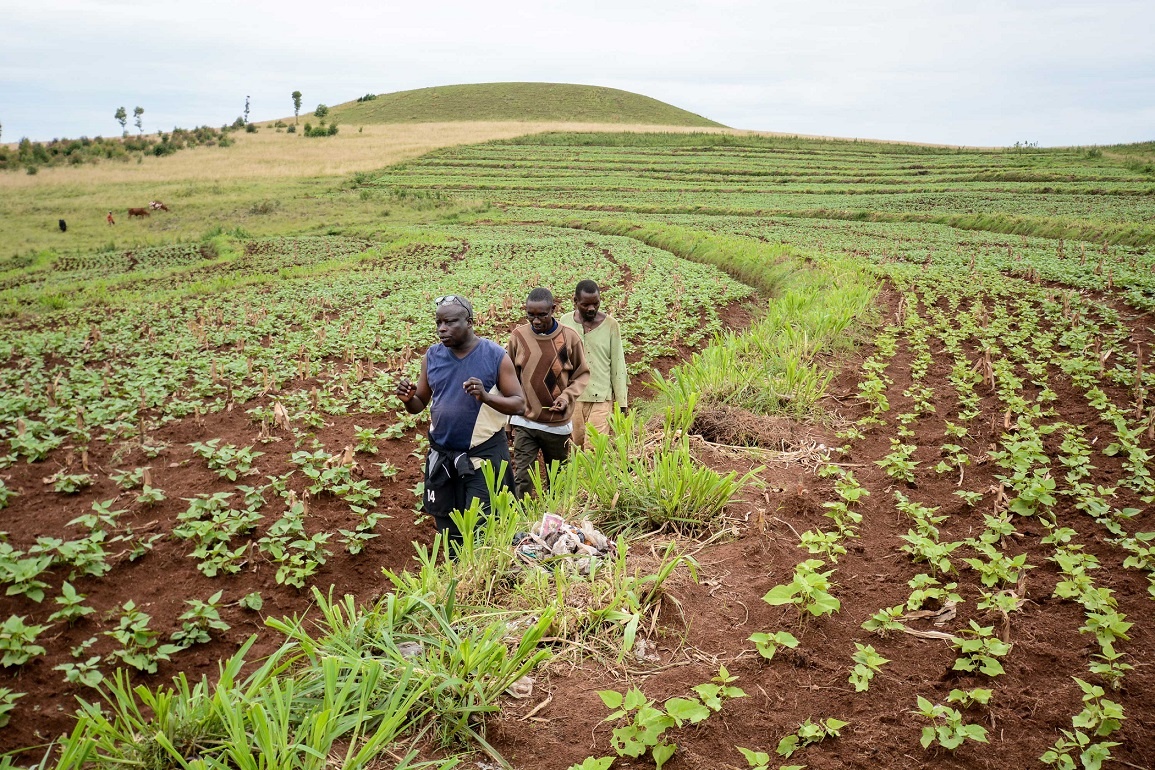
The African Continental Free-Trade Area (AfCFTA) could accelerate the development of sub-Saharan Africa’s agricultural sector and help the continent to become self-sufficient in food production.

The trading bloc, which is set to become operational in January 2021, will significantly increase intra-African trade over time as it dismantles barriers to trade – including import tariffs and non-tariff barriers such as customs delays, restrictive licensing processes, and certification challenges.

The World Bank said in a recent report that 60% of African countries are likely to see increased agricultural employment by 2035 thanks to AfCFTA, and wages for unskilled workers are expected to grow faster in these nations.

While some countries will gravitate towards other sectors in which they have competitive advantages, North African states will shift more towards manufacturing and services.  Many in sub-Saharan Africa are well placed to become food production hubs, thanks in part to favourable climates.

The World Bank estimates that by 2035, agriculture will account for more than 50% of total employment in several East African countries, including Kenya, Ethiopia, Uganda, Tanzania and Madagascar.

And by that time, intra-African trade in agriculture will likely be 49% higher than today, according to the study.

Africa’s abundance of uncultivated arable land, together with favourable climatic conditions in several countries and underutilised fresh-water resources, gives the continent significant headroom to produce more for regional and international export markets.

Those countries that adopt the latest technologies and develop strategies to remain competitive in the global marketplace will fare best. To compete over the long term, producers and governments need to plan and adopt strategies that are associated with characteristics of more mature markets to stay ahead of the curve

Further, any increases in output should be demand-driven. Products should be well researched and diversified, and production should be viable in terms of export-parity pricing.

Better cooperation

As countries establish themselves as major agricultural producers, there is an opportunity to share best practices across the continent. This includes the adoption of appropriate production systems, the development of infrastructure that supports agribusinesses, and the implementation of policies that spur investments in the sector.

Some countries are relatively well advanced when it comes to the adoption of technology and climate-smart practices, and this has lifted output, lowered costs, and ensured that product quality is consistent.

Several African nations have focused more on value-addition and processing, and this has contributed to import substitution and greater exports, returns and employment. Other African countries can greatly benefit from replicating these best practises.

To promote the sector’s growth, authorities can consider interventions that stimulate innovation and the adoption of technology, such as tax incentives. There should also be a focus on preventing illegal trade and dumping in local markets, and on developing policies that improve investor confidence and reduce the cost of funding.

Transparent market information systems, healthy competition, capacity-building programmes, and investments in transport and storage infrastructure would also go a long way towards the sector’s development.

According to the International Food Policy Research Institute, African policymakers should focus on harmonising trade regulation across the continent, with an emphasis not only on import duty reductions, but also on addressing the costly non-tariff barriers that suffocate trade, including logistical challenges. In fact, it found that non-tariff barriers can be more damaging than tariffs.

The institute says it is crucial that policymakers, investors, and businesses prioritise ‘culturally appropriate, nutrient-dense foods’ to promote healthier lifestyles. Stakeholders should also coordinate efforts to integrate informally traded goods into formal markets by removing barriers for producers and supply intermediaries.

The banking sector will also have a significant role to play as an enabler of cross-border agricultural trade. Standard Bank Group, with its footprint across 20 African markets, sees AfCFTA as a significant opportunity for clients, the agricultural sector in general, and the continent. To play its part, the bank will leverage its expertise in agribusiness, provide client-centric solutions for the agriculture value chain, and facilitate trade through platforms like Trade Club, as well as its foreign exchange and trade finance solutions.

Opportunities ahead

We believe that there are untapped opportunities in terms of both intra- and extra-African exports.

For the global market, there is scope to become a leading supplier of agricultural products such as vanilla, cocoa and avocados, thanks to strong demand elsewhere. Asia and the European Union will continue to drive global demand for African food products.

The products with the most export potential for other African countries include seafood, sugar, black tea, maize and maize seeds, palm oil, vegetables, onions, potatoes, margarine, sunflower seeds and oil, fertilisers, fruits, rice, sorghum, sesame seeds, pulses, vanilla and other spices, and poultry products.

Sub-Saharan Africa’s growing population, which is increasingly urbanising, will drive long-term demand for consumer products including foods. As a result, the growing agricultural sector will likely satisfy regional demand first, meaning it will take some time for Africa to become the ‘breadbasket’ of the world.

The COVID-19 crisis, which severely disrupted global supply chains, has highlighted the importance of local production and self-sufficiency. AfCFTA may well accelerate the shift in that direction.

Louis van Ravesteyn is the pan-Africa Head of Agribusiness, Personal and Business Banking at Standard Bank Group


Advertisement
Click to comment

Leave a Reply

Your email address will not be published. Required fields are marked *

Feature/OPED

Brent’s Jump Collides with CBN Easing, Exposes Policy-lag Arbitrage

Published

on

CBN’s $1trn Mirage

Nigeria is entering a timing-sensitive macro set-up as the oil complex reprices disruption risk and the US dollar firms. Brent moved violently this week, settling at $77.74 on 02 March, up 6.68% on the day, after trading as high as $82.37 before settling around $78.07 on 3 March. For Nigeria, the immediate hook is the overlap with domestic policy: the Central Bank of Nigeria (CBN) has just cut its Monetary Policy Rate (MPR) by 50 basis points to 26.50%, whilst headline inflation is still 15.10% year on year in January.

“Investors often talk about Nigeria as an oil story, but the market response is frequently a timing story,” said David Barrett, Chief Executive Officer, EBC Financial Group (UK) Ltd. “When the pass-through clock runs ahead of the policy clock, inflation risk, and United States Dollar (USD) demand can show up before any oil benefit is felt in day-to-day liquidity.”

Policy and Pricing Regime Shift: One Shock, Different Clocks

EBC Financial Group (“EBC”) frames Nigeria’s current set-up as “policy-lag arbitrage”: the same external energy shock can hit domestic costs, FX liquidity, and monetary transmission on different timelines. A risk premium that begins in crude can quickly show up in delivered costs through freight and insurance, and EBC notes that downstream pressure has been visible in refined markets, with jet fuel and diesel cash premiums hitting multi-year highs.

Market Impact: Oil Support is Conditional, Pass-through is Not

EBC points out that higher crude is not automatically supportive of the naira in the short run because “oil buffer” depends on how quickly external receipts translate into market-clearing USD liquidity. Recent price action illustrates the sensitivity: the naira was quoted at 1,344 per dollar on the official market on 19 February, compared with 1,357 a week earlier, whilst street trading was cited around 1,385.

At the same time, Nigeria’s inflation channel can move quickly even during disinflation: headline inflation eased to 15.10% in January from 15.15% in December, and food inflation slowed to 8.89% from 10.84%, but energy-led transport and logistics costs can reintroduce pressure if the risk premium persists. EBC also points to a broader Nigeria-specific reality: the economy grew 4.07% year on year in 4Q25, with the oil sector expanding 6.79% and non-oil 3.99%, whilst average daily oil production slipped to 1.58 million bpd from 1.64 million bpd in 3Q25. That mix supports external-balance potential, but it also underscores why the domestic liquidity benefit can arrive with a lag.

Nigeria’s Buffer Looks Stronger, but It Does Not Eliminate Sequencing Risk

EBC sees that near-term external resilience is improving. The CBN Governor said gross external reserves rose to USD 50.45 billion as of 16 February 2026, equivalent to 9.68 months of import cover for goods and services. Even so, EBC views the market’s focus as pragmatic: in a risk-off tape, investors tend to price the order of transmission, not the eventual balance-of-payments benefit.

In the near term, EBC expects attention to rotate to scheduled energy and policy signposts that can confirm whether the current repricing is a short, violent adjustment or a more durable regime shift, including the U.S. Energy Information Administration (EIA) Short-Term Energy Outlook (10 March 2026), OPEC’s Monthly Oil Market Report (11 March 2026), and the U.S. Federal Reserve meeting (17 to 18 March 2026). On the domestic calendar, the CBN’s published schedule points to the next Monetary Policy Committee meeting on 19 to 20 May 2026.

Risk Frame: The Market Prices the Lag, Not the Headline

EBC cautions that outcomes are asymmetric. A rapid de-escalation could compress the crude risk premium quickly, but once freight, insurance, and hedging behaviour adjust, second-round effects can linger through inflation uncertainty and a more persistent USD bid.

“Oil can act as a shock absorber for Nigeria, but only when the liquidity channel is working,” Barrett added. “If USD conditions tighten first and domestic pass-through accelerates, the market prices the lag, not the headline oil price.”

Brent remains an anchor instrument for tracking this timing risk because it links energy-led inflation expectations, USD liquidity, and emerging-market risk appetite in one market. EBC Commodities offering provides access to Brent Crude Spot (XBRUSD) via its trading platform for following energy-driven macro volatility through a single instrument.

Continue Reading

Feature/OPED

Gen Alpha: Africa’s Digital Architects, Not Your Target Audience

Published

on

Emma Kendrick Cox

By Emma Kendrick Cox

This year, the eldest Gen Alpha turns 16.

That means they aren’t just the future of our work anymore. They are officially calling for a seat at the table, and they’ve brought their own chairs. And if you’re still calling this generation born between 2010 and 2025 the iPad generation, then I hate to break it to you, but you’re already obsolete. To the uninitiated, they look like a screen-addicted mystery. To those of us paying attention, they are the most sophisticated, commercially potent, and culturally fluent architects Africa has ever seen.

Why? Because Alphas were not born alongside the internet. They were born inside it. And by 2030, Africa will be home to one in every three Gen Alphas on the planet.

QWERTY the Dinosaur

We are witnessing the rise of a generation that writes via Siri and speech-to-text before they can even hold a pencil. With 63% of these kids navigating smartphones by age five, they don’t see a QWERTY keyboard as a tool. They see it as a speed bump, the long route, an inefficient use of their bandwidth. They don’t need to learn how to use tech because they were born with the ability to command their entire environment with a voice note or a swipe.

They are platform agnostic by instinct. They don’t see boundaries between devices. They’ll migrate from an Android phone to a Smart TV to an iPhone without breaking their stride. To them, the hardware is invisible…it’s the experience that matters.

They recognise brand identities long before they know the alphabet. I share a home with a peak Gen Alpha, age six and a half (don’t I dare forget that half). When she hears the ding-ding-ding-ding-ding of South Africa’s largest bank, Capitec’s POS machine, she calls it out instantly: “Mum! Someone just paid with Capitec!” It suddenly gives a whole new meaning to the theory of brand recall, in a case like this, extending it into a mental map of the financial world drawn long before Grade 2. 

And it ultimately lands on this: This generation doesn’t want to just view your brand from behind a glass screen. They want to touch it, hear it, inhabit it, and remix it. If they can’t live inside your world, you’re literally just static.

The Uno Reverse card

Unlike any generation we’ve seen to date, households from Lagos to Joburg and beyond now see Alphas hold the ultimate Uno Reverse card on purchasing power. With 80% of parents admitting their kids dictate what the family buys, these Alphas are the unofficial CTOs and Procurement Officers of the home:

  • The hardware veto: Parents pay the bill, but Alphas pick the ISP based on Roblox latency and YouTube 4K buffers.

  • The Urban/Rural bridge: In the cities, they’re barking orders at Alexa. In rural areas, they are the ones translating tech for their families and narrowing the digital divide from the inside out.

  • The death of passive: I’ll fall on my sword when I say that with this generation, the word consumer is dead. It implies they just sit there and take what you give them, when, on the contrary, it is the total opposite. Alphas are Architectural. They are not going to buy your product unless they can co-author the experience from end to end.

As this generation creeps closer and closer to our bullseye, the team here at Irvine Partners has stopped looking at Gen Alpha as a demographic and started seeing them as the new infrastructure of the African market. They are mega-precise, fast, and surgically informed.

Believe me when I say they’ve already moved into your industry and started knocking down the walls. The only question is: are you building something they actually want to live in, or are you just a FaceTime call they are about to decline?

Pay attention. Big moves are coming. The architects are here.

Emma Kendrick Cox is an Executive Creative Director at Irvine Partners

Continue Reading

Feature/OPED

Why Digital Trust Matters: Secure, Responsible AI for African SMEs?

Published

on

Kehinde Ogundare 2025

By Kehinde Ogundare

For years, security for SMEs across sub-Saharan Africa meant metal grilles and alarm systems. Today, the most significant risks are invisible and growing faster than most businesses realise.

Artificial Intelligence has quietly embedded itself into everyday operations. The chatbot responding to customers at midnight, the system forecasting inventory requirements, and the software identifying unusual transactions are no longer experimental technologies. They are becoming standard features of modern business tools.

Last month’s observance of Safer Internet Day on February 10, themed ‘Smart tech, safe choices’, marked a pivotal moment. As AI adoption accelerates, the conversation must shift from whether businesses should use AI to how they deploy it responsibly. For SMEs across Africa, digital trust is no longer a technical consideration. It is a strategic business imperative.

The evolving threat landscape

Cybersecurity threats facing sub-Saharan African SMEs have moved well beyond basic phishing emails. Globally, cybercrime costs are projected to reach $10.5 trillion this year, fuelled by generative AI and increasingly sophisticated social engineering techniques. Ransomware attacks now paralyse entire operations, while other threats quietly extract sensitive customer data over extended periods.

The regional impact is equally significant. More than 70% of South African SMEs report experiencing at least one attempted cyberattack, and Nigeria faces an average of 3,759 cyberattacks per week on its businesses. Kenya recorded 2.54 billion cyber threat incidents in the first quarter of 2025 alone, whilst Africa loses approximately 10% of its GDP to cyberattacks annually.

The hidden risk of fragmentation

A common but often overlooked vulnerability lies in digital fragmentation.

In the early stages of growth, SMEs understandably prioritise affordability and agility. Over time, this can result in a patchwork of disconnected applications, each with separate logins, security standards, and privacy policies. What begins as flexibility can involve operational complexity.

According to IBM Security’s Cost of a Data Breach Report, companies with highly fragmented security environments experienced average breach costs of $4.88 million in 2024.

Fragmented systems create blind spots; each additional data transfer between applications increases exposure. Inconsistent security protocols make governance harder to enforce. Limited visibility reduces the ability to detect anomalies early. In practical terms, complexity increases risk.

Privacy-first AI as a competitive differentiator

As AI capabilities become embedded in business software, SMEs face a choice about how they approach these powerful tools. The risks are not merely theoretical.

Consumers across Africa are becoming more aware of data rights and are willing to walk away from businesses that cannot demonstrate trustworthiness. According to KPMG’s Trust in AI report, approximately 70% of adults do not trust companies to use AI responsibly, and 81% expect misuse. Meanwhile, studies also show that 71% of consumers would stop doing business with a company that mishandles information.

Trust, once lost, is difficult to rebuild. In the digital age, a single data leak can destroy a reputation that took ten years to build. When customers share their payment details or purchase history, they extend trust. How you handle that trust, particularly when AI processes their data, determines whether they return or take their business elsewhere.

Privacy-first, responsible AI design means building intelligence into business systems with data protection, transparency and ethical use embedded from the outset. It involves collecting only necessary information, storing it securely, being transparent about how AI makes decisions, and ensuring algorithms work without compromising customer privacy. For SMEs, this might mean choosing inventory software where predictive AI runs on your own data without sending it externally, or customer service platforms that analyse patterns without exposing individual records. When AI is built responsibly into unified platforms, it becomes a competitive advantage: you gain operational efficiency whilst demonstrating that customer data is protected, not exploited.

Unified platforms and operational resilience

The solution lies in rethinking digital infrastructure. Rather than accumulating disparate tools, businesses need unified platforms that integrate core functions whilst maintaining consistent security protocols.

A unified approach means choosing cloud-based platforms where functions share common security standards, and data flows seamlessly. For a manufacturing SME, this means inventory management, order processing and financial reporting operate within a single security framework.

When everything operates cohesively, security gaps diminish, and the attack surface shrinks. And the benefits extend beyond risk reduction: employees spend less time on administrative friction, customer data stays consistent, and platforms enable secure collaboration without traditional infrastructure costs.

Safer Internet Day reminds us that the digital world requires active stewardship. For SMEs across the African continent who are navigating complex threats whilst harnessing AI’s potential, digital trust is foundational to sustainable growth. Security, privacy and responsible AI are essential characteristics of any technology infrastructure worth building upon. Businesses that embrace unified, privacy-first platforms will be more resilient against cyber threats and better positioned to earn and maintain trust. In a market where trust is currency, that advantage is everything.

Kehinde Ogundare is the Country Head for Zoho Nigeria

Continue Reading

Trending
