Connect with us

Economy

WACOT to Absorb More Rice Farmers After N5bn Deal

Published

on

WACOT rice farmers

By Aduragbemi Omiyale

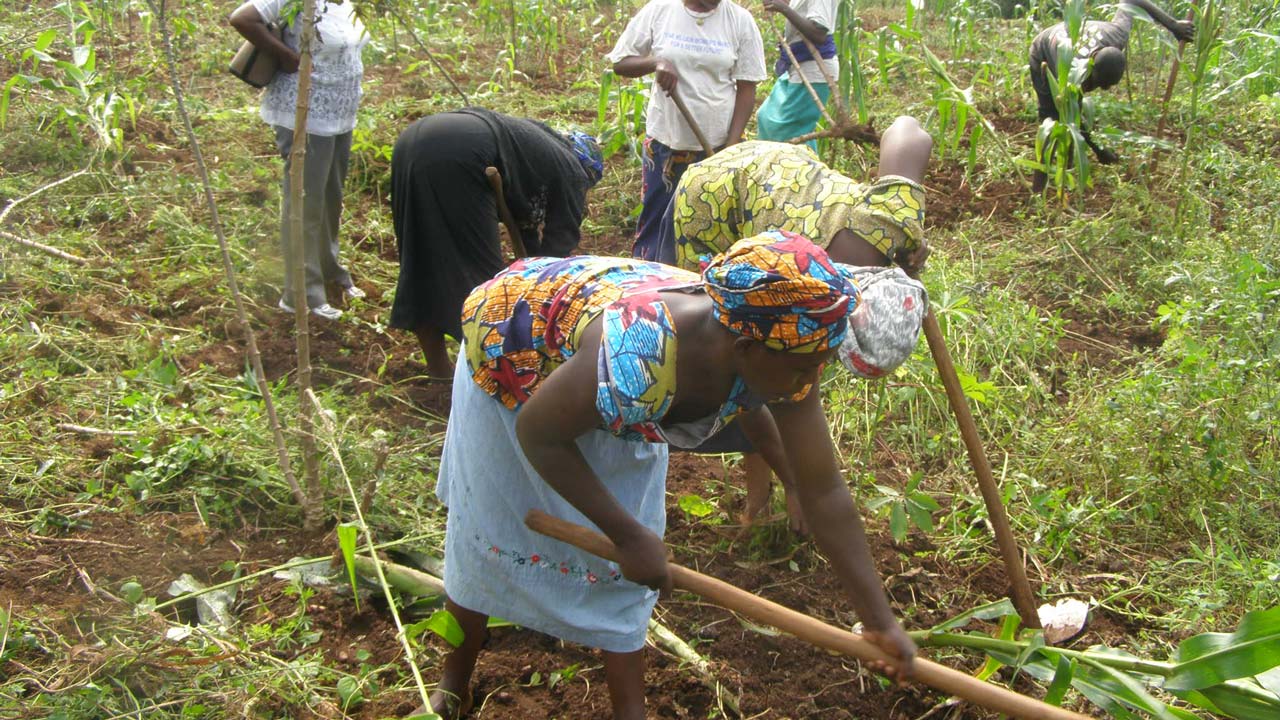
Plans are underway to register an additional 5,143 rice farmers to complement the already existing ones with WACOT Rice Limited in Kebbi State.

This followed the striking of a deal worth N5 billion between WACOT and the West Africa Trade and Investment Hub (WATIH), which is funded by the United States Agency for International Development (USAID).

These new farmers are expected to cultivate over 5,000 additional hectares of land thereby producing over 20,000 tons of paddy which will be utilised at WRL’s 120,000-ton rice mill in Kebbi.

The Nigerian based subsidiary of TGI Group is the owner of the Argungu Rice Outgrower Expansion Project in Kebbi State. It is part of the company’s strategy to become West Africa’s leading rice producer.

The state-of-the-art rice mill produces Big Bull Rice. The rice mill is one of the largest in Africa. The firm sources paddy from various paddy producing states across Nigeria. It also engages in out-grower farming programmes with paddy farmers to boost their yields and guarantees off-take of paddy from farmers through buyback arrangements.

Speaking on the development, the Group Managing Director of TGI Group, Mr Rahul Savara, noted that, “No doubt, this project not only supports our drive to support the government in achieving food security in Nigeria, it also allows us to support our community, Kebbi, which was ravaged by flood just a few months ago. For us, sustainability is a way of life. Therefore, we will continue to explore avenues to grow sustainably, while supporting others.”

On her part, Ms Anne Patterson, the USAID Mission Director, stated that, “The US government is pleased to partner with the private sector in Nigeria to develop market-driven solutions and sustainably improve food security by supporting local rice production.”

She added that, “with this new co-investment partnership, smallholder farmers in Kebbi State can increase yields and improve the livelihoods of their families.”

By supporting smallholder rice farmers to increase their yields by 50 to 100 per cent, the co-investment will help farmers earn more and lift themselves out of poverty, create thousands of jobs, and attract further private investments in the agriculture sector.

According to WACOT, a strong emphasis would be placed on women and youth, with at least 50 per cent of the new farmers trained to be women and 70 per cent of all the farmers under 30 years old.

It was stated that the overall impact is to enhance yield per hectare and help farmers better their livelihoods. In terms of their earnings, this project will help them to be able to send their kids to school, access better livelihoods, access better healthcare and to have better nutrition, and quality of life.


Aduragbemi Omiyale is a journalist with Business Post Nigeria, who has passion for news writing. In her leisure time, she loves to read.

Click to comment

Leave a Reply

Your email address will not be published. Required fields are marked *

Economy

Nigerians Resist IMF Proposal for Higher VAT, Telecom Tax

Published

on

excise tax on telecom

By Adedapo Adesanya

Nigerians have kicked against suggestions by the International Monetary Fund (IMF) to the federal government to consider increasing the Value Added Tax (VAT) rate and introducing excise duties on telecommunications services as part of efforts to boost revenue generation and create fiscal space for development spending.

IMF, in its 2026 Article IV Consultation Report on Nigeria, warned that despite recent tax reforms, additional revenue measures would likely be required over the medium term to support critical social and infrastructure spending.

According to the IMF, Nigeria’s revenue mobilisation efforts must go beyond administrative improvements to address the country’s persistently low revenue-to-GDP ratio and rising expenditure pressures.

The Fund stated that, “Further tax policy changes will likely be needed, such as increasing the VAT rate, extending VAT to fuel products, rationalising tax expenditures in particular VAT exemptions on extractive industries and some customs duties, and introducing telecom excises, to complement administrative gains.”

It noted that while the recently enacted tax reforms are expected to improve revenue collection over time, some of the measures are revenue-reducing in the short term and may take time to yield significant gains.

On X (formerly Twitter), user @RealCeecee wrote – “You want to impose more suffering on people living on empty pockets. Where exactly does all this revenue go to? IMF would never give this kind of advice to any country that has good leaders, when the masses are already going through extreme suffering.”

“To be honest Nigerian need to stand its feet against the IMF, no be anything them go detect for us. The revenue they are talking about has anyone seen where it goes, let alone imposing another way to generate that will actually cause discomfort for Nigerians,” another handle, @KingMasy, wrote.

The IMF had stressed that continued revenue mobilisation is essential if the government is to sustain higher capital spending and expand social intervention programmes aimed at cushioning the impact of economic reforms on vulnerable Nigerians.

“Over the medium term, continued revenue mobilisation is essential to creating fiscal space for development and social spending,” the Fund said, adding that there was limited room to maintain the projected increase in capital expenditure without additional revenue sources.

The Bretton Woods institution, however, cautioned that the timing of any new tax measures should take into account the worsening poverty and food insecurity situation in the country.

It emphasised that any tax increases should be accompanied by a fully funded and effective cash transfer programme to shield vulnerable households from additional economic hardship.

“The timing of reforms must consider the poverty and food insecurity situation and ensure that the cash transfer system is in place and funded,” the report stated.

The IMF’s recommendation comes as Nigeria continues to grapple with weak revenue generation despite recent reforms, including the removal of fuel subsidies and efforts to improve tax administration.

The Fund projected that poverty and food insecurity could worsen amid higher global fuel and food prices, noting that poverty had already reached 63 per cent of the population while about 27 million Nigerians faced food insecurity in 2025.

It also reiterated its call for a neutral fiscal stance in 2026, warning that spending pressures linked to poverty, food insecurity and preparations for the 2027 general elections could widen fiscal deficits and increase financing needs if not carefully managed.

Continue Reading

Economy

Nigeria’s Inflation Rises to 15.93% in May as Prices Remain Elevated

Published

on

Nigeria’s Headline Inflation

By Adedapo Adesanya 

The National Bureau of Statistics (NBS) has revealed that Nigeria’s headline inflation rate in May 2026 rose to 15.93 per cent from 15.69 per cent in April, as the pressure from the Iran war continued to affect the global economy.

In the report on Monday, the statistical office showed that the headline inflation rate for May on a month-on-month basis was 1.75 per cent. 0.39 per cent lower than the 2.13 per cent recorded in April 2026.

On an annualised basis, the print was down from 26.06 per cent in the same month of the preceding year (May 2025). This was due to the rebasing of the calculation year from 2009 to 2024.

The rise in prices, which stemmed from the continued conflict in the Middle East, continued to stoke food prices and energy costs, which account for a huge chunk of average spending.

According to the NBS, “this can be attributed to the rate of change in the average prices of the following products: Millet whole grain, yam flour, ginger (Fresh), beef, garri, tam tuber, pepper (Fresh), cray fish, cassava tuber, Beans, Irish Potatoes, tomatoes (fresh), wheat grain (Sold loose), soya beans, guinea corn, plantain, carrots (Fresh) etc.”

The Food inflation rate in May 2026 on a month-on-month basis was 2.98 per cent, down by 0.65 percentage points from April 2026 (3.63 per cent), while on a year-on-year basis, it was 16.96 per cent and stood at 24.55 per cent in the same month of the preceding year (May 2025).

In its recent assessment of Nigeria, the International Monetary Fund (IMF) acknowledged the country’s ongoing macroeconomic reform efforts while warning that rising inflation, deepening poverty, and external shocks linked to geopolitical tensions could undermine recent gains.

The IMF projected a reversal in the disinflation trend, with headline inflation rising from 15.1 per cent in February 2026 to 15.4 per cent in March, driven largely by food price increases. It projected year-end inflation of 17.0 per cent, citing global commodity shocks and domestic pass-through effects.

The lender also recommended that the Central Bank of Nigeria maintain a cautious, data-dependent monetary policy stance following its recent steadying of interest rates at 26.5 per cent.

Continue Reading

Economy

Lokpobiri Hails Petroleum Reforms Amid Surge in Investments

Published

on

petroleum products

By Adedapo Adesanya

The Minister of State for Petroleum Resources (Oil), Mr Heineken Lokpobiri, has said ongoing reforms and strategic policy implementation in Nigeria’s petroleum sector are driving significant investments and strengthening the country’s position as a leading energy destination in Africa.

Mr Lokpobiri stated this at the Management Retreat of the Ministry of Petroleum Resources, where he stressed the need for improved institutional performance and accountability to sustain growth in the sector.

According to the Minister, the federal government has deliberately pursued far-reaching reforms aimed at creating a stable and investor-friendly environment capable of attracting local and foreign capital into the oil and gas industry.

“From far-reaching institutional reforms to the effective implementation of strategic policies, we have remained committed to carrying all stakeholders along, fostering a conducive environment for investments to flourish,” Mr Lokpobiri said.

“As a result, our petroleum sector has witnessed significant investments that continue to strengthen Nigeria’s position as a leading energy destination.”

The Minister noted that the gains recorded in the sector were the product of collective efforts across the Ministry and its agencies, commending staff for their dedication and professionalism.

“The Management Retreat of the Ministry of Petroleum Resources provided an important platform to reiterate that these accomplishments would not have been possible without the collective dedication, professionalism and teamwork of every staff member across the Ministry and its agencies,” he stated.

Mr Lokpobiri said the retreat, themed Driving Institutional Performance and Accountability in the Petroleum Sector for Sustainable National Development, underscored the importance of continuous improvement in service delivery and operational efficiency.

Drawing lessons from the theme, he urged officials of the Ministry and regulatory agencies to intensify efforts toward enhancing institutional effectiveness and strengthening governance frameworks.

“I encouraged that we must redouble our efforts, continuously improve the quality of our services, and strengthen institutional performance,” he said.

The Minister further emphasised the continued relevance of fossil fuels in the global energy mix, stressing that Nigeria must leverage its hydrocarbon resources to drive economic growth while ensuring citizens benefit from ongoing reforms.

“With fossil fuel as the dominant source of energy, we must ensure that Nigerians experience the benefits of our progress and that Nigeria remains the preferred investment destination in Africa and a globally competitive hub for energy investments,” Mr Lokpobiri added.

Continue Reading

Trending