Connect with us

General

Plateau to Establish NIN Registration Centres in 17 LGAs

Published

on

governor lalong plateau state

By Adedapo Adesanya

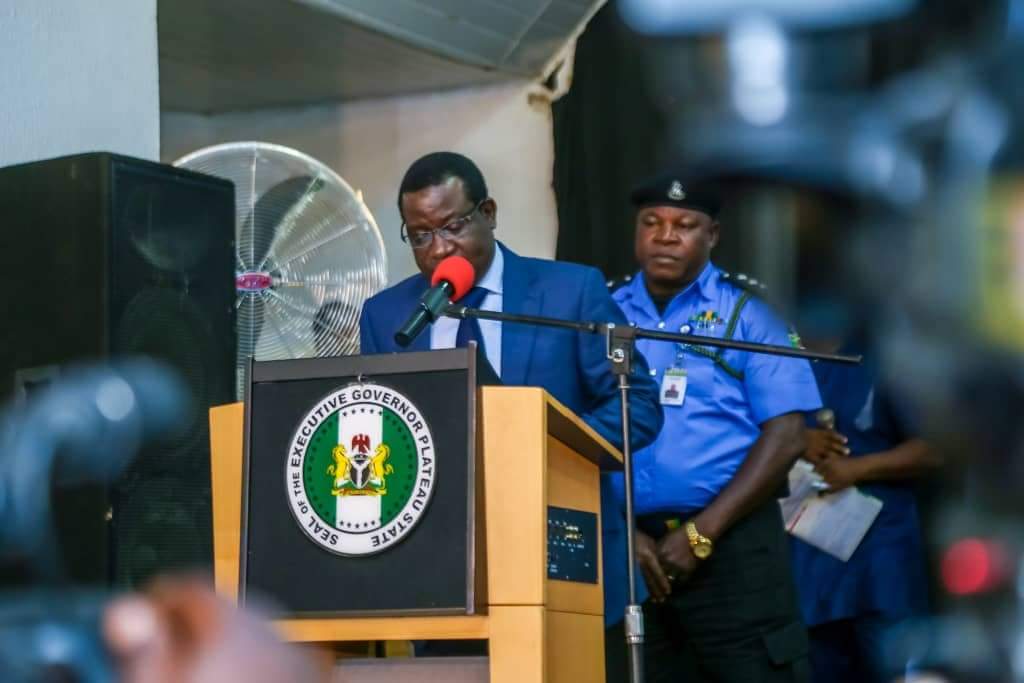
The Plateau State Government has said it will establish National Identity Number (NIN) registration centres in the 17 local government areas of the state.

This was disclosed by Governor Simon Lalong in a statement by his Director of Press and Public Affairs, Mr Makut Macham, on Sunday, January 24.

He said the move followed the license granted the state by the Ministry of Communications and Digital Economy to serve as a service provider for the NIN enrolment process.

“By that license, we are empowered to provide data capture and enrolment services for the issuance of the national identity number.

“We shall also create registration centres in other strategic towns in the state to ensure seamless, quick and efficient enrolment of all our citizens and residents,” he said.

Mr Lalong directed the state Ministry of Science and Technology to liaise with the Plateau State Information and Communication Technology Development Agency and the National Identity Management Commission (NIMC) to fast-track the process.

The governor called for speedy acquisition and installation of all necessary equipment for the take-off of the centres.

“Arrangements for suitable facilities, manpower and training are to be done speedily to ensure the enrolment of eligible persons within the state.

“We urge our people to be a bit patient, we are hopeful that the registration process will become a lot less stressful soon,” he said.

The NIN service provision approval granted the state is a one-year license which is subject to renewable upon satisfactory performance.

The federal government had directed citizens to register their NINs and link them to their phone numbers before February 9, a decision that has drawn criticisms from Nigerians over its perceived wrong timing and also the health risk associated with COVID-19.


Adedapo Adesanya is a journalist, polymath, and connoisseur of everything art. When he is not writing, he has his nose buried in one of the many books or articles he has bookmarked or simply listening to good music with a bottle of beer or wine. He supports the greatest club in the world, Manchester United F.C.

Advertisement
Click to comment

Leave a Reply

Your email address will not be published. Required fields are marked *

General

NGIC Pipeline Network to Experience 4-Day Gas Supply Shortage

Published

on

NGIC Pipeline Network

By Modupe Gbadeyanka

The pipeline network of the NNPC Gas Infrastructure Company Limited (NGIC) will witness a temporary reduction in gas supply for four days.

This information was revealed by the Chief Corporate Communications Officer of the Nigerian National Petroleum Company (NNPC) Limited, Mr Andy Odeh, in a statement on Thursday night.

A key supplier of gas into the NGIC pipeline network is Seplat Energy Plc, a joint venture partner of the state-owned oil agency.

It was disclosed that the facility would undergo routine maintenance from Thursday. February 12 to Sunday, February 15, 2026.

The NNPC stated that, “This planned activity forms part of standard industry safety and asset integrity protocols designed to ensure the continued reliability, efficiency, and safe operation of critical gas infrastructure.”

“Periodic maintenance of this nature is essential to sustain optimal system performance, strengthen operational resilience, and minimise the risk of unplanned outages,” it added.

“During the four-day maintenance period, there will be a temporary reduction in gas supply into the NGIC pipeline network. As a result, some power generation companies reliant on this supply may experience reduced gas availability, which could modestly impact electricity generation levels within the timeframe.

“NNPC Ltd and Seplat Energy are working closely to ensure that the maintenance is executed safely and completed as scheduled. In parallel, NNPC Gas Marketing Limited (NGML) is engaging alternative gas suppliers to mitigate anticipated supply gaps and maintain stability across the network,” the statement further said.

“Upon completion of the maintenance exercise, full gas supply into the NGIC system is expected to resume promptly, enabling affected power generation companies to return to normal operations,” it concluded.

Continue Reading

General

Judge Withdraws from EFCC Cases Against Former AGF Malami

Published

on

Abubakar Malami Assets Recovery Campaign

By Adedapo Adesanya

Justice Obiora Egwuatu of the Federal High Court in Abuja has recused himself from the two cases involving the former Attorney General of the Federation, Mr Abubakar Malami, filed by the Economic and Financial Crimes Commission (EFCC).

Mr Egwuatu was recently reassigned the cases by the Chief Judge of the Federal High Court, and he disclosed that he withdrew for personal reasons and in the interest of justice.

The cases against Mr Malami were formerly before Justice Emeka Nwite of the same court, who was a vacation judge during the festive season.

Mr Egwuatu’s recusal comes after the civil suit for the forfeiture of 57 properties allegedly linked to Mr Malami was called for mention.

The former AGF, his wife, and son are facing a 16-count money laundering charge. They were granted bail on January 7 in the sum of N500 million with two sureties by Justice Emeka Nwite of the Federal High Court in Abuja.

Justice Nwite stated that the sureties must have landed property in Asokoro, Maitama, and Gwarinpa.

The judge added that the trio must submit their travel documents to the court.

The former Minister of Justice is facing a fresh persecution over the arms and ammunition found in his house by the Department of State Service (DSS). The arms were reportedly uncovered at his Kebbi country home by the operatives of the EFCC during a search.

The anti-graft agency handed the weapon to the secret police for a comprehensive probe, citing a lack of constitutional authority to investigate the possession.

Similarly, the former AGF was accused of knowingly abetting terrorism financing by refusing to prosecute terrorism financiers whose case files were brought to his office as the AGF in the last administration for prosecution. Alongside his son, the lawyer was accused by the DSS of engaging in conduct in preparation to commit an act of terrorism by having in their possession and without a licence, a Sturm Magnum 17-0101 firearm, 16 Redstar AAA 5’20 live rounds of Cartridges and 27 expended Redstar AAA 5’20 Cartridges.

Continue Reading

General

NLNG Says Low-Risk Key to Unlocking Value in Nigeria’s Gas Industry

Published

on

Nigeria LNG Limited NLNG

By Adedapo Adesanya

Nigeria LNG (NLNG) has reaffirmed that a well-structured, low-risk approach in Nigeria’s energy sector is essential to unlocking investments, accelerating economic development and strengthening energy security.

NLNG’s General Manager, Production, Mr Nnamdi Anowi, said this at a panel session titled De-Risking Investments in African Oil and Gas Projects during the Sub-Saharan Africa International Petroleum Exhibition and Conference (SAIPEC) in Lagos, noting that when oil and gas projects are perceived as too risky, investors tend to withdraw, leading to stalled projects, job losses, and missed revenue opportunities critical for national growth.

According to a statement by Mrs Anne-Marie Palmer-Ikuku, Manager, Corporate Communication and Public Affairs, he stated that reducing risks in oil and gas projects, beyond being a business strategy, was a matter of national importance for Nigeria’s economy, energy security, and long-term development.

He further explained that for NLNG, lowering risk means keeping gas flowing reliably, meeting long-term contracts, and ensuring the company remains a trusted supplier to global and domestic markets.

He said this will allow investors to fund projects at a lower cost, which ultimately benefits both companies and the country.

Mr Anowi also highlighted the importance of good infrastructure, local skills, and modern technology in reducing everyday operational risks.

He said that when pipelines, processing facilities, and digital systems work well, projects are safer, cheaper to run, and more reliable over time.

“If we reduce risk the right way and work together, investment will come; the next decade must focus on growing proven, bankable projects that deliver real value to the country, ” he further said.

In his closing remarks, Mr Anowi noted that Africa and Nigeria in particular are investable when risks are planned for and managed carefully, not ignored.

Continue Reading

Trending