Connect with us

Economy

NNPC Downstream Sales Increase 92% to N158bn

Published

on

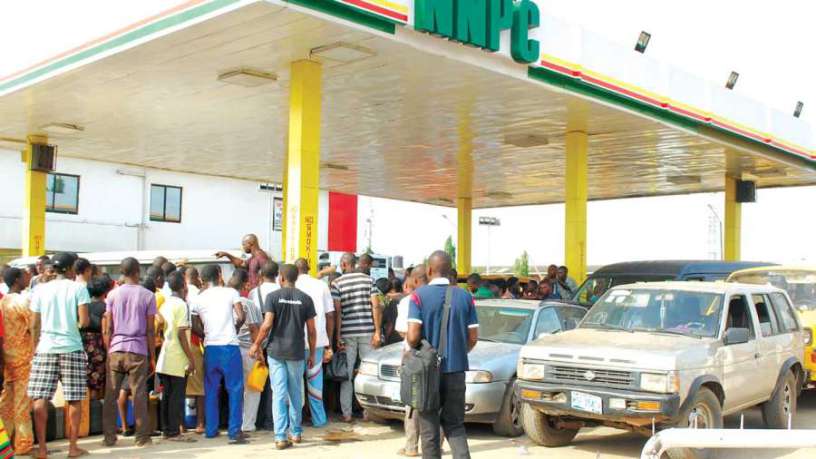
NNPC fuel retail station

By Adedapo Adesanya

The Petroleum Products Marketing Company (PPMC), a subsidiary of the Nigerian National Petroleum Corporation (NNPC), saw a 92 per cent increase in the sales of white products in the month of October 2020 to the tune of N158.0 billion compared to N80.2 billion sales in September 2020.

This was disclosed in a statement from the Group General Manager, Group Public Affairs Division of the corporation, Mr Kennie Obateru, on Thursday.

According to the NNPC, the figure was contained in the October 2020 edition of the NNPC Monthly Financial and Operations Reports (MFOR).

The report indicated that total revenues generated by its downstream subsidiary from the sales of white products for the period October 2019 to October 2020 stood at N1.95 trillion, with Premium Motor Spirit (PMS) accounting for about 99.1 per cent of the total sales with a value of over N1. 9 trillion.

In terms of volume, the October 2020 sales figure translated to a total of 1.224.54 billion litres of white products sold and distributed by PPMC within the period compared with 603.39 million litres in the month of September 2020.

This comprised 1.224.20 billion litres of PMS, 0.31 million litres of Automotive Gas Oil (AGO) also known as diesel and 0.033 million litres of Dual Purpose Kerosene (DPK).

Total sales of white products for the period October 2019 to October 2020 stood at 16.462.50 billion litres and PMS accounted for 16.344.36 billion litres or 99.3 per cent.

In the month under review, 23 pipeline points were vandalized representing about 10 per cent increase from the 21 points recorded in September 2020. Of this figure, Mosimi Area accounted for 83 per cent of the vandalised points while Port Harcourt Area accounted for the remaining 17 per cent.

In the Gas Sector, a total of 214.07 Billion Cubic Feet (bcf) of natural gas was produced in the month October 2020, translating to an average daily production of 6,908.34 Million Standard Cubic Feet per Day (mmscfd).

The daily average natural gas supply to power plants increased by 8.6 per cent to 745 mmscfd, equivalent to power generation of 2,801 Megawatts.

For the period of October 2019 to October 2020, a total of 3,018 BCF of gas was produced, representing an average daily production of 7,658.88 mmscfd during the period.

The October 2020 MFOR also indicated that period-to-date gas production from Joint Ventures (JVs), Production Sharing Contracts (PSCs) and NPDC contributed about 68.2 per cent, 20.1 per cent and 11.7 per cent respectively to the total national gas production.

In terms of natural gas off take, commercialization and utilization, out of the 208.96 BCF of gas supplied in October 2020, a total of 118.40 BCF of gas was commercialized, consisting of 38.07 BCF and 88.90 BCF for the domestic and export market respectively.

This translated to a total supply of 1,269.03 mmscfd of gas to the domestic market and 2,870.57 mmscfd of gas supplied to the export market for the month.

This 63rd edition of the MFOR highlights NNPC’s activities for the period of October 2019 to October 2020.


Adedapo Adesanya is a journalist, polymath, and connoisseur of everything art. When he is not writing, he has his nose buried in one of the many books or articles he has bookmarked or simply listening to good music with a bottle of beer or wine. He supports the greatest club in the world, Manchester United F.C.

Advertisement
Click to comment

Leave a Reply

Your email address will not be published. Required fields are marked *

Economy

LCCI Raises Eyebrow Over N15.52trn Debt Servicing Plan in 2026 Budget

Published

on

domestic debt servicing

By Adedapo Adesanya

The Lagos Chamber of Commerce and Industry (LCCI) has noted that the N15.52 trillion allocation to debt servicing in the 2026 budget remains a significant fiscal burden.

LCCI Director-General, Mrs Chinyere Almona, said this on Tuesday in Lagos via a statement in reaction to the nation’s 2026 budget of N58.18 trillion, hinging the success of the 2026 budget on execution discipline, capital efficiency, and sustained support for productive sectors.

She noted that the budget was a timely shift from macroeconomic stabilisation to growth acceleration, reflecting growing confidence in the economy.

She lauded its emphasis on production-oriented spending, with capital expenditure of N26.08 trillion, representing 45 per cent of total outlays, and significantly outweighing non-debt recurrent expenditure of N15.25 trillion.

According to Mrs Almona, this composition supports infrastructure development, industrial expansion, and productivity growth.

However, she explained that the N15.52 trillion allocation to debt servicing underscored the need for stricter borrowing discipline, enhanced revenue efficiency, and expanded public-private partnerships to safeguard investments that promote growth.

She added that a further review of the 2026 budget revealed relatively optimistic macroeconomic assumptions that may pose fiscal risks.

“The oil price benchmark of $64.85 per barrel, although lower than the $75.00 benchmark in the 2025 budget, appears optimistic when compared with the 2025 average price of about $69.60 per barrel and current prices around $60 per barrel.

“This raises downside risks to oil revenue, especially since 35.6 per cent of the total projected revenue is expected to come from oil receipts.

“Similarly, the oil production benchmark of 1.84 million barrels per day is significantly higher than the current level of approximately 1.49 million barrels per day.

“Achieving this may be challenging without substantial improvements in security, infrastructure integrity, and sector investment,” she said.

Mrs Almona said the exchange rate assumption of N1,512 to the Dollar, compared with N1,500 in the 2025 budget and about N1,446 per Dollar at the end of November, suggests expectations of a mild depreciation.

She said while this may support Naira-denominated revenue, it also increases the cost of imports, debt servicing, and inflation management, with broader macroeconomic implications.

The LCCI DG added that the inflation projection of 16.5 per cent in 2026, up from 15.8 per cent in the 2025 budget and a current rate of about 14.45 per cent, appeared optimistic, particularly in a pre-election year.

She also expressed concern about Nigeria’s historically weak budget implementation capacity, likely to be further strained by the combined operation of multiple budget cycles within a single year.

Looking ahead, Mrs Almona identified agriculture and agro-processing, manufacturing, infrastructure, energy, and human capital development as key drivers of growth in 2026.

She said that unlocking these sectors would require decisive execution—scaling irrigation and agro-value chains, reducing power and logistics costs for manufacturers, and aligning education and skills development with private-sector needs.

The LCCI head stressed the need to resolve issues surrounding the Naira for crude, increase the supply of oil to local refineries to boost local refining capacity and conserve the substantial foreign exchange used for fuel imports.

“Overall, the 2026 Budget presents a credible opportunity for Nigeria to transition from recovery to expansion.

“Its success will depend less on the size of allocations and more on execution discipline, capital efficiency, and sustained support for productive sectors.

Continue Reading

Economy

Customs Street Chalks up 0.12% on Santa Claus Rally

Published

on

Customs Street Nigerian Stock Exchange

By Dipo Olowookere

The Nigerian Exchange (NGX) Limited witnessed Santa Claus rally on Wednesday after it closed higher by 0.12 per cent.

Strong demand for Nigerian stocks lifted the All-Share Index (ASI) by 185.70 points during the pre-Christmas trading session to 153,539.83 points from 153,354.13 points.

In the same vein, the market capitalisation expanded at midweek by N118 billion to N97.890 trillion from the preceding day’s N97.772 trillion.

Investor sentiment on Customs Street remained bullish after closing with 36 appreciating equities and 22 depreciating equities, indicating a positive market breadth index.

Guinness Nigeria chalked up 9.98 per cent to trade at N318.60, Austin Laz improved by 9.97 per cent to N3.20, International Breweries expanded by 9.85 per cent to N14.50, Transcorp Hotels rose by 9.83 per cent to N170.90, and Aluminium Extrusion grew by 9.73 per cent to N16.35.

On the flip side, Legend Internet lost 9.26 per cent to close at N4.90, AXA Mansard shrank by 7.14 per cent to N13.00, Jaiz Bank declined by 5.45 per cent to N4.51, MTN Nigeria weakened by 5.21 per cent to N504.00, and NEM Insurance crashed by 4.74 per cent to N24.10.

Yesterday, a total of 1.8 billion shares valued at N30.1 billion exchanged hands in 19,372 deals versus the 677.4 billion shares worth N20.8 billion traded in 27,589 deals in the previous session, implying a slump in the number of deals by 29.78 per cent, and a surge in the trading volume and value by 165.72 per cent and 44.71 per cent apiece.

Abbey Mortgage Bank was the most active equity for the day after it sold 1.1 billion units worth N7.1 billion, Sterling Holdings traded 127.1 million units valued at N895.9 million, Custodian Investment exchanged 115.0 million units for N4.5 billion, First Holdco transacted 40.9 million units valued at N2.2 billion, and Access Holdings traded 38.2 million units worth N783.3 million.

Continue Reading

Economy

Yuletide: Rite Foods Reiterates Commitment to Quality, Innovation

Published

on

Rite foods stamp black

By Adedapo Adesanya

Nigerian food and beverage company, Rite Foods Limited, has extended warm Yuletide greetings to Nigerians as families and communities worldwide come together to celebrate the Christmas season and usher in a new year filled with hope and renewed possibilities.

In a statement, Rite Foods encouraged consumers to savour these special occasions with its wide range of quality brands, including the 13 variants of Bigi Carbonated Soft Drinks, premium Bigi Table Water, Sosa Fruit Drink in its refreshing flavours, the Fearless Energy Drink, and its tasty sausage rolls — all produced in a world-class facility with modern technology and global best practices.

Speaking on the season, the Managing Director of Rite Foods Limited, Mr Seleem Adegunwa, said the company remains deeply committed to enriching the lives of consumers beyond refreshment. According to him, the Yuletide period underscores the values of generosity, unity, and gratitude, which resonate strongly with the company’s philosophy.

“Christmas is a season that reminds us of the importance of giving, togetherness, and gratitude. At Rite Foods, we are thankful for the continued trust of Nigerians in our brands. This season strengthens our resolve to consistently deliver quality products that bring joy to everyday moments while contributing positively to society,” Mr Adegunwa stated.

He noted that the company’s steady progress in brand acceptance, operational excellence, and responsible business practices reflects a culture of continuous improvement, innovation, and responsiveness to consumer needs. These efforts, he said, have further strengthened Rite Foods’ position as a proudly Nigerian brand with growing relevance and impact across the country.

Mr Adegunwa reaffirmed that Rite Foods will continue to invest in research and development, efficient production processes, and initiatives that support communities, while maintaining quality standards across its product portfolio.

“As the year comes to a close, Rite Foods Limited wishes Nigerians a joyful Christmas celebration and a prosperous New Year filled with peace, progress, and shared success.”

Continue Reading

Trending