Connect with us

General

No Free Land for Ranching in Oyo—Governor

Published

on

makinde tests positive

By Ahmed Rahma

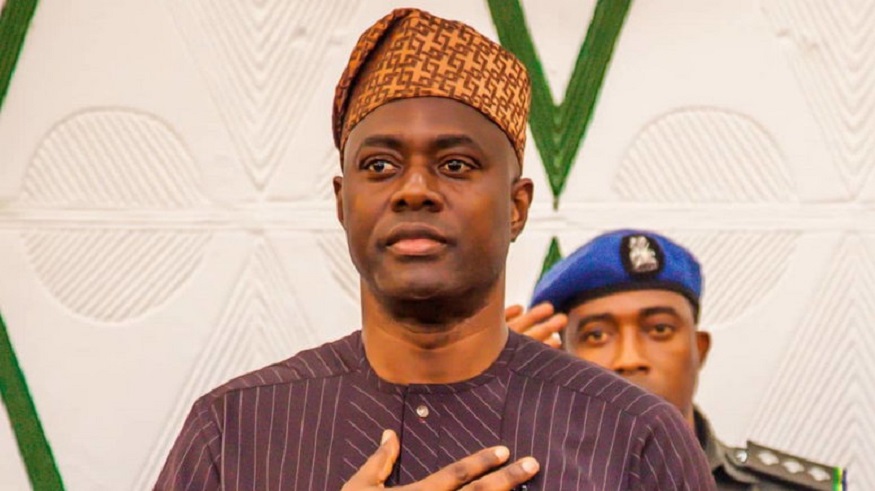
The Oyo State Governor, Mr Seyi Makinde, has stressed that the state will not provide land for free for ranching as it believes it is a private business.

Mr Makinde said this to clarify a tweet in which he revealed that Oyo State will adopt the National Livestock Transformation Plan, which is already being implemented in Kwara State.

The Governor, after a meeting with his Kwara State counterpart, Governor AbdulRahman AbdulRazaq, said on Twitter, “We also agreed that the National Livestock Transformation Plan which is already being implemented in Kwara State would be implemented in Oyo State leading to further collaborations between both states on economy and security.”

But his tweet was interpreted by many to mean an implementation of Rural Grazing Area (RUGA) settlements, which many Nigerians had in the past kicked against.

Reacting, one of the app users, @olufunkeajibul1, said, “I hope the National Livestock Transformation Plan is not the same RUGA. If yes, Mr Governor please tread with caution. But no, please fire on all salvos.”

Another @Itee_esq said, “Your Excellency Sir, hope you are not bringing RUGA to Oyo State through the back door.”

@Carol-Ukoha said, “They changed RUGA to National Livestock Transformation Plan, can’t you read between the lines? I hope you have a rethink. You cannot afford to fail your people. This decision is unintelligent please.”

The Governor, who reacted to the concerns raised, clarified that the state will not implement the whole of the National Livestock Transformation Plan, only the aspects it finds beneficial.

Mr Makinde said, “My attention has been drawn to this tweet regarding the implementation of the National Livestock Transformation Plan during the joint security meeting, yesterday. For the avoidance of doubt, when I said we would implement the plan, I didn’t mean a wholesale implementation.

“We will be taking aspects which are beneficial for our state. As I have stated on several occasions, our position in Oyo State is that ranching is a private business and should be carried out as such. Our admin won’t be providing land for free to private investors for ranching.”


Ahmed Rahma is a journalist with great interest in arts and craft. She is also a foodie who loves new ideas. She loves to travel and would love to visit other African countries someday. She is a sucker for historical movies and afrobeat.

Advertisement
Click to comment

Leave a Reply

Your email address will not be published. Required fields are marked *

General

BPP Mandates Digital Submission for MDAs From March 1

Published

on

procurement standard BPP

By Adedapo Adesanya

The Bureau of Public Procurement (BPP) has directed all Ministries, Departments and Agencies (MDAs) to comply with its digital submission process effective March 1.

The directive was contained in a circular signed by the Director-General of the Bureau, Mr Adebowale Adedokun, noting that the move was part of the bureau’s commitment to digital transformation and paperless governance.

It explained that the transition followed an earlier circular of Aug. 4, 2025, which introduced electronic submission procedures.

According to the bureau, it has successfully moved from physical filings to a dedicated e-mail service for document submissions and is now advancing to a more robust and integrated system.

The circular announced the inauguration of the BPP Digital Submission Portal, a web-based platform designed to enable MDAs submit procurement-related documents directly to the Bureau.

It stated that the automated platform would streamline the submission process, enhance transparency and ensure accelerated tracking of procurement-related documents and petitions.

“With effect from March 1, all MDAs will be required to use the portal to submit requests for ‘No Objection’ Certificates, approvals for ‘No Objection’ for special procurements, clarifications and status updates on submissions,” the bureau said.

It added that the portal would be hosted on the Bureau’s official website and would become fully operational from the effective date.

The bureau warned that physical submissions or manual hand-deliveries would no longer be prioritised and would eventually be rejected following the full transition to the digital platform.

It urged accounting officers to brief their procurement departments and ICT units on the development to ensure seamless processing of procurement activities from March 1.

It further advised MDAs to contact the Bureau via its official email for information on the onboarding process and integration into the portal.

The bureau emphasised that full compliance by all MDAs was required to ensure a smooth transition and avoid delays in the implementation of the 2026 fiscal year procurement processes.

Continue Reading

General

Senate Seeks Removal of CAC Boss Hussaini Magaji

Published

on

Hussaini Magaji CAC boss

By Adedapo Adesanya

The Senate has asked President Bola Tinubu to remove the Registrar General of the Corporate Affairs Commission (CAC), Mr Hussaini Ishaq Magaji, from office.

The Senate Committee on Finance, while passing a resolution in Abuja on Thursday, accused Mr Magaji, a Senior Advocate of Nigeria (SAN), of failing to honour the Senate’s invitations to account for the finances of his agency.

“He refused on so many occasions to honour our invitation to appear before this committee.

“We have issues with the reconciliation of the revenue of CAC.

“Each time we invite him, he gives us excuses,” the Chairman of the committee, Mr Sani Musa, said as the committee passed the resolution.

CAC was part of a group of agencies that the House of Representatives Public Accounts Committee (PAC) recommended zero allocation for the year 2026, for allegedly failing to account for public funds appropriated to them.

The committee, at an investigative hearing held two weeks ago, accused CAC and some other ministries, departments and agencies (MDAs) of shunning invitations to respond to audit queries contained in the Auditor-General for the Federation’s annual reports for 2020, 2021 and 2022.

The PAC chairman, Mr Bamidele Salam, stated that the National Assembly should not continue to appropriate public funds to institutions that disregard accountability mechanisms, saying this will create fiscal discipline and strengthen transparency across federal institutions and conform with extant financial regulations and the oversight powers of the parliament.

“Public funds are held in trust for the Nigerian people. Any agency that fails to account for previous allocations, refuses to submit audited accounts, or ignores legislative summons cannot, in good conscience, expect fresh budgetary provisions. Accountability is not optional; it is a constitutional obligation,” he said.

Continue Reading

General

IBEDC Promises Stability, Growth After Board Restructuring

Published

on

ibedc prepaid meter

By Adedapo Adesanya

The Ibadan Electricity Distribution Company (IBEDC) has announced the reconstitution of its board following the resignation of three nominees of the Asset Management Corporation of Nigeria (AMCON), promising growth and stability.

Earlier this week, the disco, which serves Oyo, Ogun, Osun and Kwara States, as well as parts of Ekiti, Kogi and Niger States, unveiled its new board led by the new chairman, Mr Tunde J. Afolabi.

The newly constituted board include Mr Ayodeji Ariyo Gbeleyi, with Mr Michael I. Magaji as Alternate Director; Mr Taiwo Afolabi; Professor Oladapo Afolabi; Mr Tunde Fayinka; Mr Oluwaseyi Akinwale and Mr Adeolu Ijose.

According to the chairman, the emergence of a new core investor and the reconstituted board marks a significant milestone in the company’s corporate journey and signals a renewed strategic direction focused on stability, continuity and sustainable growth.

“This transition represents renewal, not rupture. It represents investment, not instability. It represents partnership, not division. Our goal is to strengthen governance, enhance operational performance, deepen capital investment and deliver improved service to customers across our franchise areas,” he added.

Mr Afolabi, while addressing customers directly, assured them that there would be no avoidable service disruptions as a result of the transition, stating that all IBEDC offices will remain open, while field operations will continue uninterrupted.

“The new core investor has committed to sustained capital investments in feeder rehabilitation and expansion, transformer upgrades and replacements, injection substation improvements, and the replacement of obsolete network components,” he stated.

He added that IBEDC plans to accelerate the integration of advanced digital and operational technologies, disclosing that these include enhanced outage management systems, strengthened billing platforms, expanded smart metering deployment, and digitised customer engagement channels aimed at improving transparency and service responsiveness.

On workforce stability, the chairman emphasised that there will be no job losses as a direct result of the transition, noting that the board, under his leadership, is committed to employee welfare, improved work tools, modern safety equipment, and technology upgrades to support field efficiency, while maintaining high performance standards.

Mr Afolabi also pledged proactive and structured engagement with regulators, including the Nigerian Electricity Regulatory Commission (NERC) and the Nigerian Electricity Management Services Agency (NEMSA), underscoring its commitment to full regulatory compliance, strengthened governance frameworks, transparency and accountability.

Furthermore, he reaffirmed the commitment of the distribution company to structured and timely payment cycles for vendors and suppliers, recognising their critical role in maintaining network stability.

With the new board in place, he insisted that IBEDC is poised to deepen operational excellence, strengthen financial sustainability, and position itself firmly on the path to becoming Nigeria’s leading power distribution company—powering progress across its franchise with unity, confidence and innovation.

Established in November 2013 following Nigeria’s power sector privatisation, IBEDC operates the largest distribution network serving the highest customer population within Nigeria’s electricity distribution landscape.

Continue Reading

Trending