Connect with us

Economy

Dangote Refinery Will Benefit Nigeria—Oil Marketers

Published

on

Dangote Refinery

By Adedapo Adesanya

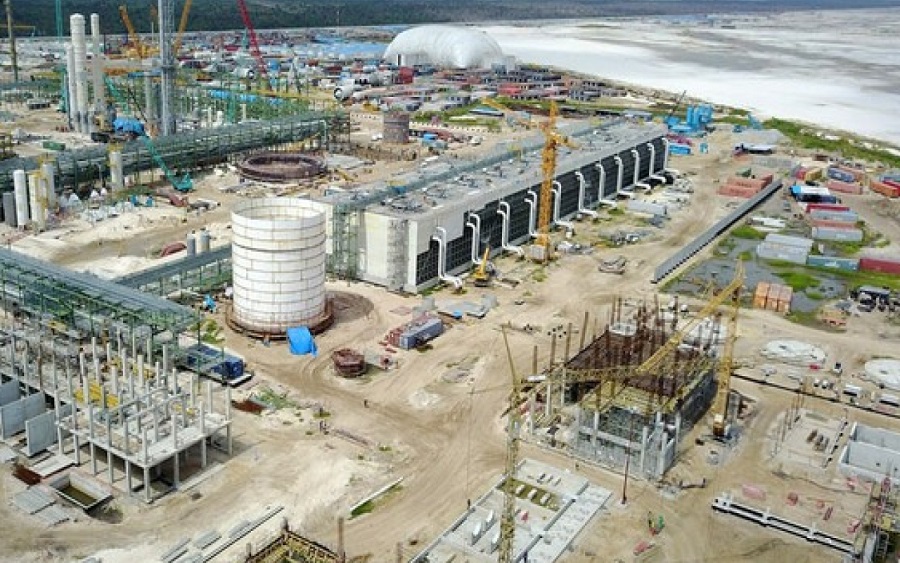
Despite potential effects on its operations, the Major Oil Marketers Association of Nigeria (MOMAN) has expressed its optimism about the 650,000 barrels per day Dangote Refinery in Ibeju Lekki, Lagos, saying it will be beneficial to Nigeria when it begins production.

This was made known by Mr Clement Isong, the Executive Secretary of MOMAN while speaking with newsmen on Thursday in Lagos.

The association used the opportunity to advise the federal government against preventing marketers from importing refined petroleum products when the refinery, saying others should be allowed to come on stream in order to create an open market for the sector.

Mr Isong said there was merit in insisting on a minimum in-country investment in order to encourage investment in the oil and gas industry.

“However, as a core principle, MOMAN believes that free-market competition remains the best protection for the final consumer and this would be our most important consideration.

“MOMAN’s position would therefore be, not to limit the importation of refined products to refiners only, but allow importers with a set minimum level of investment in the oil and gas supply chain in Nigeria.

“Furthermore, there would be a need for us to operate under a uniform exchange rate regime irrespective of who imports or refines,” he said.

According to the Executive Secretary, this also includes the exchange rate used for the purchase of crude in Naira or the purchase of refined products in order to ensure a level playing field.

He noted that the concept of buying crude in Naira from the government and selling its refined products in Naira to Nigerians was an interesting concept that needed to be properly worked out.

“It is an interesting concept not just for Dangote Refinery but for all refineries in Nigeria to be able to access the crude in Naira.

“The Governor of Central Bank of Nigeria on television espoused the benefits it would bring the country in terms of foreign exchange rate management.

“Obviously, details would need to be worked out as several questions remain unanswered.

“For instance, since crude is priced internationally in US dollars, what rate would be used to convert to Naira?

“Secondly, is it correct to say that if you use crude locally for refining, it is not included in the Organisation of Petroleum Exporting Countries (OPEC) quota?

”If this is correct, to fully benefit, therefore, we would need to produce enough to meet our full export quota under the OPEC regime and optimise the foreign exchange inflows as well as produce enough locally to meet local refining requirements,” Mr Isong added.

He said an additional benefit would be that any refined products that were in excess of Nigeria’s needs could be exported for additional foreign exchange earnings.


Adedapo Adesanya is a journalist, polymath, and connoisseur of everything art. When he is not writing, he has his nose buried in one of the many books or articles he has bookmarked or simply listening to good music with a bottle of beer or wine. He supports the greatest club in the world, Manchester United F.C.

Click to comment

Leave a Reply

Your email address will not be published. Required fields are marked *

Economy

Businesses Not Feeling Full Benefits of Tinubu’s Reforms—NECA

Published

on

NECA Adewale Smatt-Oyerinde

By Adedapo Adesanya

Many private sector operators have yet to experience the anticipated gains of President Bola Tinubu’s reforms as they continue to grapple with inflation, energy costs and exchange rate volatility, the Director-General of the Nigeria Employers’ Consultative Association (NECA), Mr Adewale-Smatt Oyerinde, has said.

Mr Oyerinde acknowledged that the removal of fuel subsidy and liberalisation of the foreign exchange market reflected the government’s commitment to market-driven economic policies and improved transparency across sectors.

He said the reforms had enhanced fuel availability, reduced recurring supply disruptions and signalled policy consistency to both local and foreign investors, but noted that while there are indications of improved investor confidence, many domestic businesses, particularly Micro, Small and Medium Enterprises (MSMEs), continue to contend with operational challenges.

The NEC chief said the depreciation of the Naira had increased production costs, affected competitiveness and heightened operational risks for many businesses.

“Many private sector operators are yet to experience the anticipated gains of the reforms as they continue to grapple with inflation, energy costs and exchange rate volatility,” he said in a recent interview with the News Agency of Nigeria (NAN) while assessing the administration’s economic performance.

Mr Oyerinde said declining consumer purchasing power and increasing production expenses had placed pressure on businesses, with some firms adjusting investment plans and operations in response to prevailing economic conditions.

On infrastructure and refining, the NECA DG said developments in housing, industrial investments and local petroleum refining had created opportunities and contributed to improved fuel supply.

He, however, identified power supply as a major challenge facing businesses, citing persistent grid instability and reliance on alternative energy sources.

“In spite of the ongoing reforms in the power sector, insufficient electricity supply remains the number one constraint to business productivity and competitiveness across the country,” he said.

Mr Oyerinde said that although some macroeconomic indicators, including foreign reserves and government revenues, had shown improvement, the gains were yet to be broadly reflected in business operations and household welfare.

“Inflation, high energy costs, multiple taxation, logistics challenges and weak consumer spending continue to constrain productivity and limit business expansion,” he said.

He said employers remained cautious about large-scale recruitment amid high borrowing costs, foreign exchange volatility and rising operating expenses.

According to him, sustainable job creation will depend on deeper structural reforms that reduce the cost of doing business and improve access to affordable finance.

He urged the government to prioritise stable power supply, lower energy costs, tax harmonisation, policy consistency and foreign exchange stability to accelerate economic recovery and strengthen investor confidence.

Continue Reading

Economy

NASD Unlisted Security Index Records 1.89% Growth

Published

on

NASD Unlisted Security Index

By Adedapo Adesanya

The NASD Over-the-Counter (OTC) Securities Exchange recorded its best performance this year on Tuesday, June 2, closing higher by 1.89 per cent.

During the session, the NASD Unlisted Security Index (NSI) went up by 81.62 points to 4,406.30 points from the preceding day’s 4,324.68 points, and the market capitalisation added N48.48 billion to close at N2.636 trillion compared with Monday’s N2.587 trillion.

Business Post reports that the bourse recorded five price gainers and one price loser, Geo-Fluid Plc, which fell by 1 Kobo to N2.87 per unit from N2.88 per unit.

Conversely, Nipco Plc gained N31.57 to sell at N347.27 per share versus N315.70 per share, FrieslandCampina Wamco Nigeria Plc grew by N9.86 to N196.51 per unit from N186.68 per unit, Central Securities Clearing System (CSCS) Plc improved by N3.13 to N76.10 per share from N72.97 per share, Food Concepts Plc added 27 Kobo to sell at N2.95 per unit compared with the preceding day’s N2.68 per unit, and UBN Property Plc expanded by 17 Kobo to N2.20 per share from N2.03 per share.

Yesterday, the volume of securities transacted by investors depreciated by 91.4 per cent to 307,363 units from the previous session’s 3.6 million units, and the value of securities dropped 75.9 per cent to N42.8 million from the preceding session’s N177.4 million, while the number of deals went up by 13.5 per cent to 42 deals from Monday’s 37 deals.

At the close of trades, Great Nigeria Insurance (GNI) Plc was the most traded stock by value on a year-to-date basis with 3.4 billion units traded for N8.4 billion, followed by Infrastructure Credit Guarantee (Infracredit) Plc with 2.3 billion units sold for N6.5 billion, and CSCS Plc with 64.3 million units exchanged for N4.4 billion.

GNI Plc also finished as the most active stock by volume on a year-to-date basis with 3.4 billion units worth N8.4 billion, followed by Infracredit Plc with 2.3 billion units valued at N6.5 billion, and Resourcery Plc with 1.1 billion units sold for N415.7 million.

Continue Reading

Economy

Naira Rallies by N5.74 at Official Market

Published

on

weakening Naira

By Adedapo Adesanya

The Naira further firmed up against the US Dollar by N5.74 or 0.42 per cent in the Nigerian Autonomous Foreign Exchange Market (NAFEX) on Tuesday, June 2, trading at N1,361.05/$1 compared with the previous day’s N1,366.95/$1.

It was also the same scenario in the official market yesterday, where the Nigerian currency gained 9 Kobo against the Pound Sterling to close at N1,833.19/£1 versus N1,833.28/£1, and against the Euro, it appreciated by N2.73 to sell for N1,584.39/€1 compared with Monday’s rate of N1,587.12/€1.

At the parallel market, the Naira traded flat against the United States Dollar at N1,380/$1, and also closed flat at the GTBank forex counter at N1,378/$1.

Data showed that FX turnover declined to $169.822 million across 168 deals, from $177.927 million in the previous day.

Following the stellar performance witnessed in the first half of 2026, there are expectations that the Central Bank of Nigeria (CBN) will continue to inject FX inflows into the official market, while elevated oil prices in the global commodity market will buoy the country’s FX reserves.

The launch of the fourth edition of the CBN’s Foreign Exchange Manual is also expected to make rules clearer in the country’s financial system, including the introduction of new measures covering imports, exports, travel allowances, trade finance, and foreign remittances as the apex bank seeks to improve transparency and efficiency in the FX market.

In the cryptocurrency market, there was a reversal in spikes seen in April price levels amid a price sell-off triggered by geopolitical uncertainties as well as attractiveness of traditional markets, where stocks are near record highs, and the Dollar index remains rangebound.

Bitcoin (BTC) slipped by 4.1 per cent to $67,352.62, Binance Coin (BNB) slumped by 5.6 per cent to $644.72, Solana (SOL) declined by 5.6 per cent to $75.09, Ethereum (ETH) fell by 5.3 per cent to $1,878.96, and Dogecoin (DOGE) depreciated by 5.2 per cent to $0.0942.

Further, Cardano (ADA) dipped by 3.7 per cent to $0.2158, Ripple (XRP) went down by 2.2 per cent to $1.24, TRON (TRX) dropped 2.0 per cent to sell at $0.3330, the US Dollar Tether (USDT) shed 0.14 per cent to settle at $0.9986, and the US Dollar Coin (USDC) slipped by 0.03 per cent to $0.9997.

Continue Reading

Trending