Economy
DPR Shuts Down 86 Illegal Cooking Gas Plants in Lagos
By Adedapo Adesanya
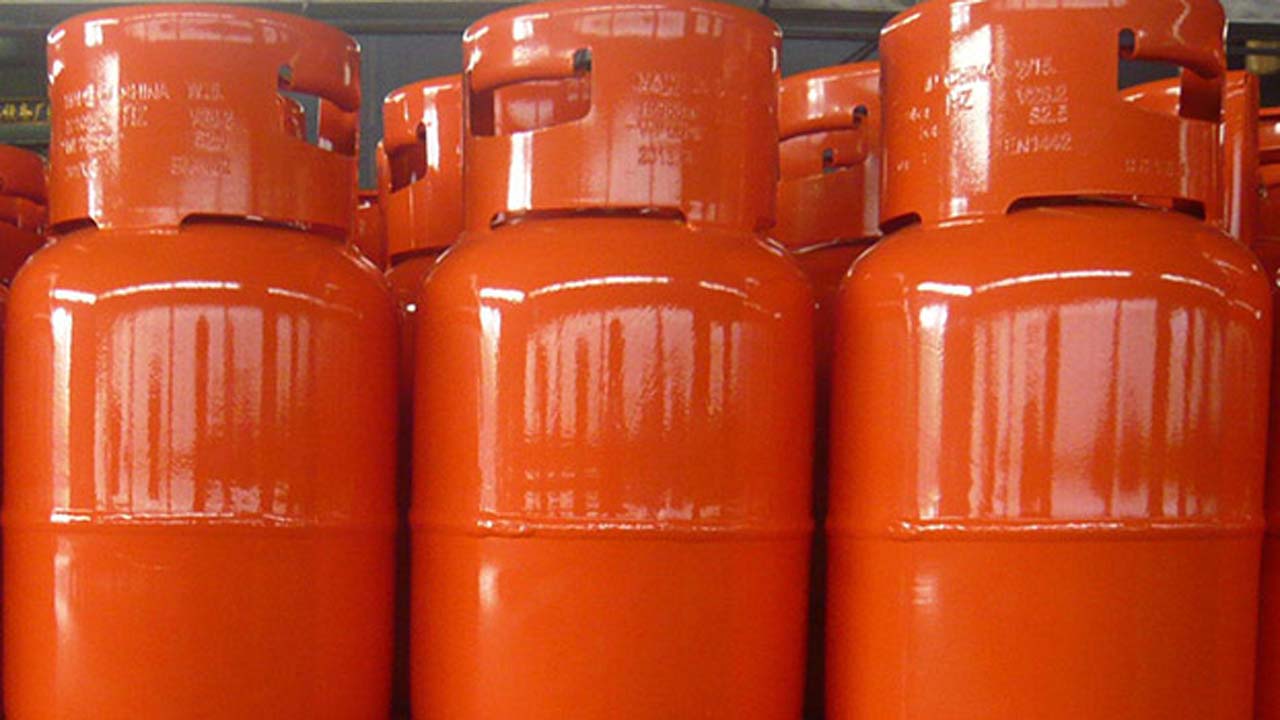
The Department of Petroleum Resources (DPR) has announced that it shutdown 86 illegally operated Liquefied Petroleum Gas (LPG) plants in Lagos State in 2020.
This disclosure was contained in a statement issued by the head of Public Affairs of DPR, Mr Paul Osu, on Wednesday, March 10, 2021, in Lagos.
The agency noted that LPG (otherwise known as cooking gas) plants were shut down for non-compliance with international safety standards.
The DPR official said that the plants were also operating without prerequisite approval or licence from the regulatory agency.
He also pointed out that some of the sealed plants were operating under high tension electrical installations and other unapproved locations.
Mr Osu noted that the move was aimed at reducing the occurrence of gas explosions and fire incidents in Lagos State.
He added that the agency would continue to clamp down on such illegal plants while at the same time sensitising the public on the need for safe usage and distribution of gas.
This sensitisation effort is coming at a time when there have been reported cases of explosions at gas stations in the state with several fatalities and destruction of properties.
The DPR and the Lagos State Government have clamped down on gas stations that have been operating illegally or without approval. Lagos State as part of the measure announced a ban on the location of gas plants in residential areas.
In December 2020, the DPR announced the rollout of guidelines for the establishment and operations of downstream gas facilities across the country.
These companies would be required to obtain three approvals and licences, among others, before commencing operations. They must satisfy all necessary requirements stipulated by DPR and obtain the under-listed applicable approvals: Site suitability approval; Approval to Construct (ATC)/Approval to Install; and Licence to Operate.
Economy
Stanbic IBTC Simplifies Global Trends into Actionable Insights for Clients
By Modupe Gbadeyanka
Stanbic IBTC Bank, a subsidiary of Stanbic IBTC Holdings Plc, has provided insights that empower businesses to navigate a complex economic landscape.
This was done at its annual Global Markets Economic Outlook forum themed Global Economic Trends and Nigeria’s Position, which was attended by key stakeholders, industry leaders, and clients.
The Executive Director for Corporate and Transaction Banking at Stanbic IBTC Bank, Mr Eric Fajemisin, said the forum reflects the bank’s continued commitment to keeping clients ahead of global shifts that have direct implications for their businesses.
“As global trade patterns continue to realign, it’s important that our clients understand not just what is happening, but what it means for their operations and growth strategies.
“This forum is part of our ongoing effort to translate global trends into actionable insights for businesses operating in Nigeria,” he said.
Also, the Head of Global Markets, Nigeria at Stanbic IBTC Bank, Mr Dare Otitoju, highlighted Nigeria’s growing relevance in global trade conversations, noting the country’s potential to strengthen its position as a trade and investment hub on the continent.
“Nigerians should look forward to a transition from stabilisation to selective growth. Global higher-for-longer rates indicate that capital will reward countries with policy consistency, which Nigeria is building post-reforms. Key areas to watch include infrastructure funding, gas and manufacturing, and capital market opportunities as FX becomes more predictable.
“The Outlook message was clear: while 2026 may not be a boom year, prepared individuals and businesses will find real opportunities. That’s the plan we want Nigerians to leave with,” he stated
On his part, the Resident Representative for Nigeria at the International Monetary Fund (IMF), Mr Christian Ebeke, in a keynote address, shed light on Nigeria’s optimistic outlook.
He highlighted several factors, including rising hydrocarbon prices, decreasing global financing costs, and tax reforms that took effect in January 2026, all of which could help the country surpass its revenue targets. He also pointed out the advantages associated with enhanced state policing.
Mr Ebeke stated in his presentation that Nigeria should capitalise on immediate opportunities. This includes securing oil pipelines, improving electricity infrastructure, and shifting investment from government securities to the private sector.
Also, the Special Adviser on Financial Markets and Economic Policy to the Governor of the Central Bank of Nigeria (CBN), Mr Mayokun Ajibade, emphasised the necessity of addressing excessive liquidity in the banking system as a sustainable means of combating inflation.
He expressed the importance of a balanced approach, advocating for a focus on lowering inflation before pursuing interest rate reductions; noting that the Nigerian banking system has too much liquidity, therefore a decline in interest rates should not be expected without first addressing inflation.
Economy
NASD Security Index Sheds 70.29 Points
By Adedapo Adesanya
The NASD Over-the-Counter (OTC) Securities Exchange depreciated by 1.63 per cent on Monday, July 6, after the share price of Central Securities Clearing System (CSCS) Plc depleted by N9.04 to N81.70 per unit from last Friday’s N90.74 per unit.
This shrank the NASD Security Index (NSI) during the session by 70.29 points to 4,236.97 points from 4,307.26 points, and contracted the market capitalisation by N42.19 billion to N2.543 trillion from N2.585 trillion.
The unlisted securities exchange lost yesterday despite having more price gainers than losers. Afriland Properties Plc gained N1.48 to end at N16.65 per share versus the previous N15.17 per share, Industrial General Insurance (IGI) Plc appreciated by 5 Kobo to close at 55 Kobo per unit compared with the preceding session’s 50 Kobo per unit, and Food Concepts Plc improved by 1 Kobo to trade at N2.51 per share, in contrast to last Friday’s N2.50 per share.
During the session, the value of trades by investors fell by 98.3 per cent to N2.8 million from N160.1 million, the volume of transactions dipped by 93.6 per cent to 114,175 units from 1.8 million units, and the number of deals decreased by 14.3 per cent to 18 deals from 21 deals.
Great Nigeria Insurance (GNI) Plc ended the day as the most traded stock by value on a year-to-date basis, with 3.4 billion units worth N8.4 billion, trailed by Infrastructure Credit Guarantee (Infracredit) Plc with 2.3 billion units valued at N6.5 billion, and CSCS Plc with 70.7 million units exchanged for N4.9 billion.
GNI Plc also closed the session as the most traded stock by volume on a year-to-date basis, with 3.4 billion units sold for N8.4 billion, followed by Infracredit Plc with 2.3 billion units traded for N6.5 billion, and Resourcery Plc with 1.1 billion units transacted for N415.7 million.
Economy
Naira Firms to N1,368/$1 at Official Forex Market
By Adedapo Adesanya
The Naira further appreciated against the United States Dollar in the Nigerian Autonomous Foreign Exchange Market (NAFEX) on Monday, July 6, by N1.92 or 0.14 per cent to end at N1,368.27/$1, in contrast to the previous exchange rate of N1,370.19/$1.
The domestic currency also improved its value against the Pound Sterling in the official forex market during the session by N2.98 to trade at N1,826.91/£1 versus last Friday’s value of N1,829.89/£1, and against the Euro, it gained N5.63 to quote at N1,562.69/€1 compared with the preceding session’s N1,568.32/€1.
In the same vein, the Nigerian Naira gained N1 against the US Dollar at the GTBank FX counter during the session to close at N1,831/$1 compared with last Friday’s quoted price of N1,832/$1, and at the parallel market, it remained unchanged at N1,390/$1.
Monday’s appreciation reinforced the local currency’s relative stability witnessed in recent months under ongoing monetary and foreign exchange reforms by the Central Bank of Nigeria (CBN).
Market analysts linked the sustained improvement to stronger foreign-exchange liquidity in the official market, also citing improved investor confidence, which has supported demand and supply conditions in the FX market.
According to analysts, sustained policy measures introduced by the apex bank have continued to strengthen market transparency and price discovery.
Updated data showed the country’s gross external reserves ended the week at $51.46 billion following successive FX inflows from across multiple sources.
In the cryptocurrency market, Bitcoin (BTC) held in the low $63,000s, despite Strategy’s disclosure this week that it sold 3,588 bitcoin for about $216 million, its largest sale since abandoning its never-sell stance, which the market largely absorbed without breaking the recovery. It appreciated by 0.2 per cent to $63,069.84, while Solana (SOL) improved by 0.8 per cent to $80.94, and TRON (TRX) expanded by 0.2 per cent to $0.3295.
On the flip side, Cardano (ADA) fell by 2.5 per cent to $0.1793, Dogecoin (DOGE) slumped by 2.2 per cent to $0.0749, Ripple (XRP) depreciated by 1.1 per cent to $1.12, Binance Coin (BNB) slid by 0.5 per cent to $578.79, and Ethereum (ETH) slipped by 0.2 per cent to $1,767.90, while the US Dollar Tether (USDT) and the US Dollar Coin (USDC) sold flat at $1.00 each.
-
Feature/OPED6 years agoDavos was Different this year
-
Travel/Tourism10 years ago
Lagos Seals Western Lodge Hotel In Ikorodu
-
Showbiz4 years agoEstranged Lover Releases Videos of Empress Njamah Bathing
-
Banking8 years agoSort Codes of GTBank Branches in Nigeria
-
Economy3 years agoSubsidy Removal: CNG at N130 Per Litre Cheaper Than Petrol—IPMAN
-
Banking4 years agoSort Codes of UBA Branches in Nigeria
-
Banking3 years agoFirst Bank Announces Planned Downtime
-
Sports3 years agoHighest Paid Nigerian Footballer – How Much Do Nigerian Footballers Earn