General
29% of Nigerian Children Lack Access to Clean Water
By Adedapo Adesanya
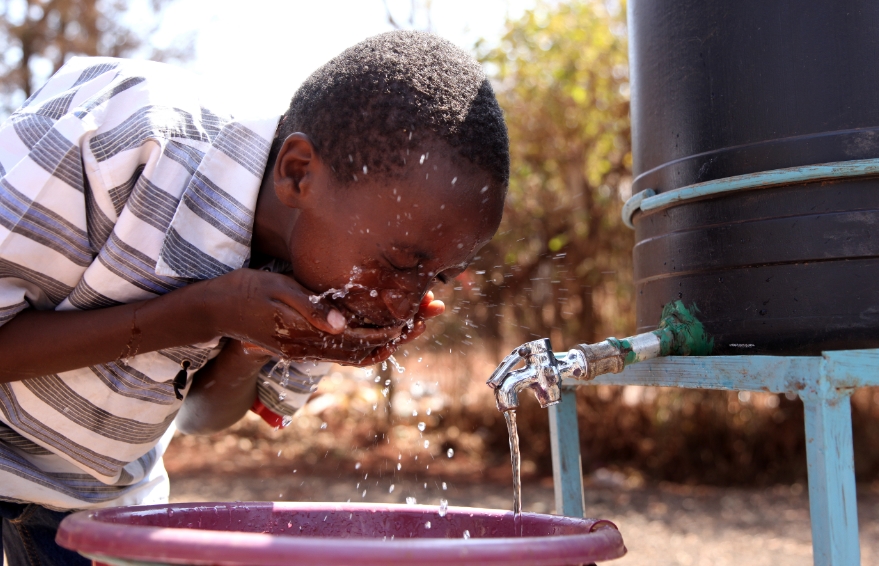
The United Nations Children’s Fund (UNICEF) has disclosed that 29 per cent of Nigerian children do not have access to clean water.
In a statement marking World Water Day, UNICEF also said more than 1.42 billion people, including 450 million children, are living in areas of high or extremely high water vulnerability in the world.
Speaking on the issue as relating to Africa’s most populous nation, the UNICEF Representative in Nigeria, Mr Peter Hawkins, stated, “The world’s water crisis is not coming – it is here, and children are its biggest victim.
‘When wells dry up, children are the ones missing school to fetch water. When droughts diminish food supplies, children suffer from malnutrition and stunting. When floods hit, children fall ill from waterborne illnesses. And when water is not available in Nigerian communities, children cannot wash their hands to fight off diseases.”
According to UNICEF, “the figures in Nigeria are particularly worrying, with 26.5 million Nigerian children experiencing high or extremely high water vulnerability – or 29 per cent of Nigerian children.”
The analysis, part of the Water Security for All initiative, identifies areas where physical water scarcity risks overlap with poor water service levels. Communities living in these areas depend on surface water, unimproved sources of water, or water that can take more than 30 minutes to collect.
The UNICEF data showed that children in more than 80 countries live in areas with high or extremely high water vulnerability. Eastern and Southern Africa have the highest proportion of children living in such areas, with more than half of children – 58 per cent – facing difficulty accessing sufficient water every day.
It is followed by West and Central Africa (31 per cent), South Asia (25 per cent), and the Middle East (23 per cent). South Asia is home to the largest number of children living in areas of high or extremely high water vulnerability – more than 155 million children.
According to the fund, children in 37 “hotspot” countries face especially dire circumstances, in terms of absolute numbers, the proportions of children affected, and where global resources support and urgent action must be mobilized. This list includes Afghanistan, Burkina Faso, Ethiopia, Haiti, Kenya, Niger, Nigeria, Pakistan, Papua New Guinea, Sudan, Tanzania and Yemen.
In 2020, the Nigerian government and UNICEF released a WASH NORM study which showed that while there has been some progress as a result of efforts by the Ministry of Water Resources and its partners to strengthen the sector’s planning and monitoring, there is still much more work to be done in the country to ensure that all Nigerians have access to adequate and quality water and hygiene services.
According to UNICEF, “Sustainable and equitable access to safe drinking water remains a challenge in Nigeria, with over 86 per cent of Nigerians lacking access to a safely managed drinking water source. The problem is compounded by poor drinking water quality and lack of equity in access.
“Although about 70 per cent of Nigerians are reported to have access to basic water services, more than half of these water sources are contaminated. And although 73 per cent of the country’s population have access to a water source, only nine litres of water on average is available to a Nigerian daily.”
This means that at the current rate, the country will miss the SDG targets on people’s access to water unless there are a strong commitment and appropriate action taken by all stakeholders.
It was disclosed that while the impact of water scarcity can be felt by all, no one suffers more than the most vulnerable children.
Children and families living in vulnerable communities face the double-edged sword of coping with high water scarcity levels while having the lowest water services, making access to sufficient water especially susceptible to climate shocks and extreme events.
Mr Hawkins added, “We have to act now both to address the water crisis in Nigeria to prevent it from getting worse and if we want to meet the SDG. We can only achieve water security for every Nigerian, including the Nigerian child, through innovation, investment and collaboration, and by ensuring services are sustainable and well-managed. We must act – for the sake of our children and our planet.”
General
Pastor Ogbueli’s Abuja Night of Glory Holds Today
By Blaise Udunze
Momentum is gathering for the Abuja Night of Glory taking place today, Friday, December 5, 2025, at the main bowl of the Moshood Abiola National Stadium.
The crusade is being hosted by Dominion City Church headed by Pastor David Ogbueli and it starts by 7pm.
The all-night programme will feature dynamic worship leaders like Nathanial Bassey, Dunsin Oyekan, Theophilus Sunday, Chioma Jesus, Kaestrings, Sunmisola Agbebi Okeleye, Minister GUC, Ebuka Songs, Anthony Kani, and DC Angels.
Reputed as a teacher of righteousness and anointed minister of the gospel, evidenced by the miracles that have trailed his ministry, and one who champions the cause of the poor through empowerment initiatives, Dr. David Ogbueli will be joined by renowned ministers from within and outside Nigeria, including Evangelist Andres Bisonni, Dr. Charles Ndifon, Evangelist Dan Scott, Apostle Ikechukwu Nnajiofor, and several others.
Night of Glory has, in previous editions held across Nigeria’s cities, recorded remarkable results, such as immediate healings and freedom from chronic ailments, recovery of vision and movement after many years of paralysis, along with liberation from dependencies and emotional distress. Numerous participants have also shared testimonies of breakthroughs and big personal changes after the experience. Organisers state that this year’s event, in Abuja, is anticipated to exceed previous editions.
The event is intended for all individuals trusting God for divine intervention in any area of life.
Understanding the role of faith in the destiny of individuals and nations, a dedicated prayer session for Nigeria will take place during the crusade to tackle some of the current challenges being faced in the country and also to uplift he leaders and institutions before God.
Attendance is free, and registration is encouraged via the QR codes on event banners. Organisers expect a massive turnout as worshippers travel from across the country for what is anticipated to be a transformative encounter.
Adequate security and free transportation have been put in place ALL over the city of Abuja, while those outside Abuja are expected to join online.
General
Rivers Speaker, 15 Other Lawmakers Leave PDP for APC
By Modupe Gbadeyanka
The Speaker of the Rivers State House of Assembly, Mr Martin Amaewhule, has defected to the All Progressives Congress (APC).
At the plenary on Friday, Mr Amaewhule joined the ruling party from the opposition Peoples Democratic Party (PDP), along with 15 other members of the state parliament.
This development comes some months after they had earlier declared their support for the APC in the wake of a crisis with the state governor, Mr Sim Fubura.
The lawmakers had an issue with Mr Fubura, which led to a state of emergency declared on the oil-rich state by President Bola Tinubu in March 2025.
This embargo was only lift in September 2025 after the duration of the six-month emergency rule in the state.
A few days ago, members of the Rivers Assembly passed a vote of confidence on President Tinubu, backing him to remain in office till 2031, when he would have spent eight years in office if re-elected in 2027.
Announcing their defection today, the lawmakers pinned their decision on the crisis rocking the PDP at the national level.
It is not certain if their political godfather, Mr Nyesom Wike, who is the current Minister of the Federal Capital Territory (FCT), will join them in APC.
Mr Wike, who governed Rivers State from 2015 to 2023, has been accused of instigating the crisis in the opposition PDP. He was expelled from the party last month at a national convention held in Ibadan, Oyo State.
General
Nigeria Risks Brain Drain in Energy Sector—PENGASSAN
By Adedapo Adesanya
The Petroleum and Natural Gas Senior Staff Association of Nigeria (PENGASSAN) has warned that Nigeria risks massive brain drain in the oil and gas sector due to poor remuneration.
The president of PENGASSAN, Mr Festus Osifo, said at the end of the National Executive Council (NEC) meeting of the union on Thursday in Abuja that the industry was facing challenges arising from Naira devaluation and inflation, noting that, oil and gas skills remained globally competitive.
Painting an example, he said, “A drilling engineer in Nigeria does the same job as one in the US or Abu Dhabi,” noting that the union must take steps to bridge the wage gap to prevent members from leaving the country for better opportunities abroad.
“If we don’t act, the brain drain seen in other sectors will be child’s play,” he said.
According to him, PENGASSAN has recorded significant gains through collective bargaining across oil and gas branches.
“We signed numerous agreements across government agencies, IOCs, service and marketing sectors,” he said.
He said the agreements brought relief to members facing rising costs of living, adding that, the association’s duty is to protect members’ jobs and enhance their pay.
Mr Osifo urged companies delaying salary reviews and those foot-dragging as a result of the prevailing economic realities, to do the needful.
He said the industry employed some of the nation’s best talents, making competitive pay critical to retaining skilled workers.
“This industry recruits the best. Companies must provide the best conditions,” he said.
On insecurity, Mr Osifo urged government to take decisive action against terrorism and kidnappings across the country.
“We are tired of condemnations. government must expose sponsors and protect citizens,” he said.
He urged government at all levels to prioritise tackling insecurity through better funding and equipment for security agencies.
Mr Osifo said PENGASSAN supported calls for state police to improve local security response, adding that decentralising policing will protect citizens better than rhetoric.
He also said economic indicators meant little, if food prices remained high and farmers could not return to farms due to insecurity.
“Nigerians want to see food on the table, not macroeconomic figures,” he said, urging the government to coordinate fiscal and monetary policies to ensure economic gains reach households.
-
Feature/OPED6 years agoDavos was Different this year
-
Travel/Tourism9 years ago
Lagos Seals Western Lodge Hotel In Ikorodu
-
Showbiz3 years agoEstranged Lover Releases Videos of Empress Njamah Bathing
-
Banking7 years agoSort Codes of GTBank Branches in Nigeria
-
Economy3 years agoSubsidy Removal: CNG at N130 Per Litre Cheaper Than Petrol—IPMAN
-
Banking3 years agoFirst Bank Announces Planned Downtime
-
Banking3 years agoSort Codes of UBA Branches in Nigeria
-
Sports3 years agoHighest Paid Nigerian Footballer – How Much Do Nigerian Footballers Earn