Connect with us

Auto

Tesla Adopts Bitcoin as Payment Method for Cars

Published

on

Tesla

By Ahmed Rahma

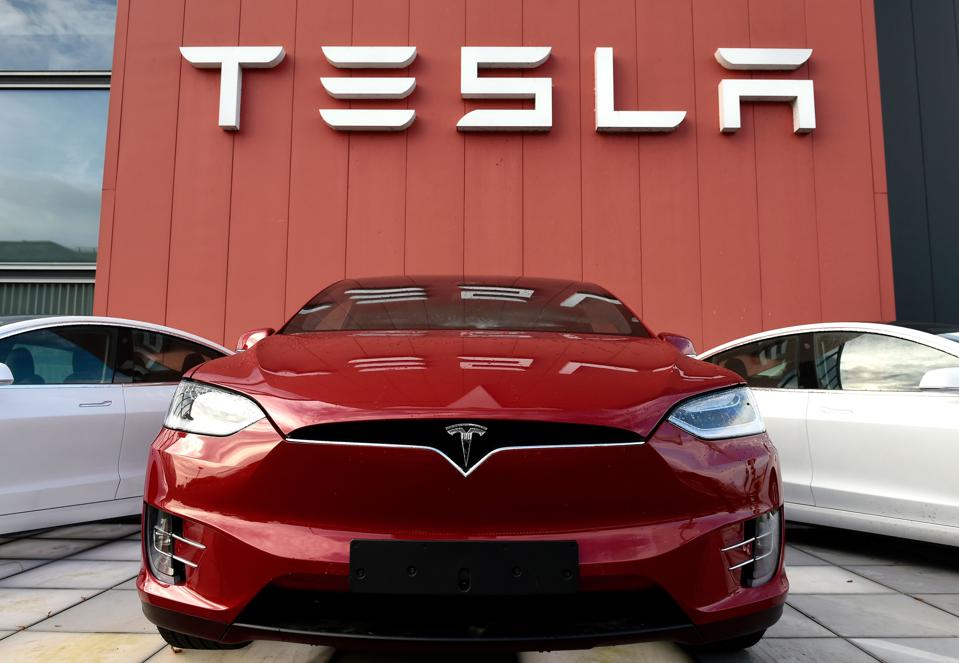
After purchasing $1.2 billion worth of the world’s largest electronic currency, Bitcoin, Tesla has said it will start accepting the cryptocurrency as means of payment for its electric cars.

The Chief Executive Officer of the company, Mr Elon Musk, made this disclosure via a Twitter post on Wednesday.

“You can now buy a Tesla with Bitcoin” he tweeted, noting that this payment option is only available to customers in the United States for now, with plans to include others later.

He added that Tesla will only use internal and open-source software and that any Bitcoin paid to the company will be retained as Bitcoin and not converted to a fiat currency.

Recall that the California-based Tesla disclosed its $1.5 billion investment in Bitcoin in February, signalling its intent to begin accepting the cryptocurrency as a form of payment at the time, sending prices to a record high.

The world’s leading EV maker made the Bitcoin bet after updating its investment policy in January to allow it to buy digital assets.

Bitcoin rose 3 per cent to $56,108 as of 8:33am in London.

In addition to lending increased legitimacy to electronic currencies, Mr Musk’s embrace of Bitcoin fits his maverick image.

The billionaire has often tweeted about cryptocurrency-related topics and recently called Bitcoin “a good thing” in an interview.

Dogecoin, the once tongue-in-cheek digital currency, also soared to records in February after Musk, rapper Snoop Dogg and Kiss bassist Gene Simmons tweeted about it.


Ahmed Rahma is a journalist with great interest in arts and craft. She is also a foodie who loves new ideas. She loves to travel and would love to visit other African countries someday. She is a sucker for historical movies and afrobeat.

Auto

NRS Denies Introduction of New Vehicle Tax from July 1

Published

on

new vehicle tax

By Modupe Gbadeyanka

The Nigeria Revenue Service (NRS) refuted reports making the rounds on social media that the federal government plans to introduce a new tax on vehicles from July 1, 2026.

Mr Dare Adekambi, who serves as the Special Adviser to the NRS Chairman, Mr Zach Adedeji, and spokesperson for the organisation, said in a statement that the government was not planning to introduce the vehicle tax as claimed.

He described a viral infographic purporting the policy as false and misleading, urging members of the public to disregard it.

Mr Adekambi advised citizens to only rely on information from the NRS, urging them to follow the company its official handles on all social media platforms and its website for accurate information about tax and its activities.

In the infographic, motorists were directed to pay an unspecified vehicle tax rate online or at approved banks and agencies. The website listed as NRS’s was the old one, http://www.firs.gov.ng and not the new http://www.nrs.gov.ng created after it was rebranded.

“The NRS wishes to state categorically that the information did not emanate from the service or any government agency.

“Citizens are, therefore, advised to disregard the fabricated messages designed to mislead the public and instead rely on official government channels for information on government policies,” Mr Adekambi said in the statement.

Continue Reading

Auto

Court Restrains Police, FRSC from Imposing Car Insurance Fines Without Court Order

Published

on

third-party insurance

By Adedapo Adesanya

The Federal High Court in Abuja has restrained the Nigeria Police Force and the Federal Road Safety Corps (FRSC) from imposing fines on motorists for third-party motor vehicle insurance violations without a court order.

The ruling followed a suit marked FHC/ABJ/CS/291/2025 filed by activist-lawyer, Mr Deji Adeyanju, against the Inspector-General of Police, the Attorney-General of the Federation and the FRSC.

Delivering judgment on Friday, Justice Hauwa Yilwa held that while both the police and the FRSC have the power to enforce compliance with third-party motor insurance, they lack the legal authority to impose fines on alleged offenders.

The suit was initiated through an originating summons, brought pursuant to Section 17 of the Motor Vehicles (Third Party Insurance) Act, 1950, Sections 68(3) and (4) of the Insurance Act, 2003, as well as provisions of the Federal Road Safety Commission (Establishment) Act, 2007.

Mr Adeyanju had asked the court to determine whether the police could enforce third-party insurance, impose fines without judicial backing, and whether such enforcement during routine stop-and-search operations violated constitutional rights.

He also sought a declaration on whether the power to enforce third-party motor insurance lies exclusively with the FRSC.

In addition to the declaratory relief, the applicant requested orders of perpetual injunction restraining the police from enforcing third-party insurance and from imposing fines without judicial backing.

He further urged the court to hold the Attorney-General of the Federation accountable for providing legal guidance on the scope of police powers under the relevant statutes.

However, in its judgment, the court drew a distinction between enforcement and sanctioning powers.

Counsel to the applicant, Mr Marvin Omorogbe, said the court upheld the authority of both the police and the FRSC to ensure compliance with motor vehicle insurance laws, but firmly ruled against the imposition of fines by either agency.

According to him, the court held that “the police and the road safety may enforce” compliance but “outrightly lack the powers to impose fines on third parties or vehicle owners” in the course of such enforcement.

“The court went further to restrain the IGP, the Police Force and all their officers, including the FRSC, from imposing fines on motor vehicle users or Nigerian citizens,” Mr Omorogbe said.

Reacting to the judgment, Mr Adeyanju expressed satisfaction, noting that the central objective of the suit had been achieved.

“The sole reason why we came to court is that we wanted the court to make a positive declaration that the police and the road safety do not have the right to impose fines on any Nigerian over motor vehicle insurance. And we have succeeded,” he said.

He argued that the ruling would curb what he described as a pattern of extortion by enforcement agencies and restore confidence among motorists.

Mr Adeyanju added that although the court declined to grant all the reliefs sought—particularly the request to strip the police entirely of enforcement powers—it nonetheless made a significant pronouncement on the limits of those powers.

He also urged Nigerians to take advantage of the judgment to assert their rights and seek legal remedies where necessary.

On the other hand, counsel to the defendants, Mr Victor Okoye, said the judgment was only partly favourable to the police and signalled plans to challenge it at the Court of Appeal.

Mr Okoye disclosed that the defence had raised a preliminary objection questioning the jurisdiction of the court to entertain the suit, arguing that the originating summons was incompetent and unsuitable for resolving contentious issues.

He relied on appellate authorities to stress that jurisdiction is fundamental to adjudication and must be determined before any substantive issues.

Despite this, he noted, the court proceeded to deliver judgment.

Continue Reading

Auto

Pamtech Issues Public Disclaimer on Popular Auto Influencer Juliet Ibekwe

Published

on

Juliet Ibekwe Somiari Lucky

By Modupe Gbadeyanka

A public disclaimer has been issued on two former representatives of Pamtech Group, Mr Somiari Lucky and Ms Juliet Ibekwe, who is a popular auto influencer.

In the notice signed by the chief executive of Pamtech, Mr Chidomere Ndubuisi, on Tuesday, members of the public were informed that the duo no longer work with the organisation.

Mr Ndubuisi, who did not disclose why he disengaged the duo, however, emphasised that Mr Lucky and Ms Ibekwe are “not authorised to act on behalf of, represent, negotiate, or enter into any business dealings in the name of Pamtech Media Ltd or Pamtech Group.”

Ms Ibekwe rose to fame by creating content on how to make vehicles work efficiently. She became a notable auto content creator in Nigeria and garnered more fans for her car care tips.

In the disclaimer today, Pamtech warned “the general public, our valued clients, partners, and stakeholders” that doing business with Ms Ibekwe and Mr Lucky is “at their own discretion and risk, and such engagements do not involve Pamtech Group in any capacity.”

“Any business transactions, agreements, or engagements entered into with the above-mentioned individuals are strictly personal to them; Pamtech Group shall not be held liable or responsible for any commitments, representations, or obligations made by them after their exit from the company,” another part of the notice stressed.

The Owerri, Imo State-based firm further noted that, “Any use of the Pamtech name, brand, platform, or reputation by them without written authorisation is unauthorised and not recognised by the company.”

The company urged its clients, partners, and members of the public to verify all engagements directly with Pamtech Group official channels, and also ensure that all payments and communications are made only through verified company accounts and representatives.”

Pamtech expressed its commitment to delivering excellence, integrity, and professionalism across all its services in media, automobile, and business solutions.

Continue Reading

Trending